Expert Interviews
Skin Cancer Prevention

Alexandra Pfitzmann ·
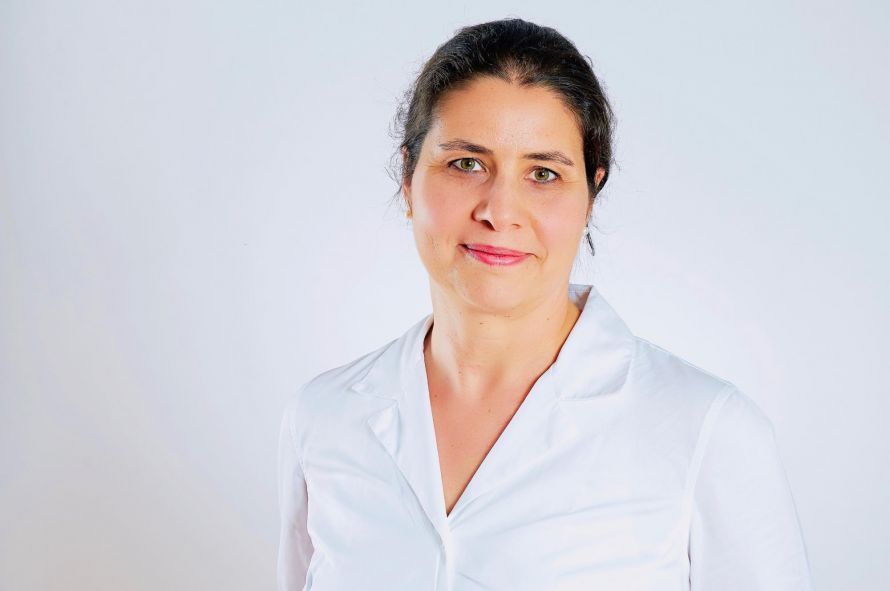
Prof. Dr. med. Stefanie Reich-Schupke is a renowned specialist in dermatology and phlebology with an impressive career and expertise in dermatology and vascular medicine. She heads a private practice for skin and vascular medicine in Recklinghausen that meets the highest standards. Prof. Dr. Reich-Schupke is not only an expert in the diagnosis and treatment of skin diseases but also in phlebology, lymphology, and medical wound therapy. Particularly noteworthy is her position as Germany’s only professor of phlebology, a title she received in 2017 at Ruhr University Bochum. This professorship strengthened phlebology as a scientific discipline in Germany and beyond. With over twenty years of clinical experience in dermatology, Prof. Dr. Reich-Schupke has earned an excellent reputation. In her private practice for skin and vascular medicine, Prof. Dr. Reich-Schupke offers comprehensive and personalized care. She places great emphasis on a holistic approach and integrates both conventional medicine and scientifically sound methods from complementary medicine, orthomolecular medicine, and nutritional medicine into her therapies. This creates synergistic effects that enhance the effectiveness of the treatments. Prof. Dr. med. Stefanie Reich-Schupke is also actively involved in teaching and research, instructing students and supervising doctoral dissertations. She is a sought-after speaker at international conferences and patient events. Her dedication and professional expertise have made her a respected figure in the medical community. At her private practice in Recklinghausen, Prof. Dr. Reich-Schupke offers patients the opportunity to benefit from her outstanding expertise and holistic approach to dermatology and vascular medicine. In a conversation with Prof. Dr. Reich-Schupke, we were able to take a closer look at the vital topic of skin cancer prevention.
Skin cancer prevention is of crucial importance, as skin cancer is one of the most common types of cancer worldwide. This type of cancer can often be prevented through the right preventive measures or detected and treated at an early stage. There are various strategies and proven methods for skin cancer prevention to minimize the risk of this disease, and these emphasize the importance of regular skin examinations and sun protection.
“One of the fundamental practices is applying high-quality sunscreen with an appropriate sun protection factor (SPF) and broad-spectrum protection to shield the skin from the harmful effects of UVA and UVB rays. I always recommend sunscreen with an SPF of 50. These sunscreens should be applied generously to the skin about 15–30 minutes before going outside and reapplied every two hours, especially after swimming or heavy sweating,” Prof. Dr. Reich-Schupke begins our conversation, emphasizing: “Many people forget to check the expiration date on their sunscreen. It doesn’t last longer than a year after opening, and the chemicals it contains are no longer safe. People also usually apply too little sunscreen. You could say that you need a whole handful—about 30 ml—to be adequately protected. Of course, this also depends on the consistency of the sunscreen. It’s also crucial to apply it to all areas of the body, including the ears and feet, for example.”
A higher SPF (“Sun Protection Factor”) is recommended if you’re spending a long time in the sun. Broad-spectrum protection is also important. Make sure the sunscreen protects against both UVB and UVA rays. It is advisable to use products labeled “broad-spectrum” or “UVA/UVB protection.” It doesn’t matter whether the sunscreen is a cream, gel, spray, or lotion.
Wearing appropriate clothing is another way to protect yourself from the sun. This includes long-sleeved shirts, long pants, sun hats, and sunglasses to protect not only your skin but also your eyes from harmful UV radiation. “It is advisable to limit direct sun exposure and stay in the shade between noon and 3 p.m., when the sun’s rays are at their strongest. Follow the example of people in southern countries, who take a siesta during this time in the hot months and stay out of the sun. In addition, spending too much time in the sun should be avoided. This, in turn, also depends on your skin type. People with fair skin (Type I) should not be exposed to direct sunlight for more than 15 minutes without sunscreen; skin type II can be in the sun for 15–30 minutes, skin type III for 35–40 minutes, and the very dark skin type IV can even tolerate up to 60 minutes in the sun without protection,” recommends Prof. Reich-Schupke.
Skin Type I: Very fair skin that almost never tans and burns very easily.
Skin Type II: Fair skin that tans slowly and burns easily.
Skin type III: Skin that usually gets sunburned but gradually tans.
Skin type IV: Light brown, olive, and dark skin that rarely gets sunburned and tans easily.
Regular self-examination of the skin is also an important step in detecting changes such as new moles or unusual skin areas.
If you suspect any skin changes, it is advisable to consult a dermatologist. There are many types of skin cancer. However, they are primarily classified into two types: white skin cancer and black skin cancer. “White skin cancer is usually recognized by small sores on the skin that do not heal properly and on which scabs form repeatedly. They can appear anywhere on the skin or mucous membranes, even without direct sun exposure. White skin cancer generally grows more slowly and is less likely to metastasize than black skin cancer. It can appear as a pearly nodule or an open sore (basal cell carcinoma) or as a rough, scaly patch that may bleed easily (squamous cell carcinoma). Malignant melanoma, on the other hand, also known as melanoma, develops from the skin’s pigment-producing melanocytes. Although melanomas are less common, they are more aggressive and dangerous. They can occur anywhere on the skin or mucous membranes, but are often found in areas less exposed to the sun. Here, it’s best to follow the so-called “A, B, C, D, E” rule (see info box below). “My former boss once said, ‘You’re looking for the ugly duckling.’ Every person has their own unique shape and type of moles, and if there’s one among them that looks completely different from the others, then caution is advised,” explains Prof. Dr. Reich-Schupke, outlining the differences. Melanomas can spread and form metastases in other parts of the body. A melanoma may appear as an irregular, dark spot that changes, enlarges, or has uneven coloring. It may also have a raised or uneven surface.
Use the ABCDE rule to assess any moles that stand out!
B (Border): Check the border of a mole. Irregular, jagged, blurred, or frayed edges are a warning sign.
C (Color): Look for moles with different colors or unusual color combinations.
D (Diameter): Look for moles that are larger than 5 millimeters (about the size of a pencil sharpener).
E (Elevation / Evolution): Keep an eye out for moles that change over time, including growth, itching, or bleeding.
Tanning in tanning beds should be avoided, as it can increase the risk of skin cancer.
Many people go to tanning beds, especially in winter, to “soak up” what they think is the sun’s rays or to prepare for a winter vacation in the Caribbean, assuming that they’re taking preventive measures against sunburn by tanning in advance. “Let me be clear: There is no such thing as healthy UV radiation. As with everything, it’s the dose that makes the poison. You can tell by looking at the skin when it’s been tanned frequently in a tanning bed. I can also go straight on vacation without having to ‘prepare’ my skin beforehand. Moles become much more active after a tanning bed session. The skin tries to protect itself from the sun and thickens. This makes the skin appear to age more quickly. You end up with coarser skin and deeper wrinkles—so-called actinic keratoses. Anyone who uses a tanning bed should keep a close eye on their moles. These tend to become increasingly fringed with excessive tanning bed exposure,” says Prof. Reich-Schupke regarding tanning bed use.
Early detection of suspicious skin changes or moles that could indicate skin cancer is crucial.
A healthy mole is usually symmetrical, meaning that if you divide it into two halves, both halves are roughly the same. Irregularities in shape, such as uneven pigmentation, could indicate a problem. “I recommend regularly checking your own skin. It’s also important to feel your skin for any possible lumps. Most patients discover early-stage skin cancer or a skin change on their own and then come to the office. If there is no family history of skin cancer, I recommend that everyone perform a self-examination every 2–3 months. When doing so, you should turn around in front of the mirror, raise your arms, and feel all areas of your skin. You should see a dermatologist at least every two years to undergo a professional screening. The professional screening takes about 10–15 minutes. During this examination, every single skin fold is checked, as well as the oral cavity and the spaces between the toes. This is because skin cancer can hide anywhere. For the screening, we use what are known as reflected-light microscopes here in the practice—equipped with a magnifying lens and a light chamber that allows us to examine pigment distribution—or a video reflected-light microscope, primarily to compare changes after about two years with the previous results. Please note: If there is a family history of skin cancer, or if patients have risk factors that increase their risk, the screening intervals are shortened. Last but not least, artificial intelligence (AI) can be utilized to make even better comparisons of individual results. “In any case, here at our practice we offer a complete screening of the skin and adjacent mucous membranes,” explains Prof. Dr. Reich-Schupke, outlining the possibilities for early detection and, specifically, the services offered at her practice.
The edges of a healthy mole are normally even and smooth. If the edges are irregular, jagged, or blurred, you should be vigilant.
A healthy mole has a uniform color. If it exhibits different shades—such as varying tones of brown, black, or red—this could be a sign of skin cancer. Healthy moles are usually rather small, with a diameter of less than 6 millimeters. Larger moles should be monitored. Changes in a mole’s shape, color, size, or symmetry are particularly suspicious. If a mole grows, changes, or itches, it should be closely monitored. Moles that flake heavily, itch, or bleed may be abnormal and should be examined by a doctor. Not all unusual skin changes or moles necessarily indicate skin cancer. Nevertheless, any suspicious signs should be taken seriously and examined by a dermatologist.
When it comes to children, it is important to use special sunscreen and to avoid direct sunlight for children under six months of age.
“Sunburn should be avoided at all costs, as it significantly increases the risk of skin cancer. The combination of sunscreen, protective clothing, shade, and regular self-examination of the skin is crucial for comprehensive skin cancer prevention, especially in children. Babies and toddlers do not yet have their own natural protection because their skin has not yet developed pigmentation. It’s also important to remember that toddlers are extremely sensitive to heat, and every effort should be made to ensure they do not get sunburned,” explains Prof. Dr. Reich-Schupke. It is important for children to learn early on how to protect themselves from UV rays. Parents and teachers play a crucial role in imparting this knowledge. This includes wearing sun hats, sunglasses, and long-sleeved clothing, especially during the hottest parts of the day. Children should also get into the habit of using sunscreen with a sufficiently high sun protection factor and reapplying it regularly. It would be desirable for schools and childcare facilities to provide sunscreen to ensure that children always have access to protective measures. In addition, children should be instructed to stay in shaded areas to reduce direct sun exposure.
The importance of vitamin D for health is undisputed. It plays a crucial role in maintaining bone health, immune function, and other important biological processes in the body.
However, it is also important to strike a healthy balance when it comes to sun exposure in order to produce sufficient amounts of the body’s own vitamin D without exposing the skin to an excessive risk of damage from UV rays. The skin synthesizes vitamin D when exposed to UV-B rays. The amount of time required depends on various factors, including geographic location, season, time of day, skin color, and the amount of exposed skin. In sunny regions and during midday hours, this time may be shorter, while in less sunny areas or during the winter season, longer exposure times may be necessary. In Germany, there are now a great many people with a vitamin D deficiency that should be addressed.
“If you want to stimulate the body’s own production of vitamin D through sun exposure, in Germany between the months of April and September on a relatively cloudless day, you can expose yourself to the sun for about 15 minutes with enough skin exposed (at least your face and forearms). However, this is often still not enough for adequate vitamin D production because the sun’s intensity at our latitudes is frequently insufficient. Personally, I’m a big advocate of actually measuring vitamin D levels. In winter, you should definitely take vitamin D supplements (for some people, I also recommend year-round supplementation). After all, vitamin D is our skin’s protective hormone. However, many over-the-counter supplements are often weak and contain only about 400–800 units per tablet. That is nowhere near enough. For example, a person weighing about 70 kg needs approximately 3,000–4,000 units per day to maintain adequate levels even in winter. Therefore, it’s better to get a prescription from a doctor for a more effective supplement. In addition, when taking vitamin D supplements over an extended period, it should always be combined with vitamin K2, as failure to do so can lead to atherosclerosis. Vitamin K2 is responsible for activating the body’s own proteins involved in calcium metabolism in the blood. Adding magnesium is also advisable in the initial phase of supplementation, as vitamin D increases magnesium consumption. “In general, supplementation is highly recommended, especially for older adults, since the body produces less and less vitamin D with age, and they are also the primary risk group for skin cancer,” recommends Prof. Dr. Reich-Schupke.
Looking to the Future
“Research on skin cancer has literally exploded. Unfortunately, however, this is primarily focused on advanced stages. More emphasis should be placed on early detection. At the same time, education on skin cancer prevention should be better promoted in schools, particularly for older children. After all, young people still think it’s cool to go out in the sun to get a ‘stylish tan.’ We also always encourage patients at our practice to take personal responsibility and not to view themselves as a car that’s dropped off at the repair shop. “We need to foster a sense of personal health awareness, combined with the question, ‘What preventive measures can I take for myself?’” says Prof. Dr. Reich-Schupke, bringing our conversation to a close.
Dear Professor Dr. Reich-Schupke, thank you very much for this informative insight into skin cancer prevention. This is an issue that concerns us all!
Share this article
About the medical author
Alexandra Pfitzmann
Editor
Alexandra Pfitzmann – medical author: expert knowledge, professional articles and medical insights in the Leading Medicine Guide.
More about the medical author →Expert Interviews
Read next
- Expert interview
Cardiogeriatrics: Significance and benefits in the context of hospital reform
Sep 21, 2026
Cardiogeriatrics: Significance and benefits in the context of hospital reform
Read more - Expert interview
Expert Interview with Professor Dr. Amadeus Hornemann, MPH
Sep 18, 2026
Prof. Amadeus Hornemann on Precision Medicine in Gynecology: Modern Surgery, New Techniques, Better Quality of Life
Read more - Expert interview
Expert Interview with Professor Dr. Konstantinos Anagnostakos
Sep 15, 2026
Prof. Anagnostakos on Painful Knee Replacements
Read more