Expert Interviews
"The gut microbiome is a microcosm all its own!" Prof. Güldütuna on food intolerances

Claudia Dechamps ·
Food Intolerances as a Widespread Condition: Professor Dr. med. Sükrettin Güldütuna is one of the world’s most renowned gastroenterologists. His gastroenterology clinic in Frankfurt am Main is one of the leading outpatient clinics of its kind in Europe: Here, a team of highly skilled specialists works alongside the renowned expert to treat all diseases of the gastrointestinal tract, as well as those of the liver, gallbladder, and pancreas. One of Prof. Güldütuna’s medical and scientific areas of focus is food intolerances, the diagnosis of which requires a high level of expertise. The Leading Medicine Guide spoke with him about this fascinating topic.
Leading Medicine Guide: Prof. Güldütuna, haven’t food intolerances always existed?
Prof. Dr. med. Güldütuna: They’ve probably always existed, but the fact is that these intolerances are on the rise today. More and more people are complaining of problems after eating. In the past, these types of symptoms—heartburn, abdominal pain, bloating, diarrhea—were grouped under the term “irritable bowel syndrome.” Gastrointestinal infections are discussed as one of the causes of irritable bowel syndrome; these can trigger a misdirected immune response, which may lead to food intolerances. To investigate their diffuse abdominal pain, patients underwent gastroscopy and colonoscopy; if the findings were normal, they were simply diagnosed with irritable bowel syndrome. Patients were prescribed probiotics, antispasmodics, or even antidepressants. Many symptoms were also simply dismissed as hypochondriacal or psychosomatic.
Leading Medicine Guide: When did the shift occur in gastroenterology?
Prof. Dr. med. Güldütuna: To answer that, I may need to back up a bit and explain that our discipline has been undergoing a paradigm shift for years. We are right in the thick of microbiome research and are constantly making new discoveries. The microbiome—the human gut flora, with trillions of different bacteria—is a microcosm in its own right, an ecosystem that keeps us healthy. But exactly how that happens, what processes are at work there, and what can go wrong—we still don’t know for sure. Science is only now gradually discovering just how crucial the microbiome is to our vital processes.
Leading Medicine Guide: A groundbreaking study with sensational results regarding food intolerances and so-called irritable bowel syndrome took place in 2014.
Prof. Dr. med. Güldütuna: Yes, you could say that. At the time, *Die Ärztezeitung* wrote, “New test finally brings peace to the gut.” Prof. Dr. Annette Fritscher-Ravens, a gastroenterologist from Kiel, used endomicroscopy to investigate what was happening in the small intestines of patients with irritable bowel syndrome. These were truly sensational findings. Using the endoscope, she introduced solutions containing the foods most commonly associated with intolerance: cow’s milk, soy, yeast, and wheat. She then used the microscope to observe how the intestinal villi reacted. And sure enough—60 percent of these IBS patients showed a remarkable reaction within just a few minutes. The cell clusters on the intestinal villi break down, defects develop in the epithelial cells of the intestine, and the intestinal mucosa becomes increasingly permeable—those affected then experience delayed abdominal pain and bloating. The medical community had been confronted with these symptoms, but until then, the process by which the symptoms developed had not been understood. With confocal laser endomicroscopy, we now finally have a diagnostic tool that shows the intestinal mucosa’s reactions in real time.
Leading Medicine Guide: Why weren’t previous diagnostic methods successful?
Prof. Dr. med. Güldütuna: Samples were taken and sent to the lab, but this yielded no findings. The reactions in the intestinal villi occur rapidly and are short-lived; only the consequences persist for a long time. It was only by making these microscopic processes visible that medicine took a significant step forward. Because nothing visible had been found until then, patients had to live with labels such as “psychosomatic causes” or “hypochondria.”
Leading Medicine Guide: Do health insurance companies cover the costs of confocal laser endomicroscopy?
Prof. Dr. med. Güldütuna: Unfortunately, this examination has not yet been included in the list of covered services for those with public health insurance. If the insurance company does not cover the costs, then we have to proceed cautiously: Over a certain period of time, we eliminate individual foods from the diet and then observe the reactions in each case. After all, it’s not just the small intestine that reacts allergically these days. Allergies affecting the esophagus have also increased significantly. One possible explanation for this is changes in food products, including the preservatives, colorants, and other additives they contain.
Leading Medicine Guide: For which symptoms do you use confocal laser endomicroscopy?
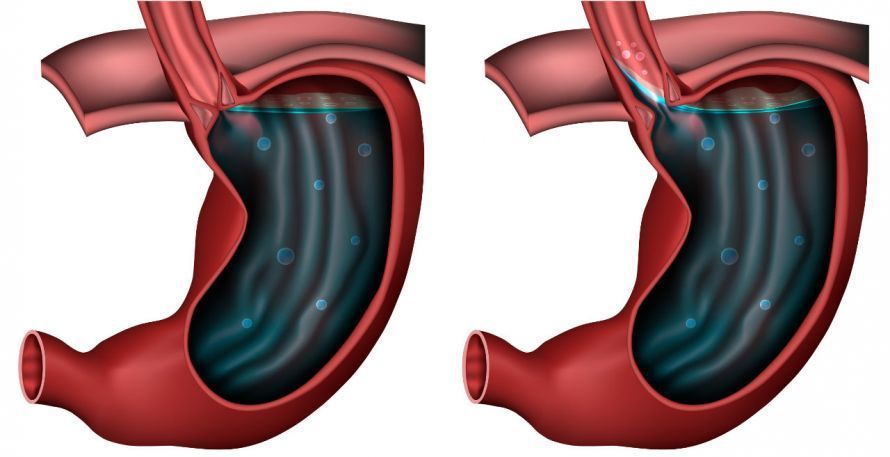
Prof. Dr. med. Güldütuna: We also use confocal laser endomicroscopy to examine the esophagus in patients who complain of reflux—commonly known as heartburn. If reflux goes untreated, the esophageal mucosa changes over time. Stomach acid and various enzymes damage it, leading to Barrett’s esophagus, which in turn is a risk factor for esophageal cancer. Cancer develops from the cellular changes—known as dysplasia—in the esophageal mucosa. Using confocal laser endomicroscopy, we can detect the dysplasias of Barrett’s esophagus—the direct precursors to cancer—at a very early stage; these can then be removed endoscopically without surgery.
Leading Medicine Guide: What else do Barrett’s patients need to know?
Prof. Dr. med. Güldütuna: Endomicroscopy for detecting precancerous lesions in Barrett’s esophagus is currently the most common application of endomicroscopy, particularly in the U.S. And we’ve found that in Barrett’s patients, we also need to examine the small intestine to see if it exhibits increased permeability. Because that, in turn—as you might have guessed—indicates a food intolerance. But if the intestine is regularly exposed to substances that trigger an immune response, it’s easy to imagine that the intestinal mucosa suffers. This leads to leaky gut syndrome—that’s the term for the damaged, permeable intestinal mucosa that allows substances into the bloodstream that don’t belong there and can then cause illness in a variety of ways.
Leading Medicine Guide: What other problems can arise from food intolerances?
Prof. Dr. med. Güldütuna: One condition affecting the esophagus that can be attributed to food allergens is what’s known as eosinophilic esophagitis. In this condition, which is actually not that rare, certain foods trigger severe inflammation of the esophagus, which can lead to serious complications such as narrowing of the esophagus and difficulty swallowing. This immune response, misdirected by food allergens, can trigger a wide range of diseases, as we already know from celiac disease, a specific type of food allergy to gluten. In this condition, not only the intestines but also the skin, liver, and other organs can be affected; failure to adhere to the diet can even result in a more than 100-fold increased risk of gastrointestinal tumors. Just how ill food intolerances can make people—this is what scientists have been studying for several years now, and they are continually gaining new insights.
Leading Medicine Guide: At your gastroenterology clinic in Frankfurt, you perform confocal laser endomicroscopy. Is this a very complex procedure?
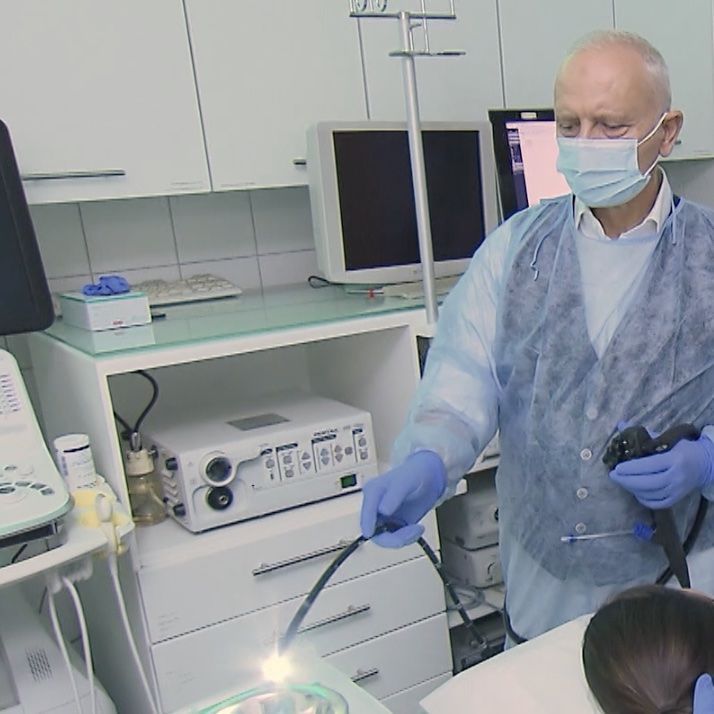
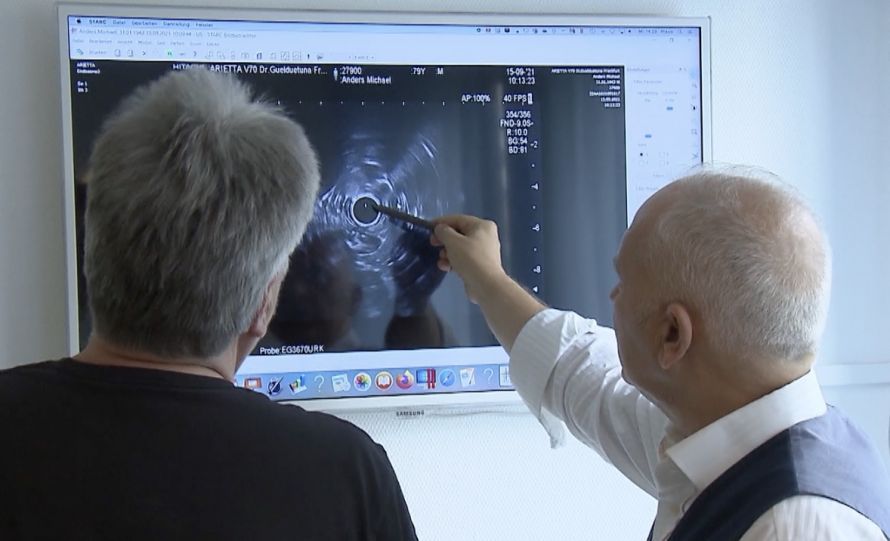
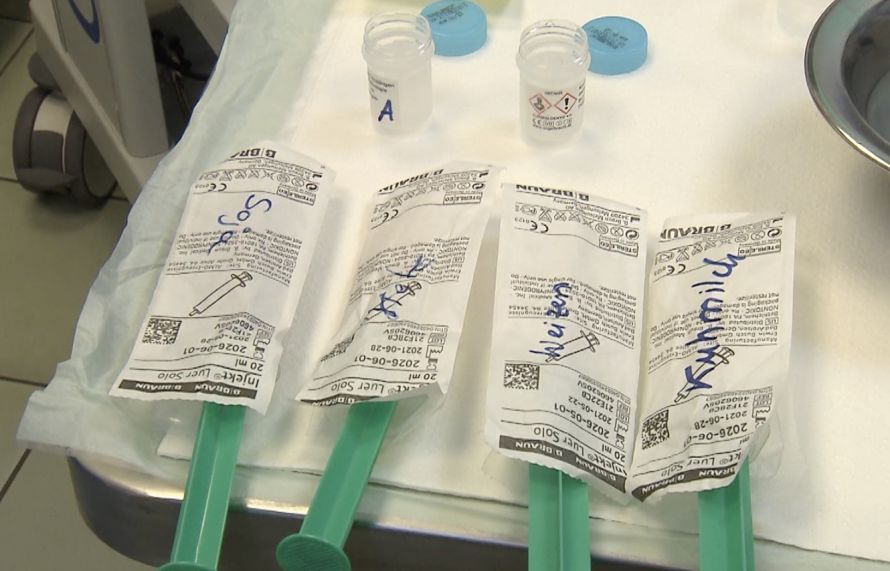
Prof. Dr. med. Güldütuna: There aren’t many centers in Germany yet that offer this examination. It’s a complicated procedure that requires a great deal of experience. And it’s not enough just to perform the examination; you also have to be able to provide the patient with appropriate counseling and support afterward. I work with a high-resolution endoscope and a microscopy probe that provides up to 1,000x magnification. This allows us to see the villi or epithelial cells magnified to an enormous size. They stand side by side like soldiers, so to speak; they look like the fingers of a glove. To be able to see anything in the laser light, we first inject the patient with the contrast agent fluorescein. Then we apply small amounts of solution containing various foods to the intestinal mucosa, one after another. If, for example, the patient is intolerant to wheat, we see truly astonishing images: the intestinal villi spread apart, the mucosa becomes permeable, and in the case of a severe reaction, the epithelial cells even break off. Although they can regenerate, if inflammatory processes also occur, they no longer recover—they break down. If a strong reaction occurs immediately upon exposure to the first food solution, we can no longer continue testing.
Leading Medicine Guide: What is your current focus in research?
Prof. Dr. med. Güldütuna: A great many patients with food intolerances and allergies come to my gastroenterology clinic in Frankfurt am Main. Using our test results, we are in the process of compiling our own reliable statistics on the subject. I’m familiar with virtually all studies in this field, both national and international. Because I’m confronted with so many inquiries on this topic every day—especially from young people—I’d like to make greater use of the internet for public education in the future. I see that there is an enormous need here, and with my expertise, I can certainly contribute a great deal.
Prof. Güldütuna, thank you very much for the interesting conversation and the insight into the progress being made on a topic that affects many of us. Anyone who would like to contact our expert directly can do so via his profile page on the Leading Medicine Guide.
Share this article
About the medical author
Claudia Dechamps
Editor
Claudia Dechamps – medical author: expert articles, professional insights and medical knowledge in the Leading Medicine Guide.
More about the medical author →Gastroenterology Clinic
ProfileExpert Interviews
Read next
- Expert interview
Cardiogeriatrics: Significance and benefits in the context of hospital reform
Sep 21, 2026
Cardiogeriatrics: Significance and benefits in the context of hospital reform
Read more - Expert interview
Expert Interview with Professor Dr. Amadeus Hornemann, MPH
Sep 18, 2026
Prof. Amadeus Hornemann on Precision Medicine in Gynecology: Modern Surgery, New Techniques, Better Quality of Life
Read more - Expert interview
Expert Interview with Professor Dr. Konstantinos Anagnostakos
Sep 15, 2026
Prof. Anagnostakos on Painful Knee Replacements
Read more