Expert Interviews
“Time and thoroughness are key!” Prof. Michael Akbar on his work as a spinal surgeon
Claudia Dechamps ·
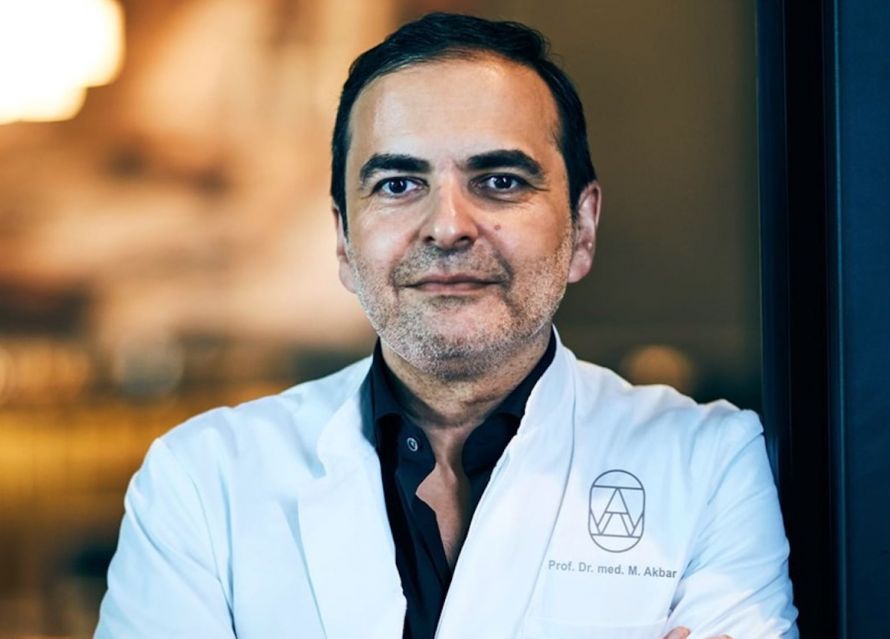
Professor Dr. med. Michael Akbar is a highly experienced specialist in spinal surgery and scoliosis surgery. He treats his patients with great empathy and his exceptionally extensive expertise at two state-of-the-art institutions—the Meoclinic in Berlin and the Experts First Private Clinic in Heidelberg. Above all, he makes it a priority to set aside sufficient time to speak with each patient individually. Prof. Akbar’s expertise, built up over many years, and his innate intuition complement each other in a particularly impressive way. He shared fascinating insights into this with the Leading Medicine Guide.
Leading Medicine Guide: With your two practice locations—the Meoclinic in Berlin and the Experts First Private Clinic in Heidelberg—you have fulfilled your dream of becoming a doctor. Would you say that’s an accurate description?
Prof. Dr. med. Michael Akbar: Yes, you could certainly describe it that way. Over the course of more than fifteen years at the Department of Orthopedics and Trauma Surgery at Heidelberg University, I have built up comprehensive expertise in spinal surgery. I treat conditions of the cervical, thoracic, and lumbar spine using both conservative and surgical methods. Spinal deformities, post-traumatic deformities, degenerative diseases—I’ve seen and treated all of these over the course of my clinical career. I have collaborated extensively with colleagues from other specialties, such as neurosurgeons, and have learned to incorporate their perspectives into my work. But I want to understand my patients; I want to have time for them. At Meoclinic in Berlin and Experts First in Heidelberg, I can finally work the way I want to and be there for my patients in the way that matters most to me.
Leading Medicine Guide: You place great importance on always being perfectly prepared for your patient appointments and then quickly getting to the heart of the problem. As an orthopedic surgeon, how do you arrive at a diagnosis quickly?
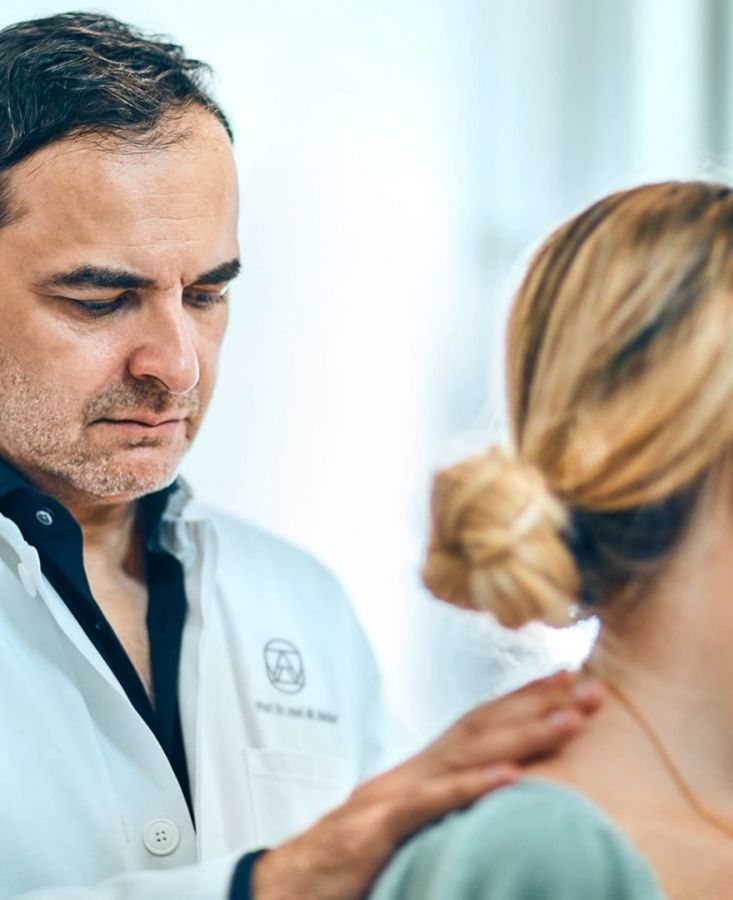
Prof. Dr. med. Michael Akbar: Well—"quickly" might be a relative term here; I set aside thirty to sixty minutes for each patient. I ask detailed questions about their medical history, and I inquire about specific activities such as climbing stairs, cycling, bending over, and stooping, and the pain they experience during these activities. For older patients, a bone density test is always part of the evaluation. Germany isn’t very well-equipped when it comes to osteoporosis care. I slowly work my way through the symptoms. And I work very intuitively.
Leading Medicine Guide: Intuitively? How should we picture that?
Prof. Dr. med. Michael Akbar: Perhaps I’ll describe two cases I’ve had recently. The first was a young girl who entered the office with her father and two walking aids. She complained of nonspecific back pain and symptoms of paralysis in her legs. The imaging results she brought with her showed nothing that could have caused these symptoms. The doctors who had treated her so far were at a loss and were considering surgery. During a detailed conversation with her, it turned out that she had already changed schools five times due to bullying. Her father was completely shocked when he understood the connection. Of course, this case required psychological therapy, not orthopedic treatment.
The second case was a young policewoman who came to my office with back pain. Young, athletic, in great shape. And from the very beginning, I had the feeling that something wasn’t quite right about the overall picture. We talked about her job and how, given her physical build, the heavy equipment she had to carry shouldn’t actually be causing back pain. There was nothing to be found in her spine. And then she said that she was pregnant, but her partner didn’t want the child—yet she didn’t want to lose him. The emotional stress was the cause of her back pain.
Leading Medicine Guide: So emotional stress can also be a cause of back pain?
Prof. Dr. med. Michael Akbar: Many psychological problems manifest themselves in the back. But you have to talk to the patients. And not settle for just some minor physical finding. For example, we now know that past experiences of abuse are linked to various pain patterns later in life. It takes time and experience to get to the root of the problem. And my intuition helps me.
Leading Medicine Guide: Does intuition also help during surgery?
Prof. Dr. med. Michael Akbar: Yes, surgery is also an intuitive process for me. For me, it’s not just about technical skill, but also about empathizing with the patient’s condition. And, of course, a precise surgical indication is absolutely crucial. Which brings us back to the in-depth consultation with the patient. The medical problem must be analyzed in the greatest detail; the success of the subsequent surgery depends entirely on this. In my practice, I also see many cases where patients come to me after a botched initial procedure. That’s not so easy—people first have to rebuild their trust in a doctor. But—and this is my principle—I don’t try to talk anyone into anything. I go through the images and test results in detail with the patients; I explain and I make recommendations. The final decision rests with the patient.

Leading Medicine Guide: Is the patient’s decision to have surgery always the right choice?
Prof. Dr. med. Michael Akbar: Here, too, one experience had a profound impact on me. I treated an elderly woman over an extended period; conservative therapy had been exhausted, and she was a candidate for spinal surgery. She was facing a major procedure; after weighing the risks, a date was set for the surgery. The evening before the procedure, I went to her room one last time and spoke with her, explaining that the surgery could also pose a risk to her and that we could still cancel it. No, she wanted to go through with it. The patient told me that she could no longer bear the pain and the increasing loss of her ability to stand and walk. The surgery went well, but she subsequently died of cardiovascular failure. I cried and saw a psychologist to help me process the situation. This psychologist then asked me if I had persuaded the patient to have the surgery. I was able to say no. And I stand by that: I advise and recommend, but I do not persuade—and I never will.
Leading Medicine Guide: Your practices see self-paying patients—a trend that’s on the rise—and privately insured patients. What about those with public health insurance?
Prof. Dr. med. Michael Akbar: Especially when treating children—an area in which I have specialized expertise—I make sure the process is socially equitable. In such cases, I perform the surgical procedure at a public hospital, and only the outpatient evaluation and follow-up care are billed as fee-for-service.
Leading Medicine Guide: What requires special attention when treating young patients?
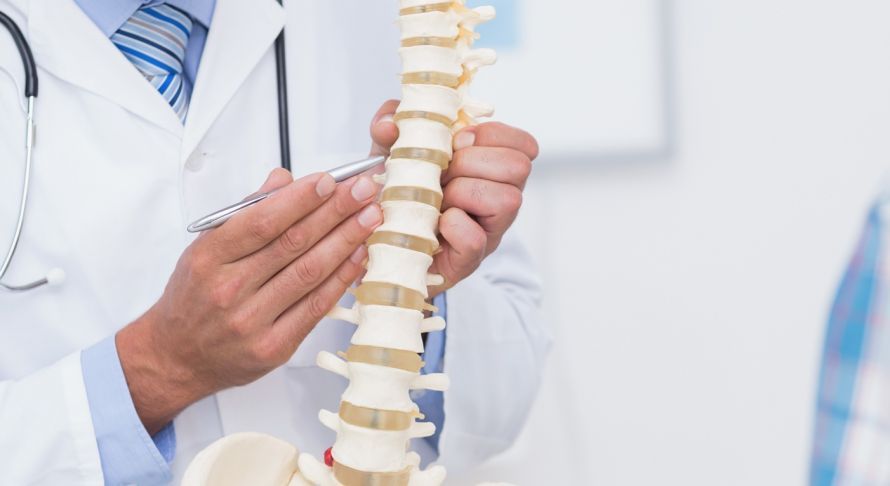
Prof. Dr. med. Michael Akbar: Many children and adolescents with scoliosis come to see me. The question often arises: brace or surgery? Using a brace on adolescents is challenging; it requires a great deal of tact, as it has a tremendous impact on the young person’s mental well-being. Many also come to me for a second opinion. In those cases, I ask if they have X-rays of their hands with them. This is because age is a decisive factor in treatment. An X-ray of the hand allows me to determine the stage of growth. If growth is nearly complete, a brace no longer makes sense.
Leading Medicine Guide: So a thorough diagnosis is very important?
Prof. Dr. med. Michael Akbar: We always come back to the same factors: time and thoroughness. And, of course, we also have the most modern equipment for our examinations in our practices. In addition, here in Berlin, in collaboration with the Charité, we can use a device that takes full-spine X-rays—which is particularly important for scoliosis diagnosis with minimal radiation exposure—and delivers truly excellent image quality.
We thank Prof. Akbar for the very candid and interesting conversation, which allowed us to share in his passion for a field of medicine that he practices not only with a high level of surgical expertise but also, often, with intuition. You can contact this exceptional specialist via his profile page on the Leading Medicine Guide.
Share this article
About the medical author
Claudia Dechamps
Editor
Claudia Dechamps – medical author: expert articles, professional insights and medical knowledge in the Leading Medicine Guide.
More about the medical author →MEOCLINIC GmbH
ProfileExpert Interviews
Read next
- Expert interview
Cardiogeriatrics: Significance and benefits in the context of hospital reform
Sep 21, 2026
Cardiogeriatrics: Significance and benefits in the context of hospital reform
Read more - Expert interview
Expert Interview with Professor Dr. Amadeus Hornemann, MPH
Sep 18, 2026
Prof. Amadeus Hornemann on Precision Medicine in Gynecology: Modern Surgery, New Techniques, Better Quality of Life
Read more - Expert interview
Expert Interview with Professor Dr. Konstantinos Anagnostakos
Sep 15, 2026
Prof. Anagnostakos on Painful Knee Replacements
Read more