News
Why Sudden, Severe Flank Pain Can Be a Warning Sign

Melanie Al Tikriti, BSc ·
They often occur completely out of the blue and are among the most severe pains a person can experience: kidney stones. Those affected frequently report sudden, cramp-like pain in the flank that radiates to the lower abdomen or groin. Nausea, vomiting, or blood in the urine are also common symptoms. While small kidney stones are often passed unnoticed, larger stones can obstruct urine flow and cause serious complications.
However, thanks to modern diagnostic methods and innovative treatment options, open surgery for kidney stones is now rarely necessary. Depending on the size, location, and composition of the stone, various minimally invasive procedures are available—ranging from shock wave therapy and endoscopic procedures to high-precision laser treatments.
How Do Kidney Stones Form?
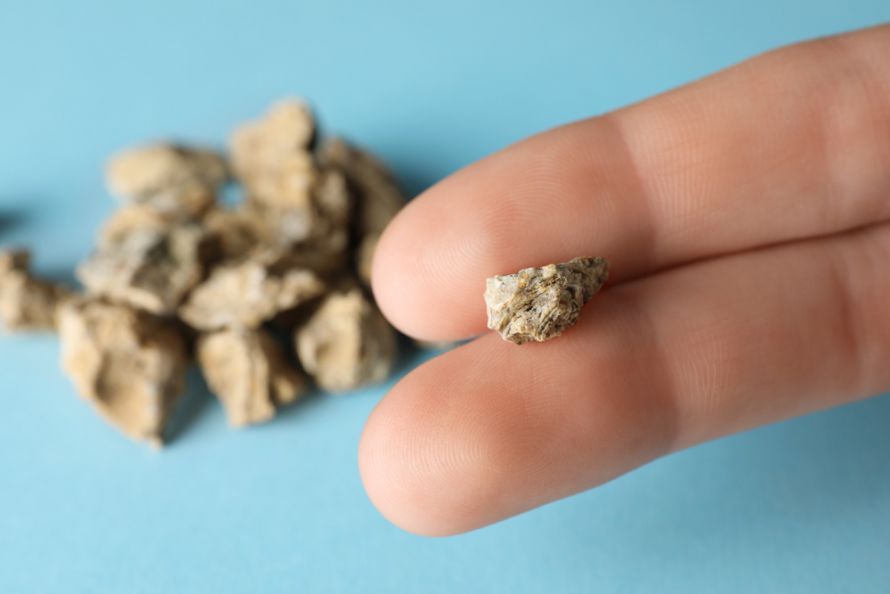
Kidney stones form when certain minerals and salts in the urine clump together to form small crystals. As these crystals continue to grow, they form solid stones that can vary in size. Some remain in the kidney permanently, while others travel into the ureter, where they cause severe discomfort.
There are different types of kidney stones. Calcium oxalate stones are the most common. Other types include uric acid, struvite, and cystine stones, among others. The specific type of stone determines both the treatment and the preventive measures.
Who is at increased risk?
Various factors can contribute to the formation of kidney stones. They occur particularly frequently when urine is highly concentrated or when certain metabolic changes are present.
The most important risk factors include:
- insufficient fluid intake
- heavy sweating
- a high-sodium diet
- high consumption of animal proteins
- Being overweight
- Metabolic disorders
- Family history
- Recurrent urinary tract infections
Anyone who has ever had a kidney stone is at increased risk of developing more stones.
What symptoms do kidney stones cause?
Not every kidney stone causes symptoms. Small stones are often passed without being noticed. However, if a stone becomes lodged in the ureter, it can lead to what is known as renal colic.
Typical symptoms include:
- sudden, severe pain in the flank
- pain that comes in waves
- Pain radiating to the groin or lower abdomen
- Nausea and vomiting
- Blood in the urine
- Frequent urge to urinate
- Pain when urinating
If you also have a fever or chills, you may have a urinary tract infection. If this is accompanied by urinary retention, it is a medical emergency that requires immediate treatment.
How are kidney stones diagnosed?
After discussing the symptoms, a physical examination is performed first. Blood and urine tests are also conducted to assess signs of inflammation and kidney function.
Today, ultrasound and computed tomography (CT) are the primary imaging methods used. While ultrasound can reliably detect many larger stones and urinary obstruction, low-dose CT is considered the most accurate method for determining the size, location, and number of stones.
When Is It Okay to Wait and See?
Not every kidney stone needs to be removed immediately. Small stones with a diameter of up to about five millimeters often pass on their own. During this time, the focus is on pain management, adequate fluid intake, and, if necessary, medication to relax the ureter.
What modern treatment options are available?
If a stone cannot be passed on its own or if it causes severe symptoms, various minimally invasive procedures are available today.
Extracorporeal shock wave lithotripsy (ESWL):
is particularly suitable for smaller kidney or ureteral stones. In this procedure, shock waves are precisely directed at the stone from outside the body, causing it to break into small fragments that can then be passed.
Ureterorenoscopy (URS):
For larger stones or those in unfavorable locations, ureterorenoscopy (URS) is often performed. In this procedure, the urologist inserts a thin endoscope through the urethra and up the ureter to the stone. Using modern holmium or thulium fiber lasers, the stone is precisely碎裂, and the fragments are then removed.
Nephrolithotomy (PCNL):
Very large kidney stones are often treated with percutaneous nephrolithotomy (PCNL). In this procedure, a small incision in the back provides direct access to the kidney to completely remove larger stones. This procedure is used in particular for complex stone formations.
Open surgery is now only required in exceptional cases.
How can new kidney stones be prevented?
After successful treatment, the focus shifts to preventing further stones. The most important measure is adequate fluid intake, ensuring that at least two to two and a half liters of urine are excreted daily.
In addition, the following measures can help:
- drink plenty of fluids
- Reduce salt intake
- Eat a balanced diet
- aiming for a healthy body weight
- getting regular exercise
- Treat metabolic disorders
- Follow individual dietary recommendations based on the type of kidney stone
In cases of recurrent kidney stones, a specialized metabolic analysis can help determine the cause more precisely and treat it effectively.
Conclusion: Early treatment can prevent complications
Kidney stones are among the most common urinary tract conditions and can suddenly cause severe pain. Thanks to modern diagnostic methods and minimally invasive treatment options such as shock wave therapy, endoscopic stone removal, or laser therapy, most stones can now be effectively treated—often without major surgery. Early evaluation of severe flank pain is crucial to prevent complications such as urinary retention or infections. Consistent prevention is equally important, as many patients develop kidney stones again over the course of their lives.
Share this article
About the medical author
Melanie Al Tikriti, BSc
Editor
Melanie Al-Tikriti, BSc – author: Explore expert medical articles in the Leading Medicine Guide.
More about the medical author →Verified expertise
Recommended specialists
1 specialists
1 results


News
Read next
- News
Retinal Detachment: Flashes of Light Can Jeopardize Vision
Oct 5, 2026
Retinal Detachment: Quick Action Can Save Your Eyesight
Read more - News
The waiting period for a semen analysis prior to planned fertility treatment
Oct 5, 2026
Semen analysis: The effects of short waiting periods
Read more - News
Diet for osteoporosis and understanding supplements correctly
Oct 5, 2026
Diet for osteoporosis: categorising supplements
Read more