News
Retinal Detachment: Quick Action Can Save Your Eyesight

Melanie Al Tikriti, BSc ·
Sudden flashes of light, black spots, or the sensation that a dark curtain is falling over your field of vision—these symptoms should never be underestimated. They may indicate a retinal detachment, a serious eye condition that, if left untreated, can lead to permanent vision loss.
Although retinal detachment is rare, it is definitely an ophthalmic emergency. The sooner it is detected and treated, the greater the chances of preserving vision.
The retina is essential for vision
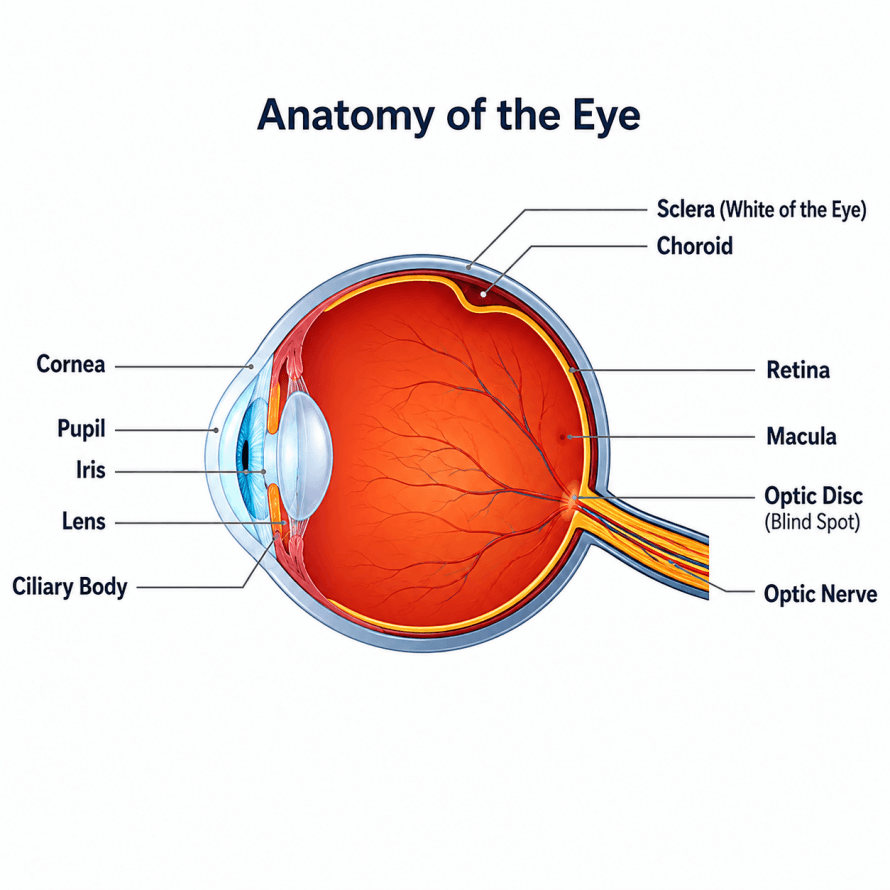
The retina is located on the inner surface of the eye and contains millions of light-sensitive sensory cells. It captures incoming light and converts it into electrical signals, which are transmitted to the brain via the optic nerve. It is only there that the images we perceive are formed.
However, if the retina detaches from the underlying layer that supplies it, the sensory cells are no longer adequately supplied with oxygen and nutrients and can thus suffer permanent damage. In the worst-case scenario, this can result in the loss of vision.
Small tears can be the beginning
In most cases, a retinal detachment begins with a small tear in the retina. Fluid seeps through this tear and slowly lifts the retina away from its underlying layer. Such a tear is often caused by age-related changes in the vitreous humor. As we age, its consistency changes, and it can pull on the retina. This results in small tears, which can develop into a retinal detachment.
Certain people are more likely to be affected
Not everyone is at the same risk. Various factors can increase the likelihood of retinal detachment.
These include:
- severe nearsightedness
- advanced age
- previous eye surgeries
- Eye injuries
- family history
- Diabetes mellitus with retinal damage
- a history of retinal detachment in the other eye
Warning signs should never be ignored
Since retinal detachment usually causes no pain, early symptoms are often underestimated.
Typical warning signs include:
- sudden flashes of light
- new black spots or “floaters”
- a shower of soot in the field of vision
- blurred vision
- shadows or a dark curtain in the field of vision
- Restricted field of vision
- Sudden deterioration of vision
Why Every Hour Can Be Critical
Whether vision can be preserved depends crucially on how quickly the retina can be reattached to its original position. The situation becomes particularly critical when the area responsible for sharpest vision—the macula—is affected. If it has already detached, the prospects for a complete restoration of vision deteriorate significantly.
Therefore, the earlier treatment is administered, the better the chances of success.
How the diagnosis is made
After a detailed consultation, the ophthalmologist examines the eye using special instruments. Eye drops are usually administered beforehand to dilate the pupil and allow for a complete assessment of the retina. In addition, an ultrasound examination may be necessary if the view of the retina is obstructed, for example, by bleeding. This helps determine whether a detachment has already occurred and how large it is.
What treatment options are available?
Treatment depends on how far the condition has progressed. Small retinal tears can often be sealed with laser treatment or cryotherapy. This prevents the retina from detaching further. If a complete retinal detachment has already occurred, surgery is usually necessary. Depending on the findings, different procedures are used, such as indenting the eye wall or removing the vitreous humor followed by stabilization of the retina.
Follow-up exams are important even after treatment
After treatment, regular follow-up visits with an ophthalmologist are, of course, necessary. Many patients can largely preserve their vision if the condition is treated in a timely manner. However, it may take some time for the eye to fully recover.
Conclusion: Sudden vision problems are always a warning sign.
A retinal detachment often develops without pain but can permanently jeopardize vision within a short period of time. Flashes of light, shadows in the field of vision, or sudden black spots should therefore never be ignored. Prompt treatment by an ophthalmologist significantly improves the chances of permanently preserving vision.
Share this article
About the medical author
Melanie Al Tikriti, BSc
Editor
Melanie Al-Tikriti, BSc – author: Explore expert medical articles in the Leading Medicine Guide.
More about the medical author →News
Read next
- News
Thrush: How to Correctly Identify White Coatings in the Mouth
Oct 2, 2026
Oral thrush: A fungal infection is often the cause of these changes
Read more - News
When Your Knee Locks Up—Could It Be a Meniscus Tear?
Sep 30, 2026
Why a Meniscus Tear Isn't Always Detected Right Away
Read more - News
Suddenly, your knee makes a popping sound—could it be a torn cruciate ligament?
Sep 28, 2026
Why a torn cruciate ligament isn't always detected right away
Read more