In medical terminology, hemodialysis is also known as apheresis. It involves the purification of the blood. The word “apheresis” comes from Greek and means “to take away” or “to remove.”
Below you will find more information about the blood purification process as well as a selection of apheresis specialists.
What is blood purification (apheresis)?
In this medical procedure, the patient lies on a table, similar to when donating blood. The doctor draws blood from a vein in the arm. A machine then cleanses the blood. The cleansed blood flows back into the patient’s body through the other arm.
Blood purification removes harmful and excess components from the blood, such as:
- proteins
- Cholesterol
- Environmental toxins, or
- medications
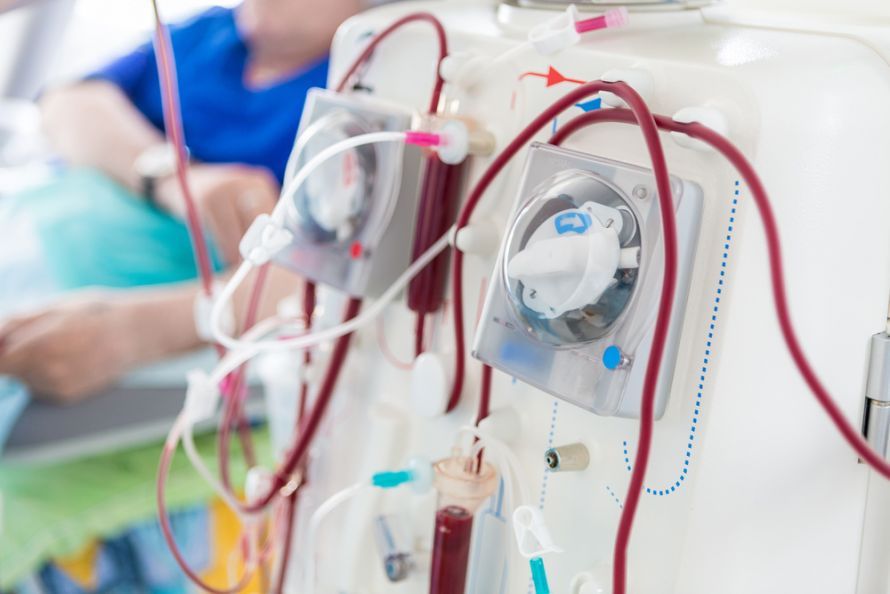 Apheresis removes harmful substances from the blood @ Alexander Ivasenko /AdobeStock
Types of Hemodialysis
There are various types of blood purification:
- Lipid apheresis
- Stem cell apheresis
- Thrombocytapheresis or
- erythrocyte apheresis (collection of red blood cells)
Experts also distinguish between preparative apheresis and therapeutic apheresis:
In preparative apheresis, blood components are collected for later use as a therapeutic agent. Stem cell apheresis, for example, helps cancer patients.
Therapeutic apheresis is used for the targeted treatment of an existing disease, such as dialysis as a renal replacement therapy.
Dialysis is suitable for all patients with severely or completely impaired kidney function. It involves artificial filtration that removes harmful substances from the blood. Dialysis is thus a special form of apheresis.
Our excretory organs, especially the kidneys and the liver, make a valuable contribution to our health every day. They ensure that harmful substances such as alcohol or medications are eliminated from the body.
If these organs become overburdened, it can have fatal consequences. Therapeutic apheresis helps the body regain its balance.
When is apheresis used?
Apheresis is used to treat many conditions. In cases of severe lipid metabolism disorders, lipid apheresis is the treatment of choice.
If neither medication nor diet helps with elevated blood lipid levels, blood purification is usually the only effective treatment. However, patients must undergo blood purification once a week for the rest of their lives.
Immunoapheresis, on the other hand, is helpful in cases of planned transplants. If the blood type or other characteristics of the donor and recipient do not match, immunoapheresis can still make a transplant possible.
The rationale: During blood purification, antibodies that would normally attack the foreign blood type are washed out of the organ recipient’s blood.
Another area of application for blood purification is neurological disorders. The best-known of these is multiple sclerosis. In patients for whom cortisone is not sufficient, apheresis removes antibodies from the blood.
Apheresis is also used to treat the following conditions:
Various environmental exposures and poisonings
- Autoimmune diseases
- Rheumatism
- Allergies
- Chronic skin conditions such as atopic dermatitis
 is also suitable for atopic dermatitis @ lial88 /AdobeStock
How does hemodialysis work?
There are two types of blood purification procedures:
- Small-volume blood purification: Filtration of two to three liters of blood
- Major blood purification: Purification of 50 to as many as 70 liters of blood
Every blood purification session is an exhausting procedure for the patient. Even the short blood purification session lasts about four hours. During this time, the patient remains fully conscious and can read or watch a DVD. Blood purification takes place extracorporeally—that is, outside the body—using an apheresis machine.
A thorough medical history is taken before blood purification. The doctor will explain the risks and side effects to you in detail.
Before the procedure, the doctor inserts cannulas into two veins in the donor’s arm. Blood flows through one of them into a sterile tubing system. There, an anticoagulant is added to the blood. From there, the mixture is directed into the cell separator, where the various blood components are separated from one another.
Filtration can also be used to isolate specific substances. After the procedure, the donor’s blood is returned through the other arm vein.
Throughout the entire procedure, doctors constantly monitor your vital signs. To ensure the procedure proceeds without complications, a team of specialists is at your side around the clock.
What does follow-up care involve, and what should you be aware of?
If you have an apheresis scheduled, stop taking any medications that promote blood clotting about a week beforehand.
Blood purification is very taxing on the human body. For this reason, you should allow for sufficient rest time after each treatment.
The duration depends on the patient and their health condition. On the day of the blood purification treatment, you should avoid strenuous activities. It is recommended that you drink plenty of fluids throughout the day.
After the procedure, you will remain under medical supervision for at least half an hour. If complications arise, they can assist you promptly. The doctor will monitor your blood pressure and heart rate. A hospital stay is not necessary after apheresis.
If you are scheduled for blood purification, you will receive a personalized treatment plan tailored to your needs. This plan includes not only pre-procedure but also post-procedure measures.
Possible Complications and Risks of Apheresis
Apheresis is a recognized therapeutic procedure and a form of blood plasma purification. In general, it is a well-tolerated procedure.
However, vasovagal reactions are possible during the procedure.
These manifest as:
- Dizziness
- Paleness, or
- Nausea
Patients often experience a drop in blood pressure and a slow heart rate.
The injection site often becomes infected immediately after the procedure and develops a bruise.
A noticeable calcium deficiency, caused by the breakdown of citrate, is also common. When this occurs, patients complain of chills and tingling in the extremities. These symptoms can be quickly alleviated by administering calcium.

Sources
https://flexikon.doccheck.com/de/Apherese
https://www.netdoktor.de/therapien/apherese/