The kidney is a vital organ that plays a central role in the human body. Each kidney filters the blood and ensures that waste products are excreted as urine. Anatomically, the kidney consists of the renal cortex, renal medulla, and renal pelvis. The actual filtration takes place in the glomeruli and tubules.
The kidney’s functions also include regulating blood pressure and fluid balance. Hormones such as renin and erythropoietin are also produced in the kidney. The two kidneys are located on either side of the spine and work continuously to cleanse the blood.
Anatomy of the Kidney
The kidney is one of the internal organs, and there are two of them. It is reddish-brown in color and bean-shaped.
A single kidney has a transverse diameter of 5 to 6 centimeters, while its longitudinal diameter is 10 to 12 centimeters. The organ is approximately 4 centimeters thick and weighs between 120 and 200 grams. The right kidney is usually slightly smaller than the left.

The renal hilum is located at the inner edge of the kidney; the renal vein (vena renalis) and the renal artery (arteria renalis) pass through it. Blood containing waste products enters the kidney through the artery. The purified blood is then carried away via the vein. The renal hilum also contains several openings for nerves and lymphatic vessels.
The kidney consists of three zones:
- Renal pelvis: This is where the formed urine collects and flows downward through the ureter toward the bladder
- Renal medulla (Medulla renalis)
- Renal cortex (Cortex renalis)
The medulla and cortex make up the actual body of the organ. They contain approximately 1 to 1.4 million small filtering units, known as nephrons, which filter waste products from the blood and produce urine. Other cells produce the hormones erythropoietin and renin. While erythropoietin produces red blood cells, renin regulates blood pressure.
Where are the kidneys located in the body?
The kidneys are located behind the peritoneum in the retroperitoneal space, which is outside the abdominal cavity. The peritoneum does not enclose the organs.
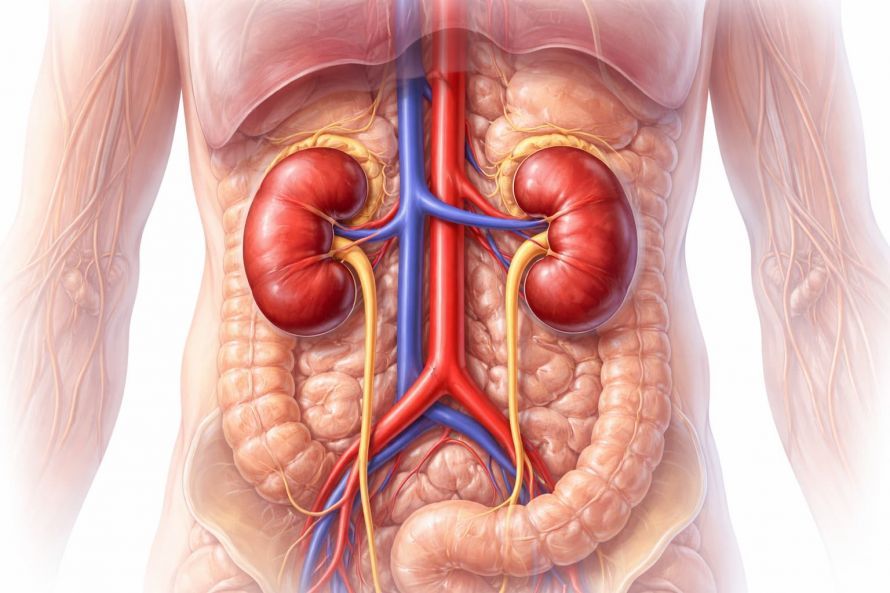
Since the liver is also located in the upper right abdomen, the right kidney is usually about two centimeters lower than the left kidney. In addition to the liver, the duodenum and the right colic flexure are located near the right kidney. The left kidney is adjacent to the stomach, spleen, parts of the pancreas, and the descending colon.
What are the functions of the kidneys?
The kidneys function as filtering organs. The entire volume of a person’s blood flows through the kidneys about 300 times a day. From this, the kidneys first filter out primary urine, which is unconcentrated urine. This primary urine contains waste products and toxic substances. These harmful substances must be excreted from the body. The kidneys filter them out of the primary urine, producing final urine—about 1.5 liters per person per day.
At the same time, the kidneys return substances that the body still needs to the bloodstream. These are primarily sugar and water.
Urine is collected in the renal pelvis. From there, it is transported out of the body via the ureters and the bladder.
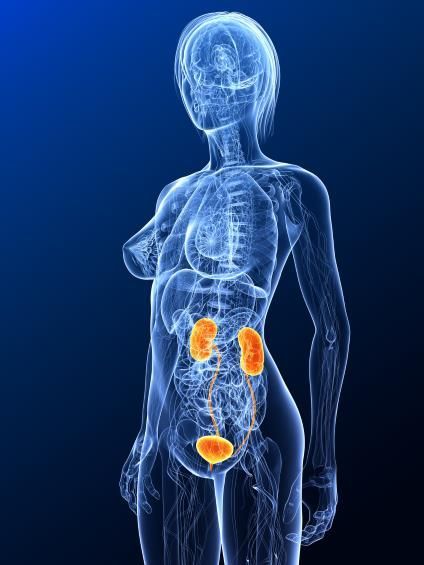
The kidneys also play a key role in the body’s water balance and in regulating blood pressure. Furthermore, by controlling urine concentration, the kidneys help maintain electrolyte balance. In addition, the kidneys produce hormones that are essential for blood formation and the production of vitamin D3.
Common Kidney Diseases
Various diseases can affect the kidneys. These include:
- pyelonephritis, which is usually caused by bacterial infections; kidney stones;
- renal artery calcification
- Kidney malformations such as polycystic kidneys, double kidneys, or horseshoe kidneys
- renal insufficiency, in which one or both kidneys become underactive
- Kidney tumors, which can be either benign or malignant
Here you can find specialists in kidney cancer.
Some diseases prevent the kidneys from performing their vital functions. Due to inadequate waste removal, toxic substances accumulate in the body. To prevent life-threatening poisoning of the body, an alternative form of blood purification is required, which is usually achieved through dialysis.
Risk Factors
Certain risk factors increase the likelihood of developing kidney diseases (nephropathies). Chronic kidney failure, for example, is often caused by other chronic conditions. The primary cause is diabetes mellitus. Because blood sugar levels remain too high over time, the kidneys are so severely affected that they are no longer able to perform their filtering function. In people with diabetes, optimal control of blood sugar levels is therefore necessary to prevent kidney damage.
Symptoms
Symptoms of kidney disease usually develop gradually. These include:
- a reddish discoloration of the urine
- an unpleasant odor in the urine
- kidney pain
- dull back pain
- colicky pain in the back that radiates to the bladder
- Swelling in the ankles or eyelids
- nocturnal urge to urinate
- Foamy urine
- low urine output
If the kidney disease progresses further, this leads to general symptoms such as:
- a feeling of weakness
- Nausea and vomiting
- Loss of appetite
- Itching
- Fluid retention in the legs
- Paleness
- A sour body odor
Diagnosis of Kidney Disease
The most important diagnostic method is the microscopic examination of a urine sample, which is tested for the presence of certain substances such as sugar, protein, or uric acid. Additional diagnostic methods include:
- nephroscopy
- kidney biopsy
- ureterorenoscopy
Conclusion on the Kidneys
Overall, the structure and function of the kidneys demonstrate that the two kidneys in the human body perform vital functions and are well protected beneath the diaphragm. Inside the kidney are the nephron and the tubule; primary urine is formed in the glomerulus and is further processed via the renal tubules and collecting ducts to become secondary urine. The production of urine serves to excrete urinary substances such as uric acid from the body, while simultaneously regulating the composition of the urine.
The kidneys also produce hormones such as calcitriol and influence blood formation as well as the production of red blood cells. Through complex regulatory processes, healthy kidneys control water and electrolyte balance as well as acid-base balance and contribute to blood pressure regulation. The blood vessels leading to the kidneys via the aorta continuously supply them with blood, while creatinine is considered an important marker of kidney function.
Conditions such as kidney stones, diabetes, or diabetes mellitus can impair kidney function and lead to renal insufficiency or even kidney failure. Particularly in chronic kidney disease, the glomerular filtration rate progressively declines, which in the long term may necessitate dialysis or even a kidney transplant.
The right kidney and both kidneys work closely with the urinary tract so that urine is ultimately directed into the bladder. Nephrology deals with these processes and the various kidney diseases, which can occur in both acute and chronic forms. Overall, it is clear that, due to its complex structure and vital functions, the kidney plays a central role in the health of the entire body.
FAQ
What is the function of the kidneys?
The function of the kidneys is to filter the blood and excrete waste products as urine. In addition, the kidneys regulate blood pressure as well as water and electrolyte balance.
What is the anatomy of the kidney?
The anatomy of the kidney includes the renal cortex, renal medulla, and renal pelvis. The glomeruli and tubules contain the functional units that filter the blood.
What happens in cases of renal insufficiency?
In renal insufficiency, kidney function is impaired, so that waste products are no longer adequately excreted. This can occur acutely or chronically and often requires medical treatment.
What hormones does the kidney produce?
The kidneys produce hormones such as renin, which regulates blood pressure, and erythropoietin, which stimulates the production of red blood cells. Vitamin D is also activated in the kidneys.
Where are the kidneys located in the body?
The two kidneys are located on either side of the spine, below the diaphragm. They are well supplied with blood and closely connected to the urinary tract.