Millions of people suffer from leg ulcers or wounds that heal poorly. When ointments and bandages no longer help, modern medicine offers a new ray of hope: cold plasma therapy. This physics-based procedure uses a special state of matter to kill even multidrug-resistant bacteria and stimulate skin regeneration. For patients with chronic wounds in particular, this often means a significant improvement in quality of life.
What exactly is cold plasma?
From a physical standpoint, plasma is an ionized gas. In nature, we know plasma from the sun or lightning—where it is extremely hot. However, plasma research has succeeded in developing technological solutions that generate cold plasma (below 40 degrees Celsius). This cold plasma is a partially ionized gas that contains charged particles, UV radiation, and reactive species. When this mixture comes into contact with a wound, it exerts its healing effect without damaging healthy tissue.
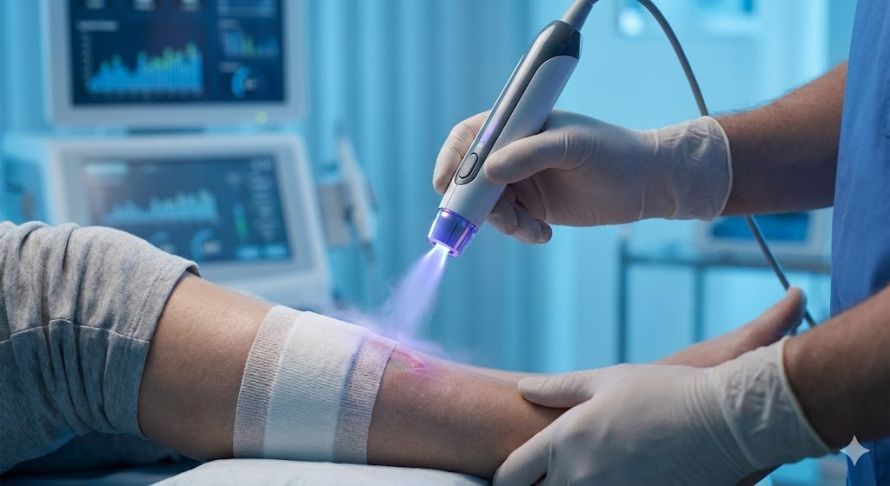
The violet-glowing cold plasma combats multidrug-resistant bacteria and stimulates blood flow to help close chronic wounds.
The Therapeutic Benefits of Cold Plasma Therapy
The use of cold plasma in wound therapy is based on two main mechanisms:
-
Antimicrobial effect: Cold plasma effectively destroys bacteria, viruses, and fungi. Since the mechanism physically destroys the cell walls of the pathogens, they cannot develop resistance. This makes cold plasma treatment a secret weapon against multidrug-resistant pathogens (MRSA) in infected wounds.
-
Promotion of wound healing: The plasma stimulates blood flow (microcirculation) and improves oxygen supply to the wound area. This stimulates cell growth and accelerates the closure of the wound surface.
Clinically proven: Cold plasma for chronic wounds
Chronic wounds often pose a challenge for doctors and nursing staff. Despite optimal standard therapy, they refuse to heal. This is where the effectiveness of cold plasma becomes particularly evident. Studies and clinical applications (as of 2022 and ongoing) demonstrate that people with chronic wounds (e.g., leg ulcers, pressure ulcers) benefit from this therapy. The procedure is also successfully used for diabetic foot ulcers or postoperative wounds that have become inflamed. A pilot study and subsequent randomized trials have shown that the bacterial load decreases significantly and healing is accelerated.
Cold Plasma Treatment Procedure
Cold plasma treatment is generally painless for patients and takes only a few minutes. A special device (some use noble gases such as argon, others use ambient air) is moved over the wound. Technologies such as those from Coldplasmatech even allow for the treatment of large areas. The bluish-shimmering plasma “bathes” the inflamed wounds, cleanses them, and stimulates healing. Since the application is contact-free or performed using special wound dressings, the risk of infection is minimal.
Who is plasma therapy suitable for?
The treatment is primarily intended for patients suffering from slow-healing wounds or chronic and infected wounds. However, patients with acute wound healing disorders or certain skin conditions (e.g., acne inversa) can also benefit from cold plasma therapy. As cold plasma becomes increasingly available in specialized wound centers and clinics, it is becoming a key pillar of modern wound care.
Is the treatment covered by health insurance?
Although cold plasma treatment is considered clinically and scientifically promising and effective, it is not yet (as of today) a standard benefit covered by statutory health insurance providers across the board. It is often reimbursed under selective contracts or for inpatient hospital care. Patients with chronic wounds should actively discuss the possibility of cold plasma treatment for chronic conditions with their doctor or wound care manager.
Conclusion
Cold plasma therapy is more than just a trend. It is a scientifically grounded, highly effective method for treating chronic and bacteria-colonized wounds. It fills the gap where antibiotics and ointments fail and helps long-standing open wounds finally heal.
FAQ: Frequently Asked Questions About Cold Plasma Therapy
Does cold plasma treatment hurt?
No, generally not. Since it involves cold plasma, patients usually feel only a slight breeze or a mild tingling sensation on the skin. No heat is generated.
How often does cold plasma wound treatment need to be performed?
That depends on the wound. The therapy is usually performed 2–3 times a week until the wound is clean and granulation tissue forms.
Is cold plasma effective against MRSA?
Yes. Cold plasma physically destroys the cell membranes of bacteria. This is why even multidrug-resistant pathogens—against which antibiotics are often ineffective—are reliably eliminated.