Cold therapy, also known as cryotherapy, is a medical treatment method that uses targeted cold to relieve pain, reduce inflammation, and promote healing in certain conditions. Cold is often used, particularly for acute injuries or chronic conditions, to reduce swelling and bruising. This form of therapy can be used both in physical therapy and as part of medical treatments, such as in dermatology.
In this article, you’ll learn how cold therapy works, when it’s used, and what methods are available. You’ll also find a list of selected specialists in cold therapy.
What is cold therapy?
Cold therapy encompasses a variety of treatments in which cold is applied to the body or specific areas of the body. Cold affects the human body by constricting blood vessels (vasoconstriction) and reducing blood flow. This helps to relieve swelling and inflammation. In many cases, cold is applied in the form of ice packs, cold packs, or special cold chambers. A well-known example is whole-body cold therapy, in which the patient is exposed to extremely low temperatures for a short period of time.
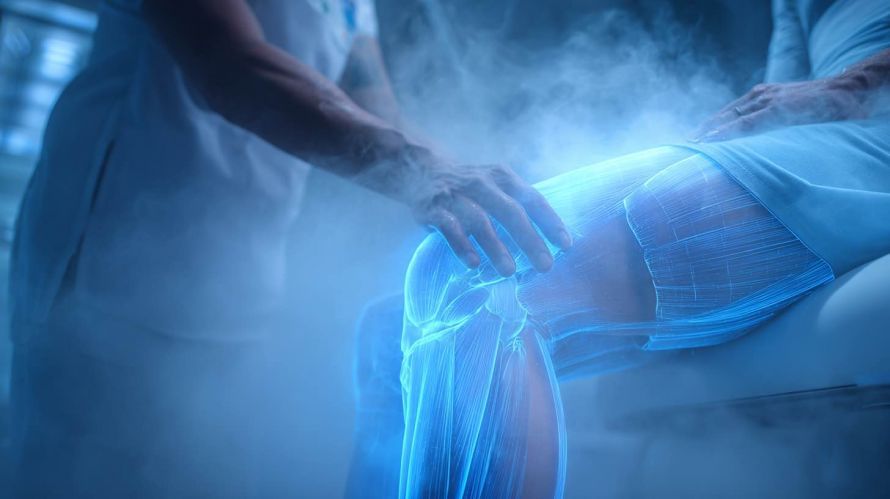
Targeted application of cold to relieve pain and support muscle regeneration.
When is cold therapy used?
Cold therapy is used in various medical fields and for a range of conditions:
- Pain relief: Cold numbs the nerve endings and can relieve acute pain, such as that following injuries.
- Anti-inflammatory effects: For conditions such as arthritis, cold is used to reduce inflammation.
- Promoting healing: For sports injuries such as bruises or strains, cold helps accelerate the healing process.
- Dermatology: In cryotherapy, skin conditions such as warts or skin tumors are treated through targeted freezing.
Methods of Cold Therapy
There are various methods for using cold therapeutically. Different procedures can be applied depending on the condition and body region.
Local cold therapy
In this method, cold is applied specifically to a small area of the body. Typical applications include:
- Ice packs or cold packs: These are applied to painful or swollen areas.
- Cryotherapy: This involves using liquid nitrogen to selectively freeze and destroy tissue, e.g., in the treatment of warts or skin cancer.
Whole-body cold therapy (cold chamber)
In whole-body cold therapy (also known as a cryochamber), the patient is exposed to temperatures as low as minus 110 °C for 2–4 minutes. This extreme cold stimulates blood circulation, reduces pain, and supports the regeneration of muscles and joints. It is often used for chronic pain conditions or rheumatism.
Cold Therapy Procedure: Treatment for Athletes and Post-Chill Chamber Care
How does cold therapy work?
The exact procedure for cold therapy depends on the method chosen. For local application—such as with ice packs—the patient places the cold pack on the affected area and leaves it in place for about 15–20 minutes. For whole-body cold therapy, the patient enters a special cold chamber where extremely low temperatures prevail for a few minutes.
During the treatment, patients should watch for any signs of frostbite and stop the treatment immediately if they experience pain. In general, however, cold therapy is well tolerated and carries little risk.
Aftercare for Cold Therapy
After cold therapy, it is important to slowly rewarm the treated area. Especially when applied to joints or muscles, it is recommended to perform a light massage or gentle exercises afterward to promote blood circulation. For whole-body therapy in a cold chamber, the patient should wear warm clothing after the treatment and engage in physical activity to stimulate circulation.
Physical Cold Therapy in Physical Therapy – Benefits and Risks of Treatment
Benefits of cold therapy
Cold therapy offers athletes a quick way to soothe overworked tissues and reduce inflammation. Targeted application temporarily reduces blood flow, which can significantly alleviate swelling, irritation, and pain after training or competition. This helps athletes return to physical activity more quickly.
In addition, cold therapy supports muscle regeneration and enhances functional recovery. Many athletes report that regular cold therapy sessions result in improved physical well-being, reduced muscle soreness, and enhanced performance—both at the recreational and professional levels.
Complications, Risks, and Prognosis
Although cold therapy is generally considered safe, complications can occur in rare cases. The most common risks include:
- Frostbite: If used improperly, the extreme cold can damage the skin.
- Hypersensitivity: Some people are sensitive to cold, which can lead to skin irritation or allergic reactions.
- Blood pressure issues: Especially with whole-body cold therapy, the extreme temperatures can affect blood pressure. Therefore, individuals with cardiovascular conditions should only undergo the treatment after consulting a doctor.
The prognosis for cold therapy is generally good. Most patients report significant pain relief and improved mobility. In the long term, regular use of cold therapy for chronic conditions such as rheumatism or arthritis can help improve the quality of life for those affected.
Conclusion
Cold therapy is a versatile and effective method for relieving pain, reducing inflammation, and promoting healing. It is used for both acute injuries and chronic conditions. Applications range from simple ice packs to whole-body cold therapy in a cold chamber. As with any medical treatment, potential risks and contraindications should be taken into account. If you are interested in this treatment, it is recommended that you consult a medical specialist to find the appropriate method for your condition.
FAQs on Cold Therapy
What does cold therapy actually do to the body?
Cold constricts blood vessels, reduces swelling, and slows inflammatory processes. At the same time, it dampens pain signals, causing many patients to feel immediate relief.
For which conditions is cold therapy particularly effective?
It is frequently used for acute injuries such as bruises or strains, joint inflammation, back pain, and after overexertion during sports. It is also used in dermatology, for example, to treat warts or minor skin lesions.
How safe is cold therapy?
When used correctly, cold therapy is very safe. It is important not to apply the cold for too long and never to apply it directly to bare skin. People with circulatory disorders, nerve conditions, or cold allergies should consult a doctor beforehand.
How quickly do you notice an effect?
Most people experience noticeable relief after just a few minutes—especially with acute pain. For chronic conditions, regular use over several weeks can improve mobility and make daily life easier.

About the medical author
Sabine Schneider
Editor-in-Chief
Sabine Schneider – medical author: Explore expert articles and medical expertise in the Leading Medicine Guide.
More about the medical author →