Breast reconstruction is a surgical procedure to restore the breasts following a mastectomy due to breast cancer. The goal of reconstruction is to restore the shape and volume of the breasts and help the patient regain a natural body image.
Depending on the individual situation, breast reconstruction is performed using the patient’s own tissue or implants and can be carried out immediately or at a later date following the surgery.
There are various methods of breast reconstruction.
There are essentially two methods of breast reconstruction:
- Reconstruction using the patient’s own tissue
- Reconstruction using donor tissue
We will discuss both forms of breast reconstruction in more detail in the course of this text.
All breast reconstruction surgeries are performed under general anesthesia.
Patients can generally decide whether to undergo primary or secondary breast reconstruction. If the breast is reconstructed during the same surgery in which it was removed, this is referred to as primary breast reconstruction. Secondary breast reconstruction is performed at a later date.
Important Initial Decisions in Reconstructive Breast Surgery
In most cases, breast cancer is the reason for breast removal (mastectomy). However, accidents or burns can also necessitate the removal of one or both breasts.
Reconstructive breast surgery primarily addresses psychological and aesthetic concerns. Physically speaking, it is entirely possible to live without breasts. For many women, however, their breasts are an integral part of their sense of their own femininity.
After the removal of one or both breasts, patients must therefore decide whether or not they wish to undergo breast reconstruction.
In some cases, it may be helpful to discuss this issue with a doctor or psychologist. The decision for or against undergoing breast reconstruction surgery is solely up to the individual concerned.
The decision for or against breast reconstruction should be made without haste. It is not necessary to perform breast reconstruction during the breast cancer surgery itself. There is always the option to make this decision at a later time.
Methods of breast reconstruction using the patient’s own tissue or implants—aesthetic surgery of the breasts and nipples through breast reconstruction
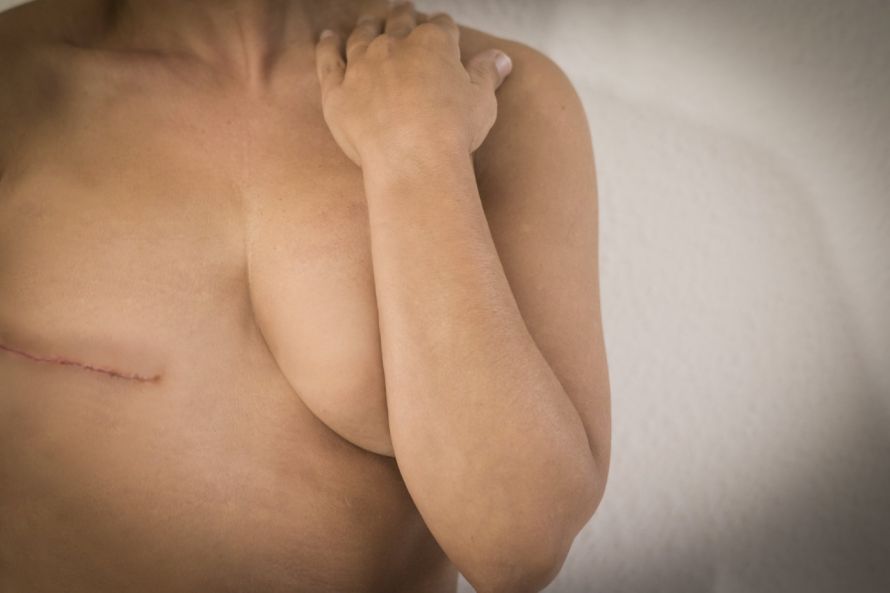
Primary breast reconstruction
Breast reconstruction can be performed as part of the same surgery in which a breast is removed. In this case, a single operation is sufficient to remove the breast and reconstruct it at the same time. This is referred to as primary breast reconstruction.
Primary breast reconstruction has the advantage that
- a second surgical procedure is not required, and
- the patient does not have to get used to life without her breast in the first place.
However, it is important to note that radiation therapy may affect the cosmetic outcome of the breast reconstruction. In some cases, it would therefore be more appropriate to perform secondary breast reconstruction once cancer treatment has been completed. In this case, a second surgery is necessary.
Secondary Breast Reconstruction
Often, the decision to undergo breast reconstruction is not made until later on. Breast reconstruction is possible at any time. To undergo the procedure, the patient must undergo another surgery.
Breast Reconstruction Using the Patient’s Own Tissue
In breast reconstruction using the patient’s own tissue, surgeons implant a tissue block consisting of
- skin,
- fat tissue, and
- muscle.
The tissue is first harvested from another part of the body, such as
- the abdomen,
- the thigh,
- the buttocks, or
- the long back extensor muscle.
Breast reconstruction using tissue from the abdomen is the most common procedure, provided there is sufficient tissue available.
Breast reconstruction using the body’s own tissue usually looks more natural. Rejection reactions are also less common. However, this requires an additional incision at another site on the body, which causes extra pain at that site and also leaves scars.
In some cases, the reconstructed breast may not be symmetrical with the natural breast. In this case, the appearance of the healthy breast can be adjusted through a lift or reduction. Breast reconstruction also includes the nipple and areola. To reconstruct the nipple, half of the nipple from the healthy breast can be used and transplanted onto the reconstructed breast. If this is not possible, a local skin flap can be shaped into a nipple and tattooed.
The areola is created either using a graft
- from the opposite side,
- from the skin on the inner thigh, or
- by tattooing
.

Breast Reconstruction Using Tissue from the Abdomen
In most cases of breast reconstruction, fatty tissue and skin are harvested from the abdomen and reattached to the breast.
With the so-called DIEP technique, no muscles or blood vessels are removed. This has the advantage that the abdominal wall remains intact, thereby minimizing the risk of abdominal wall weakness.
In the pedicled TRAM method, on the other hand, muscle tissue is removed. With this method, the abdomen is often tightened and the navel repositioned at the same time as the incision is closed. After the surgery, a compression garment and a support bra must be worn for some time.
Breast Reconstruction Using Tissue from the Buttocks
In this type of breast reconstruction, skin and fatty tissue are taken from the buttocks. This method is particularly suitable when there is insufficient tissue available from the abdomen.
The surgery and postoperative care are the same as for breast reconstruction using abdominal tissue.
Breast Reconstruction Using Tissue from the Thigh
The advantage of this method is that the scar at the donor site is barely visible later on. The incision is made in a natural crease of the inner thigh.
Breast reconstruction using tissue from the thigh is particularly suitable for slender women with small breasts. The procedure is similar to that described for breast reconstruction using abdominal tissue.
Here, too, a lift of the inner thigh can be performed during the surgical closure.
Breast Reconstruction Using Tissue from the Back
Breast reconstruction using tissue from the long back muscle is the oldest method in reconstructive breast surgery.
When harvesting tissue from the back muscle, the muscle’s function must not be compromised. Furthermore, there is often not enough tissue available.
Therefore, a small silicone implant must sometimes be inserted as well. Another disadvantage of this breast reconstruction method is a relatively long scar on the back.

Breast Reconstruction Using Foreign Material
In breast reconstruction using foreign material, a silicone implant is typically inserted. Here, it must first be determined whether there is enough remaining skin to cover the breast implant.
If there is not enough of the patient’s own skin, the existing skin must first be stretched. To do this, a so-called expander is used during an initial surgery.
If breast reconstruction is performed as a secondary procedure, the same incisions used in the first surgery can usually be reused. This results in fewer scars.
The breast implant is placed behind the pectoral muscle. This results in a more aesthetically pleasing appearance.
If radiation therapy is still planned as part of cancer treatment, breast reconstruction using the patient’s own tissue may be recommended under certain circumstances. Following implant-based reconstruction combined with radiation therapy, there may be an increased risk of so-called capsular contracture.
Capsular contracture is a hardening of the shell surrounding the silicone implant. If this occurs, it can lead to breast deformities and pain. In such cases, the breast implant may even need to be removed. Capsular contracture can also occur without radiation therapy, though this is less common.

Breast implants today are very durable and safe © H_Ko | AdobeStock
We are now talking about the fourth or fifth generation of breast implants. Compared to the first and second generations, these have a significantly longer lifespan and offer greater safety.
Newer-generation breast implants are filled with cohesive (adhesive) silicone. This makes leakage physically nearly impossible. In the U.S., saline-filled breast implants are still in use. If a saline implant leaks, it results “only” in a loss of volume in the augmented breast. The leaked saline solution cannot cause any further damage to the body.
Implants rarely need to be removed. Reasons for removal include dissatisfaction with the cosmetic result and inflammation around the implant.
The implant material is also subject to a normal aging process. Although this process can be significantly delayed, it is sometimes necessary to replace the breast implant to ensure that the cosmetic result remains stable.
Conclusion
Breast reconstruction is a central component of reconstructive and aesthetic surgery and is often planned as part of breast reconstruction following breast cancer by a plastic surgeon or a specialist in plastic and aesthetic surgery, with the plastic surgeon working together with the chief physician of the plastic surgery department to develop individualized solutions. After removal of the mammary gland—following a mastectomy— the female breast can be reconstructed using skin and fat tissue—or a combination of both—by having the surgeon harvest tissue to restore the breast’s shape, which plays a particularly important role in breast reconstruction using autologous tissue and in breast reconstruction with autologous tissue. Many women—and especially those with breast cancer—opt for breast reconstruction using their own tissue, since the use of autologous tissue allows for a natural reconstruction, while breast reconstruction with silicone implants is also an option, so the decision between implants and autologous tissue must always be carefully weighed.
The options for breast reconstruction also include nipple reconstruction, address potential breast deformities or a scar on the back, and answer key questions about breast reconstruction, including the costs of the procedure, which are often covered by health insurance. The right time for breast reconstruction can be immediately after surgery or months or years later, depending on factors such as radiation therapy, the healing process, and the patient’s wishes, with the goal always being to reconstruct the breast and improve quality of life in the long term. Professional societies such as the German Society for Plastic Surgery and the Society for Plastic Surgery offer support and guidance, providing evidence-based recommendations for breast reconstruction following breast cancer.
FAQ
What is breast reconstruction?
Breast reconstruction is a surgical procedure to restore the breasts following a mastectomy due to breast cancer. The goal is to restore the shape, volume, and symmetry of the breast as naturally as possible.
What methods of breast reconstruction are available?
Generally, a distinction is made between breast reconstruction using the patient’s own tissue and reconstruction using implants. In breast reconstruction using the patient’s own tissue, skin and fat tissue—and in some cases muscle tissue—are taken from other areas of the body, while implants are usually made of silicone.
When can breast reconstruction be performed?
Breast reconstruction can be performed either immediately following mastectomy or at a later date. The appropriate timing depends, among other factors, on any planned radiation therapy, wound healing, and the patient’s overall health.
What are the risks associated with breast reconstruction?
As with any surgery, complications such as infections, wound healing problems, or scarring may occur. With implants, there is a risk of capsular contracture, while reconstruction using the patient’s own tissue may lead to circulatory problems in the transplanted tissue.
Are the costs of breast reconstruction covered?
Generally, both public and private health insurance plans cover the costs of breast reconstruction following breast cancer. This applies to breast reconstruction using the patient’s own tissue as well as to implants and any necessary follow-up procedures.

About the medical author
Prof. Dr. med. Hans-Christian Kolberg
Medical Author · SeniorConsultant · Bottrop
More about the medical author →