Recently, more and more people have been looking to get rid of their tattoos. In fact, some dermatologists and clinics offer tattoo removal services that can completely remove body art. The laser method has proven particularly effective. Here, you’ll learn exactly how this procedure works and what to keep in mind before and after treatment. You’ll also find a selection of specialists in tattoo removal.
Requirements for Tattoo Removal
Not all tattoo colors can be removed equally well during tattoo removal. Dark colors such as black, blue, and brown respond particularly well to treatment and can be removed completely. With light colors, there is a risk that the tattoo will not be completely removed but only lightened.
However, the final result also depends on the individual’s skin type. European skin is different from, for example, Asian or African skin. People of Asian and dark-skinned descent should be aware that the skin’s natural pigments may be destroyed, potentially leading to skin discoloration.
However, these will fade on their own after some time. In principle, anyone can have their tattoo removed. The prerequisite, however, is that the tattoo must be at least 90 days old. Professional laser tattoo removal also takes into account the depth to which the pigments have penetrated the respective skin layer, as this affects how well the treatment works. Modern laser systems use different wavelength settings to specifically target different colors and treat them as effectively as possible.
Reasons for Laser Tattoo Removal
The reasons for removing a tattoo are varied. For some, it’s simply a youthful indiscretion they just want to get rid of. Or perhaps they’re starting a new job where tattoos aren’t welcome.
The reasons for tattoo removal vary widely and range from career changes to aesthetic preferences or a shift in lifestyle. Over time, many people develop a growing interest in tattoo removal, perhaps because the design no longer aligns with their personal preferences or because they want to make room for a new tattoo.
Generally speaking, there are various ways to remove an unwanted tattoo, though medical laser treatment has established itself as the safest and most effective method. Modern laser technology uses targeted light pulses to break down the pigment in the skin. This method is suitable not only for traditional tattoos but also for removing permanent makeup, such as from the eyebrows or lips.
The procedure and results of the treatment can vary from person to person, as tattoo removal outcomes depend on factors such as skin type, color, and the depth of the tattoo. During the treatment, an integrated skin cooling system ensures that the procedure is more comfortable and that the skin is protected.
In some cases, patients opt for a so-called “cover-up,” in which the old tattoo is covered by a new design. Nevertheless, a consultation with a doctor answers the most important questions about tattoo removal and helps select the best treatment method for each individual.
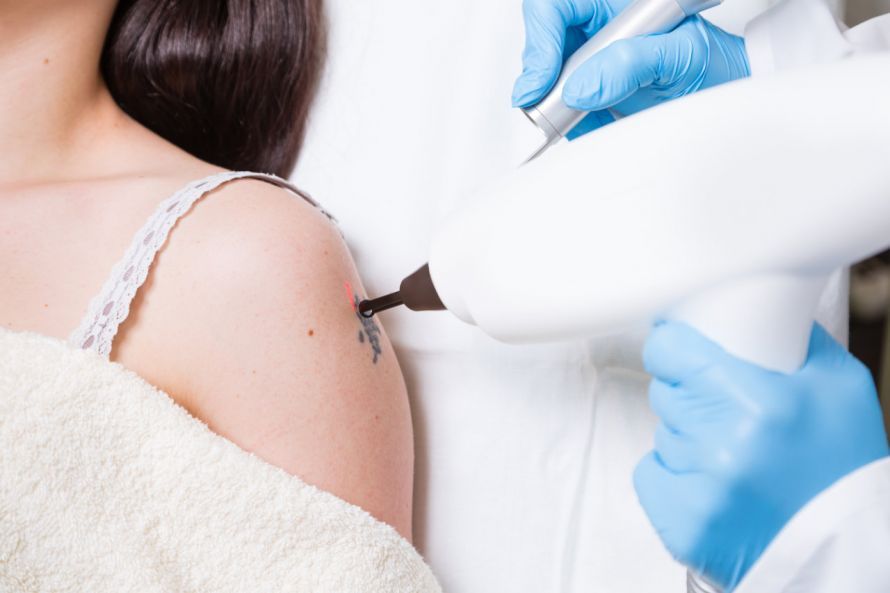
Who performs laser treatment?
You should only have laser treatment performed by a licensed physician. Laser treatment is currently the most advanced method for effectively removing a tattoo.
The key advantage: Unlike the surgical abrasion methods commonly used in the past, scarring is ruled out. Effective tattoo removal is particularly gentle on the tissue, as the surrounding skin structures are treated with great care, reducing the risk of complications.
The Tattoo Removal Process
During tattoo removal, short light pulses are directed at the color pigments; the laser essentially “blasts” these color particles apart. The light pulse is so short that it cannot burn the skin.
As a rule, a tattoo can be completely removed in several sessions. Expect between five and ten sessions, although the following factors play an important role in determining the number of sessions:
- the size of the tattoo
- the chemical composition of the tattoo
- how deep the tattoo was inked
- the colors used in the tattoo
- the intensity of the treatment
- Your personal pain tolerance
But don’t worry: Laser treatment is by no means as painful as surgical removal via skin abrasion. Most patients report that laser treatment is no more painful than getting a tattoo. If larger areas are being treated, the areas are treated with an anesthetic cream.
With each session, the tattoo becomes lighter until it eventually disappears completely. No more than 100 square centimeters of skin should be treated per session.
Each session lasts between 5 and 10 minutes, though the duration depends on the size of the tattoo. There should be an interval of at least four weeks between sessions. During this time, the body breaks down the destroyed pigment particles via the lymphatic system, causing the treated tattoo to gradually fade further.
Cost of Tattoo Removal
If you choose a reputable tattoo removal provider, you’ll receive a detailed breakdown of the expected costs before treatment. The total cost should include both the initial consultation and a test laser treatment.
The cost of the procedure depends primarily on the size of the tattoo. The larger the tattoo, the more expensive the procedure will be. More sessions will also be necessary, and the skin may take a little longer to heal. Other factors that significantly influence the price of tattoo removal include:
- Is it a professional or an amateur tattoo?
- How old is the tattoo?
- Is the tattoo single-color or multicolored?
- What is the depth and quality of the tattoo?
It is therefore difficult to make a general statement about the cost of tattoo removal. As a general rule, the newer the tattoo, the easier it is to remove. The exact cost of tattoo removal depends not only on the size of the tattoo but also on the number of sessions required and the technology used.
What should you keep in mind after the procedure?
Proper aftercare is important to prevent scarring. Avoid exposure to UV rays for at least one week before and after the procedure. This means you should refrain from sunbathing or using tanning beds. Visiting the sauna or swimming pool is also not recommended during the first week after treatment.
Immediately after the treatment, you’ll also notice that your skin feels a little sore. It’s best to wear comfortable, 100% cotton clothing. Avoid tight-fitting clothes and let the treated areas breathe as much as possible. In addition, you may experience temporary swelling of the treated skin, but this usually subsides within a few days.
Your doctor will also provide you with special skin care creams that you should apply regularly.
Here’s another insider tip: Eat fresh pineapple or drink pineapple juice. The enzymes in pineapple can speed up the healing process after tattoo removal.
FAQ
How exactly does laser tattoo removal work?
Laser tattoo removal uses high-energy light pulses to break down the pigments into small particles. These are then gradually broken down by the body, making complete removal of the tattoo possible depending on the initial condition.
Are there any side effects associated with tattoo removal?
After treatment, temporary skin reactions such as redness or mild irritation may occur, which usually subside within a few days.
How many sessions are needed for removal?
The number of sessions required depends on various factors, such as the color intensity, depth, and size of the tattoo, as well as individual skin characteristics.
Is laser treatment painful?
Pain during tattoo removal varies from person to person, but it is often described as comparable to the original tattooing process and is generally well tolerated.

About the medical author
Dr Uni. PD Amro Homssi
Medical Editor
Sources
- https://www.drduhr.de/imako/tattooentfernung/
- https://tattoolos.com/tattoo-entfernen/