Expert Interviews
A gummy smile—often a reason to hold back a laugh

Sabine Schneider ·
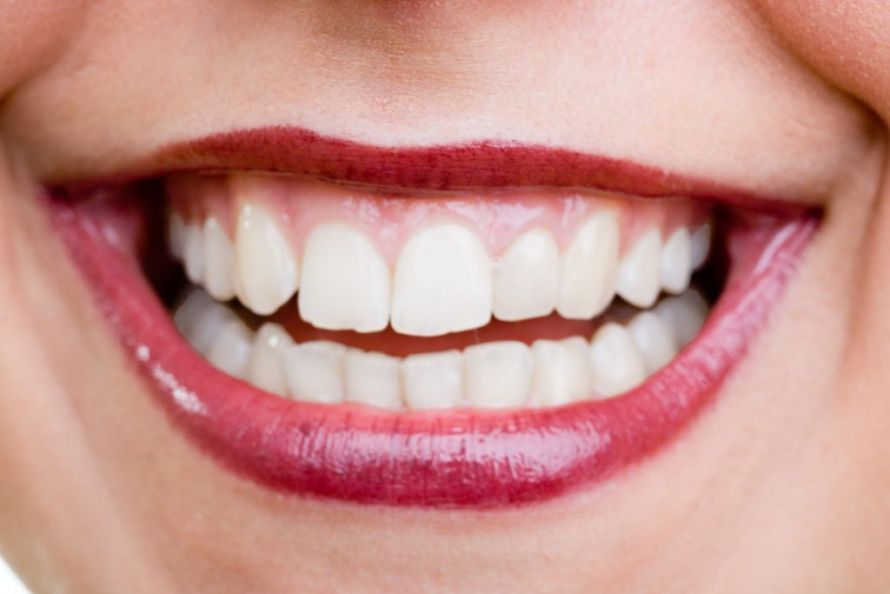
The so-called “gummy smile” has nothing to do with gum, not even chewing gum. Rather, it derives from the English term “gum,” which refers to the gums. Normally, when smiling, the upper lip reaches only to the gum line. A gummy smile is defined as a smile in which more than about 3 mm of gum tissue is visible. In the case of a very pronounced gummy smile, too much gum tissue is visible even when the mouth is only slightly open. This can have various causes: an upper jaw that is too long, an upper lip that is too short, an overly active lip-raising muscle, teeth that are too short, or gums that are too thick can all be factors; sometimes, a combination of several causes is involved.
“If too much gum is exposed when smiling, there is an aesthetic imbalance between the lip, gums, and teeth.” (Prof. Lindorf)
Julia Roberts probably has the most famous gummy smile in the world—for the Hollywood actress, it has even become something of a trademark. But not everyone with a gummy smile can embrace it as confidently as Julia Roberts, and it doesn’t look equally attractive on everyone. While a gummy smile isn’t a medical condition, many people suffer psychologically from it and perceive it as a flaw.
Smile, please! Or maybe not?
A friend of mine had gotten into the habit of always holding her hand in front of her mouth when she laughed. She was embarrassed that her gums were so conspicuous; anyone who’s ever had something stuck between their teeth or worn braces can probably relate. For my friend, the urge to hide her “flaw” actually intensified over the years: by covering her teeth, she ended up drawing even more attention to them. Eventually, she stopped smiling altogether, which had an impact on her social life and, not least, on her own mental well-being.
“A gummy smile isn’t a disease, but for many people, it’s a condition that weighs on their spirits.” (Prof. Lindorf)
If you find your own smile embarrassing, your self-confidence suffers, and you feel insecure in social situations. Consciously avoiding smiling or trying to show less gum by using trained facial expressions comes across as odd to others, and you miss out on the positive effect that smiling has on your own mood.
When the Body Affects the Mind
Psychologists have found, for example, that facial expressions are not only an expression of emotions but also evoke or intensify them. The body and mind are closely interconnected. Muscles activated during facial expressions set off further mechanisms. Take, for example, the memory center in the brain: emotional information is retrieved that we normally associate with the respective movement, facial expression, or posture. Crossed arms, for instance, automatically create a defensive posture, while a smile contributes to a feeling of optimism. So anyone who constantly holds their hand over their mouth or suppresses their laughter is also blocking themselves on an emotional level.
Fortunately, there are other solutions. Many people affected aren’t even aware that a gummy smile can be effectively corrected medically. In the U.S., for example, gummy smile corrections are performed more frequently. It’s not without reason that America is said to be the land of perfect teeth.
Modern treatment options give you reason to smile

Depending on the cause, there are various ways to correct a gummy smile. Leading Medicine Guide expert Prof. Lindorf, a specialist in oral and maxillofacial surgery, implantologist, and dysgnathia surgeon with additional certification in plastic and aesthetic surgery from Nuremberg, explains:
- If there is too much gum tissue, the excess is removed through a sculpting procedure (gingivectomy), e.g., with a laser.
- If the incisors are relatively small, the gummy smile can be significantly reduced by optically enlarging the visible surface of the teeth. This is achieved using veneers or crowns, possibly combined with surgical crown lengthening.
- If the upper lip is too short, a lip lengthening procedure can be performed—an outpatient procedure in which the lip is lowered slightly.
- An overdeveloped, overly active levator muscle can be weakened either through a small incision (myotomy) or a Botox injection.
- If the upper jaw is too long, it can be shortened by removing a bone segment (osteotomy with repositioning of the upper jaw). However, this procedure is somewhat more complex and must be performed under general anesthesia as an inpatient procedure; the hospital stay is approximately 3 days.
“An accurate diagnosis of the cause of the gummy smile is always necessary to find a treatment plan tailored to the individual. In most cases, only a minor procedure with a short recovery time is needed, and patients can smile carefree again after a short while.” (Prof. Lindorf)

Uncomplicated, simple, and quick
In many cases, a gummy smile can be corrected with a minor outpatient procedure. That was also the case for my friend. After a consultation with an oral surgeon, she opted for laser treatment and was amazed at how straightforward, quick, and simple the process was. Her former “gummy smile” has now become a “warm smile”—a smile that wonderfully infects everyone around her. Today, her only regret is that she didn’t have this done sooner. Modern oral and maxillofacial surgery certainly gives us plenty of reasons to smile.
Learn more about Professor Lindorf and contact him directly if you have any questions.
HL403GC, LMG19 – Image source: (c) deagreez, (c) ALDECAstudio, (c) unpict – Adobe Stock.
Share this article
Expert Interviews
Read next
- Expert interview
Expert interview with Professor Dr Elmar Herbst, PhD
Oct 15, 2026
Patient-centred and personalised knee surgery
Read more - Expert interview
Cardiogeriatrics: Significance and benefits in the context of hospital reform
Sep 21, 2026
Cardiogeriatrics: Significance and benefits in the context of hospital reform
Read more - Expert interview
Expert Interview with Professor Dr. Amadeus Hornemann, MPH
Sep 18, 2026
Prof. Amadeus Hornemann on Precision Medicine in Gynecology: Modern Surgery, New Techniques, Better Quality of Life
Read more