Expert Interviews
A Small Organ with a Big Impact – PD Dr. Bolli on the Pancreas

Alexandra Pfitzmann ·
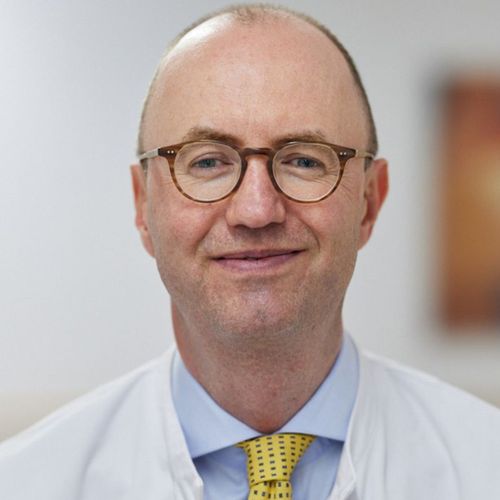
Surgery on the pancreas requires a very high level of surgical expertise. Residents of the Basel region with pancreatic problems are advised to contact the Clarunis Pancreas Center – University Abdominal Center Basel, where a top-tier team of proven specialists led by Dr. Martin Bolli, MD, treats all relevant conditions at a university-level standard. The editorial team of the Leading Medicine Guide spoke with this experienced specialist, who, as Deputy Chief of Visceral Surgery, combines deep expertise with surgical mastery—and is just as familiar with the health risks associated with the pancreas as he is with the treatment options for pancreatic diseases.
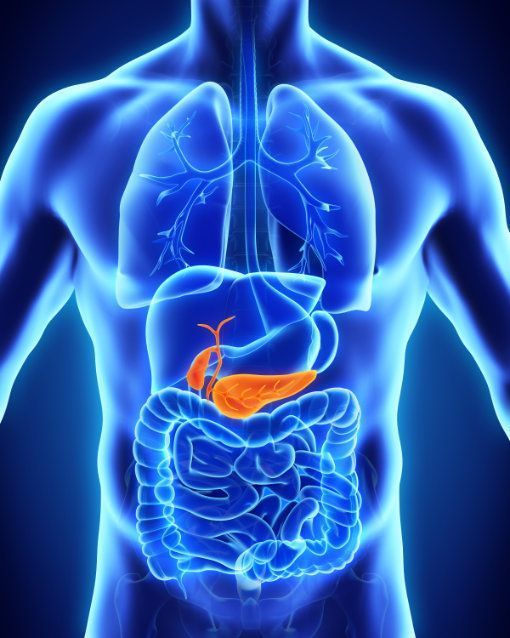
 Tucked away between the stomach and the spine, the pancreas—which is only about the size of a bar of chocolate—is responsible for two vital functions: producing essential digestive enzymes and regulating blood sugar levels.
The pancreas, as it is known in medical terminology, is a glandular organ located transversely in the upper abdomen behind the stomach. In German-speaking countries, around seventy out of every 100,000 people are hospitalized each year for acute pancreatitis, mostly after the age of 45. Men are affected slightly more often than women.
The number of people diagnosed with pancreatic cancer in our regions has remained virtually unchanged for many years: According to German Cancer Aid, there are 14,200 cases per year in Germany, with the median age at diagnosis being 69 (men) and 76 (women). In Switzerland, 1,250 cases are diagnosed annually, and in Austria, 1,500.
The most common conditions are acute pancreatitis, chronic pancreatitis, and pancreatic cancer (pancreatic carcinoma).
When pancreatic cancer is mentioned, most people recoil: this form of cancer has a reputation for usually progressing rapidly and fatally. This is indeed due to the fact that, in these cases, the tumors have only a small number of blood vessels, making it difficult for medications to reach the diseased tissue.
“It’s true that pancreatic cancer is, unfortunately, a very aggressive and difficult-to-treat disease,” confirms PD Dr. Bolli at the start of our conversation. His next statement, however, offers hope: “But there are now newer approaches in the form of combination therapies. For example, chemotherapy is sometimes combined with subsequent surgery. If the tumors are still small at the time of diagnosis, the prognosis is generally better. In so-called borderline-resectable cases—that is, when the tumor cannot be removed directly through surgery due to its size or location—it is first shrunk through chemotherapy and then surgically removed,” explains the specialist in pancreatic surgery.
Advances Save Lives
Progress has been made not only in treatment methods but also within surgery itself. “Thanks to improved surgical and technical resources, the entire operation can be performed with higher safety standards. Significant improvements for patients can also be seen in the fields of anesthesia and intensive care,” reports PD Dr. Bolli with optimism in his voice, and he goes on to explain: “Complications during or after surgery, which often used to be fatal, can now be managed much more effectively using interventional methods, such as CT-guided catheter placement.”
The major advantage of the Pancreatic Cancer Center at Claraspital and the University Hospital of Basel is that everything is under one roof. “The entire diagnostic process, treatments with chemotherapy or radiation, as well as surgery and subsequent follow-up care, all take place at the hospital. This allows for very rapid action, and the necessary appointments can be scheduled quickly. Every morning, our interdisciplinary tumor board holds a joint meeting with surgeons, gastroenterologists, oncologists, pathologists, and radiation oncologists to offer our patients the best possible and individually tailored treatment and therapy plan,” explains PD Dr. Bolli, highlighting the excellent collaboration among colleagues.
The pancreatic cancer centers at Claraspital and the University Hospital of Basel are certified by the German Cancer Society (DKG). The DKG thereby certifies that patients with pancreatic cancer benefit from treatment in accordance with the highest international quality guidelines.
Insulin—the Additional Challenge
The pancreas regulates digestive function and blood sugar levels. The hormone insulin, which is produced in the pancreas, plays a crucial role in this process, as it is primarily responsible for transporting glucose from the blood into the cells. This is because the sugar molecules are needed there for energy production. When this process is disrupted, people develop diabetes. In such cases, insulin must be administered externally. A more advanced form of insulin resistance is referred to as type 2 diabetes. In this condition, not enough sugar is transported from the blood into the cells, and blood sugar levels rise in those affected.
“If a diabetic’s insulin doses need to be adjusted, it is essential to examine the pancreas,” warns PD Dr. Bolli, explaining: “Diabetes can damage many organs, including the eyes. The cause of this dysfunction may be genetic, or patients may be severely overweight, which also contributes to diabetes. Common causes of pancreatic insufficiency or acute or chronic pancreatitis include gallstones that obstruct the flow of bile and pancreatic juice, excessive alcohol consumption, side effects of medications, infectious diseases, or autoimmune disorders.” As is so often the case, prevention comes down to a healthy diet and more exercise!
Symptoms of Pancreatic Disease
“Pancreatic diseases can cause a variety of symptoms. Tumors often grow for a long time without causing any symptoms. Inflammation usually causes severe abdominal pain, and patients suffer from abdominal bloating. Severe inflammation can be dangerous. This is because the body then begins to digest itself—a condition known in medical terms as necrosis. However, these severe forms of the disease are very rare,” explains PD Dr. Bolli.
The Whipple procedure—complex but effective
When treating a patient with pancreatic cancer surgically, the goal is to completely remove the tumor and the regional lymph nodes. In the so-called “Whipple procedure”—named after the American surgeon Allen Whipple, who played a key role in developing this technique—the entire head of the pancreas is removed, a process that typically takes many hours. This surgical technique is used to treat carcinomas, inflammation, or blockages in the pancreas. The head of the pancreas refers to the thick, right third of the pancreas, which lies close to the duodenum and part of the bile duct. If a disease is present in this area, there is a risk of rapid spread via the lymphatic and blood vessels. The goal of the surgery, which usually lasts five to six hours, is to prevent further growth and metastasis.
“This extremely challenging surgery requires the highest precision from the surgeon, as the inflowing and outflowing vessels must be ligated via a large abdominal incision. The remaining portions of the pancreas and surrounding organs are reconnected to the patient’s own small intestine. The excellent quality of the surgeries at Clarunis is ensured by the high number of cases—approximately 60 per year, performed by a small team of experienced surgeons—and the complication rate is very low by international standards. In combination with the effective chemotherapies available today, a significant extension of survival time is possible. “For locally advanced tumors, a palliative procedure can be performed to restore bile flow or the passage of food, thereby ensuring quality of life,” says PD Dr. Bolli, describing the challenges and positive developments in outcomes.
If a patient’s entire pancreas must be removed—which is quite possible—the patient immediately becomes diabetic, and digestive secretions must then be administered artificially for the rest of their life.
Chances of Recovery and the Pitfalls of Pancreatic Cancer
PD Dr. Bolli is initially optimistic, stating: “With early detection, the chances of a cure for pancreatic cancer are good. Unfortunately, however, by the time a diagnosis is made, the cancer is usually already at an advanced stage. This is because pancreatic cancer develops silently. In such cases, however, there are now good options for at least halting the disease through medication and surgery. But a recurrence of the tumor must always be expected.”
Every doctor, regardless of specialty, recommends more exercise and a healthy lifestyle as a preventive measure. To conclude our conversation, PD Dr. Bolli adds: “Of course, an adult can enjoy one or two glasses of wine now and then. And here, too, it all depends on the individual. Some people can tolerate more, others less. So the effects on the pancreas aren’t the same for everyone. My hope for the future is that there will be a screening test for the pancreas—perhaps in the form of blood markers—so that diseases can be detected early. The development of a complementary immunotherapy would also be valuable for a more favorable outcome in pancreatic diseases.”
Dr. Bolli, thank you very much for these interesting insights into the pancreas!
You can contact our specialist directly via the profile page on the Leading Medicine Guide.
Share this article
Expert Interviews
Read next
- Expert interview
Expert interview with Professor Dr Elmar Herbst, PhD
Oct 15, 2026
Patient-centred and personalised knee surgery
Read more - Expert interview
Cardiogeriatrics: Significance and benefits in the context of hospital reform
Sep 21, 2026
Cardiogeriatrics: Significance and benefits in the context of hospital reform
Read more - Expert interview
Expert Interview with Professor Dr. Amadeus Hornemann, MPH
Sep 18, 2026
Prof. Amadeus Hornemann on Precision Medicine in Gynecology: Modern Surgery, New Techniques, Better Quality of Life
Read more