Expert Interviews
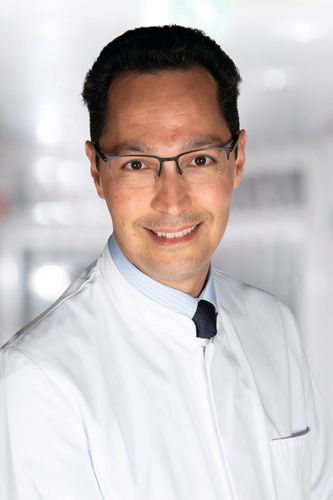
An Interview with Prof. Dr. Peter Vajkoczy: Neurosurgery at Europe's Largest Hospital

Sabine Schneider ·
He is one of the world’s most renowned neurosurgeons—and he heads one of the largest clinics of its kind in Europe: Professor Dr. Peter Vajkoczy is considered an absolute authority on brain surgery. When his bestseller *Kopfarbeit* was published in 2020, the publisher Droemer Knaur wrote: “He cares for up to a hundred patients from all over the world across his three wards and, together with his team, performs up to five or six surgeries a day—mostly for strokes, brain tumors, bypasses, and spinal disorders.” The renowned director of the Department of Neurosurgery with a focus on Pediatric Neurosurgery (CVK) provided the *Leading Medicine Guide* with insights into a fascinating and extremely complex world.
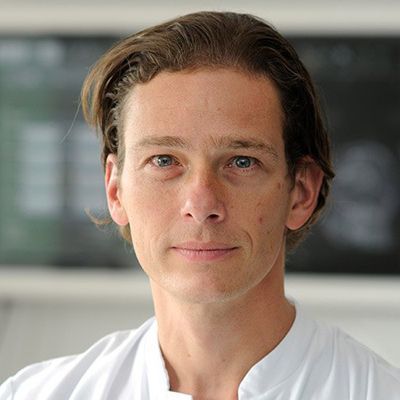
Charité Universitätsmedizin is one of Berlin’s oldest hospitals and largest employers. With 3,099 beds and a staff of 17,615 (2021 figures), Charité is in fact the largest medical institution in Europe. The Department of Neurosurgery there is particularly renowned internationally for its outstanding treatment of complex disorders of the nervous system—cerebrovascular diseases, brain and skull base tumors, as well as disorders of the spine, the cerebrospinal fluid system, the spinal cord, and the peripheral nerves. Functional neurosurgery and pain management are also provided at the Charité’s Department of Neurosurgery. Each year, the clinic performs an impressive five thousand surgeries. Clinic Director Prof. Dr. Peter Vajkoczy has made a name for himself primarily through complex surgeries. Originally from Munich, he came to Berlin after academic stints in Mannheim and Heidelberg.
Leading Medicine Guide: Professor Vajkoczy, which treatments do you perform most frequently? What, specifically, have you specialized in?
Prof. Dr. Peter Vajkoczy: I perform about fifty percent of my procedures on the brain and the other half on the spine. That amounts to a total of about 800 surgeries per year for me. In the field of neurosurgery, we perform complex microsurgical procedures such as vascular surgery—including aneurysms, angiomas, and bypasses—as well as tumor surgeries, such as gliomas and skull base tumors. In the field of spinal surgery, this includes decompression procedures, spinal stabilization, and corrective surgeries for degenerative conditions, inflammatory disorders, and tumors.
Leading Medicine Guide: In your view, what factors determine the success of a procedure?
Prof. Dr. Peter Vajkoczy: The success of these procedures depends on a large caseload, extensive experience with these sometimes rare cases, and an outstanding interdisciplinary infrastructure—all of which the Charité offers to a remarkable degree.
Leading Medicine Guide: Your professional career has included positions at LMU Munich, the University Hospital of Mannheim, Heidelberg University Hospital, and finally the Charité in Berlin—the largest hospital in Europe. What did you take away from these past, very important stages of your career?
Prof. Dr. Peter Vajkoczy: At the Institute for Surgical Research at LMU Munich, I received training in high-level scientific work related to clinical surgical practice. There, for example, I learned how important continuous scientific work is for the advancement of our field, both in the laboratory and at the patient’s bedside. And I came to understand how research and work at the operating table can be reconciled. In Mannheim and Heidelberg, I received a broad clinical training in neurosurgery and had the honor of being trained by outstanding figures in our field. I also had the necessary freedom there to further expand my theoretical and practical knowledge.
Leading Medicine Guide: And what medical advantages do you see at Charité?
Prof. Dr. Peter Vajkoczy: The Charité offers the advantage of a very high caseload, which means that here it is possible to gain a high degree of experience and expertise with rare and often complex clinical presentations and to further advance the field. The Charité’s size is also its strength. The hospital is also distinguished by its high academic standards. The opportunities for scientific work in our field are unique here.
Leading Medicine Guide: What are your areas of focus at the Department of Neurosurgery at Charité, Professor Vajkoczy?
Prof. Vajkoczy: Thanks to its unique size, Charité allows us to focus on more areas than usual. These include vascular neurosurgery, tumor neurosurgery—specifically gliomas and skull base tumors—spinal surgery, pediatric neurosurgery, the treatment of movement disorders, and epilepsy surgery.
Leading Medicine Guide: Thank you very much for speaking with us, Professor Vajkoczy!
Incidentally, the Charité can look back on a history spanning over three hundred years: Around 1710, Frederick I, then King of Prussia, had a plague house built on the outskirts of Berlin in the midst of a raging epidemic. Later, it was used as a hospice for the elderly, as a “workhouse for the homeless,” and as a maternity facility for women who had become pregnant out of wedlock. Today, of course, times are very different!
You can contact Prof. Dr. Peter Vajkoszy directly via his profile page in the Leading Medicine Guide. The Department of Neurosurgery is located at three Charité campuses: the Charité Mitte Campus, the Virchow-Klinikum Campus, and the Benjamin Franklin Campus. You’ll find a university neurosurgery outpatient clinic at all three locations. Please also note: Since the clinic covers a wide range of areas and offers a comprehensive range of treatments, the specialized consultation hours are divided by medical specialty.
Share this article
About the medical author
Sabine Schneider
Editor-in-Chief
Sabine Schneider – medical author: Explore expert articles and medical expertise in the Leading Medicine Guide.
More about the medical author →Charité-Universitaetsmedizin Berlin, Campus Virchow Medical Center
ProfileExpert Interviews
Read next
- Expert interview
Cardiogeriatrics: Significance and benefits in the context of hospital reform
Sep 21, 2026
Cardiogeriatrics: Significance and benefits in the context of hospital reform
Read more - Expert interview
Expert Interview with Professor Dr. Amadeus Hornemann, MPH
Sep 18, 2026
Prof. Amadeus Hornemann on Precision Medicine in Gynecology: Modern Surgery, New Techniques, Better Quality of Life
Read more - Expert interview
Expert Interview with Professor Dr. Konstantinos Anagnostakos
Sep 15, 2026
Prof. Anagnostakos on Painful Knee Replacements
Read more