Expert Interviews
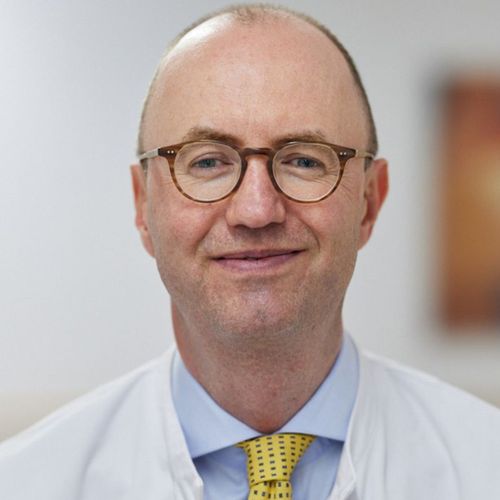
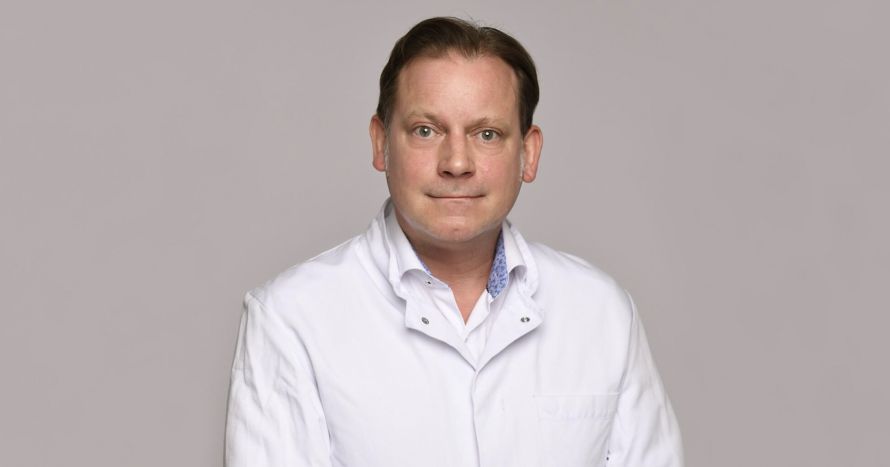
Back problems? Dr. Miguel Alquiza, M.D.: “Avoid unnecessary treatments!”

Sabine Schneider ·
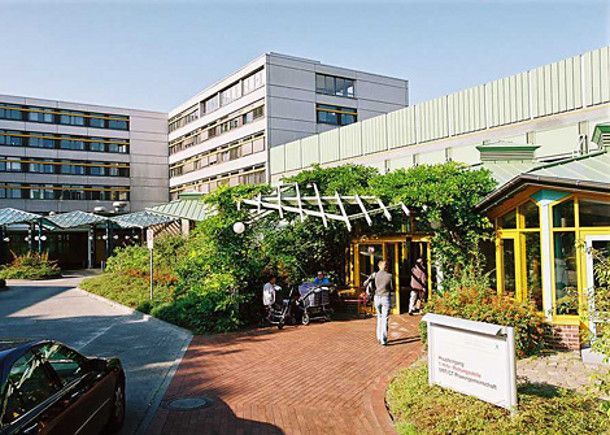
Back pain has become a widespread problem in our society. Often, seeing a doctor is a last resort to find relief from pain; sometimes, even surgery is the only way to get the help you need. It’s essential to consult a specialist: After all, it’s your back! Dr. Miguel Alquiza is just such a specialist: As chief physician at the Center for Spinal Surgery at the Evangelical Waldkrankenhaus in Spandau, he specializes in complex and difficult spinal procedures. There, the surgeon and his experienced team perform exceptional work in the field of spinal surgery: This includes the treatment of herniated discs, vertebral fractures, and spinal cord injuries—as well as the removal of tumors and metastases in the spinal region.

Leading Medicine Guide: Dr. Alquiza, what types of surgeries do you perform most frequently in your daily clinical practice?
Dr. Miguel Alquiza: We very frequently deal with degenerative spinal conditions. Accordingly, we often perform spinal canal decompression and corrective surgeries. However, we also treat all other conditions with corresponding frequency.
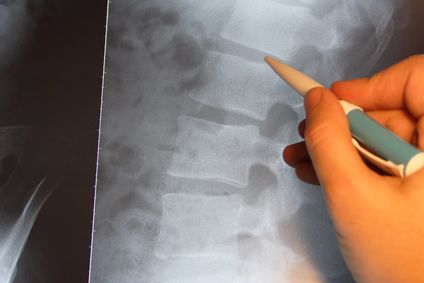
What exactly is spinal stenosis? Especially in older people, wear and tear and bone spurs often develop at the vertebral joints and vertebral arches. This can severely narrow the spinal canal, which can put pressure on the affected nerves. This sometimes occurs in combination with a herniated disc. As a result, the spinal cord lacks the necessary space. This can lead to symptoms of paralysis. This is when a doctor is needed! Spinal canal widening can relieve pressure on the spinal canal and the nerves.
Leading Medicine Guide: You have various methods at your disposal for treating a vertebral fracture—can you briefly explain exactly what the terms “kyphoplasty” and “vertebroplasty” mean?
Dr. Miguel Alquiza: Both procedures stabilize a vertebral fracture using bone cement. On the one hand, we have vertebroplasty—in this procedure, the cement is injected into the natural, sponge-like cavities of the vertebra.
In kyphoplasty, a fracture can first be straightened using a balloon expander. Under X-ray guidance, hollow needles are used to create channels in the vertebral body through which a small balloon is inserted. This balloon is slowly inflated to restore the damaged vertebral body to its original height. In addition, there are special titanium expanders that act on the vertebra like a scissor jack, thereby straightening the vertebra. These implants are then additionally “encased” in bone cement. This procedure is used in particular for complex fractures.
Leading Medicine Guide: We often hear that vertebral bodies can no longer be saved. When is vertebral body replacement surgery necessary?
Dr. Miguel Alquiza: In cases of so-called burst fractures and tumors, the affected vertebral body often does indeed need to be replaced. This also rarely occurs in cases of inflammation. In such cases, the obstruction of the spinal canal by bone fragments or tumors plays a significant role. Often, the only way for us to relieve pressure on the spinal canal and stabilize the spine is through a complete vertebral body replacement.
Leading Medicine Guide: Artificial discs—that is, intervertebral disc endoprostheses—can also be used for disc problems, can’t they? Under what conditions do you implant such prostheses?
Dr. Miguel Alquiza: This is primarily done in cases of degenerative disc disease where the facet joints are still largely intact. We have developed a detailed set of criteria for this internally.
Leading Medicine Guide: About one percent of the population over the age of sixty suffers from painful narrowing of the spinal canal. What are the warning signs of spinal canal stenosis, and when does it require surgery?
Dr. Miguel Alquiza: You can’t make a blanket statement like that. In most cases, however, the distance a person can walk decreases as the spinal canal narrows. This means that those affected experience “heavy legs” while walking, have to stop, and often have to bend forward. Back pain, however, is usually not the primary symptom. Surgery is performed only when the patient’s suffering makes this step necessary.
Leading Medicine Guide: None of us really wants to undergo surgery if we can help it. But sometimes a surgical procedure is simply unavoidable. To wrap up, can you tell us to what extent health can be restored, for example, after a vertebral body replacement surgery?
Dr. Miguel Alquiza: As long as there is no complete nerve damage, we expect a very good recovery. Modern surgical methods also allow for very rapid mobilization. Prolonged periods of bed rest are no longer necessary after spinal surgery. Of course, some restriction of movement is to be expected only in cases of extensive spinal fusion surgery.
Would you like to contact Dr. Alquiza directly? Visit his profile on Leading Medicine Guide and reach out to him with any questions about the spine!
Share this article
Expert Interviews
Read next
- Expert interview
Expert interview with Professor Dr Elmar Herbst, PhD
Oct 15, 2026
Patient-centred and personalised knee surgery
Read more - Expert interview
Cardiogeriatrics: Significance and benefits in the context of hospital reform
Sep 21, 2026
Cardiogeriatrics: Significance and benefits in the context of hospital reform
Read more - Expert interview
Expert Interview with Professor Dr. Amadeus Hornemann, MPH
Sep 18, 2026
Prof. Amadeus Hornemann on Precision Medicine in Gynecology: Modern Surgery, New Techniques, Better Quality of Life
Read more