Expert Interviews
Bariatric Surgery at Muri Hospital: “Recommended for those with a BMI of 35 or higher!”

Alexandra Pfitzmann ·
Many people have fought the battle against extra weight. But what if there’s more to it than that? Sure: one too many slices of pizza, a serving of fries, or ice cream with whipped cream is just too delicious—and before you know it, you’ve got a little extra fat on your hips or belly… that’s normal. With a little discipline and willpower, we can shed those pounds. And above all: This has nothing to do with the medical condition of obesity. But what if it’s not just the love handles that are growing, but also the associated emotional distress—which you might think a slice of cake could help you cope with? A vicious cycle sets in: the body and mind suffer more and more until, in the end, everything seems to spiral out of control.
The editorial team of the Leading Medicine Guide spoke with Dr. Markus von der Groeben of Muri Hospital about the weighty topic of obesity. Dr. von der Groeben is an FMH (Foederatio Medicorum Helveticorum)-certified specialist in surgery, with subspecialties in general surgery and traumatology. The hospital’s chief physician specializes in the treatment of severely obese patients.
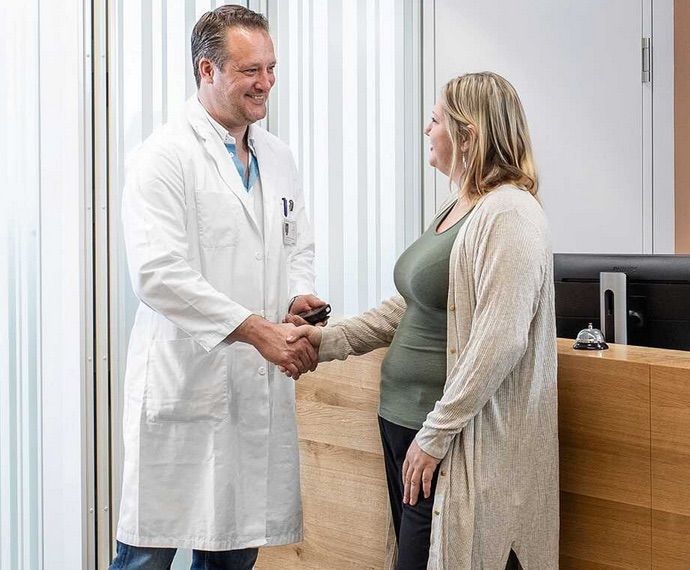
Always Personal: A Conversation with Dr. von der Groeben
Excess weight is a problem that literally weighs on many people. But it’s not just pizza or french fries that cause excess weight: often, many factors come together that make it difficult to lose those extra kilos. Severe excess weight is referred to as obesity, derived from the Latin word *adeps*—meaning fat. A person’s body fat percentage can be measured using the so-called Body Mass Index (BMI). This Body Mass Index is a metric used for a rough assessment of a person’s body weight in relation to their height. Let’s take a look at it:
The Body Mass Index
BMI expresses the ratio between a person’s body weight and height (kg/m²). However, to better assess body weight, age should also be taken into account alongside weight and height, since metabolism changes over the course of a person’s life.
Let’s look at an example to better understand how to calculate BMI: You are 1.75 meters tall and weigh 85 kilograms. Then do the math: 1.75 × 1.75 = 3.06. Now divide your weight by this value: 85 ÷ 3.06 = 27.7. Round that up—your BMI would then be 28.
“We speak of severe obesity starting at a BMI of 45,” Dr. von der Groeben begins our conversation. “In the example given, we would only describe the person as slightly overweight. We recommend surgical treatment for a BMI of 35 or higher.” And why? It’s clear: “Weight-loss surgery can be a decisive step toward a new—and, above all, healthy—weight that makes you feel good.”
An Important Factor: Genetic Predisposition
Of course, in addition to diet itself, genetic predisposition also plays a role in patients with obesity. “If, for example, the mother was severely overweight during pregnancy or developed pregnancy-related insulin resistance—also known as gestational diabetes—a baby may be born already overweight,” explains Dr. von der Groeben. “For people with such a genetic predisposition, maintaining a healthy weight is a lifelong challenge and, depending on the type, often impossible to achieve on their own.”
If obesity is present, it is essential to lose weight before pregnancy to allow for ovulation and subsequent fertilization. Dr. von der Groeben: “We have many women who come to us because they cannot get pregnant due to severe obesity, but who have a strong desire to have children.”
The First Steps Before Surgery
Of course, not everyone who is severely overweight can simply walk into the hospital and ask to have the excess weight removed. Various steps must be taken into account beforehand: “Most of our patients have already been through a long and difficult journey and are quite well-informed about other weight-loss options; they’re seeking surgery,” explains Dr. von der Groeben. However, he immediately adds: “They must provide proof of two years of dieting. Whether this was done with Weight Watchers, Herbalife, or through medical counseling doesn’t matter. Only then can I sit down with our dietitians and physical therapists to develop a personalized treatment plan with the patient.”
In addition to dietitians and primary care physicians, Dr. von der Groeben explains, other specialists are also involved, such as endocrinologists, psychologists, internists, and heart and lung specialists. The possibilities for continuing with a non-surgical approach are evaluated—as well as the possibility of surgical intervention. “These options,” says the experienced specialist, “must be carefully examined by all parties involved, together with the patient and the primary care physician.”
Muri Hospital—A Resource Not Only for Obesity Patients:
With four operating rooms, 135 inpatient beds, and six intensive care beds, the approximately 760 employees at Muri Hospital offer high-quality services featuring comprehensive healthcare and modern infrastructure.
What happens if obesity is left untreated?
As weight increases, so do related health conditions. “We must not forget that, in addition to the psychological distress—which is exacerbated by judgmental glances from others and everyday difficulties—health is also at risk. Obesity is a chronic condition that increases the risk of complications such as type 2 diabetes and can lead to a higher incidence of cancer,” explains Dr. von der Groeben, highlighting the dangers of untreated obesity. Back and joint pain, shortness of breath, skin problems, and depressive mood swings are also among the side effects of obesity.
“Bariatric surgery offers many options!”
When it comes to surgery for severe obesity, people often think of liposuction or gastric banding to curb hunger. But there are many more options: “Yes, the gastric band was the most popular method for surgically treating obese patients for a long time. Here at Muri Hospital, we no longer opt for the gastric band because too many complications can arise. For one thing, the band can ‘slip’; for another, the esophagus can also stretch out. Holes can also develop in the esophagus,” explains the obesity expert.
New method: the gastric balloon—simple and temporary
“The insertion of a gastric balloon is a relatively new procedure. This method is suitable for patients with a BMI of 27 to 33, and it promises weight loss of around 25 kilograms. After about six to twelve months, the balloon is removed, and the patient then works with a nutritionist to maintain their new weight,” says Dr. von der Groeben. “However,” he adds, “this is a treatment that the patient must pay for out of pocket.”
Incidentally, the gastric balloon is inserted without surgery. The balloon is inserted endoscopically into the stomach through the mouth and esophagus within twenty to thirty minutes. Once the balloon is in the stomach, it is filled with 500 to 700 milliliters of saline solution. The balloon now occupies a large portion of the stomach, causing the patient to feel full more quickly. However, this form of therapy is only suitable for patients who need additional support while changing their diet.
Gastric Bypass and Gastric Sleeve
At Muri Hospital in Switzerland, one-third of patients undergo gastric sleeve surgery and two-thirds undergo gastric bypass surgery. With both options, patients have the opportunity to lose about two-thirds of their excess weight within a year.
In a gastric bypass, the stomach is bypassed using a section of the small intestine, while in a sleeve gastrectomy, the stomach is reduced in size through a minimally invasive procedure. “For patients who suffer from severe reflux—that is, heartburn—we recommend a bypass,” explains Dr. von der Groeben. A minor drawback: The gastric bypass requires the patient to take multivitamins for life, as these can no longer be absorbed through normal digestion. If the stomach is reduced to a sleeve, its volume is reduced to 85 to 100 milliliters, allowing only very small amounts of food to be consumed and thus leading to rapid satiety. In both cases, however, success becomes apparent relatively quickly.
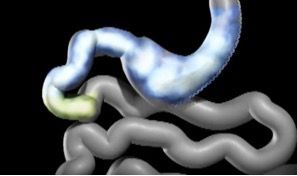
Sleeve Gastrectomy Option (Photo from the Agrundo app video)
After the surgery is before the surgery
Just because surgery has been performed doesn’t mean that patients can sit back and relax—because: “At Muri Hospital, regular follow-up care is provided over a period of five years. More frequently in the first year and then gradually less so. Ultimately, the goal is to teach new dietary guidelines so that the success is sustained. From a health perspective, the patient’s vital signs must also be monitored through laboratory tests to ensure that no deficiency symptoms arise,” explains Dr. von der Groeben.
An unwelcome side effect of weight loss is usually excess skin. “Most patients aren’t bothered by this at first. They’re overjoyed to finally be able to move more easily through life,” the chief surgeon interjects, explaining: “If further weight loss occurs, patients can try to get a cost approval from their health insurance provider”—that is, coverage by the health insurance provider.
Agrundo—the Obesity App
In addition to his surgical work, Dr. von der Groeben has made a name for himself in another capacity: He is the owner of the company ClinicAdvisor—and was involved in the development of the highly user-friendly obesity app AGRUNDO. “The idea behind the app was to develop a digital business card that patients can use, for example, if they need to speak with the surgeon,” he explains. “It also allows users to track their weight history and enter medications along with their dosage and date of administration. It also includes short videos of surgical procedures, so users can explain a planned procedure to family and friends,” says the tech-savvy specialist, who is also working on further developing the app in his spare time. It’s important to him that the app remain free of charge under all circumstances.
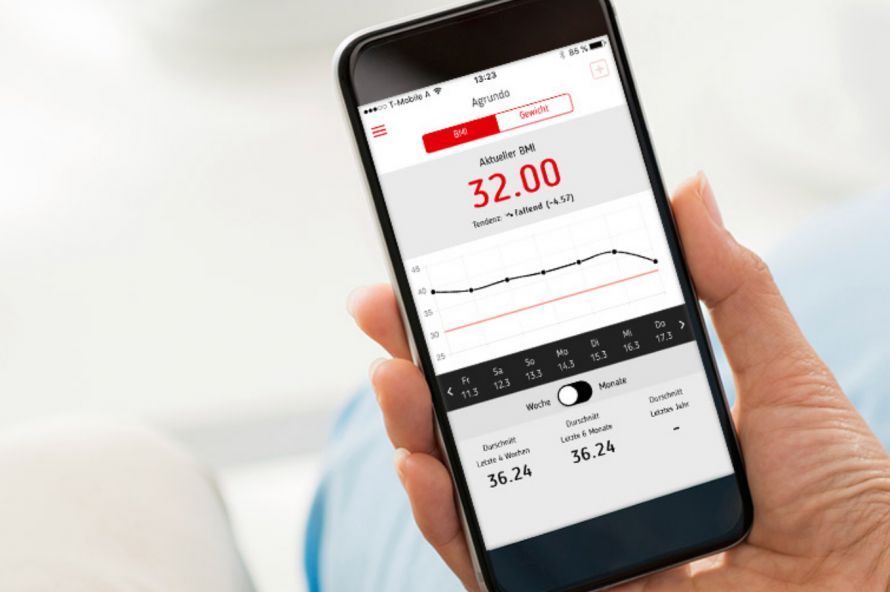
Helpful Obesity App—Co-Developed by Dr. von der Groeben
“Obesity is a serious health risk!”
If your Body Mass Index is over 35, it’s time to take action, since obesity isn’t just a cosmetic problem—it’s a serious health risk. You shouldn’t be ashamed—you should do something about it. Two-thirds of men (67%) and half of women (53%) in Germany are overweight. A lack of exercise, an oversupply of food, and the excessively high sugar content in many foods quickly lead to far too many extra kilos.
When asked if he could cite a particularly impressive example from his daily practice, Dr. Markus von der Groeben replied immediately: “I was very impressed by a patient, a truck driver, who managed—entirely on his own—to reduce his weight from 240 to 160 kilograms. Thanks to a subsequent surgery, his weight then dropped to nearly a normal range.” Experiences like these inspire the empathetic specialist: “The joy of people who finally no longer have to carry around so much excess weight is motivating, and I hope that in the future, more internists and primary care physicians will see the positive aspects of such surgeries and recommend them to their patients when in doubt. We’re not dealing with mutilation here, but with helping people who are often desperate. The subsequent significant reduction in medication use should also not be overlooked,” Dr. von der Groeben concludes.
At Muri Hospital, under Chief Physician Dr. Gerfried Teufelberger and Senior Physician Dr. Markus von der Groeben, all patients with abdominal conditions are treated. The focus is on bariatric, colorectal, and hernia surgery. At the Center for Obesity and Metabolic Surgery, the team fully involves all patients in their treatment. Nutritional counseling and psychological support accompany patients on their journey toward a better quality of life and greater mobility. Muri Hospital is officially recognized as a bariatric reference center by the SMOB (Swiss Society for the Study of Morbid Obesity and Metabolic Disorders). Patients with severe obesity receive expert treatment here based on the latest scientific findings. Its status as a reference center guarantees patient care in a 24-hour emergency department and a Level 2 intensive care unit. The Obesity Center in Muri significantly exceeds the required minimum of fifty bariatric surgeries per year: With approximately 180 procedures—some of which are highly complex—per year, Muri Hospital has established itself as an outstanding center of excellence for obesity and metabolic surgery.

Beautifully located: Muri Hospital in the canton of Aargau
Share this article
Expert Interviews
Read next
- Expert interview
Expert interview with Professor Dr Elmar Herbst, PhD
Oct 15, 2026
Patient-centred and personalised knee surgery
Read more - Expert interview
Cardiogeriatrics: Significance and benefits in the context of hospital reform
Sep 21, 2026
Cardiogeriatrics: Significance and benefits in the context of hospital reform
Read more - Expert interview
Expert Interview with Professor Dr. Amadeus Hornemann, MPH
Sep 18, 2026
Prof. Amadeus Hornemann on Precision Medicine in Gynecology: Modern Surgery, New Techniques, Better Quality of Life
Read more