Expert Interviews
Comprehensive Regenerative Orthopedic Therapy for Achilles Tendon Problems and Heel Spurs - Expert Interview with Dr. Borgmann

Alexandra Pfitzmann ·
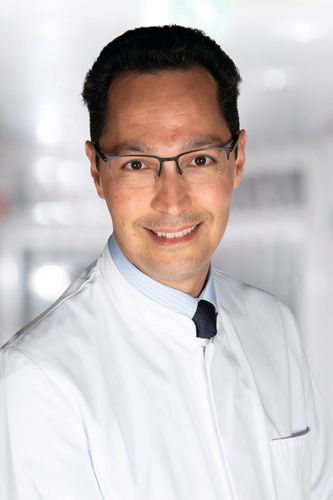
Dr. Raúl Borgmann, M.D., is an experienced specialist in orthopedics and trauma surgery as well as a certified osteopath who offers modern and holistic treatment approaches at his private practice, “OrthoPassion,” in Freiburg im Breisgau. His practice is located in the charming old town and offers a comprehensive approach to treating orthopedic conditions. Dr. Borgmann’s specialization in regenerative medicine and osteopathy is reflected in the innovative treatment methods he and his team employ. Thanks to his previous role as head of shoulder and knee arthroscopy at the Ortenau Clinic, he brings in-depth clinical experience to his practice.
At the heart of his work is what is known as “regenerative orthopedic complex therapy,” which he successfully uses to treat conditions such as Achilles tendon problems and heel spurs. This approach combines proven orthopedic methods with modern regenerative techniques to not only relieve acute pain but also achieve long-term improvements. In addition to traditional orthopedics, Dr. Borgmann relies on techniques such as shock wave therapy, PRP injections, and minimally invasive procedures like the Tenex procedure.
He places a special emphasis on prevention and the long-term promotion of his patients’ health. Together with his colleagues, including Dr. Andreas Baumgartner, M.D., who is also an orthopedist and chiropractor, Dr. Borgmann offers comprehensive diagnostic and treatment options. In addition to traditional orthopedic treatments, his practice also utilizes alternative approaches such as osteopathy, acupuncture, and high-power laser therapy to ensure holistic care. His philosophy is based on not merely treating symptoms, but rather identifying the root causes of the complaints to avoid unnecessary surgeries or medication. With this integrative approach, Dr. Borgmann helps to improve his patients’ well-being in the long term.
The editorial team at Leading Medicine Guide had the opportunity to speak with Dr. Borgmann, who explained the treatment options for heel spurs and Achilles tendon issues in more detail.
The Achilles tendon is the strongest tendon in the human body and connects the calf muscles to the heel bone. It plays a central role in walking, running, and jumping by transmitting the force of the calf muscles to the heel. Any movement in which the foot is pushed downward—whether to push off while running or to stand on tiptoes—would be impossible without the Achilles tendon. Despite its strength, however, it can become vulnerable when overused, subjected to improper stress, or injured. The legend of Achilles gives the tendon its name: In Greek mythology, Achilles was a nearly invulnerable hero because his mother dipped him in the River Styx as a baby to make him invincible. But she held him by the heel, and that very spot remained his vulnerable “Achilles’ heel.” Today, although the Achilles tendon is powerful, it is often considered a potential weak spot—especially among athletes or people who are very active. Another common problem in the heel area is a heel spur. This is a bony protrusion on the heel bone that develops due to repeated strain. This painful inflammation often occurs in conjunction with inflammation of the tendinous plate that supports the arch of the foot and can cause sharp pain with every step. Fortunately, there are modern and gentle treatment options available today that not only relieve pain but can also lead to long-term improvements.
Achilles tendon issues and heel spurs are common problems that often result from overuse or improper weight-bearing.
“Both the Achilles tendon and the plantar fascia are extensions of the fascia that runs across the sole of the foot, along the Achilles tendon and the posterior leg muscles, up to the pelvis, and ultimately up the back to the occiput. If tension issues arise there, the Achilles tendon or the plantar fascia can become overloaded. This overload eventually leads to a restructuring of the tendon, which you can imagine as something like matting. This is because the fibers normally run neatly parallel—but when overloaded, they run diagonally due to the matting, which alters the tendon’s biomechanics. In cases of chronic inflammation, the plantar fascia calcifies at its attachment point on the heel. And since X-rays were the only diagnostic tool available in the past, this calcification was mistaken for a heel spur. Hence the name. But what actually causes pain is not the spur itself, but the inflamed tendon attachment. This can be painful—or not—with or without a heel spur. Because even after the inflammation has healed, the spur may still be there but won’t cause any symptoms. The cause of a heel spur is therefore a state of irritation. What the patient doesn’t really notice with a heel spur is the thickening, whereas this can definitely be felt in the Achilles tendon. Muscular imbalances definitely play a role. These imbalances can develop from frequent and prolonged sitting, as this promotes shortening of the soleus (a long, deep muscle in the lower leg) and the posterior chain of the leg, since these muscles are not properly stretched due to the flexed position of the hips. “When you then suddenly stand up, this can lead to a stiff, painful sensation,” explains Dr. Borgmann, going on to describe the connection to pelvic dysfunction and a blockage of the sacroiliac joint:
“Such dysfunction can lead to a functional leg-length discrepancy—an apparent difference in leg length. I like to compare this to a wooden table left out in the garden, exposed to wind and weather. When the tabletop warps, one leg hangs in the air, even though the table legs are still the same length. When this happens in humans, it alters the muscular tension in the lower limb chain and can lead to irritation of the Achilles tendon or plantar fascia. This can also be a chronic process that patients often don’t notice for a long time, and at some point, it starts to hurt. A common symptom in both cases is significant pain upon starting to walk. In the early stages, it’s common for the pain to occur during the first few steps, then subside, but eventually a persistent pain sets in. The pain can then intensify and become downright debilitating, to the point where some patients can no longer walk at all.”
The plantar fascia (also known as the plantar aponeurosis) is a strong, band-like connective tissue that runs along the bottom of the foot. It plays an important role in foot structure, stability, and movement mechanics.
In orthopedic regenerative complex therapy, various regenerative procedures are used to specifically treat Achilles tendon issues and heel spurs.
“Comprehensive regenerative orthopedic therapy emerged from the combination of orthopedics and the holistic approach of osteopathy, regenerative medicine, physical therapy, and movement medicine. We have various therapeutic components with which we aim to address different systems. The first is classical local therapy, which we use to treat the tendon; this is carried out using focused shockwave therapy in conjunction with a specialized self-exercise program. This is a classical conventional medical therapy for which there are also solid studies, and it has the highest potential for regenerative effects. This is because the shock wave facilitates the release of neurotransmitters in the tissue, allowing diseased tissue to release more signaling molecules, which in turn boosts all metabolic processes at the cellular level. We supplement this with regenerative medicine using PRP (platelet-rich plasma) injections. We generally only do this in more severe cases,” explains Dr. Borgmann.
PRP injection is a promising therapy that supports the body’s natural healing process by delivering highly concentrated platelets and growth factors to the injured or inflamed area. PRP therapy uses the patient’s own blood, which is processed to obtain platelet-rich plasma. This plasma contains growth factors that are injected directly into the affected areas. This stimulates the body’s own regenerative processes, allowing damaged tissue to heal more quickly and reducing inflammation. For Achilles tendon issues, PRP can help repair micro-tears in the tendon and strengthen its structure.
“We also offer regional therapeutic measures of a regenerative-physical nature. These utilize a high-energy magnetic field—electromagnetic transduction therapy—which has a completely different biophysiological effect. To explain this, it’s important to note that human cells have a membrane with a voltage gradient from the inside to the outside, which is crucial for all ion transport and metabolic transport from the inside to the outside and vice versa. And our magnetic field acts a bit like an induction cooktop, transferring energy to this cell membrane, which facilitates ion exchange. Through this interplay of the various therapies, we achieve synergistic effects, just as with sun, water, and fertilizer,” explains Dr. Borgmann, adding:
“In very acute cases, we would also use the laser, which works a little differently. Here, protons penetrate the tissue, knock an electron out of the atomic shell, and energy is released again at the cellular level. This triggers a reaction that converts the ADP (adenosine diphosphate) molecule back into the ATP (adenosine triphosphate) molecule, which is the fuel for the mitochondria, and in doing so, we have released ‘mitochondrial kerosene,’ referred to in modern medicine as soft-tissue engineering.” ATP is the cell’s “energy currency molecule” and provides immediately available energy. ADP is formed after ATP is consumed and can be converted back into ATP by taking up a phosphate group to meet the cell’s energy needs.
All of these regenerative procedures aim to stimulate the damaged tissue, accelerate natural healing, and at the same time avoid surgical intervention. By directly treating the causes of the symptoms—such as inflammation or calcifications—they enable long-term relief of symptoms and improved functionality of the tendons and tissues.
Comprehensive regenerative orthopedic therapy offers an innovative and holistic approach to Achilles tendon issues and heel spurs that differs significantly from conventional treatment methods.
“We also use a holistic osteopathic approach, with which we typically treat patients once or twice. If someone has pelvic dysfunction and walks with legs of different lengths, you can treat the Achilles tendon for a long time, but without correcting the static dysfunctions, complete healing will not occur. Osteopathy therefore helps restore proper alignment to release tissue tension, facilitate lymphatic drainage, and reduce dysfunctional fascial tension,” Dr. Borgmann explains, adding further key points regarding movement analysis:
“In addition to the actual treatments of the affected tendons or the heel, regenerative orthopedic complex therapy also emphasizes general posture, movement mechanics, and the causes of improper loading. This means that additional measures, such as gait and movement analysis, are integrated into the Motion Lab. The goal is to correct poor posture and improper loading to prevent future symptoms and achieve a lasting improvement in movement patterns. What sets us apart is that we have a high-performance Motion Lab—a facility found in only ten practices throughout Germany. Here, for example, we can also assess runners and simultaneously display spinal alignment, pelvic alignment, and leg axis alignment at every point in the movement, even at high running speeds. This allows us to precisely identify whether the patient, for example, has flat feet, shortened chest muscles, or whether the shoulders are rotated forward (due to extensive computer mouse use). When jogging, a person must compensate for shortening in the chest, which in turn leads to an imbalance in the pelvis. Such a dysfunction then extends into the leg axis, and if the Achilles tendon is the weak point, symptoms become noticeable there. The analysis then identifies treatment points for osteopathy, as well as for a training program. In any case, after the assessment, the findings are discussed in detail with the patient, and they receive a personalized exercise plan to address and correct the specific imbalances. At the end of each therapy session, cold therapy using CO₂ is administered. “This means that CO₂ gas, at approximately -60 °C, is released from a cylinder, allowing us to rapidly cool the tissue down to 4–7 °C. This induces a thermal shock, which further helps to clear away inflammatory mediators.”
The holistic gait and running analysis provides a comprehensive examination of the body, ranging from the feet through the legs and pelvis to the spine—all in a single measurement session.
During the process, over 30 points on the body are marked, a line pattern is projected onto the back, and the movement is recorded from four perspectives using five high-resolution cameras. The cameras operate at 240 frames per second, while highly sensitive pressure plates in the treadmill measure the exact rolling motion of the feet. This enables dynamic foot pressure measurement as well as simultaneous analysis of the spine, pelvic alignment, leg axes, and joint angles—from the hip through the knee to the ankle. The 4D spinal measurement uses a radiation-free, optical method. Here, the body’s surface is examined using video raster analysis, which creates a dynamic 3D model of the spine. This model provides detailed information about spinal curvature, vertebral rotation, vertical and lateral deviations, as well as pelvic position and torsion. This technique allows for the precise documentation of postural problems, muscular imbalances, and static changes. The underlying software was developed in collaboration with the University of Mainz and delivers exceptionally reliable results. The examination is supplemented by a high-performance gait and running analysis that provides precise measurement data even at speeds of up to 30 km/h. Reflective markers attached to specific points on the body enable comprehensive recording from various perspectives. The results provide insight into foot roll-off patterns, movement sequences, and even the slightest asymmetries or postural abnormalities.
“A high-performance motion lab comes with certain requirements. For one thing, it’s naturally more expensive to set up than basic motion labs. You also need suitable facilities and—of course—staff who are willing to learn the system in order to fully realize its added value. I conducted measurements myself for two years and am very familiar with the system. Our sports scientists are specially trained to interpret the results, a process that required a learning curve of 6 to 12 months, even though they already have about five years of sports science studies under their belts. “A measurement in the lab also takes about 90 minutes, and the overall effort involved is very high,” explains Dr. Borgmann.
In modern regenerative orthopedic complex therapy, the patient’s individual biomechanics play a central role. The therapeutic approaches are tailored to each patient’s specific physical conditions and movement patterns to ensure a customized and effective treatment.
Based on these detailed analyses, the treating physician can develop a customized treatment plan that addresses the patient’s specific biomechanical characteristics. “Shockwave therapy and self-exercises always form a unified approach for each individual patient. In cases of chronic conditions, we tend to opt for magnetic field therapy. If it is a very acute case involving severe irritation and intense vascular activity, we would start with laser therapy for about two weeks and only then switch to magnetic field therapy. The duration of treatment varies from case to case. The sooner a patient comes in, the better the prognosis. If someone has only been experiencing pain for a few weeks, we can expect significantly faster therapeutic success. Generally speaking, we can say more after the first ultrasound. This varies from three weeks to three months. During this period, the patient comes to see us two to three times a week, and the entire chain is treated. After all, you don’t get in shape by going to the gym just three times. Consistent treatment is key. Because the longer the problem persists, the more protracted the treatment becomes,” states Dr. Borgmann.
As part of a holistic approach to treating Achilles tendon issues and heel spurs, supportive measures such as dietary adjustments and targeted exercise therapies play an important role.
“We always offer our patients exercises they can do on their own, which are also effective as a preventive measure. It’s also important to focus on correcting muscle shortening. So anyone who spends a lot of time sitting at a desk should get up once every 1–2 hours, stretch for five minutes, do jumping jacks, or simply dance to create balance. That works wonders. However, a regular self-exercise program is an essential factor. We also offer this online via Zoom, especially for patients who live farther away. Footwear, of course, also plays a role. Proper shoes with good insoles are recommended for people who already have flat feet or pronated feet. High heels can be worn, but not for twelve hours straight, and you should also take your shoes off more often, stretch your feet, and so on. “Exercise and stretching account for 90% of prevention!” recommends Dr. Borgmann.
Dietary changes often focus on an anti-inflammatory diet. Foods such as fresh fruits and vegetables, fish rich in omega-3s, nuts, and healthy fats can help reduce inflammatory processes in the body, which is particularly beneficial in cases of chronic tendonitis or an irritated heel spur. Avoiding highly processed foods, sugar, and trans fats also helps speed up the healing process by reducing inflammatory reactions. In some cases, taking dietary supplements—such as collagen, vitamin D, or omega-3 fatty acids—may also be recommended to support tissue regeneration and promote tendon elasticity.
“A so-called anti-inflammatory lifestyle is always beneficial, with measures to minimize acid formation, sufficient sleep, minimal smoking, minimal alcohol, and minimal coffee. As for diet, the Mediterranean diet is best—low in carbohydrates, free of white flour and refined sugar, and low in meat (and if consumed, then from grass-fed animals),” advises Dr. Borgmann at the conclusion of our conversation.
Thank you very much, Dr. Borgmann, for this insightful information!
Share this article
About the medical author
Alexandra Pfitzmann
Editor
Alexandra Pfitzmann – medical author: expert knowledge, professional articles and medical insights in the Leading Medicine Guide.
More about the medical author →Expert Interviews
Read next
- Expert interview
Cardiogeriatrics: Significance and benefits in the context of hospital reform
Sep 21, 2026
Cardiogeriatrics: Significance and benefits in the context of hospital reform
Read more - Expert interview
Expert Interview with Professor Dr. Amadeus Hornemann, MPH
Sep 18, 2026
Prof. Amadeus Hornemann on Precision Medicine in Gynecology: Modern Surgery, New Techniques, Better Quality of Life
Read more - Expert interview
Expert Interview with Professor Dr. Konstantinos Anagnostakos
Sep 15, 2026
Prof. Anagnostakos on Painful Knee Replacements
Read more