Expert Interviews
Krone, Wastewater Treatment Plant, Recycling Center: Prof. Dr. med. Otto Kollmar on the Liver

Alexandra Pfitzmann ·
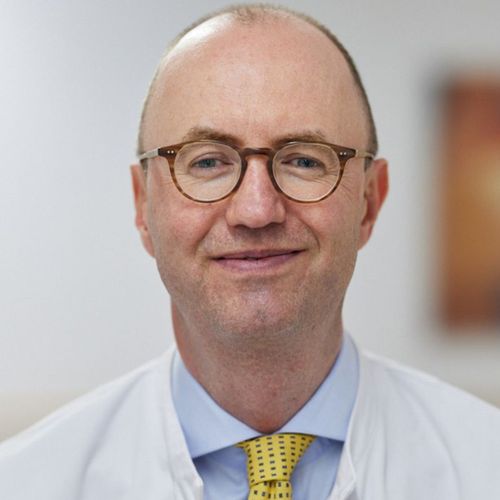
For Professor Dr. med. Otto Kollmar, it is a remarkable organ that fascinates him immensely: The liver, our largest organ, weighs on average about one and a half kilograms—and has very specific functions: It is essential for metabolism and also acts as a filtration system for harmful and toxic substances. From the food we consume, the liver extracts vital nutrients, converts toxic substances into non-toxic ones, and passes them on to the intestines for elimination. It’s clear, then, that liver disease requires prompt action—whether it’s an abscess, cirrhosis, or even liver cancer. Prof. Kollmar, who heads the Department of Hepatobiliary Surgery as the cross-site Deputy Chief Physician at Clarunis – University Abdominal Center Basel, is regarded as a proven specialist in all matters related to the liver. This makes him the ideal interviewee for the Leading Medicine Guide on this multifaceted topic.
 Probably the greatest challenge with liver diseases is diagnosing the condition in the first place. “The liver doesn’t show any signs on its own. There are no primary symptoms, especially since the liver has no pain nerves. Only secondary consequences are observed. Then the affected patient may, for example, develop ascites, the navel may protrude, the skin may turn yellowish, or blood vessels that weren’t there before may suddenly become visible,” says Professor Dr. Kollmar, describing the diagnostic dilemma at the start of our conversation. Liver diseases are usually detected during a general examination, such as when liver function tests are performed using a blood sample.
“If the measured liver values are too high, the best way to further examine the liver is with an ultrasound. Ultrasound imaging, in particular, has been perfected over the last five years and is an excellent diagnostic method for getting to the root of disease symptoms. The next step in further investigation is specialized imaging, which is performed using liver-specific contrast agents for ultrasound and/or magnetic resonance imaging (MRI). The contrast agent is metabolized by the liver and excreted via the bile ducts. “This is where we then use magnetic resonance cholangiopancreatography (MRCP), an examination of the bile ducts and the pancreatic duct,” says Professor Dr. Kollmar, explaining the various diagnostic procedures.
The Complex Hepatobiliary System
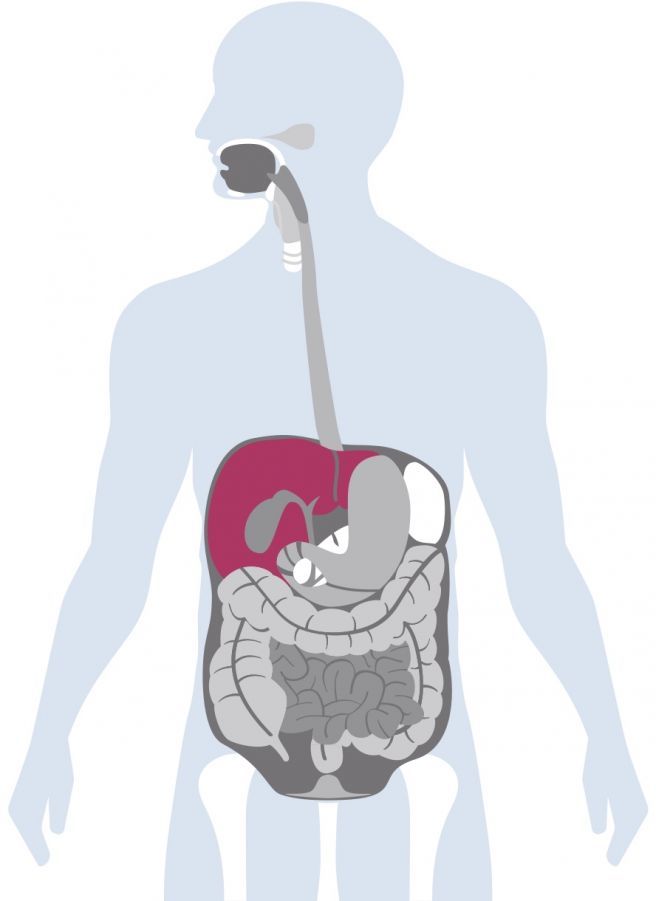
The adjective “hepatobiliary,” composed of “hepatic” and “biliary,” refers to “the liver and the gallbladder.” “The hepatobiliary system is the connection between the circulatory system, the liver, and the bile ducts. You have to imagine it like an apple tree,” illustrates Professor Dr. Kollmar. “The liver forms the crown of the tree, while the bile duct system makes up the branches and the trunk. Everything a person needs in terms of nutrients is produced by the liver. And at the same time, it acts as our filtration system. There is a true circulatory system between the liver, bile, and the intestines.” It’s a bit puzzling that some people have their entire gallbladder removed, and one might assume that this would disrupt the cycle. “In fact, humans don’t need the gallbladder. It’s, so to speak, a relic of our biological evolution,” explains Professor Dr. Kollmar.
And if hepatocellular carcinoma is detected …?
If a liver examination reveals that hepatocellular carcinoma has developed, there are a variety of treatment options available. “There is a wide range of surgical techniques available. One can remove a small or large section of the diseased liver as needed, and—depending on the stage of the disease—one must always consider whether parts of the bile ducts need to be removed as well,” states Professor Dr. Kollmar, who then describes three common ablation procedures:
“The first option is ablation, also known as radiofrequency ablation. In this procedure, a heat probe is used to create a heat zone within the tumor at approximately sixty to eighty degrees, effectively cooking the tumor. The second option is microwave ablation, which follows a similar procedure but at slightly lower temperatures. A third option is cryoablation of the tumor, in which the tissue is frozen to minus eighty degrees for about fifteen minutes using a cryoprobe. The patient’s immune system is strongly stimulated by the tissue destroyed by the cold. Although this method is very effective, it is also very expensive because it requires liquid nitrogen; for this reason, clinics are reluctant to use it, especially since equivalent results can be achieved with the less expensive heat-based method. “About fifteen percent of patients with liver tumors can be treated surgically, and we are working hard to increase that percentage.”
Unfortunately, metastatic tumor cells often end up in the liver—a process known as “homing.” “This phenomenon occurs because tumor cells have a better chance of survival in the liver, since blood flow is slowed there. Using chemokines—signaling proteins—and cytokines, which play an important role in coordinating the immune response, the liver literally lures the tumor cells in: The many armed immune cells in the liver want to minimize the cancer cells. But the cancer cells aren’t ‘stupid’; they settle in the ‘friendly’ areas of the liver and try to outwit the immune system,” explains Professor Dr. Kollmar, describing the particular challenge posed by tumor cells in the liver.
Organ Donation and Liver Transplantation
If liver cancer has already reached an advanced stage, a liver transplant must definitely be considered. “There are always priority lists for organ transplants. The availability of donated organs varies greatly from country to country. In Norway, for example, the waiting time for a donor liver is surprisingly short—about two to three weeks—while here in Switzerland, patients must expect a waiting time of about one year,” says Professor Dr. Kollmar, highlighting the issue of organ donation willingness.
In Switzerland, the so-called “opt-out” system for organ donor cards was adopted in June 2022. This means that every adult citizen is automatically a potential organ donor, unless they submit a request stating that no organs may be removed after death has been certified. This regulation is set to take effect in 2024. In Germany, this option was also discussed but not implemented.
“I don’t think very many people are afraid of an organ donor card. We can only keep encouraging people to make this decision. After all, I can’t take my organs with me to heaven, but I might still be able to save lives here on earth,” Professor Dr. Kollmar urges, emphasizing: “Please imagine a patient who, for example, has to go for dialysis three days a week—let’s say Mondays, Wednesdays, and Fridays. Each dialysis session lasts four to five hours, and the patient also has to travel to and from the treatment center. In addition to the significant time commitment, dialysis is physically taxing. By Tuesday at the latest, our example patient will be feeling very unwell. This person’s entire quality of life will change completely if they can put an end to this ordeal thanks to donor organs.”
Time Becomes the Enemy
As soon as a donor organ becomes available, things have to move pretty quickly. “With a liver, we only have twelve to sixteen hours to complete the transplant. That’s a lot of time compared to a heart transplant, where you only have four to five hours, but it still requires good logistics. The donor, who has been declared brain dead, must be kept on life support so that the organs remain viable. The recipient is notified by phone and must come to the hospital immediately. The sooner the liver transplant can be performed, the better. Here in Switzerland, the distances involved still make this feasible. In Germany, however, the distance between Kiel and Munich, for example, would be almost impossible to cover in time,” explains Professor Dr. Kollmar, highlighting the time constraints.
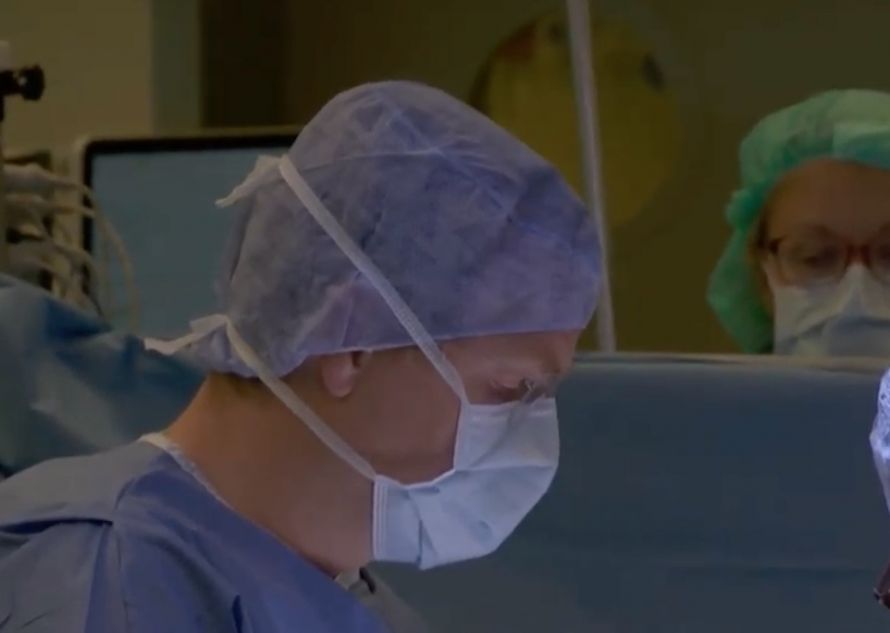
A transplant usually takes about four hours, but can last up to eight hours. “The patient’s postoperative care and rehabilitation depend on their overall condition. If they are generally healthy and still have, for example, their own functioning liver tissue in their body, they can usually leave the hospital after two to three weeks,” says Professor Dr. Kollmar encouragingly. “Medications to prevent organ rejection are always administered, and certain precautions must be taken for life at home. For example, no canaries or cats should live in the household of immunosuppressed patients, as these animals can transmit diseases that could be dangerous. Dogs in the household must be dewormed,” explains Professor Dr. Kollmar, outlining the precautions.
What’s Good and Bad for the Liver
The liver generally benefits from lighter activities. For example, someone who eats a seven-course meal at a restaurant and drinks wine with it really gives the liver a workout. Of course, you can do this once in a while, but consistently “going overboard” tires out the liver and increases the risk of damage. “If you want to do your liver a favor, you should regularly consume fish oils, omega-3 fatty acids, and artichokes. Artichokes help with antioxidant protection and are equally healthy whether taken as capsules, pickled, or as a cooked vegetable. What the liver doesn’t like is a lot of meat and too much alcohol—that really makes it work hard,” notes Professor Dr. Kollmar.
The biggest problem with the liver in the Western world, however, is the development of fatty liver disease. Because many people simply consume too much of everything—especially unhealthy sugar and fat—and, on top of that, don’t get enough exercise, they are becoming increasingly overweight. “The liver immediately absorbs fat and stores it. The development of a fatty liver, in turn, can lead to cirrhosis, which can ultimately promote the formation of a tumor. I generally advise my patients to eat little to no meat and to consume sweets and fatty foods only in moderation. A period of fasting doesn’t hurt, but it’s important to know that the liver always holds on to stored fat. It doesn’t break that down very quickly,” says Professor Dr. Kollmar.
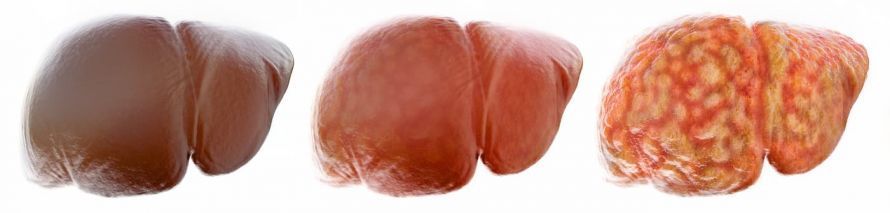
Transition from a healthy liver to a fatty liver © crevis / AdobeStock
Looking to the Future
One of the most fascinating aspects of the liver is that it can regenerate. It consists of eight different segments. If, for example, two segments are removed, the remaining segments continue to grow until the liver regains its weight of 1.2 to 1.5 kilograms. “However, it’s important to consider that this regrowth of the liver weakens the patient’s immune system, as it naturally requires a great deal of energy. The liver is also less effective at detoxifying the body during the regrowth process. Research is currently underway—including here at Clarunis—to determine how the liver could be stimulated to grow prior to surgery. If such a mechanism were to work, it would be possible to improve the entire prophylactic approach,” Professor Dr. Kollmar concludes our conversation on a hopeful note.
Professor Kollmar, thank you for the pleasant and very informative conversation!
Anyone wishing to contact our specialist directly can do so via his profile page on the Leading Medicine Guide.
Share this article
Expert Interviews
Read next
- Expert interview
Expert interview with Professor Dr Elmar Herbst, PhD
Oct 15, 2026
Patient-centred and personalised knee surgery
Read more - Expert interview
Cardiogeriatrics: Significance and benefits in the context of hospital reform
Sep 21, 2026
Cardiogeriatrics: Significance and benefits in the context of hospital reform
Read more - Expert interview
Expert Interview with Professor Dr. Amadeus Hornemann, MPH
Sep 18, 2026
Prof. Amadeus Hornemann on Precision Medicine in Gynecology: Modern Surgery, New Techniques, Better Quality of Life
Read more