Expert Interviews
Delaying the Need for Prosthetics: Dr. Ferdinand Krappel on Innovative Approaches in Regenerative Medicine

Sabine Schneider ·
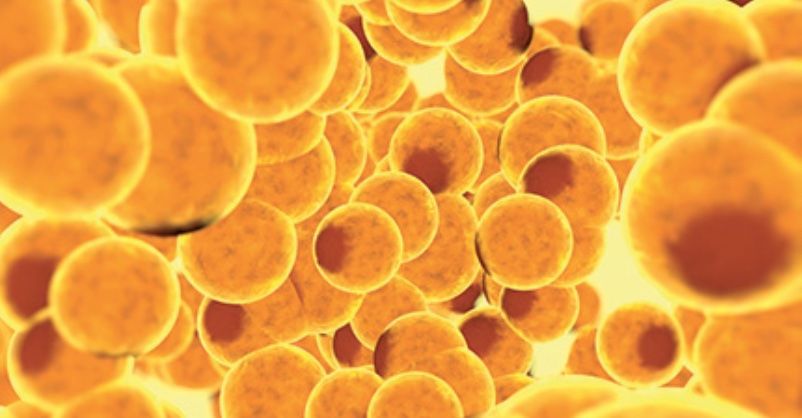
It sounds a bit like science fiction: The body’s own stem cells or fat cells are injected into the knee joint, hip, or spine—and trigger regenerative processes in the cartilage or intervertebral discs. Innovative methods make it possible to treat damage caused, for example, by osteoarthritis in a completely new way: pain in the joints or back disappears, long-lost mobility returns—and those who had already come to terms with the idea of an artificial joint can breathe a sigh of relief. Dr. Ferdinand Krappel, MD, who, as chief physician at the Spine Center at Spital Oberwallis in Brig, enjoys a strong reputation as a proven specialist in orthopedics and traumatology of the musculoskeletal system, is deeply passionate about this emerging field. He provides the Leading Medicine Guide with insights into procedures that have one primary goal: to delay the need for artificial joints and, in some cases, perhaps even make them unnecessary.
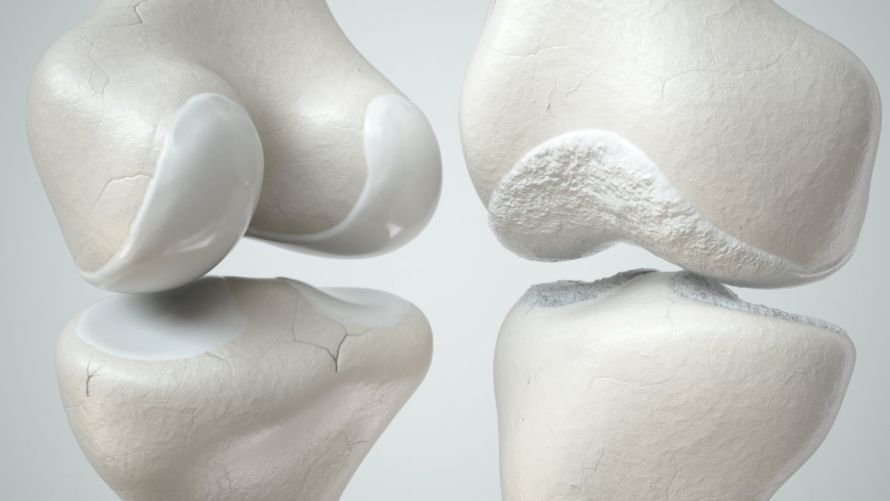
Restoring dysfunctional tissue naturally and thereby curing a wide variety of diseases: this age-old human dream has come true—as demonstrated by current developments in modern medicine. Regenerative medicine is the field in which more research has been conducted in recent years than in almost any other.
To enable damaged tissue to heal itself from within, stem cells stimulate the recovery of damaged cells—thereby treating, for example, injury-related damage. It is therefore obvious that orthopedics is a particular focus of regenerative medicine. However, this is due in no small part to the fact that visionary leaders in high-performance orthopedics have focused on this field—renowned physicians who are accustomed to thinking outside the box even in their daily clinical practice. No wonder, then, that Dr. Ferdinand Krappel was immediately enthusiastic when he learned of entirely new methods for treating conditions such as osteoarthritis or osteoporosis—possibilities for stem cell therapy in his discipline of orthopedics that had previously been considered almost unimaginable: “I came across this in 2017 and then immediately attended a meeting of the American Academy for Regenerative Medicine in Miami,” Dr. Krappel explains at the start of the conversation. His passion for medicine was quickly ignited—and before long, he was taking courses through this very academy.
A Pioneering Method in Regenerative Medicine: The Lipogems Procedure
“There are various procedures,” he says. “Perhaps the most important one, which is the focus here, is the Lipogems procedure. It’s used for peripheral joints, such as the knees and hips. First, fat tissue is extracted using traditional liposuction, and then, after processing, it’s injected into the knee or hip.” The Lipogems procedure is so new that it is still awaiting final approval in German-speaking countries—partly for ethical reasons: “If I extract cells from one site and inject them into another, that can run into trouble with regulators. But it is legal to remove tissue and re-inject it into the same patient.” Even in the U.S., where Dr. Krappel first encountered stem cell therapies, the development was viewed critically by the authorities. However: “These procedures are now approved in many countries,” he reports, “with the U.S. and England, the Nordic countries, and Italy leading the way.” And it was precisely in the latter country that Dr. Ferdinand Krappel performed his first procedures: “I performed the first regenerative surgeries on knees—with my colleague Dr. Arcangelo Russo in Bologna, who kindly hosted me. He has already performed the Lipogems procedure over 500 times; that’s where I learned it from him.”
Once the fat cells have been injected into the knee or hip, regeneration occurs relatively quickly, according to Dr. Krappel—but of course, it requires some patience: “It can take one or two months for the desired result to become apparent—with an 80 percent success rate over two years.” The results speak for themselves, as the specialist emphasizes: “For example, I spoke with a man in his late fifties in Bologna. He played tennis at a relatively high level for his age and simply didn’t want to accept that with a knee replacement, he wouldn’t be able to make certain movements—he wanted to keep playing tennis. This man had already undergone the Lipogems procedure with Dr. Russo two years earlier, and now he’s doing it again; as long as it works for two years, he’s satisfied and doesn’t need a prosthesis.”
Innovative Method Using Fat Cells: “A Modern Alternative”
A minor procedure every two years for worry-free mobility—that sounds like a truly sustainable method. Dr. Krappel confirms this: “It’s simply an alternative we should offer patients in this day and age. This applies to the joints, and the Lipogems procedure has really established itself in this area.” The method’s success has since been confirmed: “At a conference in Bologna in October 2022, it became clear that the success rates are very consistent,” says the chief physician at Spital Oberwallis in Brig.

Just how well-established the procedure already is is also evident from the fact that one of the pioneers of stem cell therapy trusts in it: Arnold Caplan, an internationally renowned professor of biomedicine in Cleveland, Ohio, flew from the U.S. to Bologna—“to have Dr. Arcangelo Russo perform the procedure on his knee and hip,” as Dr. Krappel reports. No question about it: “If he’s having it done, that’s convincing.”
“Especially for people who are very active in sports, the procedure can be applied relatively easily,” says Dr. Krappel. “I have a patient who is an international kickboxing champion, and if he develops stiffness, he’ll naturally have to hang up his gloves.” And he continues: “The procedures are already so advanced that, while we can’t restore the original cartilage, we can now create such a high-quality regenerated tissue that the kickboxer can continue his career for at least a few years before he might eventually need a prosthesis.” Incidentally, Dr. Krappel had to harvest stem cells from the kickboxer mentioned earlier—for one simple reason: “The man is so well-trained; he’s all muscle and has absolutely no fat that could be harvested.”
Of course, you don’t have to be a competitive athlete to benefit from modern procedures using stem cells or adipose tissue. Especially for many people who enjoy being active and exercise frequently, the question arises as they get older: Can I continue living my normal life? And, as Dr. Krappel puts it: “Do I need an artificial joint right away, or can I still manage on my own?”
A Clear Approach: Preserve Joints for as Long as Possible
On the other hand, the question arises: Isn’t it sometimes sensible to have a new artificial joint implanted after all? Dr. Ferdinand Krappel also has a clear position on this: “Of course, joint replacement surgery is at a very high level today,” he emphasizes, “but it must be said: Ninety percent of hip replacements work very well—this was recently confirmed by a meta-analysis from the Schulthess Clinic in Switzerland, which also won an international award. With knee replacements, satisfaction is slightly lower—at 75 to 80 percent.” Not bad either—or is it? “That’s certainly true, but it means that 20 to 25 percent of patients experience pain. And it’s not always clear why these people are in pain. When patients simply can’t do what they want to do—whether for stability reasons or because of tissue pain—then the path to a pain-free life may be a longer one.” A clear argument rooted in his own daily clinical experience: “Of course, I also see these people as part of my work in pain management. That can be frustrating. And that’s exactly why we continue to do everything we can to delay the need for artificial joints.”
Certainly: Highly specialized orthopedic surgeons do everything they can to save their patients’ joints. That should actually be the norm, but: “Unfortunately, that’s not always the case,” as Dr. Krappel says. “Joint replacement is a huge field, and there’s a lot of money involved—for companies as well as for hospitals. Back when I was in training, this approach was completely normal: I received my medical training at the University of Homburg, where Prof. Heinz Mittelmeier and Prof. Giselbert Fries—two pioneers in joint replacement—were based. And they always said you should try to delay getting an artificial joint for as long as possible.” Nowadays, however, that’s no longer necessarily the rule: “Today, many doctors say that a prosthesis might provide ten years of quality of life—and that’s something. But if we can delay the need for an artificial joint by perhaps two years, then we lose nothing. And since we use the patient’s own tissue in regenerative stem cell therapy, there are no side effects, so it’s promising—after all, you gain some time in this case.” How much time that is depends on several factors, as Dr. Krappel notes: “But it’s usually at least two years—and then you can still consider a prosthesis.”
No Side Effects: Low Risk Due to Use of the Patient’s Own Tissue
An important argument in favor of the Lipogems procedure, for example, is the fact that the procedure is relatively simple. Local anesthesia is usually sufficient for the liposuction, and the stem cells are easily injected using a syringe—and the body does the rest of the work on its own.
And what about the spine? “For the spine, treatment is simpler if you harvest stem cells from the pelvic region, for example.” In another relatively new procedure, about eight milliliters of bone marrow are extracted from the central part of the pelvis and injected into the intervertebral discs during a similarly straightforward operation. “Patients arrive at the clinic in the morning and go home by noon.”
That leaves one question: How scientifically sound is this? Of course: “Prospective randomized studies aren’t an option here,” which means: “You can’t inject one patient with their own fat and throw it away on another.” Therefore, one must rely on case numbers, and according to Dr. Krappel, there have long been meaningful registries: “A colleague in London has tracked more than a thousand procedures, and Dr. Russo well over five hundred,” as the chief physician of the Spine Center at the Upper Valais Hospital in Brig emphasizes—thus, effectiveness and success rates are clearly evident.
It is also important to Dr. Krappel that he compares the findings for each individual patient with international colleagues and exchanges ideas—and that he provides seamless follow-up care. For him, constant consultation with the developers of the individual methods and with leading experts is simply part of the process—including on an interdisciplinary basis. “In medicine, it’s normal that even as an established specialist, you feel like an apprentice learning from a master when it comes to new procedures,” says Dr. Krappel—and in doing so, he perfectly sums up his enormous drive for research: Ultimately, the goal is to achieve mastery in his own right.
For Dr. Ferdinand Krappel, the prospects for these regenerative medicine procedures are brilliant—for several reasons. “I remove tissue from you—and I inject it back into you,” he says, “so there’s no significant risk,” especially since the amounts removed are minimal. And he plans to follow the example of American professor Caplan: Even during his active judo career, Dr. Krappel was told after a sports injury that his knee would eventually give out. His position is clear: “I’m going to have this done on myself, too. I’m convinced it will work well for me for several years.”
Interest in the new regenerative procedures is growing rapidly among experts, as Dr. Krappel emphasizes. A well-known equestrian, for example, heard about it and approached him: The athlete was facing the stiffening of his two lower intervertebral discs—and that would most likely have meant the end of his career in the saddle. “Thanks to stem cell therapy, his career can certainly continue for at least another two years,” says Dr. Krappel. And of course, it’s not just about his career, but about his overall quality of life. Furthermore, spinal fusion is a much more invasive procedure and, incidentally, irreversible. So the decision was an easy one for the show jumper.
There is one major difference, however, between treating the knee or hip with Lipogems and applying stem cell therapy to the spine: In the case of the knee and hip joints, the need for an artificial joint can often be postponed for many years. With the spine, the treatment may permanently resolve the problem. But even that could still change, as Dr. Ferdinand Krappel emphasizes: “The procedures are constantly being refined.” By him as well, of course.
Dr. Krappel, thank you for these very interesting insights into your field of expertise.
You can contact our specialist directly via his profile page on the Leading Medicine Guide.
Share this article
About the medical author
Sabine Schneider
Editor-in-Chief
Sabine Schneider – medical author: Explore expert articles and medical expertise in the Leading Medicine Guide.
More about the medical author →Expert Interviews
Read next
- Expert interview
Cardiogeriatrics: Significance and benefits in the context of hospital reform
Sep 21, 2026
Cardiogeriatrics: Significance and benefits in the context of hospital reform
Read more - Expert interview
Expert Interview with Professor Dr. Amadeus Hornemann, MPH
Sep 18, 2026
Prof. Amadeus Hornemann on Precision Medicine in Gynecology: Modern Surgery, New Techniques, Better Quality of Life
Read more - Expert interview
Expert Interview with Professor Dr. Konstantinos Anagnostakos
Sep 15, 2026
Prof. Anagnostakos on Painful Knee Replacements
Read more