Expert Interviews
Post-Bariatric Body Contouring Surgery After Weight Loss - Expert Interview with Dr. Ali Abdeen

Alexandra Pfitzmann ·
Dr. Ali Abdeen, M.D., is a board-certified specialist in plastic and aesthetic surgery and the head of the Center for Post-Bariatric and Reconstructive Surgery at Schloss Heiligenberg in Seeheim-Jugenheim. With over 15 years of clinical and scientific experience, he is one of the leading specialists in the field of body contouring following significant weight loss.
A particular focus of his work is the surgical removal of excess skin, which often occurs after bariatric surgery or significant weight loss. He employs the latest techniques in plastic surgery—always with the goal of alleviating functional discomfort while achieving a harmonious aesthetic result. At the center at Schloss Heiligenberg, Dr. Abdeen offers a wide range of reconstructive procedures, including abdominoplasty, upper arm and thigh lifts, breast reduction and lift surgeries, and comprehensive body lift procedures. His high level of surgical precision, combined with a deep understanding of his patients’ individual anatomical conditions, makes him a highly regarded expert in this field.
In addition, Dr. Abdeen covers the entire field of aesthetic plastic surgery. Alongside facial procedures—such as facelifts or eyelid lifts—he also offers body-contouring procedures like liposuction or buttock lifts. Another area of focus is minimally invasive procedures such as medical needling, hyaluronic acid treatments, and botulinum toxin therapy. Dr. Abdeen has worked at renowned clinics both in Germany and abroad, including the Center for Severe Burn Injuries at the Berlin Trauma Hospital, the Schlossparkklinik, and Dr. Viola Moser’s Parkklinik. His extensive training, surgical expertise, and ongoing scientific education make him a leading figure in plastic and reconstructive surgery. At the Center for Post-Bariatric Surgery, he combines medical excellence with a personalized approach to patient care—delivering lasting results and a new quality of life.
The editorial team of the Leading Medicine Guide learned more details about this in a conversation with Dr. Ali Abdeen.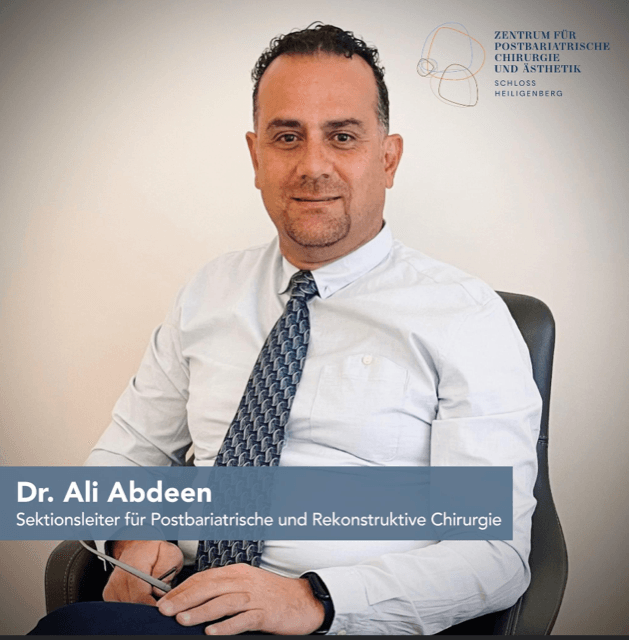
Significant weight loss—whether through bariatric surgery or consistent lifestyle changes—represents a major health and personal achievement for many people. However, after reaching their target weight, patients are often left with excess skin, which can cause both functional discomfort and aesthetic concerns. Post-bariatric body contouring surgery addresses precisely this issue: It helps patients restore their body contours, enhance their well-being, and provide long-term relief from symptoms such as skin irritation or limited mobility. At specialized centers such as the one at Schloss Heiligenberg in Jugenheim, the focus is on individualized, medically sound care—from the initial consultation through the application process with health insurance providers to the precise surgical procedure.
Body contouring surgery following significant weight loss—known as post-bariatric surgery—is far more than just a cosmetic procedure. It may be medically and functionally necessary and can make a decisive contribution to patients’ long-term physical and mental health.
“After significant weight loss, excess skin often remains in various areas of the body. The skin, which has stretched over many years, loses its elasticity over time and can no longer fully retract after weight loss. Areas such as the abdomen, upper arms, thighs, breasts, and back are particularly affected. This so-called excess skin is not merely an aesthetic issue. In many cases, they also have medical and functional implications. Those affected complain of recurring skin irritation, inflammation in skin folds, fungal infections, and chronic sores. Unpleasant odors, mechanical friction, and restricted movement can also occur, significantly impairing daily life. In addition to physical symptoms, psychological distress plays a major role: Many patients report feelings of shame, depressive moods, and social withdrawal. “In such cases, a skin tightening procedure is not only advisable for aesthetic reasons but may also be medically necessary to alleviate symptoms, improve quality of life, and restore physical well-being,” explains Dr. Abdeen at the beginning of our conversation.
Maintaining a stable weight prior to a tummy tuck is essential, as further weight fluctuations can negatively impact the surgical outcome or lead to new excess skin. General health is equally crucial: Nutritional status should be balanced, particularly with adequate protein intake, so as not to compromise wound healing. Any deficiencies (e.g., iron, vitamin D, zinc) should also be corrected before surgery. Good mental stability, realistic expectations regarding the outcome, and thorough medical counseling and preparation are further prerequisites for the success of such procedures.
“The right time for a body contouring procedure following significant weight loss depends primarily on the stability of body weight. As a general rule: Only once the new weight has remained stable for at least six to nine months can a reliable assessment be made of how the skin has retracted. This point is usually reached about twelve to 18 months after weight loss,” explains Dr. Abdeen. Surgery performed too early can compromise the outcome, as the skin may still continue to change. Only once these conditions are met can we discuss together which surgical procedures are appropriate and medically or aesthetically feasible.
The individual selection of appropriate skin-tightening procedures following massive weight loss takes place as part of a comprehensive medical examination and consultation. The focus is on determining which areas of excess skin and tissue actually cause discomfort and in what order surgical correction is medically appropriate and manageable for the patient.
“Whether multiple body contouring procedures can be performed in a single surgery depends heavily on the patient’s individual initial condition. Key factors include the extent of excess skin, the affected body regions, the patient’s general state of health, and their physical endurance. Functional limitations and aesthetic preferences also play an important role in the planning process. Generally speaking, abdominoplasty, upper arm, thigh, breast, buttock, and back lifts are among the most common procedures following significant weight loss. In practice, however, combining several of these procedures into a single operation is generally discouraged—primarily for safety reasons. Longer operating times increase the strain on the circulatory and respiratory systems and carry an elevated risk of complications. Since these procedures are not emergency surgeries, planning can and should be carried out deliberately in stages. Shorter, carefully planned individual surgeries are generally better tolerated, lead to faster recovery times, and reduce the risk of wound healing problems or other complications,” says Dr. Abdeen, adding:
“The duration of surgery varies depending on the body region. A tummy tuck takes about two and a half hours on average, while a thigh lift takes about two hours. In more complex cases—such as when there is significantly sagging tissue across multiple areas of the abdomen or extensive excess skin on the thighs—the surgery time may be extended accordingly. Here, too, it is clear that every procedure must be planned individually and tailored to the specific findings.”
The patient’s life circumstances are also crucial: professional and family obligations, mobility, pain tolerance, wound-healing capacity, and personal expectations regarding the aesthetic outcome are all factored into the individual surgical plan. The goal is a gentle, medically sound treatment plan that the patient can understand—one that maximizes functional improvement and quality of life while minimizing physical strain as much as possible.
In the case of post-bariatric body contouring surgeries, which are performed following significant weight loss, patients should realistically anticipate potential risks and complications, even though modern surgical techniques and careful planning can significantly reduce these risks.
“In addition to the general risks associated with any surgery—such as infections, postoperative bleeding, or circulatory reactions—body contouring surgeries carry some specific complications that require particular attention. Especially in cases of surgery following significant weight loss, these are complex procedures—sometimes psychologically and physically taxing—in which the healing process and outcome depend heavily on the individual’s initial condition. A key risk is impaired wound healing. This occurs more frequently when the tissue is severely stretched or pre-stressed, as is often the case with formerly overweight patients. Risk factors such as smoking, diabetes, or malnutrition can also significantly impair healing. Another potential problem is seromas—accumulations of fluid in the wound area that must be aspirated or drained. In some cases, wound infections may also occur, particularly in areas with deep skin folds or when postoperative care and hygiene are inadequate. Complications can also arise from an aesthetic perspective: despite precise surgical techniques, scars may be noticeable, wide, or hardened and occasionally require subsequent correction. Asymmetries or residual excess skin cannot always be completely avoided in cases of severely deformed initial anatomy, which may also necessitate a follow-up surgery. “Therefore, careful planning, thorough patient education, and professional postoperative care are essential for a good outcome—both medically and aesthetically,” explains Dr. Abdeen.
To prevent complications, careful preoperative preparation is essential. This includes a comprehensive medical examination, during which comorbidities such as diabetes, high blood pressure, or cardiovascular diseases should be well-controlled. Avoiding nicotine before and after surgery also significantly improves wound healing. Diet plays a role as well, since a balanced protein intake and adequate nutrient supply support the healing process. During follow-up care, regular check-ups, wearing compression garments to support tissue healing, and guidance on cautious mobilization and rest are important measures to promote a complication-free recovery. Ultimately, open and trusting communication between patients and the surgeon is crucial for realistically assessing individual risks and taking appropriate precautions.
The Seeheim-Jugenheim Bariatric Center offers patients comprehensive support in applying for coverage of post-bariatric body contouring surgeries through their public health insurance. This process can be complex and time-consuming, which is why the center works closely with patients to carefully prepare all necessary medical documentation and expert opinions and submit them by the deadline.
An important part of the application process is the detailed documentation of the medical need. This documentation clearly outlines the functional or health-related limitations caused by excess skin following significant weight loss, such as skin irritation, infections, restricted mobility, or psychosocial stress. This evidence is crucial for convincingly demonstrating the medical necessity of the surgery to the health insurance provider and for encouraging a positive decision.
Dr. Abdeen explains: “Coverage by statutory health insurance providers for post-bariatric body contouring surgery is not automatically guaranteed and is not subject to uniform regulations. Even though these procedures are often not purely cosmetic but are based on clear medical reasons, health insurance providers sometimes still reject applications. Successful approval depends largely on a careful and well-founded application. In our practice, we actively support patients throughout this process. This includes a comprehensive medical report detailing the exact medical indication, professional photographic documentation of the affected body areas, and evidence of functional impairments such as recurrent inflammation or limitations in daily life. We also document weight stability, body mass index, and, if applicable, conservative measures that have already been exhausted, such as specialized skin care. If a specialist’s confirmation of chronic symptoms is provided, the chances of approval increase significantly. “If an application is nevertheless denied, we also support our patients through the appeals process.”
The surgical options at the two locations, Jugenheim and Groß-Umstadt, are generally of a comparably high medical standard, but differ in certain aspects that are taken into account when planning post-bariatric body contouring surgery.
“Surgical procedures are primarily performed in Jugenheim, where the central practice and the clinic’s main location are situated. Extensive surgical capacities are available here. In addition, we also perform surgeries in Groß-Umstadt two days a week. This location is primarily used when all capacities in Jugenheim are fully utilized or when patients prefer to be treated closer to home. Groß-Umstadt is also a bariatric center, so it is often the case that bariatric surgery has already taken place there and the subsequent body-contouring surgery can also be performed there. “In any case, the procedures are performed at both locations, so there are no differences in treatment for the patients,” explains Dr. Abdeen.
In the long term, patients who undergo post-bariatric body contouring surgery often show significant improvements in their quality of life and self-perception. Many report increased body confidence, greater comfort in daily life, and higher satisfaction with their appearance.
“After successful sleeve gastrectomy and subsequent body contouring procedures, the results for patients are generally very satisfactory—both functionally and psychologically. Many report a significantly improved body image, greater mobility, and an overall enhanced quality of life. However, maintaining the achieved weight long-term is crucial for success. If significant weight gain occurs again after surgery—for example, due to an unhealthy diet, lack of exercise, or pregnancy—excess skin may form once more. Although the removed skin does not simply grow back, the tissue can stretch again under heavy strain, which can significantly compromise the results of the lift. Especially after a tummy tuck, it is therefore important to ensure that you no longer plan to have children. Our postoperative care consists of several phases: In the first few weeks after surgery, the focus is on wound healing, drains, compression garments, and pain management. This is followed by regular follow-up appointments, lymphatic drainage, exercise therapy, and, if desired, psychological support. Our care is highly personalized: I personally accompany the patient from the initial consultation through preoperative preparation all the way to postoperative care. Immediately after the procedure, we conduct close monitoring—initially on a weekly basis, and later at longer intervals. About six to nine months after surgery, we also take photographs to document the patient’s progress. Should any questions or concerns arise later on, we are always available for a follow-up visit or a personal consultation,” says Dr. Abdeen, adding at the end of our conversation:
“There are very few patients who hesitate to undergo additional body contouring surgery after bariatric surgery. Most are highly motivated following massive weight loss—often 70, 80, or even 100 kilograms. They see themselves as completely transformed individuals and want to take the final step toward a new body image. Their enthusiasm is high, because many feel liberated after losing weight and want to round out the aesthetic and functional results with a body contouring procedure. However, people often underestimate just how much psychological pressure these individuals were under before. Being overweight takes a toll not only physically but also emotionally—and with weight loss often comes the desire for a harmonious overall appearance.”
Thank you very much, Dr. Abdeen, for this insight into post-bariatric surgery!
Share this article
Expert Interviews
Read next
- Expert interview
Expert interview with Professor Dr Elmar Herbst, PhD
Oct 15, 2026
Patient-centred and personalised knee surgery
Read more - Expert interview
Cardiogeriatrics: Significance and benefits in the context of hospital reform
Sep 21, 2026
Cardiogeriatrics: Significance and benefits in the context of hospital reform
Read more - Expert interview
Expert Interview with Professor Dr. Amadeus Hornemann, MPH
Sep 18, 2026
Prof. Amadeus Hornemann on Precision Medicine in Gynecology: Modern Surgery, New Techniques, Better Quality of Life
Read more