Expert Interviews
Obesity is a chronic disease! The Obesity Center at the MIC Clinic—Cutting-Edge Medicine—Now Under Female Leadership

Alexandra Pfitzmann ·
Obesity is one of the most significant chronic diseases today—and requires specialized, interdisciplinary treatment rather than finger-pointing. At the Obesity Center of the MIC Clinic, modern medicine meets a unique approach: It is the only center in Berlin headed by a woman, Dr. Anke Richter, a specialist in general surgery and visceral surgery. With a comprehensive range of diagnostic services, tailored treatment options, and a great deal of empathy, the center offers those affected a clear, structured path to recovery. The editorial team of the Leading Medicine Guide took the opportunity to learn more about the causes, symptoms, and treatment options for obesity in an in-depth interview with Dr. Richter.
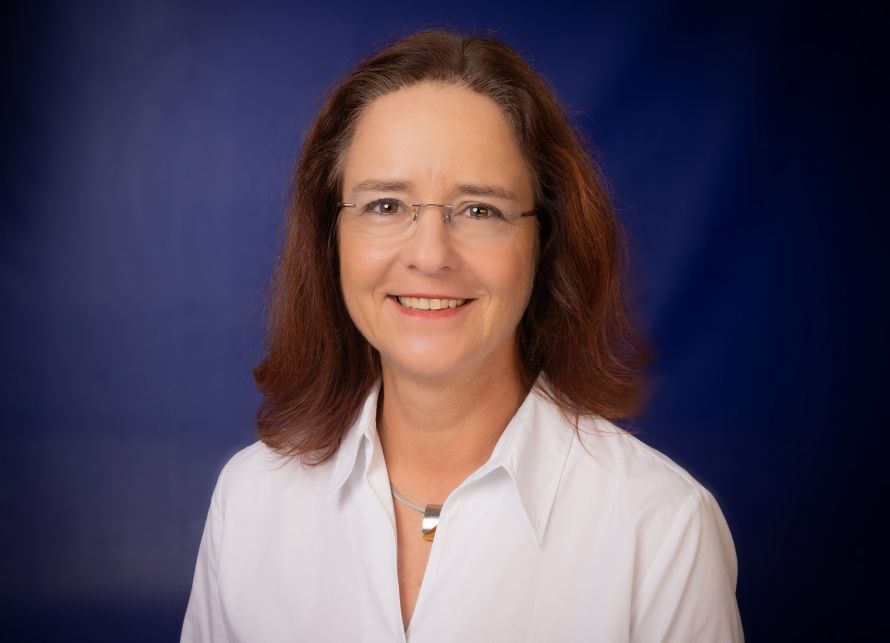
Urbschat Photo Studio Kleinmachnow, Owner: Martin Urbschat
Obesity is far more than just “being overweight”—it is a chronic disease that affects both physical and mental health. Early detection and a targeted approach are crucial for preventing complications and sustainably improving quality of life.
“Obesity is defined as a Body Mass Index (BMI) exceeding 30. The BMI is a calculated measure derived from height and weight using a specific formula. It is important to note that BMI alone is not always a reliable indicator, as individuals with significant muscle mass may also have a BMI over 30. Therefore, in addition to BMI, hip and waist circumference as well as the presence of comorbidities should be considered. The severity of overweight can also be classified medically, mentally, and functionally without the need to weigh patients. “A scoring system developed in Canada—Professor Sharma’s Edmonton Obesity Staging System—offers a nuanced assessment of obesity (based on mental health, comorbidities, and functional limitations),” Dr. Richter explained at the start of our conversation.
In diagnostics, BMI is often used as the most important criterion, although a comprehensive body fat analysis (bioelectrical impedance analysis, BIA) could provide much more accurate data. Unfortunately, such detailed examinations are often not covered by health insurance plans.
The formula for the Body Mass Index (BMI) is: BMI = body weight (in kg) ÷ (height in m)² Example:
70 kg ÷ (1.75 m × 1.75 m) = 22.9
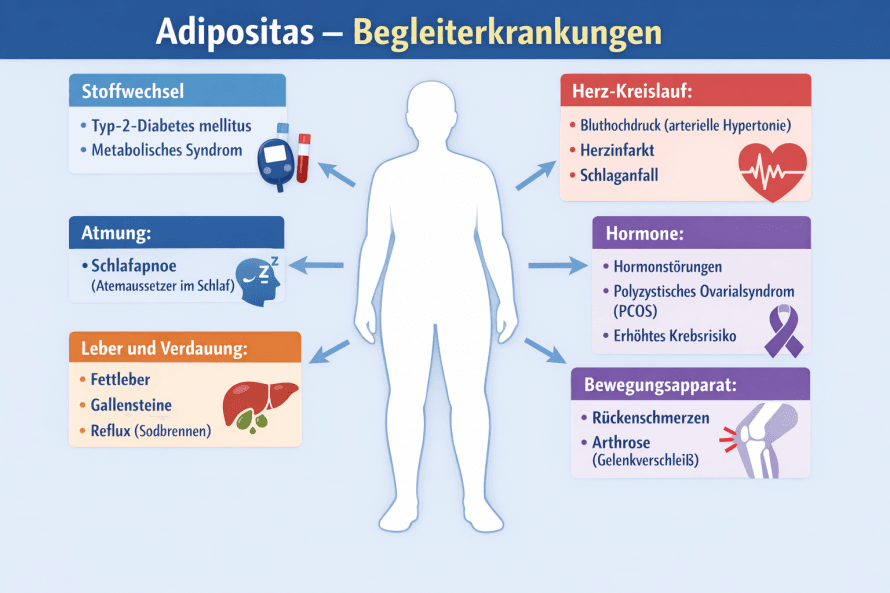
Obesity is considered a chronic disease when the Body Mass Index (BMI) in adults is 30 or higher. However, it is about much more than just weight: Obesity can affect numerous organ systems.
AI generates
Dr. Richter comments: “Being overweight contributes to numerous health problems, including cardiovascular disease, diabetes, joint problems, and sleep apnea, and even increases the risk of many types of cancer. These risks are often linked to a specific inflammatory process in the body triggered by excess weight. In addition, many people with obesity suffer from significant psychological stress characterized by social stigma as well as feelings of shame and guilt. Repeated failures in weight-loss attempts, often associated with the so-called yo-yo effect, exacerbate this psychological stress. Obesity is a chronic, progressive disease that usually develops gradually and ultimately significantly impairs the quality of life of those affected, albeit to varying degrees. Those affected often suffer from low self-esteem, social isolation, or stigmatization. Depression, anxiety, or eating disorders such as “binge eating” (uncontrolled binge eating episodes) frequently develop. Stress, negative emotions, and psychological distress can, in turn, worsen the course of the disease, as they negatively influence eating behavior and motivation to exercise. The course of obesity is typically chronic and progressive. Without targeted interventions, body weight and health risks increase over the years, while psychological distress rises. Early therapeutic measures that combine a healthy diet, exercise, behavioral changes, and, if necessary, surgical interventions are crucial for limiting both physical and psychological consequences and for sustainably improving quality of life,” and goes on to explain:
“Society’s perception of overweight people is often associated with negative prejudices. They are stigmatized (as ‘fat idiots’), and this is a long-standing, outdated social attitude that is further reinforced by the media and advertising. Idealized images conveyed through social media platforms further contribute to this stigmatization. These platforms present perfect, often filter-enhanced images that seem unattainable to many people. This intensifies the pressure on many individuals and often causes the reality of their individual life situations to take a back seat. At the same time, there are also serious concerns regarding the marketing of quick fixes such as so-called “weight-loss injections,” which are offered without medical supervision and are potentially dangerous. Obesity remains a chronic condition that requires both dietary changes and exercise to bring about improvement. Patients must realize that only they themselves can make changes in their lives, even if they receive support through medical interventions such as surgery or medication. These additional options also require a long-term commitment, and funding must be secured, as not all costs are covered by health insurance. Obesity is a chronic condition; it cannot be cured, but it can be managed for life.”
Patients benefit in many ways from an obesity center that brings together all diagnostic and therapeutic components in one place. First, centralized care enables particularly rapid and coordinated diagnostics: blood tests, metabolic analyses, physical examinations, and imaging procedures can be efficiently combined, allowing doctors to gain a comprehensive picture of each patient’s individual situation.
“We try to provide patients with a clear roadmap so we can design a treatment plan together. That is precisely what sets an obesity center apart: having a functioning network and working in an interdisciplinary manner, such as in collaboration with internists at the Medical Care Center (MVZ). Beyond that, however, it is extremely important to bring the primary care physician on board, as they are the first point of contact for these patients. It is alarming that even within the medical community, the chronic condition of obesity is still not sufficiently recognized as such. Although there is now a so-called DMP-Obesity (Disease Management Program for Obesity), comparable to the well-established DMP-Diabetes, it is ultimately more of a concept with a nice name but little substance. On top of that, many health insurance companies do not even cover the costs of nutritional counseling for these patients. At our annual Obesity Update, we inform our colleagues in private practice about current developments and use this meeting for an in-depth exchange to expand our network. Germany lags significantly behind in this area. At international conferences, we’re regularly asked why our patients are so old, so sick, and so heavy when they undergo surgery. The answer is sobering: because our healthcare system hasn’t allowed for anything else for a long time. Admittedly, things have improved somewhat over the past ten years—in the past, we literally had to beg health insurance companies to cover costs, write lengthy justifications, and were often turned down. Today, the necessary requirements are usually in place, patients undergo surgery, and there are, at most, only occasional follow-up inquiries. A major problem, however, is paying for patient care before and after surgery. We receive no reimbursement for initial consultations or follow-up care—even when patients have undergone surgery at our facility. This entails an enormous investment of time and staff resources. Nevertheless, the fundamental problem remains: Preventive medicine still plays virtually no role in Germany, even though the long-term health and financial consequences have long been known,” Dr. Richter sharply criticizes.
After a detailed consultation, the patient is weighed and measured, followed first by nutritional counseling and a recommendation for exercise therapy.
“This naturally raises the question of how closely the patient will be monitored afterward, whether they must come in for regular checkups, and how the entire process is evaluated—especially when we’re not yet talking about surgery or are in the preparatory phase leading up to a possible operation. If we’re considering surgery, we generally need a six-month preparation period. For severely obese patients, this period may be shorter. During this time, patients attend nutritional counseling sessions once a month with our partner organization and are thus regularly monitored. The nutritionists also offer exercise therapy. In our experience, it’s easier for patients to integrate these activities into their daily lives when they use local programs or online courses. As part of the 6-month multimodal program, patients return for a follow-up appointment after 4 months, which includes a psychological consultation; contact with our support group is also an important component and a valuable source of information for those affected. If conservative treatment continues, contact with the nutrition counseling service can be maintained, and further care is primarily provided through our partner organizations, such as the patient’s primary care physician or medical care center, while we remain available as points of contact. It’s also important to know that patients do not necessarily have to lose weight before surgery. Ideally, they maintain their weight—and we’re already very happy with that. However, there are also patients who gain weight during the preparatory phase—for example, because they’ve quit smoking, can no longer exercise due to severe knee problems, or, although they eat healthily, their portion sizes are larger. “All of this must be taken into account and explained,” says Dr. Richter, adding:
“It’s generally impossible to predict how much weight a patient will lose after surgery. It depends on their starting weight, how well they follow dietary recommendations, how much more they exercise, and their individual metabolic factors. Some patients lose weight very quickly, while others lose it more slowly over a longer period of time. What counts as success is also highly individual: One person may be determined to lose 50 kilograms, while another is satisfied after losing 20 kilograms because they no longer need to take insulin injections or blood pressure medication. Here, too, many factors always come into play.”

An interdisciplinary network is crucial because obesity is a complex, multifactorial condition that affects physical, psychological, and social aspects in equal measure. Surgical procedures alone are not sufficient to ensure long-term success, as the causes and consequences of obesity are diverse.
After a successful operation, the question naturally arises regarding the patient’s long-term motivation and ongoing support.
“If, for example, a patient has lost 50 kilograms after gastric sleeve surgery, feels good, and has achieved a lot, we still recommend ongoing medical monitoring. We can show patients ways forward and offer ideas, but only the patients themselves can implement the changes. As a general rule, we recommend checking vitamin and trace element levels once a year, as these must be supplemented long-term, especially after a gastric bypass. During the first two years, follow-up care is very frequent: at three, six, and twelve months, and then once a year thereafter. During this time, patients send us their lab results, fill out a standardized questionnaire about symptoms and their well-being, and follow-up care usually takes place in writing or by phone. All patients know that they can contact us at any time if they have problems, and this applies explicitly even after the two-year period has ended. The annual lab checkup can then be easily arranged through the medical care center (MVZ), which has extensive experience in this area and provides appropriate recommendations. Should any difficulties arise—for example, if weight begins to increase again—an appointment can be scheduled at our center at any time. Of course, there is always the risk of falling back into old patterns of behavior, especially if patients are unable to break them permanently. Often, the cause becomes clear very quickly during the conversation: Patients may mention eating larger portions, spending more time eating with several small meals in a row, or that stressful situations—such as illness in the family—have led them to neglect exercise. Patients often identify their own sticking points when asked specific questions. Sometimes this small nudge is all it takes to get back on track—for example, through renewed nutritional counseling or an adjustment to their exercise routine. In a few cases where weight increases significantly again, additional medication therapy may be considered, although this remains difficult because there are significant gray areas, and health insurance companies usually do not cover the costs without a diabetes diagnosis. “In some cases, repeat surgery may also be necessary,” states Dr. Richter.
Female leadership in a field that has traditionally been heavily male-dominated opens up new perspectives. On a structural level, she serves as a role model and motivator for younger female physicians and medical assistants, demonstrating that professional excellence and leadership are possible regardless of gender. At the same time, a female approach to patients sometimes differs from that of male physicians.
Dr. Richter notes: “I quickly realized that the doctor’s gender definitely plays a role in patient care. Personally, I’m the type who sometimes asks about the ‘personal side’ of things—who inquires about how patients are doing in their daily lives and what problems they’re facing or have faced. Many patients find it easier to confide in a woman. This leads me to focus more on non-surgical therapy, even though my male colleagues do that as well, of course. Bariatric surgery is, after all, a field that also involves a great deal of “non-surgical” work. While many surgeons tend to solve problems in a technical manner—problem identified, surgery performed, done—bariatric surgery requires a holistic approach. Here in Berlin, we have very few women in senior surgical positions; I’m the only one in the field of bariatric surgery. In our communication, we try to convey trust in a holistic way and show empathy.”
Nutrition, behavior, and exercise, together with modern bariatric surgery, form the foundation for sustainable weight loss and improved overall health. Surgery alone is merely a medical procedure that restricts food intake or influences metabolism, but without accompanying lifestyle changes, long-term success is limited.
 AI generates
“The main problem is that we consume far too much sugar, fat, and unhealthy products—often from foods that are heavily advertised. While there are now initiatives like the traffic-light system or the Nutri-Score, these by no means apply to all products. I also wonder why certain manufacturers are so vehemently opposed to printing the Nutri-Score on their products. Certainly, the confectionery and food industry lobby plays a role, but the influence that the family has on eating habits is even greater. If children don’t learn to eat healthily at home, it’s very difficult for them to pick up these habits elsewhere. Health education and nutrition education should be an integral part of the curriculum starting in preschool, with structured programs supplemented by physical activity. When speaking with patients, many report that their problems began as early as childhood. For others, there were triggering events, such as the death of close relatives, separations, or injuries sustained by competitive athletes who were forced to abruptly give up their sport. Even though there are cases in which people use food as a substitute for emotional fulfillment because they are emotionally unstable, unhappy, or lonely, this is only part of the bigger picture. The psychological components of eating disorders are very diverse; loneliness or the desire for emotional compensation alone do not adequately explain the problem. Rather, it is a complex interplay of family, psychological, and societal factors,” notes Dr. Richter.
Nutri-Score is a voluntary nutrition labeling system for food products that makes a product’s nutritional quality visible at a glance. It ranges from A (green) for a more favorable composition to E (red) for a less favorable one and takes into account, among other things, sugar, fat, salt, and calorie content, as well as fiber and protein. Nutri-Score is designed to help compare similar products within a category and is intended to make purchasing decisions easier.
People with obesity still face barriers in society. Comprehensive care in a large, interdisciplinary medical care center (MVZ) is needed to provide holistic care for patients.
At the conclusion of our conversation, Dr. Richter states: “When I look to the future, I would first and foremost like to see significantly greater acceptance of obesity as a chronic disease across all areas of medicine. The problem is so widespread, and yet those affected still face barriers in many areas. This starts with providing appropriate seating—not just in healthcare facilities. I would like to see funding for prevention and long-term treatment for these patients, because in the long run, dedicated teams at obesity centers—whether surgical or conservative—cannot provide this care without adequate funding. Surgical treatments take place in hospitals, but comprehensive care that addresses all comorbidities and psychological aspects should ideally be provided in a large medical care center where internists, endocrinologists, gynecologists, and psychologists work under one roof and provide holistic care for patients. At the moment, we are still miles away from that. Such a medical care center would enable patients to receive continuous, structured care without being shuffled from one practice to another. My hope would be for a center that brings together all these specialties, with an exercise room and a café as a gathering place where patients who are overweight can relax, enjoy healthy snacks, and connect with one another. A place like this would ensure that prevention, treatment, and follow-up care truly go hand in hand and are tailored to patients’ needs.”
Thank you very much, Dr. Anke Richter, for this in-depth insight into the chronic condition of obesity!
- An experienced obesity surgeon with extensive expertise in all modern bariatric procedures.
- Part of the MIC Clinic’s multi-award-winning obesity center—specializing in gentle, minimally invasive surgeries.
- Fast, structured care from initial diagnosis through long-term follow-up.
- An interdisciplinary team covering surgery, nutrition, psychology, and exercise—all under one roof.
- State-of-the-art surgical technology and obesity-specific wards for maximum safety and comfort.
- A holistic approach that not only reduces weight but also improves health in the long term.
Share this article
Expert Interviews
Read next
- Expert interview
Expert interview with Professor Dr Elmar Herbst, PhD
Oct 15, 2026
Patient-centred and personalised knee surgery
Read more - Expert interview
Cardiogeriatrics: Significance and benefits in the context of hospital reform
Sep 21, 2026
Cardiogeriatrics: Significance and benefits in the context of hospital reform
Read more - Expert interview
Expert Interview with Professor Dr. Amadeus Hornemann, MPH
Sep 18, 2026
Prof. Amadeus Hornemann on Precision Medicine in Gynecology: Modern Surgery, New Techniques, Better Quality of Life
Read more