Expert Interviews
Focus on Colorectal Cancer: Early Detection, Better Treatment—On Opportunities and Modern Medicine

Alexandra Pfitzmann ·
Colorectal cancer is one of the diseases where screening and modern medicine can make a particularly significant difference. When detected early, the disease can often be treated effectively—and in some cases, even completely cured. Advances in diagnostics, surgery, and treatment now open up possibilities that were unthinkable just a few years ago. At the same time, early detection remains crucial: it prevents severe progression of the disease, improves the chances of recovery, and eases the burden on both patients and their families.
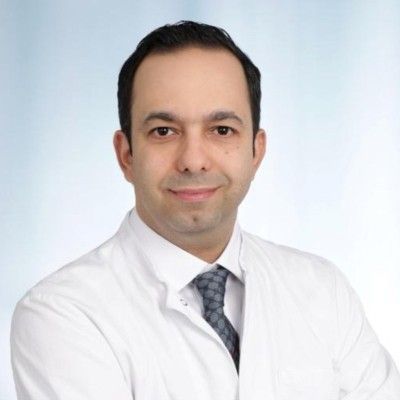
“Colorectal cancer remains so dangerous because it causes virtually no symptoms for a long time. As the tumor grows slowly, it can progressively constrict the colon, cause bleeding, and disrupt digestion—often without the patient noticing anything. Only when the cancer has invaded deep into the intestinal wall or spread through the bloodstream and lymphatic system do noticeable problems arise, often with metastases in the liver or lungs.
The process usually begins with benign polyps, which can develop into a malignant tumor over a period of seven to ten years. If this invasive tumor goes undetected, it continues to grow over a period of months to a few years, causing increasingly severe symptoms. “Many patients don’t see a doctor until they notice blood in their stool or develop an intestinal obstruction—a process that builds up over weeks or months, for example through increasing constipation, irregular bowel movements, or frequent use of laxatives,” explains Dr. Elshafei, adding:
“Risk factors play a major role: The risk of developing the disease increases significantly after age 50, which is why screening colonoscopy is so important. A family history of the disease, colorectal polyps, chronic inflammatory bowel diseases such as ulcerative colitis or Crohn’s disease, and an unhealthy lifestyle further increase the risk.
Lack of exercise, being overweight, smoking, regular alcohol consumption, a diet low in fiber, red or processed meat, and type 2 diabetes are well-documented risk factors. All these factors demonstrate why early detection is crucial: it makes it possible to remove polyps before they become malignant and to detect colorectal cancer at a stage when it is highly treatable.”
Colorectal cancer is particularly dangerous because it can spread almost unnoticed in the body over many years. In most cases, the disease begins with small, benign polyps in the intestinal lining.
Early detection of colorectal cancer has made enormous strides in recent years—primarily through more precise technology, better imaging, and new testing methods that make changes in the colon visible much earlier. It is particularly important that many of these methods are non-invasive, highly precise, and can be used at an early stage.
“Early detection has fundamentally changed in recent years because polyps can now not only be detected early but also removed immediately. These benign precursors are considered the actual starting points for colorectal cancer—small ‘islands’ that can develop into malignant tumors over the course of years without being noticed. If a polyp is found during a screening exam, it can usually be safely removed during the same procedure.
This eliminates the cause before cancer can even develop. Modern endoscopy technology has significantly improved the quality of these examinations. High-resolution equipment, better visualization of the mucosa, and AI-supported systems that automatically detect polyps now make it possible to reliably identify even very small changes.
These technical advances ensure that virtually no relevant findings are overlooked. “That is precisely why failing to undergo screening is the greatest risk factor: Those who undergo regular colonoscopies have the chance to prevent colorectal cancer before it develops—rather than having to treat it only after it has already caused symptoms,” advises Dr. Elshafei.
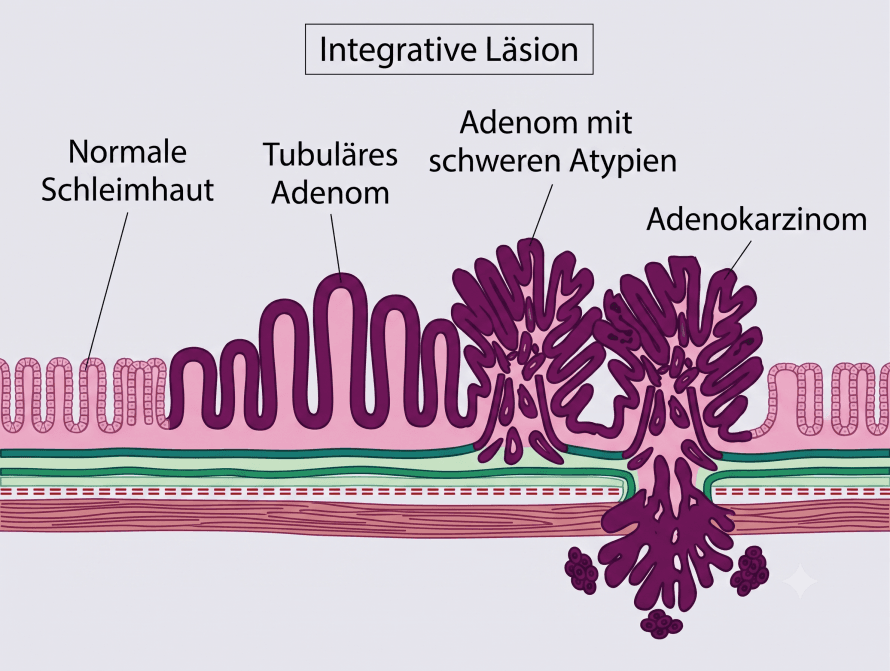
Photo Sequence: Adenoma to Carcinoma
The combination of modern endoscopy, AI support, improved stool tests, and precise imaging has taken the early detection of colorectal cancer to a new level—and thus significantly increased the chance of detecting the disease at a curable stage.
The decision on whether to treat a colorectal tumor with surgery, endoscopic removal, or other procedures is based on clear medical criteria—primarily the tumor’s location, extent, and biology, as well as the patient’s overall health.
“When a colorectal tumor is detected, the treatment decision is always made at a specialized colorectal center. There, all findings are discussed in an interdisciplinary tumor board, where experts in surgery, gastroenterology, oncology, radiology, and pathology jointly determine the treatment plan. The decision is based on age, overall health, the exact extent of the tumor, its location in the colon, and whether distant metastases are already present. Guidelines provide clear recommendations for each section of the colon, ensuring that the decision is made in a structured and patient-centered manner.
In colorectal cancer, metastases occur particularly frequently in the liver and lungs. If there are only a few, well-defined metastases, a cure may be possible—sometimes even through a combined surgical procedure in which the primary tumor and the metastases are removed simultaneously. In cases of multiple or diffuse metastases, systemic therapy is initiated first, usually chemotherapy, which treats the tumor throughout the body.
This may be supplemented with radiation therapy. Only after a reevaluation is a decision made as to whether the primary tumor or individual metastases can be surgically removed. This results in a tailored treatment plan that takes into account the tumor’s biology, its spread, and the patient’s individual circumstances—always with the goal of achieving the best possible treatment,” emphasizes Dr. Elshafei.
The treatment decision is based on a combination of tumor stage, biological characteristics, technical feasibility, and the patient’s individual tolerance—always with the goal of selecting the safest and most effective treatment.
Minimally invasive and robotic procedures have significantly transformed the treatment of colorectal cancer in recent years, as they make surgeries more precise, less invasive, and safer.
A key advantage is the significantly reduced physical strain on the body. Using small incisions instead of a large abdominal incision results in smaller wound areas, leading to less pain, a lower risk of infection, and a faster recovery. Many patients can become mobile sooner and require shorter hospital stays—an important factor for the overall prognosis.
Dr. Elshafei explains: “Robotic surgery has significantly transformed the treatment of colorectal cancer in recent years. Especially in rectal surgery, it is now considered the modern standard of care because tumors can be removed with high precision while better preserving important nerve structures. The technique enables radical tumor removal without compromising functional outcomes—a decisive advance over earlier procedures, in which radicality often came at the expense of quality of life.
A permanent colostomy is also required much less frequently. Only in cases of very deep-seated tumors in the rectum is a temporary protective stoma created to ensure proper healing of the intestinal suture and reduce the risk of leakage. After four to six weeks, this temporary stoma can usually be closed. Most procedures are minimally invasive and take about two to three hours for rectal cancer.
The hospital stay is usually between five and seven days. Outpatient surgery is not an option for colorectal cancer, as patients must be closely monitored following intestinal suturing. Nevertheless, robotic surgery has led to a shorter overall hospital stay, and many patients no longer require intensive care. This significantly reduces the burden on hospitals while also improving postoperative recovery.”
Modern minimally invasive and robotic techniques lead to less pain, faster recovery times, more precise tumor removal, and better functional outcomes—without compromising oncological safety.
Structured follow-up care is a central component of colorectal cancer treatment because it enables early detection of recurrences, prevents complications, and stabilizes long-term quality of life.
“After a successful surgery, the patient immediately enters the stabilization and recovery phase. On the ward, they are encouraged to move around early on, supported by physical therapy, so that circulation and bowel function can quickly return to normal. At the same time, tailored pain management ensures that movement and breathing are possible without significant discomfort. A key focus during the first few days is gradually reintroducing food: small, frequent meals, easily digestible foods, and a protein-rich diet support wound healing and reduce strain on the bowel.
Adequate fluid intake is also important. The treatment team monitors lab results and pays particular attention to ensuring that the intestinal suture heals properly. As soon as the patient can eat again, has regular bowel movements, and can move around safely, nothing stands in the way of discharge. At home, the patient continues to follow the recommendations—gradually increasing fiber intake, continuing to eat small portions, drinking plenty of fluids, and making a gradual return to daily life.
Depending on the patient’s age and the stage of the tumor, rehabilitation or follow-up therapy may be advisable and will be arranged immediately. If the postoperative histological examination reveals that lymph nodes are affected or that other risk factors are present, systemic therapy—such as chemotherapy—will be administered over several weeks. “This ensures that treatment is consistently continued to secure the long-term chance of a cure,” says Dr. Elshafei, adding:
“Structured follow-up care also includes monitoring tumor markers, particularly the CEA level, which can indicate a possible recurrence (carcinoembryonic antigen marker). Imaging techniques such as CT or MRI help detect metastases at an early stage.
Functional follow-up care is equally important: Many patients experience changes in digestion, nutritional problems, or difficulty coping with stress after treatment. Targeted nutritional counseling, exercise therapy, and—if needed—psycho-oncological support help stabilize quality of life and strengthen the body over the long term.
In the long term, follow-up care improves the prognosis because it not only detects relapses early but also supports physical recovery. Good blood sugar and weight control, regular exercise, and a high-fiber diet reduce the risk of tumor recurrence. Equally important is the consistent treatment of comorbidities such as chronic inflammatory bowel diseases or metabolic disorders, which can increase the risk.”
Structured, close-knit follow-up care is not a formal conclusion to treatment, but rather an active form of protection that stabilizes the chances of recovery in the long term and supports health sustainably.
Several preventive measures have been shown to have the greatest impact on an individual’s risk of colorectal cancer—and many of them can be easily incorporated into daily life.
“Today, colorectal cancer is not a diagnosis without hope—provided it is detected early. The earlier the disease is detected, the greater the chances of recovery, because surgery remains the decisive step in treatment in most cases. However, the overall treatment approach is crucial: precise diagnostics, individualized planning, and modern, tailored therapies.
In the tumor board, all findings are evaluated collectively to develop an optimally tailored treatment plan for each patient. Modern medicine now offers numerous complementary approaches, such as advanced chemotherapy, targeted therapies, and immunotherapies, which can be employed depending on the tumor’s biology. This is precisely why maximum expertise from various specialties is needed to determine the best combination.
Screening itself is also far less stressful than many people fear. A colonoscopy is a brief, low-risk procedure performed under light sedation; it usually takes only 10 to 20 minutes and is done on an outpatient basis. The risk of serious complications is extremely low—significantly lower than the risk of detecting a tumor too late. If the general population underwent regular screening, a large proportion of colorectal cancer cases could be prevented.
Although tumors do occur in younger people who are not yet eligible for screening, the overall picture is clear: a healthy diet, low sugar intake, a high-fiber diet, exercise, and a normal body weight are key factors for good colon health. Unhealthy, highly processed foods, fast food, high sugar intake, and being overweight, on the other hand, are considered major risk factors—especially among young people,” states Dr. Elshafei.
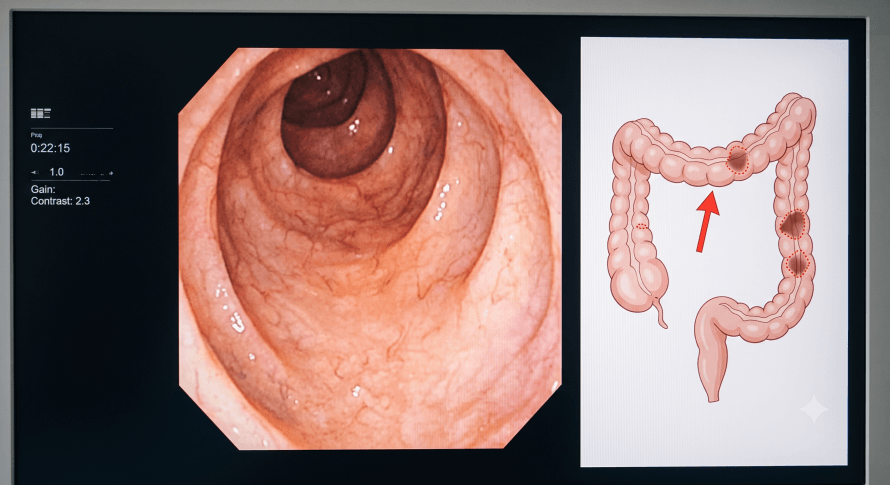
Photo: Colorectal Cancer Screening
Preventing Colorectal Cancer
A high-fiber diet rich in vegetables, fruits, and whole grains supports gut flora and shortens stool transit time—thereby reducing the amount of time potentially harmful substances remain in contact with the mucous membrane. Consumption of red and processed meats should be reduced, as they have been shown to increase the risk of colorectal cancer. Alcohol and smoking are also considered clear risk factors. A healthy body weight plays a central role: being overweight, especially excess visceral fat, promotes chronic inflammation and hormonal changes that increase the risk of cancer. Regular exercise—ideally at least 150 minutes per week—has been shown to have a protective effect and supports metabolism, the immune system, and bowel motility. Early detection remains the most effective measure: Modern stool tests and, above all, colonoscopy make it possible to detect and remove polyps before they become malignant.
Marienhaus Klinikum Mainz is home to the oldest and largest certified colorectal center in Rhineland-Palatinate—operating since 2007 and thus boasting over two decades of expertise and consistent dedication to the treatment of colorectal cancer.
“The large number of patients ensures that the team has exceptionally broad experience and works in an interdisciplinary manner at the highest level. This is precisely what distinguishes a colorectal center: surgery, gastroenterology, oncology, radiology, and pathology work together on the tumor board to develop the optimal strategy for each individual case. The center is regarded as a medical ‘beacon’ of the hospital, with complication rates that are among the lowest in Germany and a level of quality that is clearly reflected in the annual reports.
“The outlook for the coming years is to maintain and further expand these high standards. This also includes the introduction and further development of robotic surgery, which will support the center even more strongly in the future and further improve treatment options,” emphasizes Dr. Elshafei, and with that, we conclude our conversation.
- Chief Physician and Director of General and Visceral Surgery at Marienhaus Klinikum Mainz
- Specialist in visceral and oncological surgery with a focus on diseases of the digestive tract
- Expert in colorectal cancer and tumors of the colon, stomach, esophagus, and pancreas
- Minimally invasive surgery for complex procedures
- Treatment of hernias, reflux, and diaphragmatic hernias
- Treatment of liver, gallbladder, and bile duct diseases
- Management of chronic inflammatory bowel diseases and proctological conditions
- Bariatric surgery
- FACS member – international surgical recognition
- Modern, patient-centered surgery at a high medical standard
Share this article
Expert Interviews
Read next
- Expert interview
Expert interview with Professor Dr Elmar Herbst, PhD
Oct 15, 2026
Patient-centred and personalised knee surgery
Read more - Expert interview
Cardiogeriatrics: Significance and benefits in the context of hospital reform
Sep 21, 2026
Cardiogeriatrics: Significance and benefits in the context of hospital reform
Read more - Expert interview
Expert Interview with Professor Dr. Amadeus Hornemann, MPH
Sep 18, 2026
Prof. Amadeus Hornemann on Precision Medicine in Gynecology: Modern Surgery, New Techniques, Better Quality of Life
Read more