Expert Interviews
Hyperthermia Treatment for Cancer

Alexandra Pfitzmann ·
Hyperthermia complements radiation and chemotherapy by selectively heating tumor tissue to 40–43 °C, thereby weakening heat-sensitive cancer cells, promoting their death, and activating the immune system. When combined with other therapies, it can improve treatment outcomes—particularly in cases of locally advanced or recurrent tumors—reduce pain, and enable organ preservation.
Depending on the depth of the tumor, it is performed as surface or deep hyperthermia. In an interview with Senior Physician Dr. Emanuel Stutz, acting on behalf of Clinic Director Professor Dr. Aebersold, the editorial team of the Leading Medicine Guide was able to learn more.
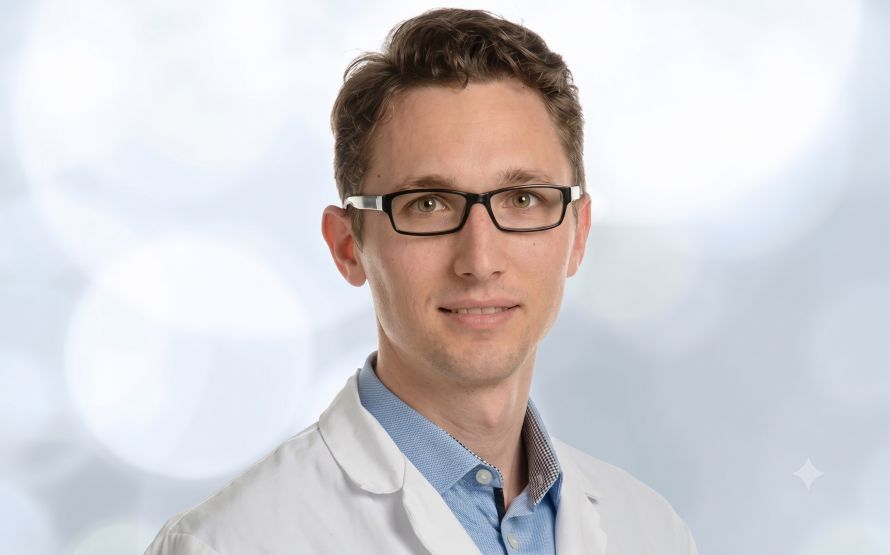
Dr. Emanuel Stutz
“Hyperthermia literally means ‘overheating.’ In cancer treatment, we specifically heat the tumor region, usually to about 40 to 43 °C. You can think of it, in simple terms, as an artificial fever confined only to the tumor area—the rest of the body does not develop a fever. It’s important to note that hyperthermia is not a standalone cancer treatment. Its strength lies in making other therapies more effective, particularly radiation therapy and, in certain situations, chemotherapy as well. Radiation therapy damages the genetic material of cancer cells.
Oxygen is essential for this process. The heat causes the blood vessels to dilate, improving blood flow to the tumor and allowing more oxygen to reach it. This enables the radiation to be more effective. At higher temperatures, the cancer cells’ ability to repair themselves is also disrupted. “In other words, radiation causes damage to the cancer cells, and hyperthermia makes it harder for the cancer cells to repair that damage,” explains Dr. Stutz at the beginning of our conversation.
Changes in blood flow also play a role in combination with chemotherapy. The warming makes the blood vessels more permeable, allowing chemotherapy drugs to penetrate better and deeper into the tumor tissue, especially in poorly perfused areas of the tumor.
In practice, hyperthermia is always used as an adjunctive treatment—for example, in combination with radiation therapy for chest wall recurrences or with chemotherapy for certain soft-tissue sarcomas. It is not a substitute for surgery, radiation, or medication, but rather an enhancer: The heat alters the tumor and its surroundings in such a way that established therapies are more effective. This is precisely where its core benefit lies—not in the heat as the “main weapon,” but in its targeted support of other cancer therapies.
Hyperthermia is particularly helpful for solid tumors that are locally confined or locally advanced and for which conventional therapies alone do not work optimally. It is most beneficial when tumors are poorly perfused, oxygen-deprived, or have already undergone prior treatment, because it is precisely in such situations that heat can significantly enhance the effectiveness of radiation therapy or chemotherapy.
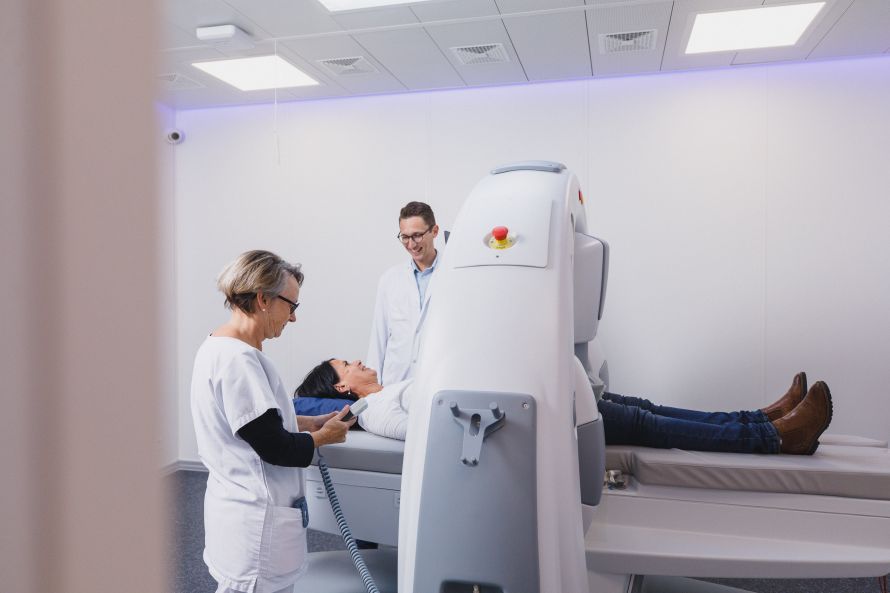
Photo: Hyperthermia
“In general, hyperthermia is an option when radiation therapy is also being administered. It has been particularly well studied for certain types of tumors, such as recurrent breast cancer, soft tissue sarcomas, melanomas (malignant melanoma), and cervical cancer. There is also data available for tumors in the pelvic region, such as bladder, rectal, or anal cancer.
Hyperthermia can also be very helpful in cases of recurrence—that is, when a tumor returns after previous treatment. This is often a difficult situation because the area may have already been irradiated. It is not possible to simply administer the full radiation dose again, as this would place too much strain on the healthy tissue. “Hyperthermia can help in these cases by enhancing the effect of a lower or more cautious radiation dose,” says Dr. Stutz.
Even when surgery is not possible or the tumor is located in an area that is difficult to access surgically, hyperthermia can increase the effectiveness of other therapies. In cases of metastasis, the addition of hyperthermia—in combination with radiation therapy—can contribute to better pain and tumor control for locally confined and irradiable metastases.
Hyperthermia can enhance the effect of cancer treatment, usually without additional side effects. As a result, it can contribute to better symptom control and potentially allow for less intensive follow-up therapies, which can improve the quality of life for those affected.
Dr. Stutz explains: “The most important advantage of hyperthermia is that we can enhance the effect of radiation therapy on the tumor without expecting additional side effects on healthy tissue to the same extent. One example is pain management: When bone metastases cause pain, radiation therapy is a proven treatment.
The addition of hyperthermia can increase the likelihood that pain will subside more significantly and remain under control for longer. For patients, this can mean less pain, fewer pain medications, improved mobility, and a better quality of daily life. A second important point is organ preservation. In bladder cancer, a combination of tumor ablation through the urethra, radiation therapy, and chemotherapy can be an alternative to bladder removal for certain patients, thereby avoiding the need for a urinary diversion.
Hyperthermia can serve as an additional component to further enhance the effects of radiation therapy and chemotherapy and increase the chance of long-term cure. Similar approaches are also being investigated for rectal cancer: In these cases, many patients already receive preoperative treatment consisting of radiation therapy and chemotherapy. A European study is investigating whether the addition of hyperthermia can lead to the tumor disappearing completely more often.
If such a complete response is achieved, surgery—and potentially the need for a colostomy—may be avoided in selected patients, or at least significantly delayed. This can be very important for quality of life, because preserving natural bladder or rectal function often places a significantly lesser burden on daily life than a colostomy.”
Finally, the psychological aspect also plays a role. Hyperthermia gives many people the feeling that they are receiving an additional, active treatment that specifically targets the area where the tumor is causing problems. This sense of control and support can reduce anxiety and make the treatment phase emotionally more stable.
Whether superficial or deep hyperthermia is appropriate depends primarily on where the tumor is located, how deep it is embedded in the tissue, how large the area to be treated is, and what other therapies are planned concurrently.
“The decision depends primarily on where the tumor is located and how deep it lies beneath the skin. With superficial hyperthermia, we treat tumors or recurrences that are close to the skin. Typically, these are tumors located at a depth of just a few centimeters. For this, an applicator—simply put, a kind of flat tile with a water cushion—is placed on the skin over the tumor.
This applicator emits microwaves and heats the tumor region. Deep hyperthermia is used for tumors located deeper within the body, such as in the pelvis or abdominal cavity. In these cases, patients are positioned inside a special device. Several antennas emit energy in the form of microwaves from different directions. “The waves are directed so that the heat is concentrated in the tumor area,” explains Dr. Stutz, adding:
“There are also very superficial forms, such as those using infrared light. These penetrate only very shallowly and are therefore suitable only for very superficial lesions. However, they can cover large tumor regions. It’s important to note that not every region of the body is equally amenable to treatment. Brain tumors or tumors in the lung area cannot be heated because air and certain anatomical conditions make the application of hyperthermia difficult.
It’s also important to note that the success of hyperthermia depends on the temperature reached within the tumor. Reputable hyperthermia devices therefore always include an integrated temperature sensor to measure the temperature. After all, you want to know at home whether your freezer is set to -5°C or -18°C, don’t you? High-quality hyperthermia devices should be able to heat the tumor regions to over 40°C.”
Superficial hyperthermia is suitable for superficial tumors directly under the skin because the heat penetrates only a few centimeters deep and can be controlled very precisely. It is used primarily for locally confined recurrences or those that have already been treated with radiation, and it feels like even heat on the skin.
Deep hyperthermia is chosen when the tumor is located in the pelvis, abdomen, or between organs. In this case, electromagnetic waves are controlled so that the heat is generated deep within the tissue. This procedure is significantly more complex.
A hyperthermia session follows a clearly structured protocol designed to selectively heat the tumor tissue while minimizing stress on the body. The heat is built up in a controlled manner, continuously monitored, and regulated so that it acts precisely where it is therapeutically needed.
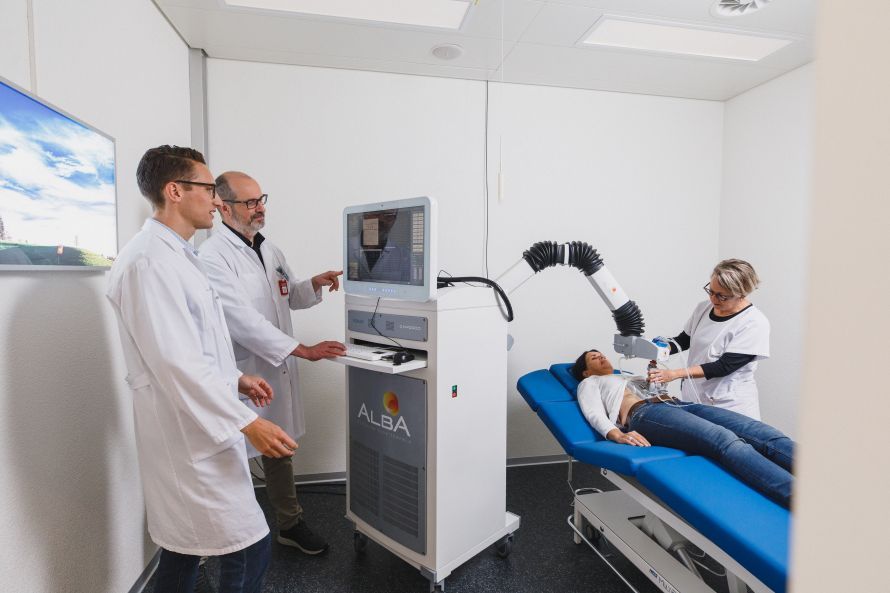
Photo: Structured Hyperthermia Procedure
“First, there is always a preliminary consultation with a physician. During this consultation, we assess whether hyperthermia is appropriate for the specific tumor situation and whether there are any reasons that would preclude its use. This is usually followed by a trial positioning session. During this, we check whether the patient can lie comfortably and safely in the device and whether the applicator or the device can effectively reach the tumor region. The actual session then proceeds in a highly controlled manner. The patient is positioned, and the power is slowly increased. This is the warm-up phase.
The goal is to reach a temperature of approximately 41 to 43 degrees in the tumor area. If patients experience an uncomfortable sensation of heat, burning, or pain beforehand, we reduce the power immediately. This is followed by the maintenance phase, during which the temperature is kept as stable as possible for a certain period of time. Overall, a session often lasts about 60 to 90 minutes, depending on the technique and treatment plan. Most patients primarily feel warmth. With deep hyperthermia, it can feel a bit like being in a sauna.
Some patients sweat, and their heart rate may increase as the body tries to dissipate the heat. However, it should not be painful. Qualified staff are present throughout the entire treatment, monitoring the patients and ready to intervene at any time—for example, by reducing the power output, providing cool towels, or offering beverages. “The treatment is usually performed once or twice a week during the course of radiation therapy,” explains Dr. Stutz.
After the session, the body cools down quickly, and nearly everyone can get up right away and resume their daily activities. Patients often report a feeling of relaxation in the treated area, and sometimes a brief period of fatigue, which is more related to the heat than to side effects.
The entire process is designed to make optimal use of the therapeutic effects of heat without placing a strain on the body. Patients therefore generally experience the session as calm, controlled, and physically well-tolerated.
Hyperthermia is generally considered a well-tolerated form of therapy, but as with any medical treatment, risks and side effects can occur. These are usually mild, temporary, and primarily result from the local generation of heat. It is crucial that the treatment be closely monitored—both technically and clinically—so that adverse effects are detected early and corrected immediately.
“Compared to many other cancer therapies, hyperthermia has a favorable side-effect profile. Nevertheless, it is not a treatment completely free of side effects. Temporary skin redness or a sensation of warmth in the treated area are common. Sometimes, during treatment, patients may experience uncomfortable heat, a burning sensation, or localized pain. In such cases, the power output is immediately reduced or the patient’s position is adjusted.
In very rare cases, minor burns with blistering may occur. Deep hyperthermia can place greater strain on the circulatory system, similar to a visit to a sauna. Therefore, severe heart or lung conditions are important factors that must be carefully evaluated beforehand. During treatment, the patient’s well-being, temperature, and—depending on the situation—other parameters such as pulse and blood pressure are monitored.
Pacemakers or implanted defibrillators may react to the electromagnetic field by malfunctioning. In such cases, we refrain from using hyperthermia. Metal implants in the treatment area can also heat up uncontrollably and are another reason not to perform hyperthermia. Small surgical clips, on the other hand, are usually not a problem. Safety therefore depends on three things: careful patient selection, thorough treatment planning, and continuous monitoring with temperature measurements during the session.
The patient plays an important role in this monitoring process: “If something becomes uncomfortable, they should say so immediately. Then the heat can be adjusted right away,” Dr. Stutz explains, and with that, we conclude our conversation.
These devices are used at the University Clinic for Radiation Oncology:
- ALBA ON 4000D surface hyperthermia device
- Surface hyperthermia system
- ALBA 4D deep hyperthermia device
- Deep hyperthermia system
- Daniel M. Aebersold—an internationally recognized expert in modern radiation therapy in Bern; has expertise across the entire spectrum of radiation oncology, from stereotactic radiosurgery (SRS/SBRT) through all forms of brachytherapy (including IORT) to AI-based adaptive radiation therapy, hyperthermia, and complex combination therapies.
- Broad high-end portfolio—use of state-of-the-art systems such as CyberKnife with real-time tumor tracking, TrueBeam LINACs, orthovolt and beta radiation, as well as collaboration with the Paul Scherrer Institute on proton therapy.
- Leading clinical structure – ISO-certified university hospital, part of the Inselspital Comprehensive Cancer Center; internationally recognized partner for stereotactic radiotherapy and brachytherapy, with a strong focus on quality, research, and continuing education.
- Specialized Center for Brachytherapy – all forms of brachytherapy, including intraoperative radiation therapy; particular expertise in interstitial partial-breast irradiation.
- Stereotactic Excellence – three state-of-the-art systems, precise 6-axis position correction, respiratory gating, and CyberKnife-based real-time tracking for lung and
- Adaptive AI Radiotherapy – Ethos system with integrated CT imaging and AI-assisted daily treatment plan adjustments for maximum precision.
- Hyperthermia Expertise – established as a combination therapy since 2022; surface and deep hyperthermia to enhance the effect of radiation at 40–43°C.
- Emanuel Stutz – Senior Physician and Head of Hyperthermia; responsible for the implementation, indication determination, and further development of hyperthermia programs at Inselspital.
Share this article
Expert Interviews
Read next
- Expert interview
Expert interview with Professor Dr Elmar Herbst, PhD
Oct 15, 2026
Patient-centred and personalised knee surgery
Read more - Expert interview
Cardiogeriatrics: Significance and benefits in the context of hospital reform
Sep 21, 2026
Cardiogeriatrics: Significance and benefits in the context of hospital reform
Read more - Expert interview
Expert Interview with Professor Dr. Amadeus Hornemann, MPH
Sep 18, 2026
Prof. Amadeus Hornemann on Precision Medicine in Gynecology: Modern Surgery, New Techniques, Better Quality of Life
Read more