
Prof. Daniel M. Aebersold
Specialist for radiation oncology & radiation therapy in Bern
Insel Hospital· Freiburgstraße 18, 3010 Bern
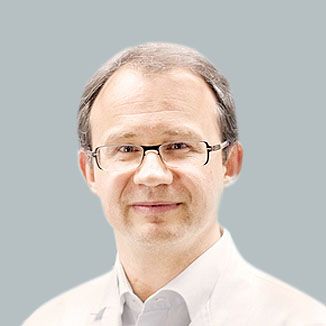
Prof. Aebersold has extensive expertise as a specialist in radiation therapy. His broad spectrum ranges from cancer treatment and tumor tracking to state-of-the-art combinations of the most diverse therapies - such as intraoperative brachytherapy.
Areas of focus
- Stereotactic radiotherapy (SRT): intracranial radiosurgery (SRS) and extracranial radiotherapy (SBRT)
- Respiration-triggered radiotherapy (gating) and tumor tracking using the CyberKnife
- All forms of brachytherapy, including intraoperative brachytherapy, IORT
- AI-based adaptive radiotherapy
- Hyperthermia (surface and deep hyperthermia)
- Combination therapy such as radiochemotherapy and bioradiotherapy
- Collaboration with the Paul Scherrer Institute (PSI) and referral of patients for proton therapy
- Orthovoltage irradiation
- Beta-irradiation of surfer’s eye (pterygium)
Admission criteria
- At least 10 years of surgical and treatment experience
- Expertise in modern diagnostic and surgical procedures
- An outstanding treatment focus within your own specialist area
- Member of a leading national professional association
- Leading professional position
- Active participation in specialist events (e.g. lectures)
- Active in research and teachin
- Evaluated quality management (e.g. certification)
- Medical specialist title (Radiation Therapy—Radio-Oncology)
About Prof. Daniel M. Aebersold
The Universitätsklinik für Radio-Onkologie (Department of Radiation Oncology) at Inselspital is one of the leading providers of radiotherapy in Switzerland. Providing our patients with individual and thoughtful care is of prime importance to us. The clinic is committed to the highest standards of quality in its work. The Department of Radiation Oncology works according to strict quality guidelines and has been ISO-certified since 2013. It is a partner of the tumor center, the Comprehensive Cancer Center. The Comprehensive Cancer Center coordinates the cooperation of highly qualified experts from all disciplines of the organ centers and ensures holistic care and treatment for patients in all stages of cancer.
The University Hospital offers a very wide range of modern radiotherapeutic procedures and highly specialized services (stereotactic radiosurgery, interstitial brachytherapy, online adaptive radiotherapy, hyperthermia). In individual focus areas, such as brachytherapy and stereotactic radiotherapy, we are international leaders and a recognized partner in oncological care.
At the Center for Brachytherapy, a dedicated and specialized team offers all forms of brachytherapy, including intraoperative radiotherapy (IORT). In brachytherapy, a tiny source of radiation is placed directly into the tumor, allowing the surrounding tissue to be protected as much as possible. The clinic can offer our patients this additional therapy option thanks to its experience and expertise,
especially in the case of interstitial partial breast irradiation for breast cancer.
At the Center for Stereotactic Radiotherapy, the stereotactic team treats tumors with the latest technologies and with the highest precision. Three state-of-the-art treatment systems are available – two LINAC-based Truebeam systems and the CyberKnife, a dedicated stereotactic device. Each system allows the patient’s position to be corrected in six spatial directions and provides options for breath triggering when irradiating moving organs. The Cyberknife also offers the possibility of real-time tumor tracking for the treatment of various lung and liver tumors.
With Ethos, the Department of Radiation Oncology is focusing on AI-assisted adaptive radiotherapy and thus taking another step toward patient-centered, personalized healthcare. Ethos features a Varian Adaptive Intelligence™ solution that combines artificial intelligence (AI) with adaptive therapy. A CT is integrated into the Ethos linear accelerator, which produces images of the size and position of the tumor and the surrounding organs while the patient is lying on the radiation table. Using artificial intelligence, the software calculates a daily radiation plan based on the timely images. The doctors and specialists in medical physics can thus react to momentary changes during treatment. Patients benefit from radiation therapy that has even greater precision.
The Department of Radio-Oncology has been using hyperthermia as a combination therapy with radiation since 2022. In hyperthermia (Greek for overheating), cancer cells are warmed to a temperature of 39-43 °C. Cancer cells are more sensitive to heat than healthy cells. And it is precisely this property that the hyperthermia procedure uses to promote the death of cancer cells during radiation – without damaging healthy tissue. Hyperthermia is applied as surface or deep hyperthermia, each with two different devices according to the tumor location, and is performed immediately before or after a radiation session.
In addition to providing high quality service, we run extensive research programs in clinical research, technology development, medical physics and radiobiology. Through education and training programs for all professional groups involved (doctors, medical physicists, radiology specialists, nursing staff), we are able to continuously strengthen our know-how and make an active contribution to high-quality care and the further development of radiation oncology.
Together with our alliance partners, we operate a clinical network that is unique in Switzerland and thus enable a comprehensive range of university radiotherapy with high case numbers.
The University Hospital offers a very wide range of modern radiotherapeutic procedures and highly specialized services (stereotactic radiosurgery, interstitial brachytherapy, online adaptive radiotherapy, hyperthermia). In individual focus areas, such as brachytherapy and stereotactic radiotherapy, we are international leaders and a recognized partner in oncological care.
At the Center for Brachytherapy, a dedicated and specialized team offers all forms of brachytherapy, including intraoperative radiotherapy (IORT). In brachytherapy, a tiny source of radiation is placed directly into the tumor, allowing the surrounding tissue to be protected as much as possible. The clinic can offer our patients this additional therapy option thanks to its experience and expertise,
especially in the case of interstitial partial breast irradiation for breast cancer.
At the Center for Stereotactic Radiotherapy, the stereotactic team treats tumors with the latest technologies and with the highest precision. Three state-of-the-art treatment systems are available – two LINAC-based Truebeam systems and the CyberKnife, a dedicated stereotactic device. Each system allows the patient’s position to be corrected in six spatial directions and provides options for breath triggering when irradiating moving organs. The Cyberknife also offers the possibility of real-time tumor tracking for the treatment of various lung and liver tumors.
With Ethos, the Department of Radiation Oncology is focusing on AI-assisted adaptive radiotherapy and thus taking another step toward patient-centered, personalized healthcare. Ethos features a Varian Adaptive Intelligence™ solution that combines artificial intelligence (AI) with adaptive therapy. A CT is integrated into the Ethos linear accelerator, which produces images of the size and position of the tumor and the surrounding organs while the patient is lying on the radiation table. Using artificial intelligence, the software calculates a daily radiation plan based on the timely images. The doctors and specialists in medical physics can thus react to momentary changes during treatment. Patients benefit from radiation therapy that has even greater precision.
The Department of Radio-Oncology has been using hyperthermia as a combination therapy with radiation since 2022. In hyperthermia (Greek for overheating), cancer cells are warmed to a temperature of 39-43 °C. Cancer cells are more sensitive to heat than healthy cells. And it is precisely this property that the hyperthermia procedure uses to promote the death of cancer cells during radiation – without damaging healthy tissue. Hyperthermia is applied as surface or deep hyperthermia, each with two different devices according to the tumor location, and is performed immediately before or after a radiation session.
In addition to providing high quality service, we run extensive research programs in clinical research, technology development, medical physics and radiobiology. Through education and training programs for all professional groups involved (doctors, medical physicists, radiology specialists, nursing staff), we are able to continuously strengthen our know-how and make an active contribution to high-quality care and the further development of radiation oncology.
Together with our alliance partners, we operate a clinical network that is unique in Switzerland and thus enable a comprehensive range of university radiotherapy with high case numbers.
Special offers / services / rooms
International patients are optimally assisted by the Insel International Center, mostly in their mother tongue.
Various specialized consultation hours with organ specialists are available offering coordinated interdisciplinary case consultations.
Therapeutic services
- High-precision irradiation units (Novalis Tx and TrueBeam) with all forms of stereotactic radiation therapy (stereotactic radiosurgery, SRS, fractionated stereotactic radiotherapy, FSRT, stereotactic body radiotherapy, SBRT) and conformal treatment techniques (intensity-modulated radiotherapy, IMRT, volumetric arc therapy, VMAT, image guided radiotherapy, IGRT); respiration-triggered radiotherapy, (gating)
- Standard linear accelerator for 3-D conformal radiotherapy
- Radiotherapy planning based on molecular imaging (MRI, PET-CT)
- HDR brachytherapy (all forms of endoluminal and interstitial brachytherapy including partial breast irradiation and intraoperative radiotherapy)
- Intraoperative radiotherapy for incompletely resectable tumors
- LDR seed brachytherapy for carcinoma of the prostate
- All forms of combined radio-chemotherapy in close collaboration with the University Medical Oncology Clinic
- Brachytherapy for pterygium (surfer’s eye) using the strontium applicator
- Orthovoltage and surface irradiation for skin tumors and degenerative conditions
- Irradiation of adult and pediatric patients
- Online Adaptive Radiotherapy (ART)
Diagnostic services
- Onsite 4D-CT including contrast medium applications
- Fusion of molecular imaging such as PET-CT and MRI
- Dedicated stereotactic radiotherapy planning (iPlan)
Additional services
- Brain and ocular tumors
- Liver and lung tumors
- Breast cancer and gynecological tumors
- Prostate cancer
- Complex spine tumors
- Head and neck cancer
Video presentation
Expert interviews
Insights
Insights: Insel Hospital
Insel Hospital – Image 1 Insel Hospital – Image 2 Insel Hospital – Image 3 Insel Hospital – Image 4 Insel Hospital – Image 5 Insel Hospital – Image 6 Insel Hospital – Image 7 Insel Hospital – Image 8 Insel Hospital – Image 9
Location
How to reach Prof. Daniel M. Aebersold

Insel Hospital
Department of Radiation Oncology
Freiburgstraße 183010 BernSwitzerland
Specialisation
The medical spectrum of Prof. Daniel M. Aebersold
Diseases
- Prostate Cancer (opens in a new tab)
- Arteriovenous Malformation (opens in a new tab)
- Acoustic neuroma (opens in a new tab)
- Eye Cancer (opens in a new tab)
- Basal cell carcinoma (opens in a new tab)
- Pancreatic Cancer (opens in a new tab)
- Bladder Cancer (opens in a new tab)
- Colon Cancer (opens in a new tab)
- Colon Cancer (Colonic Carcinoma) (opens in a new tab)
- Ovarian Cancer (opens in a new tab)
- Ependymoma (opens in a new tab)
- Cervical Cancer (opens in a new tab)
- Uterine Cancer (opens in a new tab)
- Facial tumor (opens in a new tab)
- Glioma (opens in a new tab)
- Gynecological Cancer (opens in a new tab)
- Urinary tract tumor (opens in a new tab)
- Skin Cancer (opens in a new tab)
- Brain metastases (opens in a new tab)
- Brain tumor (opens in a new tab)
- Brain Tumors in Children (opens in a new tab)
- Pituitary adenoma (pituitary tumor) (opens in a new tab)
- Laryngeal Cancer (opens in a new tab)
- Liver Cancer (opens in a new tab)
- Liver metastases (opens in a new tab)
- Tracheal Cancer (opens in a new tab)
- Lung Cancer (opens in a new tab)
- Lung metastases (opens in a new tab)
- Stomach Cancer (opens in a new tab)
- Rectal Cancer (opens in a new tab)
- Melanoma (opens in a new tab)
- Meningioma (opens in a new tab)
- Neoplastic Meningitis (opens in a new tab)
- Nasal Cancer (opens in a new tab)
- Adrenal metastases (opens in a new tab)
- Nerve Cancer (opens in a new tab)
- Neuroblastoma in Children (opens in a new tab)
- Kidney Cancer (opens in a new tab)
- Kidney Cancer in Children (opens in a new tab)
- Oligodendroglioma (opens in a new tab)
- Paraneoplastic Syndrome (opens in a new tab)
- Throat cancer (opens in a new tab)
- Spinal cord tumor (opens in a new tab)
- Vaginal Cancer (opens in a new tab)
- Esophageal Cancer (Esophageal Carcinoma) (opens in a new tab)
- Spinal lymphoma (opens in a new tab)
- Vulvar cancer (opens in a new tab)
- Skull base tumor (opens in a new tab)
- Spinal Tumor (opens in a new tab)
- CNS Lymphoma (opens in a new tab)
- Prostate Disease (opens in a new tab)
- Benign Prostatic Hyperplasia (opens in a new tab)
- Endometrial carcinoma
Treatments
- Breast Cancer Treatment (opens in a new tab)
- Brachytherapy (opens in a new tab)
- Total-body irradiation (opens in a new tab)
- HDR Brachytherapy (opens in a new tab)
- Hyperthermia (opens in a new tab)
- Intensity-Modulated Radiation Therapy (IMRT) (opens in a new tab)
- Cancer Treatment (opens in a new tab)
- Deep Hyperthermia (THT) (opens in a new tab)
- Stereotaxy (opens in a new tab)
- Seed Implantation for Prostate Cancer (opens in a new tab)
- X-ray irradiation (opens in a new tab)
- Radiotherapy (opens in a new tab)
- Radiation Oncology Treatment (opens in a new tab)
- Radiofrequency Ablation (opens in a new tab)
- Radiochemotherapy (opens in a new tab)
- Kidney Tumor Nucleation (opens in a new tab)
- Intraoperative Radiation Therapy (IORT) (opens in a new tab)
- Lung Cancer Treatment (opens in a new tab)
- CyberKnife (opens in a new tab)
- Superficial hyperthermia
Diagnostics
Areas of Expertise
Prof. Daniel M. Aebersold
Specialist for radiation oncology & radiation therapy in Bern