
Liver cancer is one of the most common malignant tumors of the liver and often develops chronically over many years. It is particularly common in patients with cirrhosis or chronic inflammatory liver diseases. Typical symptoms of liver cancer often do not appear until the disease has reached an advanced stage and include symptoms such as weight loss, pain, or impaired liver function. Liver cancer is diagnosed through physical examination, MRI, CT scans, and laboratory tests such as AFP (alpha-fetoprotein).
Hepatitis B and C, alcohol consumption, fatty liver disease, and diabetes mellitus are considered major risk factors. Hepatocellular carcinoma, also known as HCC, is the most common form of liver cancer. Depending on the extent of the tumor, treatment, therapy for liver cancer, or a liver transplant may be considered.
Liver Cancer: Causes and Risk Factors
The causes of liver cancer are largely known. In 80 to 90 percent of cases, pre-existing liver conditions that lead to cirrhosis are responsible for the malignant degeneration of liver cells. In cirrhosis, the liver tissue becomes scarred, and the liver cells can no longer perform their function of detoxifying the body.
Cirrhosis of the liver is caused by long-term excessive alcohol consumption or by infections with hepatitis B or hepatitis C, as well as, increasingly in Europe, by nonalcoholic fatty liver disease.
Other causes of primary liver cancer include
- Rarely, metabolic disorders such as hemochromatosis (iron storage disease),
- the toxin aflatoxin produced by the mold Aspergillus flavus (extremely rare in Europe), and
- the development of fatty liver disease (cirrhosis) due to severe obesity (increasingly common)
.
In recent years, there has been a sharp increase in liver cancer cases caused by fatty liver disease in particular. This condition involves the accumulation of fatty tissue in the liver, which in turn can lead to fatty liver inflammation and subsequent cirrhosis.
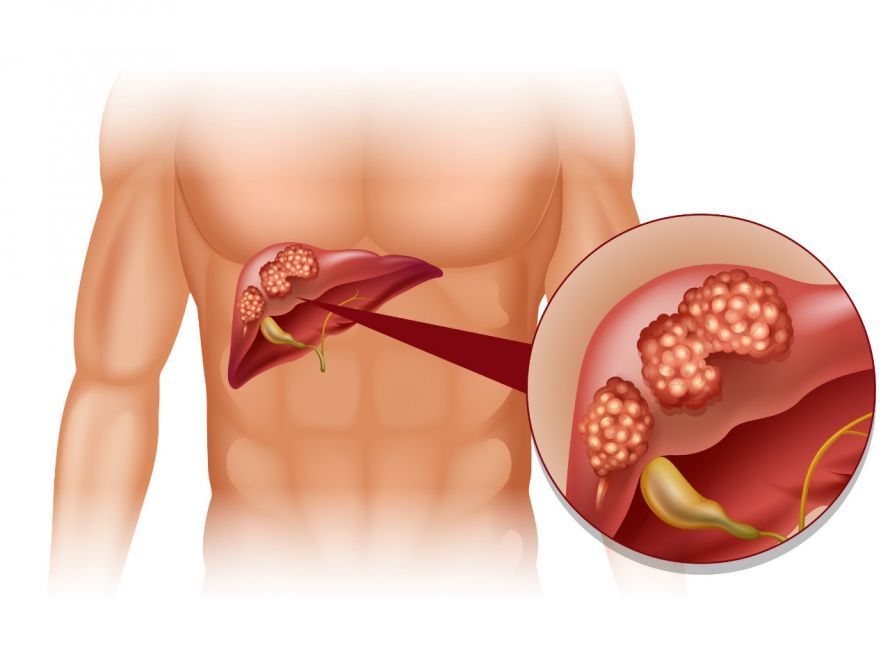
Risk factors for liver cancer at a glance:
- Excessive alcohol consumption
- Severe obesity with fatty liver
- Cirrhosis of the liver
- Type 2 diabetes
- Chronic hepatitis B and C
Early detection screenings are necessary for patients with liver cirrhosis, patients with chronic hepatitis B infection, and people with fatty liver disease. Ideally, the livers of these high-risk groups should be monitored every six months via ultrasound in certain cases.
If liver cancer develops, it can potentially be detected much earlier, which significantly increases the chances of recovery.
Symptoms of Liver Cancer
Liver cancer causes few symptoms in the early stages of the disease, so it is usually not detected until the tumor has already reached a certain size. At that point, patients often experience
- a feeling of pressure in the upper right abdomen,
- unintentional weight loss,
- yellowing of the sclera (the white part of the eye) and the skin, as well as
- an increase in abdominal girth due to fluid retention (ascites).
Since many of the symptoms are very nonspecific and can also occur in other diseases of the liver or the digestive tract, a doctor specializing in liver diseases (gastroenterologist, hepatologist, surgical or medical oncologist) must first diagnose liver cancer through comprehensive diagnostic testing and rule out all other possible conditions.
Diagnosis of Liver Cancer
The diagnosis of liver cancer begins with a patient interview (medical history) to determine any pre-existing conditions, lifestyle habits, and symptoms, as well as which medications the patient is taking. The physical examination includes, among other things, palpation of the abdomen. Laboratory tests provide indications of possible liver damage.
If these tests raise suspicion of a liver tumor, imaging procedures are performed next. A three-phase contrast-enhanced imaging procedure is recommended, in which, after the administration of a contrast agent, the accumulation of the contrast agent in the liver and the liver tumor is assessed at specific time intervals, followed by an evaluation of how the contrast agent is flushed out. This examination can be performed using computed tomography (CT) or magnetic resonance imaging (MRI); sometimes, an ultrasound with contrast agent is also helpful.
To confirm the diagnosis, a tissue sample may or should be taken (liver biopsy). Upon diagnosis, as part of follow-up after tumor surgery, or in advanced stages to monitor the course of the disease during treatment, the tumor marker alpha-fetoprotein (AFP) may be measured for HCC. If the suspicion of liver cancer is confirmed, liver cancer specialists will perform what is known as staging, which determines the extent to which the liver tumor has already penetrated the liver capsule and spread to neighboring organs, and whether it has already formed metastases.
This initially involves contrast-enhanced magnetic resonance imaging (MRI) and, if there is suspicion that the tumor has spread to the chest and abdominal cavities, computed tomography (CT) as well.
The following are also important for treatment planning:
- Determination of the tumor stage (tumor staging) based on the results of the spread assessment
- Assessment of treatment options and the resulting disease progression using the “Barcelona Clinic Liver Cancer” classification (BCLC classification)
- Assessment of the patient’s physical condition using a special evaluation scale known as the ECOG Performance Status (ECOG = Eastern Cooperative Oncology Group)
Treatment Options for Liver Cancer
To date, the most successful treatment for liver cancer is surgery. In surgical treatment of liver cancer, parts of the liver are removed (segmental resection or hemihepatectomy) depending on the size of the tumor. A liver transplant may also be available as a treatment option for patients with a defined tumor extent and underlying end-stage cirrhosis; this must be evaluated at a specialized center.
Unfortunately, this treatment option often fails due to the lack of available donor organs. As an alternative to surgery, tumors up to a certain size and in certain locations can also be “destroyed” using radiofrequency ablation (RFA) or microwave ablation (MWA). These are so-called “curative” procedures; thus, despite a high risk of recurrence, the tumor is initially considered to have been completely treated.
Liver Cancer Treatments in Advanced Stages: Transarterial Chemoembolization
In transarterial chemoembolization (TACE), the blood supply to liver cancer tumors is blocked using interventional radiology techniques (similar to a cardiac catheterization) with gel foam or small metal coils, after a chemotherapeutic agent has first been administered, which acts only locally within the tumor. This inhibits tumor growth indefinitely.
Stereotactic Radiation Therapy
In rare cases (when the tumor is in a difficult location), the tumors are destroyed from the outside using specially focused radiation. This occurs only in exceptional cases.
Systemic Therapies
Systemic immunotherapy/antibody therapy
The best current treatment option for advanced disease that affects the entire body is a combination of immunotherapy with an antibody or a combination of two immunotherapies. Alternatively, in rare cases, a range of mostly oral (tablets to be swallowed) medications is available that effectively inhibit certain tumor growth factors.
Liver Cancer: Life Expectancy and Prognosis
The earlier liver cancer is diagnosed, the greater the chances of a cure. Unfortunately, in most cases, liver tumors grow unnoticed at first. In 80% of cases, they can no longer be surgically removed by the time of diagnosis.
If the liver cancer has metastasized to other organs or is locally very advanced, life expectancy is limited. If the liver cancer is still operable, 50% of patients survive longer than 5 years.
What sets liver cancer specialists apart?
In a multidisciplinary tumor board, experts from a wide range of specialties work together to develop the most appropriate treatment for the patient. All hospitals specializing in the treatment of liver cancer hold tumor board meetings attended by experts in internal medicine, gastroenterology and hepatology, nuclear medicine, radiology, surgery, and pathology.
Liver cancer specialists are distinguished by their extensive experience with the recommended diagnostic and therapeutic procedures. Oncology centers are generally certified by the German Cancer Society, which ensures a high standard of care for patients with liver cancer.
FAQ
What are the symptoms of liver cancer?
Typical symptoms of liver cancer include fatigue, weight loss, a feeling of pressure in the upper abdomen, and impaired liver function. Many patients do not notice the disease until it is advanced, as liver cancer can progress chronically for a long time with few symptoms. Other signs of liver cancer may include nausea, discomfort, or palpable liver tumors.
What are the causes and risk factors?
The most common causes of liver cancer include cirrhosis, chronic hepatitis B or hepatitis C infection, and alcohol consumption. Fatty liver disease, diabetes mellitus, and other liver diseases also increase the risk of liver cancer. A major risk factor for liver cancer is permanent damage to liver cells.
How is liver cancer diagnosed?
Liver cancer is diagnosed through physical examination, blood tests, tumor markers such as AFP, and imaging techniques such as CT or MRI. If liver cancer is suspected, doctors assess the size of the tumor lesions and check for possible metastases outside the liver. The diagnosis and treatment of hepatocellular carcinoma are usually managed through an interdisciplinary approach involving gastroenterology and oncology.
What treatment options are available for liver cancer?
Treatment for liver cancer depends on the stage of the disease, liver function, and the extent of the tumor’s spread. Depending on the findings, options may include medication, therapy for hepatocellular carcinoma, surgery, or a liver transplant. In advanced liver cancer, metastases may already have formed, which makes treatment more complex.
Is liver cancer curable?
Liver cancer is curable, especially if it is diagnosed early and the tumor is still localized. The chances of a cure depend on the timing of the diagnosis, the condition of the liver, and the presence of cirrhosis. In advanced stages, the prognosis and life expectancy worsen significantly. Consistent follow-up care for liver cancer therefore remains particularly important.
Share this article
Sources
- Leitlinienprogramm Onkologie (Deutsche Krebsgesellschaft, Deutsche Krebshilfe, AWMF) (2013) Diagnostik und Therapie des hepatozellulären Karzinoms, Langversion 1.0, AWMF Registrierungsnummer: 032-053OL
- Leitlinienprogramm Onkologie (Deutsche Krebsgesellschaft, Deutsche Krebshilfe, AWMF) (2014) Leberkrebs. Ein Ratgeber für Patientinnen und Patienten. Patientenleitlinie
- Schünke M et al. (2018) Prometheus. Innere Organe: LernAtlas der Anatomie. Thieme, Stuttgart