Modern procedures such as stereotactic radiotherapy, brachytherapy, and combined chemoradiotherapy enable a tailored treatment plan. The goal remains, as always, to control tumors as effectively as possible, alleviate symptoms, and improve quality of life.
Appropriate Use of Radiation Therapy – When Radiation Oncology Is the Right Treatment Option
Radiation therapy is used when a tumor can be effectively treated or its growth controlled through targeted radiation. It is appropriate for patients when surgery is not possible or when radiation therapy is required as an adjunct to surgical removal of the tumor.
Even advanced cancers can benefit from radiation oncology, particularly when a combination with chemoradiotherapy is medically necessary. In many cases, radiation therapy replaces a more invasive surgery or reduces the extent of the procedure. Modern techniques enable gentle yet highly effective treatment. Radiation oncology may also be considered for benign conditions when conventional therapies are insufficient.
Furthermore, radiation therapy plays a central role when local tumor control is crucial. Patients with certain tumors of the lung, chest, or head and neck region can achieve significant improvements through precise radiation therapy. Studies from Munich and other centers in Germany show that radiation therapy, when combined with systemic therapies, offers better long-term outcomes. The decision is always made on an individual basis, depending on the location, size, and biological behavior of the tumor.
The patient’s personal situation is also taken into full consideration.
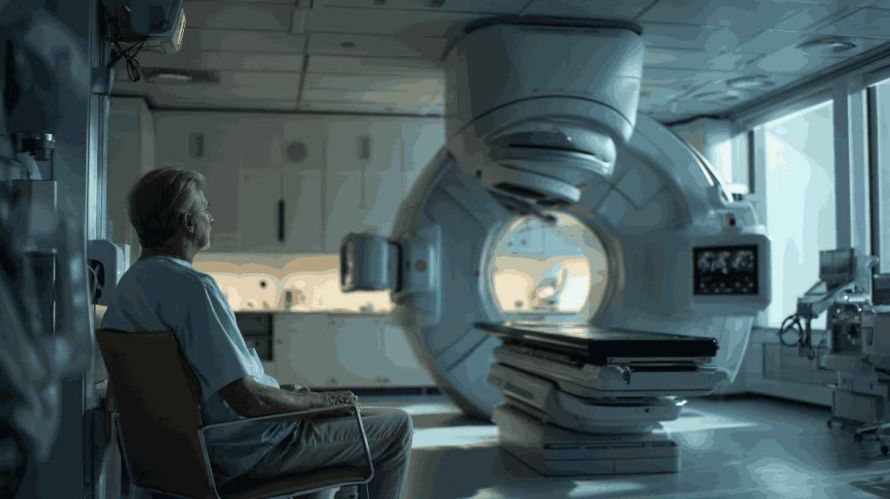
Radiation oncology treatment with a linear accelerator—precise, tissue-sparing, and individually tailored.
The Radiation Therapy Process – How Treatment Works for Patients
The process begins with diagnostic planning, often using modern imaging techniques such as CT or MRI, to ensure that radiation can be delivered with millimeter precision. An individualized radiation plan is then created, which precisely determines the dose, duration, and technique of the therapy. For the patient, radiation therapy is painless and usually takes place on an outpatient basis at a specialized radiation oncology clinic.
Individual sessions last only a few minutes, while the entire treatment cycle can span several weeks. Medical teams closely monitor the process to ensure optimal radiation effectiveness with as few side effects as possible.
During treatment, the patient’s position and the radiation field are regularly monitored to ensure effectiveness and to protect healthy tissue as much as possible. Patients also receive guidance on skin care, nutrition, and general well-being during therapy.
Modern techniques such as stereotactic radiation therapy allow certain tumors to be treated with exceptionally high precision. In some cases, a combination of radiation therapy and chemotherapy is required, administered simultaneously to specifically weaken the tumor. Follow-up care is structured and includes monitoring of treatment outcomes.
Radiochemotherapy, Combinations, and Modern Procedures—When Expanding Treatment Is Advisable
Radiochemotherapy is used when radiation therapy alone is insufficient or when the combination has been scientifically proven to achieve better results. This applies to various types of cancer, such as those in the head and neck region or the esophagus. Chemotherapy enhances the effect of radiation, making tumor cells more sensitive. At the same time, however, the physical burden on the patient increases, which is why only trained teams in radiation oncology and radiation therapy monitor the process. Hyperthermia can also be a useful adjunct, as it improves the effectiveness of radiation on certain tumors.
Modern radiation oncology approaches also utilize high-precision stereotactic techniques that specifically target particularly small or hard-to-reach tumors. Brachytherapy offers a way to place radiation sources directly in or near the tumor, which increases the dose to the target area while better sparing surrounding tissue. Patients also benefit from scientific research that evaluates new treatment approaches in clinical trials. In Munich and at other hospitals in Germany, there are specialized centers that provide access to the latest treatment approaches. The decision to pursue combination therapy is always made on an individual basis.
Advantages and Disadvantages of Therapy for Tumors and Cancer—When Surgery Is Appropriate and How Experts Are Improving Treatment
Advantages of modern radiation oncology—effectiveness, research, clinical trials, and care
Radiation therapy is one of the most effective methods of tumor treatment and is used clinically worldwide. A key advantage is its high precision, which allows for targeted radiation exposure to tumor tissue while largely sparing healthy tissue. Patients benefit from good tolerability, which is particularly evident when compared to other oncological procedures. Modern radiation therapy is also versatile and can treat many tumors noninvasively. In Germany, the further development of these procedures is closely supported by research and clinical trials.
Another advantage is that radiation therapy can often be performed on an outpatient basis, which has little impact on the patient’s daily life. Close collaboration between surgery, medical oncology, radiation oncology, and radiation therapy enables interdisciplinary care of the highest standard. This leads to improved long-term treatment outcomes. Benign conditions such as certain inflammations, degenerative processes, or painful changes can also be effectively treated. This versatility makes radiation oncology a central pillar of modern medicine.
Possible Disadvantages and Risks—Factors That Can Affect Treatment Outcomes
Like any therapy, radiation therapy also carries potential risks. Some patients experience skin irritation, fatigue, or local discomfort in the area being treated. These side effects usually subside after a few weeks. In rare cases, long-term changes to the irradiated tissue may occur, depending on the tumor, the dose, and the location of the radiation fields. Combining radiation therapy with chemotherapy can also cause more severe side effects. Nevertheless, modern procedures are considered to be very safe from a medical standpoint.
Risks may also exist when radiation is administered near sensitive structures. In such cases, precise planning of radiation therapy is crucial. Studies show that close monitoring at the Munich Clinic for Radiation Oncology significantly reduces many of these risks. Patients undergo regular checkups to detect and treat both early and late side effects.
Thorough patient education and individualized treatment planning are therefore essential components of every radiation oncology treatment.
Study on Tumor and Cancer Risks – Expert Assessment
The risks associated with radiation oncology treatment cannot be completely ruled out, even though modern procedures are significantly safer today. A study shows that the impact on healthy tissue has been clearly reduced through more precise techniques, particularly in tumor and cancer treatments. An experienced specialist always evaluates on a case-by-case basis which radiation fields are truly necessary. This reduces the risk of long-term effects without compromising the effectiveness of the treatment. Careful planning that takes into account both tumor biology and anatomical structures is crucial.
Before treatment begins, a specialized expert explains all possible side effects. These include temporary skin irritation, fatigue, or local discomfort in the irradiated area. Most of these effects subside after treatment is completed. Specially trained professionals help identify symptoms early and take targeted measures to alleviate them. Experience and precise dosimetry are particularly crucial for sensitive locations such as head and neck tumors.
Patients receive close support throughout the entire treatment. The team works together in an interdisciplinary manner and coordinates regularly to keep the burden on patients as low as possible. Support is also offered to family members, as cancer treatment affects the entire support network. This continuous support strengthens patients’ sense of security and builds trust. Compassion and clear communication are just as important as medical precision.
Risk assessment also involves keeping an eye on rare long-term effects. Some patients are more sensitive, for example due to pre-existing conditions or certain types of tumors. The range of possible symptoms extends from mild functional impairments to rare structural changes in the irradiated area. Through regular follow-up care, such developments can be detected and treated early.
Collaboration with specialized centers significantly improves long-term treatment outcomes.
FAQ
Who decides whether radiation therapy is appropriate?
The decision is made by an interdisciplinary team comprising radiation oncology, medical oncology, and, if necessary, surgery. The decision is based on the type of tumor, the clinical findings, and the patient’s individual situation.
How long does a treatment session last?
The actual radiation exposure takes only a few minutes. The entire session, including preparation, usually takes 10 to 20 minutes.
Is radiation therapy painful?
The radiation itself does not cause any pain. Any discomfort usually arises only as the therapy progresses, but it is generally easy to manage.
Can radiation therapy be combined with chemotherapy?
Yes, for certain tumors, chemoradiotherapy is used to increase effectiveness. However, this combination is administered only under close medical supervision.
How safe are modern radiation therapy methods?
Current studies and clinical guidelines show that modern radiation therapy is effective, well-tolerated, and medically very safe.