Liver metastases are malignant colonies of tumor cells in the liver and are among the most common forms of cancer metastasis. Liver metastases occur particularly frequently in cases of colorectal cancer, breast cancer, or lung cancer. The treatment of liver metastases is a multidisciplinary effort involving oncologists, surgeons, radiologists, and other surgical specialties. Depending on the number of liver metastases, treatment options may include chemotherapy, surgical removal, or local ablation procedures.
Modern procedures such as radiofrequency ablation, microwave ablation, or SIRT improve treatment options for patients. CT scans, ultrasound, and other imaging techniques are used for diagnosis. The prognosis depends, among other factors, on the location of the metastases, the patient’s general condition, and the primary tumor. Diagnosis and treatment are tailored to the individual patient at specialized centers or a university hospital.
Causes of Liver Metastases
Liver metastases can occur when cancer cells break away from a primary tumor and travel through the bloodstream to the liver. There, under favorable conditions, they can take root and grow, forming what are known as secondary tumors.
Tumors that frequently lead to liver metastases include:
In Europe and North America, more people suffer from liver metastases than from primary liver cancer.
Since the liver is an organ with a rich blood supply, cancer cells can enter the liver through several routes. For one, they can be transported via the portal vein. Nutrient-rich blood from the digestive organs—the intestines, esophagus, pancreas, and spleen—reaches the liver through this vein.
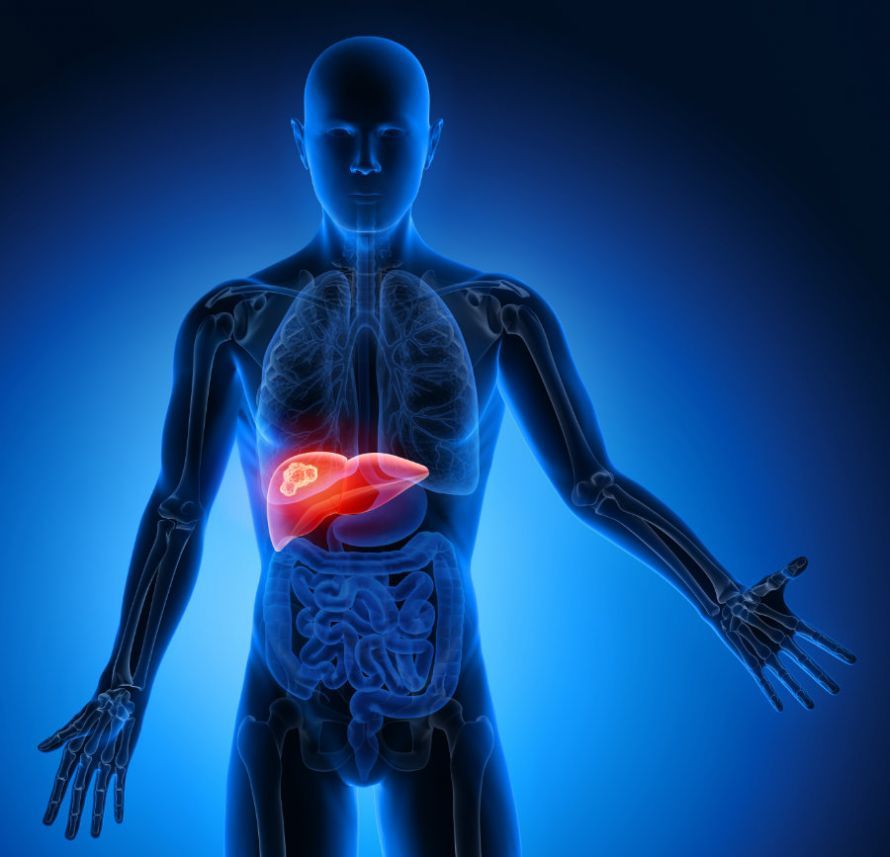
The location of the liver in the human body, shown here with a stylized tumor © peterschreiber.media | AdobeStock
Additionally, cancer cells can reach the liver from anywhere in the body via the aorta and the hepatic artery. This route primarily affects patients with lung cancer and breast cancer, but also patients with other types of tumors.
Whether a cancer patient is at increased risk of developing liver metastases varies from patient to patient. It depends on the specific characteristics of the primary tumor and is difficult to predict.
Due to their anatomical location, patients with tumors of the digestive organs have an increased risk of developing liver metastases. However, it also depends on the stage at which the primary tumor was detected and how quickly it is spreading. A general risk assessment is not possible in this case either.
Symptoms of Liver Metastases
As with liver cancer, liver metastases initially cause few problems and can grow undetected and asymptomatically for a long time. Only at a later stage may
- a feeling of pressure in the upper right abdomen,
- unintentional weight loss, and
- yellowing of the skin and eyes
may indicate liver metastases.
Diagnosis of Liver Metastases
Liver metastases are usually discovered during follow-up care for another type of cancer. The development of liver metastases is often an indication that the primary cancer has already progressed.
Imaging techniques such as
- ultrasound,
- computed tomography, or
- MRI (magnetic resonance imaging)
are used.

MRI machine in a hospital © digitale-fotografien | AdobeStock
Treatment Options for Liver Metastases
Treatment options for liver metastases depend on
- the underlying cancer and
- the number, size, and distribution of the liver metastases that have already developed.
For example, liver metastases from colorectal cancer can often be effectively treated with surgery. In some cases, it is even possible to perform simultaneous surgery on both the colorectal tumor and the liver metastases.
Surgery for Liver Metastases
During surgery for liver metastases, the metastases are removed by resecting the tumors along with surrounding liver tissue. This is only possible if sufficient healthy liver tissue remains to continue ensuring the liver’s vital functions.
Today, there are various interventional radiological and surgical methods available to increase the volume of the remaining liver tissue. This can make previously inoperable liver metastases operable after all.
Alternative Methods for Treating Liver Metastases
If resection of liver metastases is not possible, alternative methods can be used to attempt to destroy the metastases. This is done by applying heat to the tips of needles inserted through the skin from the outside.
Alternatively, individual metastases can also be destroyed using focused external radiation. Well-known methods include:
- Radiofrequency ablation (RFA),
- microwave ablation (MWA),
- stereotactic radiation.
FAQ
What are liver metastases?
Liver metastases are secondary tumors that originate from a malignant primary tumor. Metastases develop when tumor cells spread to the liver via blood or lymph vessels. Liver metastases are particularly common in cases of colorectal cancer, breast cancer, or pancreatic cancer.
What symptoms do liver metastases cause?
Many liver metastases are initially asymptomatic. As the disease progresses, symptoms such as a feeling of pressure in the liver area, jaundice, weight loss, or pain may occur. An enlarged liver capsule can also be painful.
How are liver metastases diagnosed?
CT scans, ultrasound, and radiological procedures are used to make the diagnosis. Additionally, diagnosis and treatment are carried out on an interdisciplinary basis by a radiologist, oncologist, and surgeon. The exact location of the metastases and their number are crucial for determining further treatment.
What treatment options are available for liver metastases?
Treatment for liver metastases includes chemotherapy, surgical removal, surgical therapy, or local ablative procedures such as radiofrequency ablation (RFA) or microwave ablation. In addition, radiation therapy, SIRT, or systemic therapy may be used.
When is surgery an option for liver metastases?
Surgery is an option if the liver metastases can be completely removed and sufficient healthy tissue is preserved. Procedures such as partial liver resection or surgical removal improve the prognosis and chances of a cure, particularly in cases of colorectal cancer.
Share this article