Brain metastases result from the spread of tumor cells from a primary tumor to the brain. Brain metastases are among the most common malignant lesions of the central nervous system. Lung cancer, melanoma, and other cancers are particularly common causes of brain metastases. The symptoms of brain metastases depend on their location, the number of metastases, and the presence of any edema. Typical symptoms include headaches, neurological deficits, speech disorders, or epileptic seizures.
MRI (magnetic resonance imaging) and CT (computed tomography) scans are used for diagnosis. Treatment of brain metastases includes surgery, radiation therapy, whole-brain radiation therapy, radiosurgery, and chemotherapy. The prognosis depends on the primary tumor, the extent of metastasis, and the overall quality of life of patients with brain metastases.
How do brain metastases develop?
More than 25 percent of all cancer patients develop brain metastases as the disease progresses. Patients with
Patients with skin cancer and those with renal cell carcinoma are also at high risk. About one-third of all brain tumors are brain metastases.
The malignant cells break away from the original tumor and travel through the bloodstream to the brain. They cross the blood-brain barrier and spread into the cerebrospinal fluid. This fluid is found in the brain between the skull and the surface of the brain and is also present in the nervous tissue.
As the brain metastases grow, they exert pressure on the surrounding nervous tissue due to the limited space in the brain. The adjacent brain regions swell. Tissue fluid accumulates beneath the skull.
Only about 20 percent of patients have a single metastasis in the brain. If the primary tumor cannot be identified, doctors refer to this as CUP syndrome (cancer of unknown primary).
Symptoms of Brain Metastases
One of the symptoms used to identify brain metastases is the sudden onset of epileptic seizures. In some types of cancer that form metastases in the brain, nonspecific symptoms occur as a result of increased intracranial pressure. The cancer patient suffers from
Many cancer patients initially experience headaches that last longer than usual. These headaches do not respond to painkillers. They are often accompanied by nausea and vomiting. These nonspecific symptoms suggest that the cancer cells have already damaged the entire nervous system by causing brain swelling.
Brain tumors also manifest as nerve deficits and hemiplegia: The affected person
- suddenly drops objects for no apparent reason,
- loses their balance, or
- speak unclearly.
Paralysis of the right leg indicates that the brain metastases are located in the left hemisphere of the brain. Some patients develop organic brain syndrome (HOPS). In this condition, the physical changes affect the psyche. Patients exhibit unusual behavior and are sometimes no longer able to perform simple daily tasks.
Brain metastases that grow on the cerebral cortex (the surface of the brain) trigger severe seizures. Rapidly growing secondary tumors sometimes also cause bleeding into the surrounding brain tissue. Cancer patients then exhibit symptoms typical of a stroke.
Anyone who notices one or more of these symptoms should seek medical help as soon as possible.
Diagnosis of Brain Metastases
When diagnosing brain metastases, the primary care physician works in collaboration with a neurologist (a specialist in nervous system disorders). Intracranial pressure is monitored via an ophthalmoscopy. The general physical examination is followed by an assessment
- of reflexes,
- movement patterns, and
- sense of balance
.
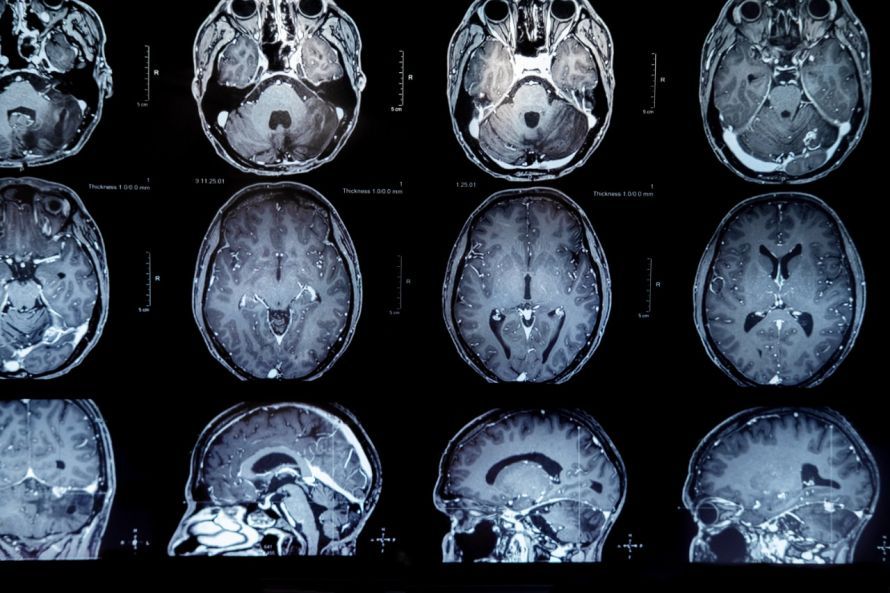
If damage to the central nervous system is suspected, magnetic resonance imaging (MRI) can provide clues. This imaging technique makes it possible to visualize the diseased tissue and cerebral edema (fluid accumulation in the brain). In addition, the images allow the doctor to see tissue that has already partially died (necrosis).
Computed tomography (CT)—another imaging technology—can be used to visualize bleeding in the brain and calcified brain tissue.
A biopsy is also necessary. To perform this, the physician removes a tissue sample from the brain metastasis and has it examined for malignant cells in the oncology laboratory. There, they also attempt to determine where in the body the primary tumor is located.
If the metastasis is in a location that makes it difficult to obtain a tissue sample or if it is too large, brain surgery performed by a neurosurgeon is necessary.
How are brain metastases treated?
The symptoms of brain metastases often cause severe discomfort and limitations in daily life. Therefore, symptom relief is the first step in treatment. Patients with epileptic seizures are given anticonvulsant medications. To this end, the specialist prescribes the standard medications used to treat epilepsy.
The cerebral edema surrounding the metastases subsides with corticosteroid therapy. The patient receives high doses of this anti-inflammatory medication at the same time. To help flush out the excess tissue fluid through the urinary tract, the patient receives infusions of osmotically active diuretics. This is administered via an IV drip containing a specific type of diuretic. This treatment complements the corticosteroid therapy or is administered as part of emergency care.
Brain metastases can only be treated with chemotherapy if they originate from small-cell bronchial carcinoma, a form of lung cancer. Unlike most other brain tumors, these brain metastases respond well to chemotherapy. The drugs used in this treatment inhibit the growth of cancer cells.
Brain tumor surgery is also part of standard medical therapy. However, since it carries a certain residual risk, surgery is performed only on secondary tumors larger than 3 centimeters. Brain tumor surgery is usually not performed if multiple metastases are present and/or if they are located in an unfavorable position. Surgical removal of the brain metastasis is followed by 4 weeks of radiation therapy. During this treatment, the entire head—with the exception of the face—is irradiated several times a week.
Radiation therapy is the only treatment option for patients who
- are in very poor physical condition or
- have more than three tumors in the brain.
Some cancer centers treat brain metastases on an outpatient basis using radiosurgery: an extremely high dose of radiation is precisely targeted at the tumor and destroys it in a single session. Neighboring tissue or cells penetrated by the radiation are not damaged in the process. A prerequisite for radiosurgery is
- a tumor diameter of less than 3 centimeters and
- that there are only a few metastases present.
What is the prognosis for patients with brain metastases?
If the underlying cancer responds well to treatment, patients with brain metastases have a better life expectancy. The same applies to younger cancer patients and those in good overall physical condition. If the primary tumor metastasizes to the brain only some time after the cancer diagnosis, the prognosis is also more favorable.
Patients with
- many brain metastases and/or
- tumors on the meninges
usually have a life expectancy of only about 3 to 6 months.
FAQ
What are brain metastases?
Brain metastases are tumor cells that have spread to the brain from a primary tumor outside the brain. Brain metastases often result from lung cancer, melanoma, or other malignant tumors.
What symptoms do brain metastases cause?
The symptoms of brain metastases depend on their location in the brain. Typical neurological symptoms include headache, nausea and vomiting, speech difficulties, seizures, or dizziness.
How are brain metastases diagnosed?
MRI, CT, and magnetic resonance imaging are used for diagnosis. In addition, a tissue sample may be taken to more precisely identify the metastasis and plan treatment.
What treatments are available for brain metastases?
Treatment for brain metastases includes surgery, stereotactic radiosurgery, whole-brain radiation therapy, and chemotherapy. Surgery is often an option for a single brain metastasis, while multiple brain metastases are frequently treated with radiation therapy.
What is the prognosis for brain metastases?
The prognosis depends on the number of brain metastases, the diffuse infiltration of brain tissue by tumor cells, and the primary tumor. Patients with brain metastases have varying life expectancies depending on their treatment and overall health. In advanced, end-stage disease, the prognosis is often poor.
Share this article