
Prof. Dr. med. Daniel Hänggi
Specialist for head and brain neurosurgery, spinal surgery, pediatric neurosurgery in Hanover
INI – International Neuroscience Institute® in Hannover· Rudolf-Pichlmayr-Straße 4, 30625 Hannover
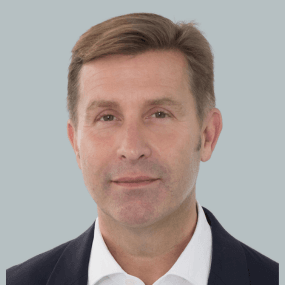
Professor Daniel Hänggi, MD, specialist in neurosurgery, is a renowned doctor and specialist in the field of head and brain neurosurgery, spinal surgery, as well as pediatric neurosurgery. With an impressive professional career and a wealth of expertise, he has built an outstanding reputation.
Areas of focus
- Vascular neurosurgery – consultation and treatment of patients with neurovascular diseases (aneurysms, arteriovenous malformations, cavernomas, cerebral bypass surgery)
- Neuro-oncology – Microsurgical therapy of brain tumors with maximum safety (intraoperative monitoring, navigation) and corresponding follow-up treatment, microsurgical therapy of spinal cord tumors with maximum safety (intraoperative monitoring, navigation) and corresponding follow-up treatment
- Skull base surgery – Minimally invasive skull base surgery in combination with endoscopic technique
- Spine surgery – Minimally invasive spine surgery with instrumentation measures
- Pediatric neurosurgery – Entire field of neurosurgical diseases in childhood
Admission criteria
- At least 10 years of surgical and treatment experience
- Expertise in modern diagnostic and surgical procedures
- An outstanding treatment focus within your own specialist area
- Member of a leading national professional association
- Leading professional position
- Active participation in specialist events (e.g. lectures)
- Active in research and teachin
- Evaluated quality management (e.g. certification)
- Personnel certificate (Spinal Surgery)
- Quality management (Spinal Surgery)
- Recording of complications (Spinal Surgery)
- Quality circle (Spinal Surgery)
- Spine register of the DWG (Spinal Surgery)
- Inpatient treatment (Spinal Surgery)
- Authorization for further training (Spinal Surgery)
About Prof. Dr. med. Daniel Hänggi
Prior to his current position as Director of Translational Neurosurgery at the INI – International Neuroscience Institute® in Hannover and Founder and Managing Director of Neurosurgical Clinics Prof. Hänggi GmbH in Germany, Prof. Dr Hänggi was Director and Full Professor of the Neurosurgical Clinic at the University Medical Center Mannheim, Ruprecht-Karls-University Heidelberg from 2015 to 2019 and Full Professor of the Neurosurgical Clinic at the University Hospital Düsseldorf, Heinrich-Heine-University from 2019 to 2023.
This position demonstrates his many years of experience and profound knowledge in his field of expertise.
One of Prof. Hänggi's main areas of expertise is vascular neurosurgery, i.e. the surgical treatment of the vessels in the brain. He is one of the world's ten most cited authors in this field. In particular, he has made a name for himself in the detection and treatment of aneurysms in the brain, vascular bulges that can become life-threatening. In addition, he also performs bypasses in the brain and places great emphasis on skull base surgery and minimally invasive spinal surgery. The treatment of patients after serious accidents is also an important part of his work.
Interdisciplinary cooperation is a priority
Prof. Daniel Hänggi, MD, has been Director of Translational Neurosurgery at the INI – International Neuroscience Institute® in Hannover since 2023. There he treats a wide range
of diseases, and operates on and treats brain tumors, skull base tumors, brain haemorrhages, aneurysms, cavernomas of the brain and spinal cord, and diseases of the spine and skeletal system. Nerve diseases such as facial paralysis, nerve tumors, nerve injuries and nerve compression syndromes are also part of his treatment spectrum.
Prof. Dr med. Hänggi attaches great importance to interdisciplinary cooperation with specialists from various fields such as neurosurgery, neurology, neuroradiology, internal medicine, oncology, ENT, ophthalmology, orthopedics and others. This cooperation enables a holistic diagnosis and an optimally coordinated therapy. Patients who consult Prof. Dr med. Hänggi can benefit from state-of-the-art surgical procedures and optimal post-operative care at the INI Hannover. By using state-of-the-art diagnostic procedures such as functional MRI (brain mapping) and modern technologies such as high-performance microscopes, neuronavigation and intraoperative magnetic resonance imaging (Brain Suite), he ensures precise and safe surgical treatment. The wards and intensive care unit also offer upscale hotel-like comfort for post-operative care. In addition, neuro-rehabilitation is also offered to enable patients to recover comprehensively.
Prof. Dr med. Daniel Hänggi is a member of various renowned professional societies such as the German Society for Neurosurgery (DGNC), the German Academy for Neurosurgery (GANS), the German Society for Skull Base Surgery (DGSB), the Swiss Society for Neurosurgery (SGNC), the European Association of Neurosurgical Societies (EANS), the World Federation of Neurological Surgeons (WFNS), the American Association of Neurological Surgeons (AANS) and the Congress of Neurological Surgeons (CNS). These memberships underline his professional competence and his commitment to exchange with other experts in his field.
Overall, Prof. Daniel Hänggi, MD, offers his patients comprehensive and state-of-the-art neurosurgical care. His expertise, precision and commitment to the well-being of his patients make him a valued doctor who gives them security and confidence.
This position demonstrates his many years of experience and profound knowledge in his field of expertise.
One of Prof. Hänggi's main areas of expertise is vascular neurosurgery, i.e. the surgical treatment of the vessels in the brain. He is one of the world's ten most cited authors in this field. In particular, he has made a name for himself in the detection and treatment of aneurysms in the brain, vascular bulges that can become life-threatening. In addition, he also performs bypasses in the brain and places great emphasis on skull base surgery and minimally invasive spinal surgery. The treatment of patients after serious accidents is also an important part of his work.
Interdisciplinary cooperation is a priority
Prof. Daniel Hänggi, MD, has been Director of Translational Neurosurgery at the INI – International Neuroscience Institute® in Hannover since 2023. There he treats a wide range
of diseases, and operates on and treats brain tumors, skull base tumors, brain haemorrhages, aneurysms, cavernomas of the brain and spinal cord, and diseases of the spine and skeletal system. Nerve diseases such as facial paralysis, nerve tumors, nerve injuries and nerve compression syndromes are also part of his treatment spectrum.
Prof. Dr med. Hänggi attaches great importance to interdisciplinary cooperation with specialists from various fields such as neurosurgery, neurology, neuroradiology, internal medicine, oncology, ENT, ophthalmology, orthopedics and others. This cooperation enables a holistic diagnosis and an optimally coordinated therapy. Patients who consult Prof. Dr med. Hänggi can benefit from state-of-the-art surgical procedures and optimal post-operative care at the INI Hannover. By using state-of-the-art diagnostic procedures such as functional MRI (brain mapping) and modern technologies such as high-performance microscopes, neuronavigation and intraoperative magnetic resonance imaging (Brain Suite), he ensures precise and safe surgical treatment. The wards and intensive care unit also offer upscale hotel-like comfort for post-operative care. In addition, neuro-rehabilitation is also offered to enable patients to recover comprehensively.
Prof. Dr med. Daniel Hänggi is a member of various renowned professional societies such as the German Society for Neurosurgery (DGNC), the German Academy for Neurosurgery (GANS), the German Society for Skull Base Surgery (DGSB), the Swiss Society for Neurosurgery (SGNC), the European Association of Neurosurgical Societies (EANS), the World Federation of Neurological Surgeons (WFNS), the American Association of Neurological Surgeons (AANS) and the Congress of Neurological Surgeons (CNS). These memberships underline his professional competence and his commitment to exchange with other experts in his field.
Overall, Prof. Daniel Hänggi, MD, offers his patients comprehensive and state-of-the-art neurosurgical care. His expertise, precision and commitment to the well-being of his patients make him a valued doctor who gives them security and confidence.
Facts & experience
- Neurosurgical pain therapy (Cranial and Brain Neurosurgery)
over 2000
- Injuries (Spinal Surgery)
over 40
Minimum requirement: 40
- Degenerative disease (Spinal Surgery)
over 100
Minimum requirement: 100
- Inflammatory disease (Spinal Surgery)
over 15
Minimum requirement: 15
- Tumor diseases (Spinal Surgery)
over 20
Minimum requirement: 20
Location
How to reach Prof. Dr. med. Daniel Hänggi

INI – International Neuroscience Institute® in Hannover
Rudolf-Pichlmayr-Straße 430625 HannoverGermany
Specialisation
The medical spectrum of Prof. Dr. med. Daniel Hänggi
Diseases
- Arteriovenous Malformation (opens in a new tab)
- Craniosynostosis (opens in a new tab)
- Neurofibromatosis (opens in a new tab)
- Cranial malformation (opens in a new tab)
- Spina bifida (opens in a new tab)
- Tethered Cord Syndrome (opens in a new tab)
- Brain hemorrhage (opens in a new tab)
- Cerebrovascular Diseases (opens in a new tab)
- Neurovascular Diseases (opens in a new tab)
- Subarachnoid hemorrhage (opens in a new tab)
- Herniated Disc (opens in a new tab)
- Herniated disc in the cervical spine (opens in a new tab)
- Kyphosis (opens in a new tab)
- Osteochondrosis (opens in a new tab)
- Spinal Canal Disorders (opens in a new tab)
- Spinal Canal Stenosis (Spinal Canal Narrowing) (opens in a new tab)
- Spondylodiscitis (inflammation of the intervertebral discs and vertebrae) (opens in a new tab)
- Spondylolisthesis (Spinal Slippage) (opens in a new tab)
- Spondylosis (arthrosis of the vertebral joints) (opens in a new tab)
- Spinal Disorders (opens in a new tab)
- Cauda equina syndrome (opens in a new tab)
- Dystonia (opens in a new tab)
- Hydrocephalus (opens in a new tab)
- Paralysis (opens in a new tab)
- Meralgia Paresthetica (opens in a new tab)
- Supinator loge syndrome (opens in a new tab)
- Thoracic Outlet Syndrome (opens in a new tab)
- Trigeminal Neuralgia (opens in a new tab)
- Acoustic neuroma (opens in a new tab)
- Angioma (opens in a new tab)
- Astrocytoma (opens in a new tab)
- Glioblastoma (opens in a new tab)
- Glioma (opens in a new tab)
- Brain metastases (opens in a new tab)
- Pituitary adenoma (pituitary tumor) (opens in a new tab)
- Cavernomas (opens in a new tab)
- Lymphomas (opens in a new tab)
- Medulloblastoma (opens in a new tab)
- Meningioma (opens in a new tab)
- Nerve Cancer (opens in a new tab)
- Oligodendroglioma (opens in a new tab)
- Spinal cord tumor (opens in a new tab)
- Skull base tumor (opens in a new tab)
- Spinal Tumor (opens in a new tab)
- Brain Injury (Traumatic Brain Injury) (opens in a new tab)
- Spinal Cord Injury (opens in a new tab)
- Vertebral Fracture (opens in a new tab)
- Brain aneurysm (opens in a new tab)
- Acromegaly (opens in a new tab)
- Hyperprolactinemia (opens in a new tab)
- Pituitary insufficiency (opens in a new tab)
- Post-Traumatic Kyphosis (opens in a new tab)
- Degenerative Disc Disease (opens in a new tab)
- Spinal Instability (opens in a new tab)
- Spinal Sprain (opens in a new tab)
- Whiplash (opens in a new tab)
- Spondylopathy (opens in a new tab)
- Spondylitis (inflammation of the vertebrae) (opens in a new tab)
- Flat Back (Postoperative Flat Back Syndrome) (opens in a new tab)
- Postnucleotomy Syndrome (Postoperative Pain Syndrome) (opens in a new tab)
- Low-grade glioma (opens in a new tab)
Treatments
- Cervical Spinal Disc Surgery (opens in a new tab)
- Brain Aneurysm Surgery (opens in a new tab)
- Brain Tumor Surgery (opens in a new tab)
- Neuromodulation (opens in a new tab)
- Spinal Disc Surgery (opens in a new tab)
- Brain Surgery (opens in a new tab)
- Spinal Stabilization (opens in a new tab)
- Spinal Correction (opens in a new tab)
- Brain Pacemaker (Deep Brain Stimulation) (opens in a new tab)
- Stereotaxy (opens in a new tab)
- Spondylodesis (opens in a new tab)
- Pain Pump (opens in a new tab)
- Skull Base Surgery (opens in a new tab)
- Plexus Surgery (opens in a new tab)
- Neurosurgical Pain Management (opens in a new tab)
- Percutaneous Spinal Surgery (opens in a new tab)
- Endovascular Therapy (opens in a new tab)
- Minimally Invasive Disc Surgery (opens in a new tab)
- Kyphoplasty (opens in a new tab)
- Neuronavigation (opens in a new tab)
- Nerve Reconstruction (opens in a new tab)
- Spinal Stabilization Surgery Using a Cage (opens in a new tab)
- Percutaneous Nucleotomy (opens in a new tab)
- Back Pain Treatment (opens in a new tab)
- TLIF Procedure (Spinal Fusion) (opens in a new tab)
- Epilepsy Surgery (opens in a new tab)
Diagnostics
Areas of Expertise

Prof. Dr. med. Daniel Hänggi
Specialist for head and brain neurosurgery, spinal surgery, pediatric neurosurgery in Hanover