Sudden, sharp pains that radiate from the back into the extremities and initially become increasingly intense. A herniated disc presents with distinct symptoms. However, doctors do not always recognize and treat it correctly right away.
Here you’ll find all the information about herniated discs, as well as recommended specialists for treating a herniated disc.
Anatomy of the Spine & Intervertebral Disc
The spine consists of 24 vertebrae and 23 intervertebral discs located between them. These discs consist of a stable yet elastic fibrous ring (annulus fibrosus) and a gel-like core (nucleus). The gelatinous nucleus acts as a water-retaining cushion and absorbs stress on the spine.
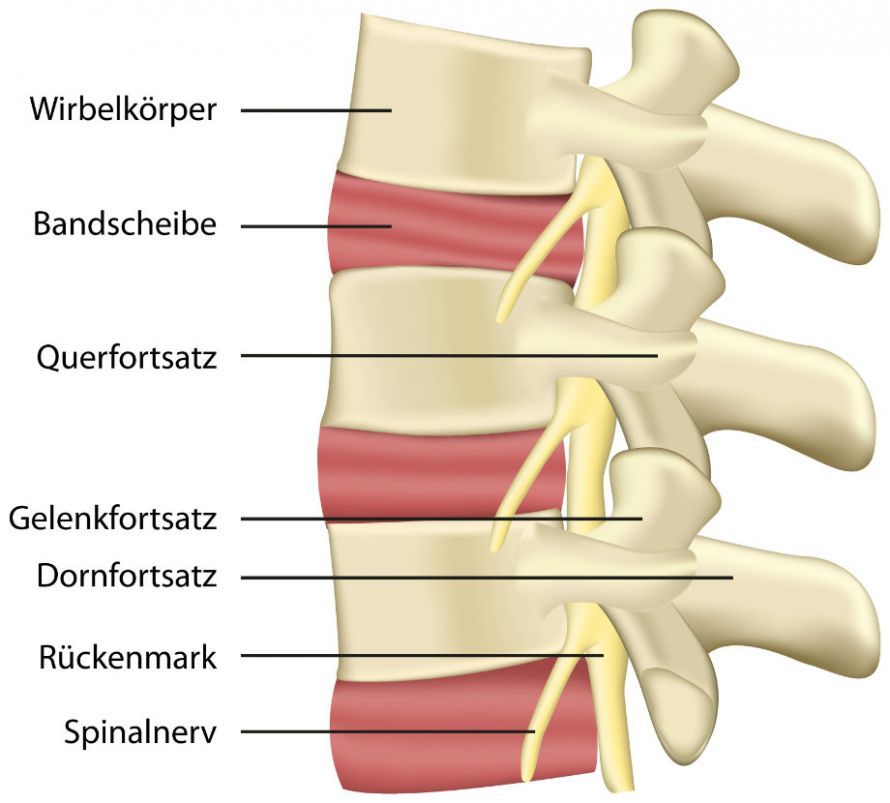
Anatomy of the Spine and Intervertebral Discs @ bilderzwerg /AdobeStock
Intervertebral discs are not supplied by blood vessels. They receive their nutrients via interstitial fluid. When we move, we squeeze the intervertebral discs like sponges. When we then relieve the pressure, they soak up the nutrient-rich fluid.
Definition of a Herniated Disc
In a herniated disc, the gel-like nucleus breaks through the fibrous ring of the disc and presses on the surrounding nerves. The pressure on the nerves causes pain.
The German Society for Orthopedics and Trauma Surgery points out that a herniated disc can be associated not only with back pain but also with neurological symptoms (e.g., paralysis). Herniated discs most commonly occur in the lumbar spine, followed by the cervical spine, and early diagnosis and treatment should be initiated.
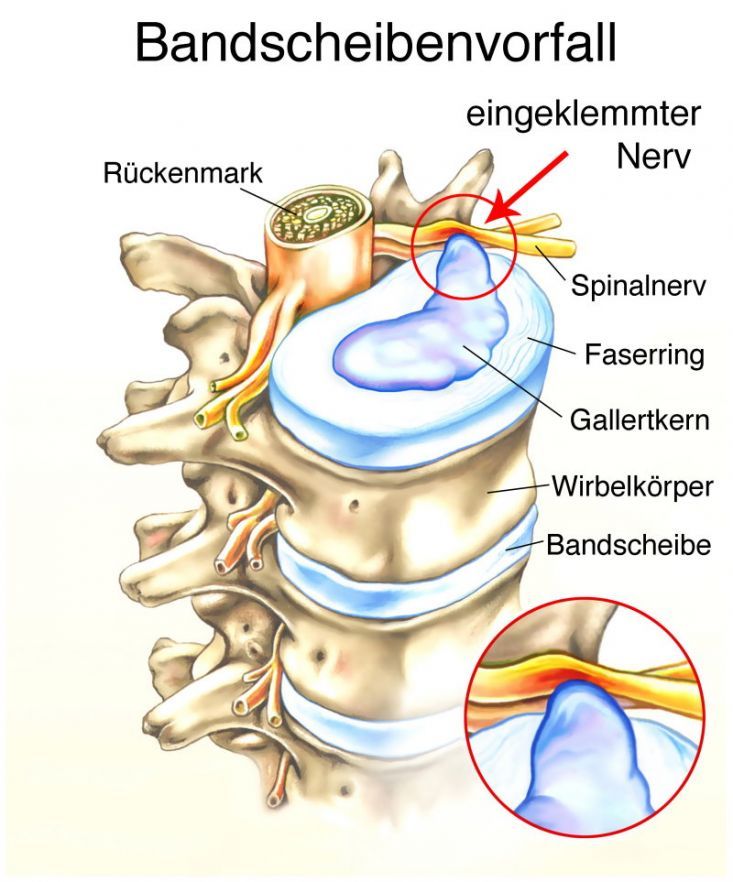
Herniated Disc © Henrie / Fotolia
In the video, you can see the progression of a herniated disc:
Where does a herniated disc occur?
A herniated disc can occur in any section of the spine.
It frequently occurs:
- in the lower lumbar spine (LSS) — (lumbar herniated disc) and
- in the cervical spine (C-spine) — (cervical herniated disc)
Doctors classify herniated discs based on their location in the spine:
For example, L5/S1 refers to damage to the lumbar spine in the segment between the 5th lumbar vertebra (L5) and the first sacral vertebra (S1).
Types of Disc Damage
Disc damage can occur in various forms:
- Early-stage protrusion
- Progressive protrusion
- Herniated disc
- Sequestration
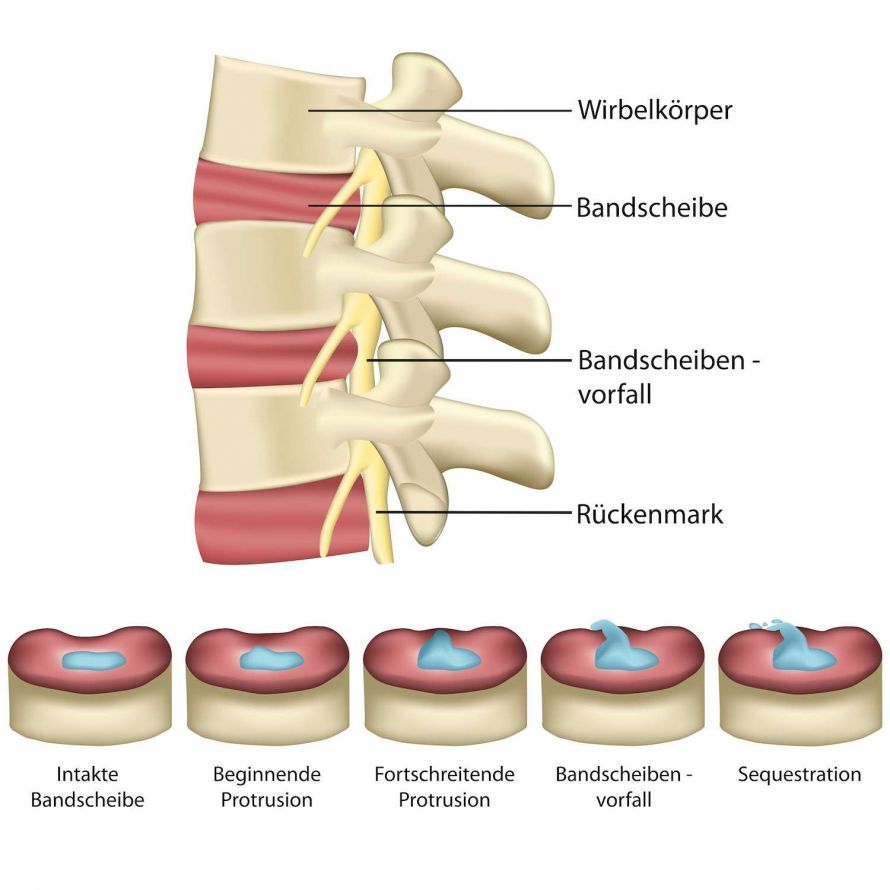
Types of Disc Protrusions © bilderzwerg / Fotolia
In advanced disc protrusion, the annulus fibrosus is still intact, but the outer layer of the intervertebral disc has shifted. The altered shape of the disc presses on surrounding tissue and spinal nerves that emerge from the spinal cord. A protrusion can often be successfully resolved with conservative treatment.
In the case of a sequestration, the annulus fibrosus is ruptured and the nucleus pulposus protrudes from the intervertebral disc. A sequestration does not necessarily require surgery.
The patient should discuss the pros and cons of surgical and rehabilitative care with a specialist.
Symptoms of a Herniated Disc
The tissue damage caused by a herniated disc results in severe, immobilizing pain. This pain often radiates into the extremities.
Neurological sensory disturbances also frequently occur, such as:
- tingling
- A sensation of heat or cold without any external cause
- Numbness
The pain often occurs during physical activity. The pain frequently forces the patient into a protective posture to reduce discomfort.
Diagnosis of a Herniated Disc
The clinical symptoms and a discussion of the patient’s medical history regarding possible causes provide initial guidance on the choice of treatment. This is followed by a physical and neurological examination.
However, imaging studies are absolutely essential to confirm a suspected herniated disc.
On an X-ray, the treating physician can identify signs of changes in the bony structures as well as degenerative processes.
Magnetic resonance imaging (MRI) is the method of choice for diagnosis, further treatment planning, and determining whether surgery is necessary. It can visualize the soft tissue components and thus detect a herniated disc.
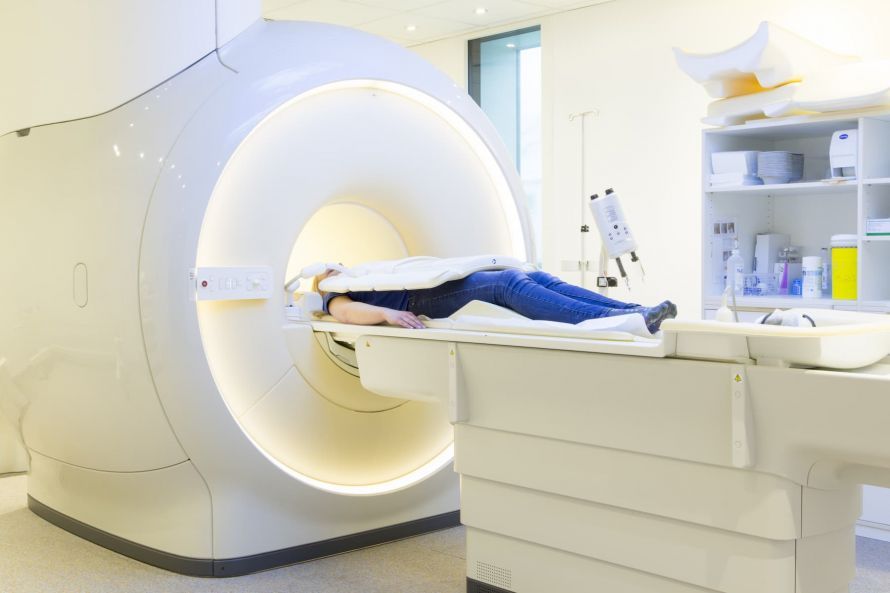
Magnetic Resonance Imaging © digitale-fotografien / Fotolia
Causes of Herniated Discs
Disc damage usually has a long, unnoticed history. In most cases, the disc gradually sustains more and more damage until a herniation finally occurs.
Intervertebral discs become dehydrated and brittle due to:
- Aging
- Lack of exercise
- An unbalanced diet
- Smoking
Muscle imbalances, untrained muscles, and poor movement patterns significantly increase the risk of a herniated disc, as does being overweight.
The video shows a possible progression of disc degeneration and its resulting damage:
A herniated disc is a neurological condition with an orthopedic basis. It therefore exhibits symptoms from both areas.
There are three main causes of a herniated disc:
- a congenital weakness of the intervertebral disc tissue and connective tissue
- a sudden “twisting motion” of the torso combined with heavy lifting or pushing
- Excess weight combined with muscular imbalances, which together place abnormal stress on the spine
A herniated disc often occurs when lifting a heavy case of beverages with a bent spine. In doing so, people often twist to place the case in the trunk.
This places significant pressure on the intervertebral discs, which eventually give way under the load. Poor muscle condition and being overweight increase the risk. Additionally, smoking weakens the intervertebral disc tissue.
Back Pain = Herniated Disc? What to Do?
As an immediate first step, try the “stepped” position. Lie on your back and raise your legs to a 90° angle.
Special foam intervertebral discs are available for this purpose. A padded box, a stool, or a chair will also suffice. This position creates space between the vertebrae and relieves pressure on the compressed tissue.
You can use this first-aid measure for a herniated disc flexibly—whether in bed or on a yoga mat. It’s important that your spine lies flat and that you can breathe calmly and deeply.
A hot water bottle can also help you relax. To get up from a lying position, roll onto your side in a way that’s gentle on your back and stand up with support.
Be sure to avoid lifting heavy loads. See the right doctor as soon as possible.
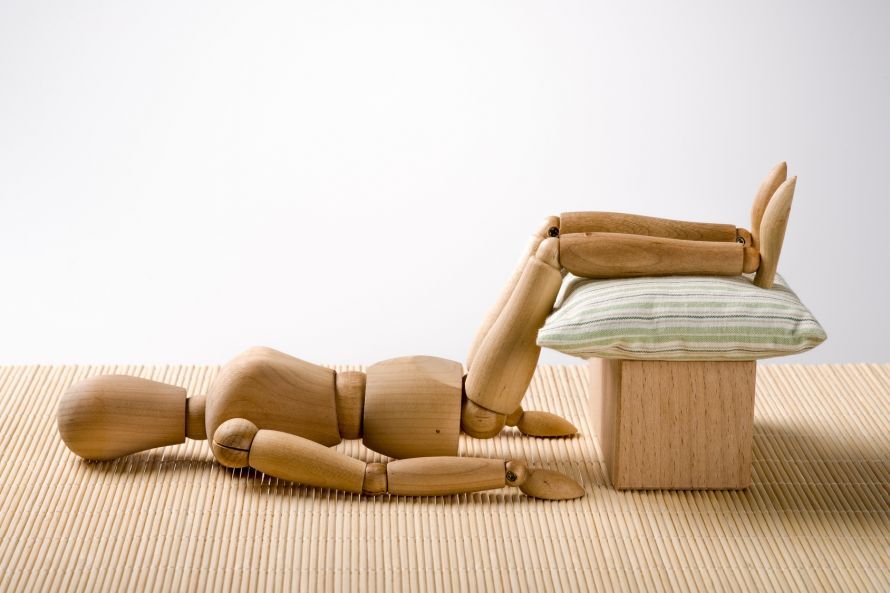
Step-by-step positioning for a herniated disc © C. Schüßler / Fotolia
Herniated Disc: Which Doctor?
Specialists for herniated discs include:
These specialists diagnose a herniated disc through a physical examination and an MRI scan, and they treat the condition.
Severe cases may require the collaboration of several specialists. Since a herniated disc affects the nerves, the orthopedic surgeon, for example, will consult a neurologist.
If surgery is necessary, the orthopedic surgeon will consult a spinal surgeon. The latter typically has completed specialty training in orthopedics and trauma surgery or neurosurgery.
Specialists in herniated discs have undergone many years of training. Trainee specialists must work for several years as residents—for example, in a specialized orthopedic clinic.
Treatment of a Herniated Disc
A herniated disc does not always automatically require surgery. In fact, doctors and therapists can effectively treat herniated discs with conservative methods.
A herniated disc is associated with the following factors:
- Pain
- Nerve compression and
- Inflammation
The doctor must address these three factors. This helps the patient break out of the pain cycle and prevents the symptoms from becoming chronic.
The healing phase lasts from a few weeks to several months. During this time, if there is a bulge, the deformed annulus fibrosus returns to its original shape.
The body breaks down any disc material that has already herniated on its own. 90% of all herniated discs can be successfully treated this way.
Conservative Treatment of a Herniated Disc
Sometimes, it is sufficient to rest the back for two weeks after a herniated disc while engaging in gentle mobilization. During this time, you should avoid heavy lifting.
Afterward, you should begin strengthening your abdominal and back muscles. It is essential that a physical therapist ensure the correct selection and execution of the exercises.
In the case of a herniated disc, the doctor usually prescribes physical therapy. Rehabilitation exercises may also be used, depending on the symptoms.
Medications help relieve pain, severe muscle tension, and inflammation. The doctor also prescribes anti-inflammatory drugs—specifically, anti-inflammatory and decongestant medications from the NSAID (nonsteroidal anti-inflammatory drugs) class.
These include the active ingredients:
- diclofenac and
- ibuprofen
Preparations containing the active ingredient methocarbamol, for example, are suitable as muscle relaxants. These require a prescription. NSAIDs should always be taken with appropriate stomach protection.
Another treatment option is injection therapy. In this procedure, the doctor injects pain medication directly into the irritated nerve or the small vertebral joints, known as facet joints.
The video demonstrates how pain therapy with a radiofrequency probe works:
The goal of medication is to relieve pain so that the irritated tissue around the intervertebral disc can heal. This allows you to perform physical therapy exercises more effectively and stop adopting protective postures.
With conservative treatment of a herniated disc, it takes 3 to 6 weeks to achieve initial pain relief.
Complete healing of the disc damage may take several months.
Surgical Treatment: Disc Surgery
Improvement should occur after 6 to 8 weeks. If this is not the case, or if there is significant numbness or muscle weakness (inability to lift the foot), intervertebral disc surgery may be performed. The surgeon thoroughly weighs the benefits and risks with the patient.
The goal of intervertebral disc surgery is to relieve the nerve compression causing the pain. To do this, the surgeon removes the protruding—and in some cases, herniated—gel-like material from the disc nucleus.
Surgery can be performed endoscopically or as open surgery—that is, microsurgically using an operating microscope—under general anesthesia
The microscope allows the surgeon to see the protruding bone of the vertebral body more precisely and, if necessary, to remove part of it.
The doctor and patient decide together which surgical procedure is appropriate and most suitable for the individual case.
How long does the pain last with a herniated disc?
Pain is the main symptom of a herniated disc. In some cases, symptoms of paralysis and sensory disturbances may also occur.
However, the question should not be how long this pain lasts. Rather, it is about how long the patient must live with this pain.
If the pain persists for longer than 6–12 weeks, doctors must consider surgery to prevent chronic pain.
Duration of Work Disability Due to a Herniated Disc
Following conservative treatment for a herniated disc, the patient is unable to work for 4 to 12 weeks. The duration depends on the severity of the condition and how well the conservative therapy works.
If the patient undergoes disc surgery, they will stay in the hospital for a few days. Rehabilitation measures may follow.
During the first week after disc surgery, the patient should rest. However, they should take a few steps every day. Immediately after surgery, the patient must wear a special support brace.
Follow-up Care and Rehabilitation for a Herniated Disc
After about one to three weeks, the patient can begin physical therapy.
A follow-up examination is necessary after three months—either at the clinic or with a back specialist of your choice.
A muscle test is performed during the three-month follow-up. If the muscles are not strong enough, a special exercise program can help.
Can a herniated disc be prevented?
Herniated discs are often caused by disc degeneration. This depends on several lifestyle factors that you can change through preventive measures.
This will slow down the degeneration and may help prevent another herniated disc.
It is especially important to maintain a healthy weight. Being overweight and a lack of exercise put strain on the spine—and on the intervertebral discs as well.
This accelerates disc degeneration and makes a herniated disc more likely.
You can support a healthy body weight by engaging in low-impact sports.
These include:
- Swimming
- Cycling, or
- Nordic walking
These sports bring movement and activity into your life.
At the same time, they strengthen your back and help it better cope with the stresses of everyday life. With this combination, you can prevent another herniated disc.
Share this article
Sources
- S2k-Leitlinie zur Leitlinie zur konservativen, operativen und rehabilitativen Versorgung bei Bandscheibenvorfällen mit radikulärer Symptomatik; AWMF-Nr. 033-048, Version vom 3. September 2020 [letzter Aufruf am 28.02.2021].
- medlexi.de/Bandscheibendegeneration