Prof. Klaus-Dieter Schaser
Specialist for Spinal Surgery in Dresden
University Hospital Carl Gustav Carus Dresden at the Technical University Dresden· Fetscherstr. 74, 01307 Dresden
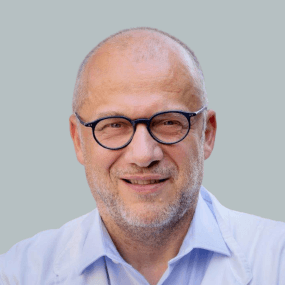
Prof. Schaser is not only known for state-of-the-art diagnostics and treatment procedures in spinal surgery, he also enjoys a high international reputation for his intensive scientific research. His expertise is often in demand, especially for rare bone and soft tissue tumors.
Areas of focus
- Intervertebral disc surgery
- Spinal stabilizations
- Spinal corrections
- Spinal tumor extirpations
- Treatment of spinal inflammations
About Prof. Klaus-Dieter Schaser
Prof. Dr. med. Klaus-Dieter Schaser is an expert in spinal column surgery and tumor surgery in Dresden. Prof. Schaser and his team provide consultation, diagnostics, multimodal therapy and aftercare for patients with bone and soft tissue tumors and bone metastases.
Bone and soft tissue tumors, especially malignant ones, are relatively rare. For this reason, experience in diagnostics and therapy is generally very limited. In order to be able to treat patients with bone tumors and bone metastases effectively and in the best possible way, such patients should be treated by experts such as Prof. Schaser in specialized centers.
In these specialized centers, the patient can be provided with holistic interdisciplinary diagnostic and therapeutic concepts of spinal column surgery and tumor surgery. An interdisciplinary team creates an individual tumor-specific overall treatment concept for each patient.
An unconditional relationship of trust between Prof. Schaser, the attending physician, and the patients is the fundamental basis for such a therapy, which is usually mentally and physically strenuous and stressful. For Prof. Schaser, the realization of this relationship of trust already begins with the detailed consultation of the patient about all possible therapies based on the specific findings, always taking into account possible advantages and disadvantages as well as possible complications.
The relationship of trust continues during the treatment by accompanying the patients during the individual therapy phases of other specialties (e.g. oncology or radiotherapy) and then leads on to tumor-specific aftercare after completion of all possible therapeutic measures.
Additional services
- Injury-related spinal diseases
- Tumor-related spinal diseases
- Degenerative spinal diseases
- Spinal diseases
- Spinal deformities
- Spinal cancer
Insights
Insights: University Hospital Carl Gustav Carus Dresden at the Technical University Dresden
Insights: University Hospital Carl Gustav Carus Dresden at the Technical University Dresden – Bild 1
Location
How to reach Prof. Klaus-Dieter Schaser

University Hospital Carl Gustav Carus Dresden at the Technical University Dresden
University Center for Orthopedics and Traumatology
Specialisation
The medical spectrum of Prof. Klaus-Dieter Schaser
Diseases
- Neurofibromatosis (opens in a new tab)
- Tethered Cord Syndrome (opens in a new tab)
- Herniated Disc (opens in a new tab)
- Herniated disc in the cervical spine (opens in a new tab)
- Kyphosis (opens in a new tab)
- Osteochondrosis (opens in a new tab)
- Spinal Canal Disorders (opens in a new tab)
- Spinal Canal Stenosis (Spinal Canal Narrowing) (opens in a new tab)
- Spondylodiscitis (inflammation of the intervertebral discs and vertebrae) (opens in a new tab)
- Spondylolisthesis (Spinal Slippage) (opens in a new tab)
- Spondylosis (arthrosis of the vertebral joints) (opens in a new tab)
- Spinal Disorders (opens in a new tab)
- Cauda equina syndrome (opens in a new tab)
- Paralysis (opens in a new tab)
- Meralgia Paresthetica (opens in a new tab)
- Supinator loge syndrome (opens in a new tab)
- Thoracic Outlet Syndrome (opens in a new tab)
- Nerve Cancer (opens in a new tab)
- Neuroblastoma in Children (opens in a new tab)
- Spinal cord tumor (opens in a new tab)
- Spinal Tumor (opens in a new tab)
- Spinal Cord Injury (opens in a new tab)
- Vertebral Fracture (opens in a new tab)
- Lower Back Pain (opens in a new tab)
- Post-Traumatic Kyphosis (opens in a new tab)
- Degenerative Disc Disease (opens in a new tab)
- Spinal Instability (opens in a new tab)
- Spinal Sprain (opens in a new tab)
- Whiplash (opens in a new tab)
- Spondylopathy (opens in a new tab)
- Spondylitis (inflammation of the vertebrae) (opens in a new tab)
- Flat Back (Postoperative Flat Back Syndrome) (opens in a new tab)
- Postnucleotomy Syndrome (Postoperative Pain Syndrome) (opens in a new tab)
Treatments
- Neuromodulation (opens in a new tab)
- Spinal Disc Surgery (opens in a new tab)
- Spinal Stabilization (opens in a new tab)
- Spinal Correction (opens in a new tab)
- Spondylodesis (opens in a new tab)
- Neurosurgical Pain Management (opens in a new tab)
- Percutaneous Spinal Surgery (opens in a new tab)
- Minimally Invasive Disc Surgery (opens in a new tab)
- Kyphoplasty (opens in a new tab)
- Neuronavigation (opens in a new tab)
- Nerve Reconstruction (opens in a new tab)
- Spinal Stabilization Surgery Using a Cage (opens in a new tab)
- Percutaneous Nucleotomy (opens in a new tab)
- Back Pain Treatment (opens in a new tab)
- TLIF Procedure (Spinal Fusion) (opens in a new tab)