Typically, the sprain itself does not result in bone damage but can irritate ligaments and nerves. From a medical standpoint, it is important to determine early on whether there are any additional injuries, especially in the cervical spine. The doctor makes the diagnosis through a clinical examination and, if necessary, imaging tests when more severe symptoms occur. Early treatment helps prevent complications and supports complete recovery.
Definition and Meaning of a Distortion
A sprain is a medically defined injury in which ligaments, tendons, or joint structures are overstretched. A spinal sprain usually occurs after a rapid forceful or rotational movement and is often referred to as a sprain. Cervical spine distortion is particularly common; many patients know this as whiplash. The distortion itself is mild in most cases, but can still cause significant pain depending on the affected region and the nerves involved.
In a distortion, symptoms arise because the stabilizing structures of the spine have been strained beyond their physiological limits. Although the injury is generally not bony, it can cause functional limitations. However, a sprain usually does not indicate serious damage—the structures can heal completely if treated correctly. A thorough evaluation is particularly important in the cervical spine, as spinal nerves that supply the entire body run through this area.
Common Causes of Spinal Distortion
A distortion usually occurs suddenly, for example, due to abrupt deceleration, falls, or jerky movements by the patient. A typical cause is the sudden acceleration and deceleration that can occur in a traffic accident. Cervical spine distortion is the classic example of this. Rotational movements or external force can also lead to overstretching of ligaments and tendons in the back, cervical spine, or lumbar spine.
Sprains can occur both during sports activities and in everyday life. A misstep, a fall on black ice, or strenuous exertion is enough to overstretch the spine. Depending on the force involved, a sprain can lead to mild discomfort or—more rarely—cause neurological symptoms. A doctor should always determine the cause if the pain is severe or persists for an extended period.
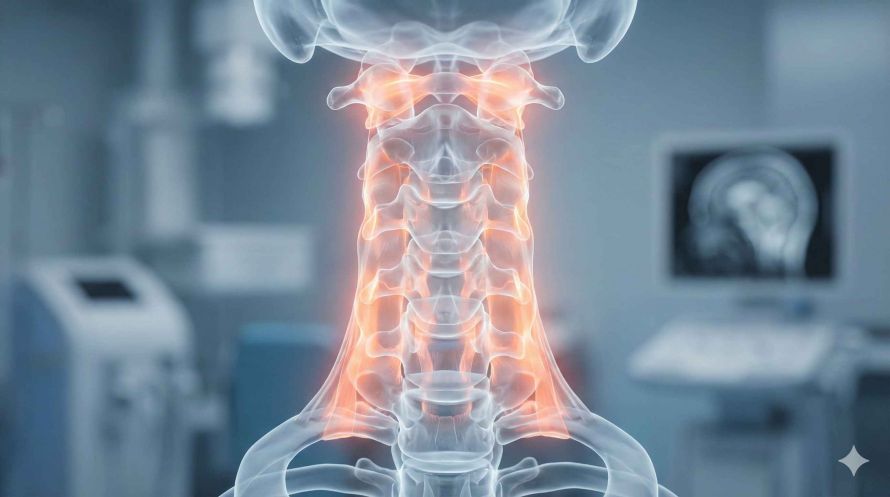
Medical visualization of a cervical spine sprain: The highlighted area shows the painful overstretching of the ligamentous structures in the cervical spine.
Symptoms of a Cervical Sprain
The most common symptoms include pain, which may occur immediately after the injury or with a delay. Many affected individuals report a dull, pressing sensation, muscle tension, or restricted movement. A cervical sprain may also cause headaches, dizziness, or radiating pain.
Typically, these symptoms occur without any obvious external injuries. If a nerve is irritated, numbness or tingling may also occur. Severe pain, neurological abnormalities, or a feeling of instability are warning signs that absolutely require a medical examination. Even though a whiplash injury alone is rarely serious, complications must be ruled out—especially near the spinal cord.
Diagnosis, Treatment, and Therapy
The Correct Diagnosis of a Sprain or Cervical Spine Sprain
Diagnosis begins with a clinical examination by a doctor, who assesses which movements cause pain and whether there are any neurological deficits. Imaging—such as X-rays or MRI—is used to definitively rule out bone injuries. Especially when a cervical sprain is suspected, it is crucial to detect injuries to ligaments, intervertebral discs, or nerves at an early stage.
Medically, a sprain is diagnosed primarily based on the patient’s symptoms. The goal is to distinguish between a simple sprain and a more serious injury. A clear diagnosis is the foundation for safe treatment and prevents unnecessary strain during the healing phase.
Therapy and Treatment
Treatment depends on the severity of the sprain. Mild sprains are usually treated conservatively with rest, ice, and anti-inflammatory medications. Once the acute pain subsides, gentle mobilization and physical therapy help restore the stability of the spine. The structures need time to heal completely, as ligaments and tendons regenerate more slowly than muscles.
In cases of more severe symptoms or neurological abnormalities, close medical monitoring is recommended. A sprain in the cervical spine requires special caution, as sensitive spinal nerves run through that area. Further intervention is rarely necessary. In the vast majority of cases, symptoms usually subside within a few weeks.
Further details on the course of a spinal sprain
Mechanisms, Course, and Possible Consequences
FAQ
What exactly does the term “distortion” mean?
The term “distortion” refers to an injury in which ligaments and tendons are overstretched. It occurs rapidly—for example, due to abrupt deceleration—and frequently affects the cervical spine. Medically, it is classified as a sprain.
What is the most common cause of a cervical spine sprain?
A cervical spine sprain is often caused by whiplash, such as in a traffic accident. The sudden acceleration overstretches and irritates the ligaments, causing pain. Even everyday falls can trigger such an injury.
What are the typical symptoms?
Typical symptoms include pain, muscle tension, and limited mobility. Depending on the severity, headaches, dizziness, or neurological symptoms may occur. Severe or persistent symptoms should be evaluated by a doctor.
When should you seek urgent medical attention?
If neurological symptoms occur—such as numbness, tingling, or loss of strength—there is a suspicion of more severe damage. Severe pain or symptoms following an accident should also be evaluated.
How long does it take for a sprain to heal?
A sprain usually heals within a few days to a few weeks. However, ligaments and tendons need time to regenerate, so physical activity should be increased gradually. With consistent treatment, full function can be restored.
Share this article

About the medical author
Sabine Schneider
Editor-in-Chief
Sabine Schneider – medical author: Explore expert articles and medical expertise in the Leading Medicine Guide.
View full expert profile →