Ahlbäck's disease refers to the spontaneous breakdown of bone tissue in the lower part of the thigh bone (femur). It most commonly affects older adults aged 60 and older. If left untreated, it can lead to bone fractures and other symptoms.
Here you will find all the important information as well as qualified Ahlbäck’s disease specialists.
What exactly is Ahlbäck's disease?
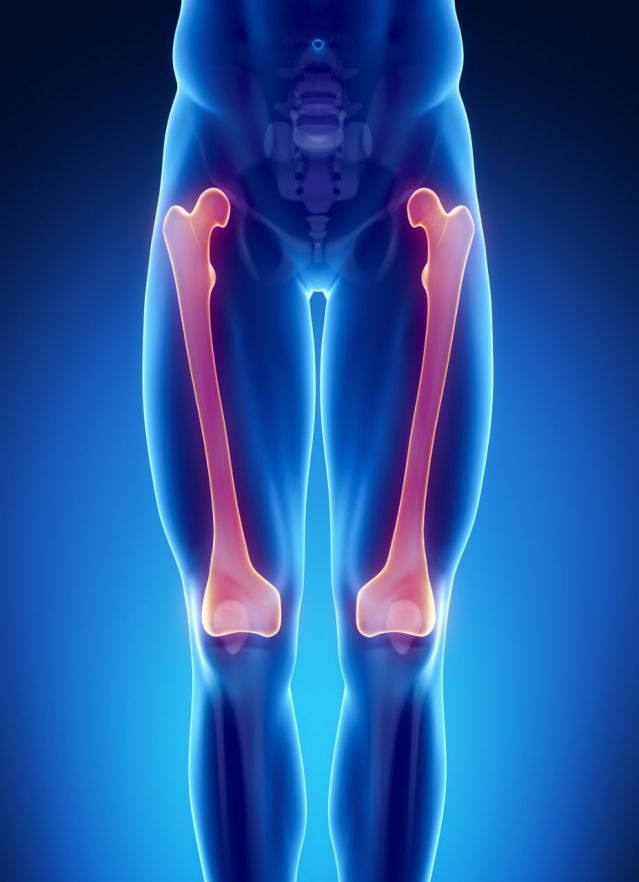
The thigh bone (femur) widens toward the knee into a projection known as the femoral condyles. These are covered with articular cartilage on the inner and outer sides and form an important part of the knee joint. If bone tissue dies in the medial femoral condyle—the one facing the body’s midline—doctors refer to this as bone necrosis.
The condition is also known as Ahlbäck’s disease, named after the physician who first described it. In 1968, the Swedish radiologist Sven Ahlbäck described the typical bone changes and necrosis associated with this condition.
How does Ahlbäck’s disease develop?
Ahlbäck’s disease is a form of so-called aseptic bone necrosis, as the death of the bone tissue is not caused by an infection.
The reasons for the tissue death are not yet fully understood, but a circulatory disorder is suspected to be the cause. As a result of the impaired blood flow, the bone tissue can no longer be adequately supplied with oxygen and nutrients and dies off.
What are the contributing factors (risk factors) for Ahlbäck’s disease?
In general, conditions that can lead to impaired bone metabolism are associated with an increased risk of developing Ahlbäck’s disease. The condition primarily occurs after the age of 60, as metabolism—both overall and specifically in the bones—decreases with advancing age.
However, conditions that place exceptional stress on bone and joint structures also increase the likelihood of bone necrosis developing. Finally, traumatic events should also be mentioned as a cause of Ahlbäck’s disease.
In summary, the following risk factors exist:
- advanced age
- metabolic disorders (such as diabetes mellitus)
- tumors (rarely bone tumors)
- leg misalignments (particularly bowlegs) and
- damage to the menisci (the cartilaginous discs in the knee joint that absorb shock)
What symptoms are typical of Ahlbäck’s disease?
Ahlbäck’s disease is characterized by the following symptoms:
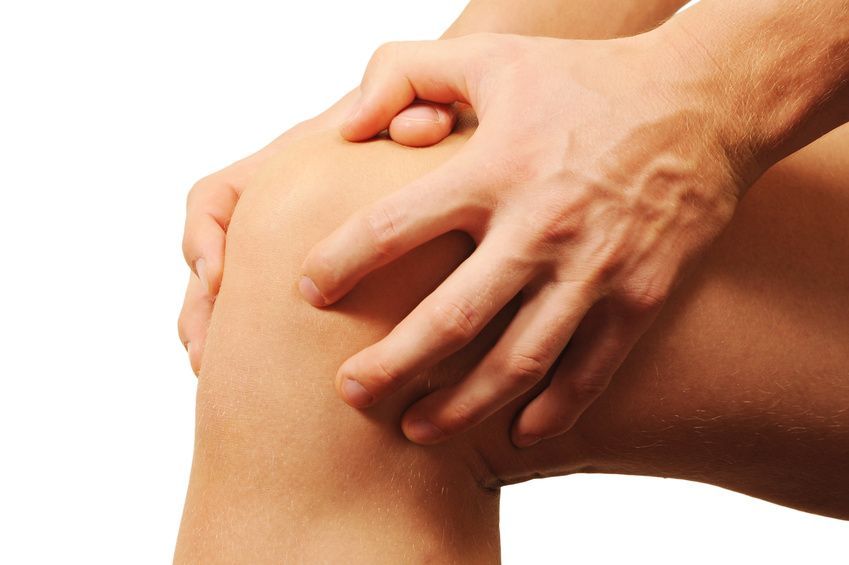
- Pain on the inner side of the knee joint
- Swelling of the knee joint
- Knee effusion with limited range of motion
- Increasing bowlegs (varus deformity) as the disease progresses
The condition typically presents with sudden-onset pain. The pain occurs in the front of the knee joint, toward the center of the body. It usually worsens with weight-bearing. Depending on the extent of the affected bone area, symptoms can range from mild to very severe.
The subsequent course of the disease can also vary greatly. If, for example, only a small area is affected, the joint often returns to normal after a painful acute phase.
However, as the disease progresses, the dying bone tissue may fracture. This is also referred to as a pathological fracture, as it involves bone breaks that occur without a traumatic event. These fractures are caused by the reduced stability of the bone.
In the long term, these fractures are accompanied by increasing misalignment (deformation) of the upper joint surfaces. This, in turn, leads to postural abnormalities and, in severe cases, can result in impairment of the entire body’s alignment.
In addition, joint effusions often develop, leading to swelling and restricted movement in the affected knee joint.
How is Ahlbäck’s disease diagnosed?
First, as part of a physical examination, the knee joint is palpated and various functional tests are performed. In cases of Ahlbäck’s disease, patients experience pain in the inner region of the knee joint. This pain intensifies with pressure and rotational movements, which can be assessed more precisely through specialized tests.
In advanced stages, the bony defect can be visualized using an X-ray. Early stages, on the other hand, can also be detected using magnetic resonance imaging (MRI). MRI also allows for a precise assessment of the extent of tissue loss.
In addition, bone scintigraphy may be used. In this procedure, a radioactive substance is injected into a vein. It then accumulates in areas of the bone with high metabolic activity (including pathologically altered bone tissue).
A few hours after the injection, the body is scanned using a special camera to map the distribution of the injected substance. Because the substance accumulates in areas with altered bone metabolism, Ahlbäck’s disease can be diagnosed at an early stage and its exact extent assessed.
How is Ahlbäck’s disease treated?
There are several treatment options for Ahlbäck’s disease, in particular
- non-surgical (= conservative) and
- surgical treatment methods.
Non-surgical treatment when the disease is stable
If Ahlbäck’s disease is not progressing, conservative therapy is usually sufficient. It primarily aims to protect the affected leg through support and avoiding sports.
In cases of leg deformities (bowlegs or knock-knees), shoes are modified by raising the outer edge. This can correct the knee misalignment and relieve pressure on the knee.
In addition, physical therapy is recommended
- to maintain mobility in the knee joint and
- to strengthen the leg muscles.
Hyperbaric oxygen therapy (HBO therapy) can also help improve blood circulation and reduce pain. Bone-building medications (including bisphosphonates) can further promote the regeneration and stabilization of the affected bone tissue.
Joint-Preserving Surgery When the Disease Is Stable
Various surgical procedures can be used to preserve the joint. One option is drilling into the affected bone tissue (decompression drilling). This can stimulate the bone tissue to heal itself.
Another method involves transplanting healthy bone tissue from another part of the body. Cancellous bone is used for this purpose; this refers to the loose bone structures found inside a bone. These can be easily harvested, preferably from the iliac crest. This procedure is called a cancellous bone graft, which allows the destroyed tissue to be replaced.
To relieve pressure on the area affected by necrosis, the relative position of the femur and tibia can be altered. In this procedure, the bone is cut, and the new position is then stabilized. This is usually done using plates and screws, which are applied to the outside of the bone and secured in place. This procedure is called a realignment osteotomy, since the bone (osteo-) is cut (-tomy) and then stabilized again in a new position (realignment).
How is advanced Ahlbäck’s disease treated?
In about one in five affected individuals, Ahlbäck’s disease progresses and the necrotic bone areas collapse. In these cases, removal of the affected bone area and implantation of a partial or total knee prosthesis is recommended. This procedure prevents further progression of tissue loss.
What does postoperative treatment for Ahlbäck’s disease involve?
Physical therapy should be performed after every surgical procedure. As part of this therapy, the knee joint is gradually subjected to increasing loads until normal daily activities can be resumed.
In addition, special exercises are used to strengthen the leg muscles that stabilize the knee joint.
Can Ahlbäck’s disease be completely cured?
The prognosis for Ahlbäck’s disease depends on
- the patient’s age
- the progression of the disease, and
- the choice of treatment
. In the early stages of the disease, spontaneous healing can be observed in about one-quarter of patients. As blood flow improves, new cartilage tissue forms and the pain subsides.
In 3 out of 4 patients, however, bone loss continues to progress. If left untreated, this leads to increasing pain and knee osteoarthritis. At that point, relief can often only be achieved through total knee replacement. The prognosis is generally good, though the healing process can be protracted and occur in episodes. Nevertheless, the risk of losing the leg is considered very low.
Orthopedic Surgeons—Specialists in Ahlbäck’s Disease
If Ahlbäck’s disease is suspected, you should consult a specialist in orthopedics and trauma surgery. After completing medical school, this specialist undergoes a 6-year residency to specialize in the treatment of disorders of the musculoskeletal system, including the knee joint.
Orthopedic surgeons are experts in the joint structures of the knee, namely
- bones,
- muscles,
- tendons, and
- cartilage.
FAQ
What exactly is Ahlbäck’s disease?
Ahlbäck’s disease is osteonecrosis of the knee joint—a condition in which bone tissue dies. This form of osteonecrosis is named after the Swedish radiologist Ahlbaeck and primarily affects people aged 60 and older.
How is Ahlbäck’s disease diagnosed?
First, the affected knee undergoes an orthopedic examination. Early stages can be detected promptly via MRI; in advanced cases, conventional X-rays may also be used—bone scintigraphy can be employed as a supplementary diagnostic tool.
How is Ahlbäck’s disease treated?
The goal is to preserve the knee joint and maintain its function—shock wave therapy can be used as an adjunct to promote healing. If the affected bones collapse, the entire knee joint is often replaced.
What are the risk factors?
Patients with Ahlbäck’s disease often have metabolic disorders, leg deformities, or a history of long-term corticosteroid use. Meniscal tears and increased medial stress on the knee are also contributing factors.
Share this article

About the medical author
Prof. Dr. med. Susanne Regus
Medical Author
Prof. Dr. med. Susanne Regus – medical author: expert articles, professional insights and medical expertise in the Leading Medicine Guide.
View full expert profile →