
Prof. Martin Scholz
Specialist for spinal surgery, pediatric neurosurgery, head and cerebral neurosurgery in Duisburg
Sana Kliniken Duisburg GmbH· Zu den Rehwiesen 9-11, 47055 Duisburg
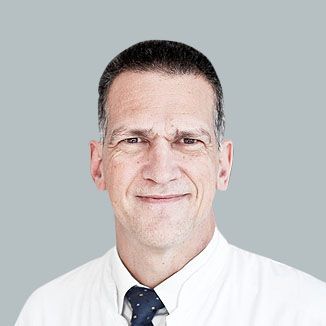
Prof. Scholz heads one of the largest German neurosurgical departments - and is considered a specialist for surgeries on both the brain and the spinal column. The renowned expert pays special attention to neurosurgery in children: a field of expertise that only a few specialists master with confidence.
Areas of focus
- Cerebral tumors in children and adults
- Vascular neurosurgery, angiomata, cavernomata, aneurysms
- Surgery to the base of the skull, orbita and pituitary gland, petroclival meningeomata and pineal tumors
- Pediatric neurosurgery
- Endoscopic craniosynostosis
- Endoscopic procedures on the ventricular system
- Spinal instrumentation (in particular, of the cervical spinal column), also navigated
- Spinal microsurgery for spinal tumors and degenerative conditions
About Prof. Martin Scholz
Prof. Martin Scholz is a specialist in neurosurgery and special neurosurgical intensive care medicine with additional qualifications in neurosurgery from the German Neurosurgical Society and in the fields of special oncological neurosurgery, vascular neurosurgery and spinal neurosurgery from the Professional Association of German Neurosurgeons. He also has a Master’s Certificate from the German Spinal Association (DWG). As such, Prof. Scholz specializes in the surgical treatment of tumors and vascular conditions of the brain and spinal cord, as well as conditions in the area of the entire spinal column. In addition, the clinic has also been certified as an Oncological Neurosurgery Institute by the German Neurosurgery Association (DGNC).
As its Senior Consultant, Prof. Scholz has headed the Neurosurgery Clinic of the Sana Hospitals, Duisburg since 2009. The Clinic provides the entire range of neurosurgery. This includes the diagnosis and surgical treatment of all conditions of the peripheral and central nervous system, including, for example, cerebral hemorrhage, cerebral tumors, cerebral vascular deformities, vascular deformities of the spinal cord, tumors of the spinal cord, prolapsed disc and spinal canal stenosis. Here, the range of services of Prof. Scholz and his team includes an array of special medical treatment and surgical techniques, including surgery for cerebral tumors in children and adults, neuronavigation and microsurgery.
One focus of the neurosurgical clinic of the Sana Hospitals, Duisburg, is pediatric neurosurgery, which concerns the surgical treatment of neurovascular conditions, i.e. conditions of the blood circulatory system of the brain and spinal cord in children, as well as tumors, malformations and deformities of the skull in children.
Prof. Scholz is a member of the European Society of Pediatric Nephrology (ESPN) and specialized, subordinate medical practitioners possess a certificate of the European Society of Pediatric Neurosurgery. The emphases of the Neurology Clinic in Duisburg also include so-called neuromodulation, which is employed for complex pain syndromes and pain symptoms.
All told, Prof. Scholz and his team at the Neurology Clinic, which has 68 beds, treat around 3,000 in-patients and 7,000 out-patients each year, who largely come from the region of the city of Duisburg, as well as from the western Ruhr district and the entire lower Rhine area, North Rhine Westphalia and from across Germany. Here, the main objective is always to provide the patients with the best treatment and care in invariably consistent quality.
To this end, on the one hand, Prof. Scholz and his team utilize the infrastructure of the Sana Hospitals, Duisburg. On the other hand, they work in close collaboration with the various specialist departments of the hospital. Thus, together with the Departments of Neurology, Neuroradiology, Pediatric Neurology, Radiotherapy, and Oncology, for example, the Neurosurgery Clinic forms a nationwide Neurocentre, which is internationally acknowledged and which also cares for many patients from abroad.
Therapeutic services
- Microsurgical and endoscopic techniques for complex spinal and cranial conditions using state-of-the-art technology in children and adults
- Cerebral tumors in children and adults
- Vascular neurosurgery, angiomata, cavernomata, aneurysms
- Surgery to the base of the skull, orbita and pituitary gland, petroclival meningeomata and pineal tumors
- Pediatric neurosurgery
- Endoscopic craniosynostosis
- Endoscopic procedures on the ventricular system
- Spinal instrumentation (in particular, of the cervical spinal column), also navigated
- Spinal microsurgery for spinal tumors and degenerative conditions
As well as:
- Conservative therapy such as fango, physiotherapy, speech therapy, acupuncture, exercise pool
- High-end radiotherapy (linear accelerator and TomoScan)
Diagnostic services
- 3 Penter microscopes with mouth switch and all fluorescence techniques, 2 additional high-end microscopes,
- HD ultrasound, micro-Doppler ultrasound, 2 cranial navigation systems, spinal navigation (O-arm)
- 2 MRTs (up to 3 T) , 2 computer tomographs, 24-hour cerebral angiography
Expert interviews
Insights
Insights: Sana Kliniken Duisburg GmbH
Sana Kliniken Duisburg GmbH – Image 1
Location
How to reach Prof. Martin Scholz

Sana Kliniken Duisburg GmbH
Neurosurgery Clinic
Specialisation
The medical spectrum of Prof. Martin Scholz
Diseases
- Arteriovenous Malformation (opens in a new tab)
- Craniosynostosis (opens in a new tab)
- Neurofibromatosis (opens in a new tab)
- Cranial malformation (opens in a new tab)
- Spina bifida (opens in a new tab)
- Tethered Cord Syndrome (opens in a new tab)
- Brain hemorrhage (opens in a new tab)
- Cerebrovascular Diseases (opens in a new tab)
- Neurovascular Diseases (opens in a new tab)
- Subarachnoid hemorrhage (opens in a new tab)
- Herniated Disc (opens in a new tab)
- Herniated disc in the cervical spine (opens in a new tab)
- Kyphosis (opens in a new tab)
- Osteochondrosis (opens in a new tab)
- Spinal Canal Disorders (opens in a new tab)
- Spinal Canal Stenosis (Spinal Canal Narrowing) (opens in a new tab)
- Spondylodiscitis (inflammation of the intervertebral discs and vertebrae) (opens in a new tab)
- Spondylolisthesis (Spinal Slippage) (opens in a new tab)
- Spondylosis (arthrosis of the vertebral joints) (opens in a new tab)
- Spinal Disorders (opens in a new tab)
- Cauda equina syndrome (opens in a new tab)
- Dystonia (opens in a new tab)
- Epilepsy in Children (opens in a new tab)
- Hydrocephalus (opens in a new tab)
- Paralysis (opens in a new tab)
- Meralgia Paresthetica (opens in a new tab)
- Supinator loge syndrome (opens in a new tab)
- Thoracic Outlet Syndrome (opens in a new tab)
- Tremor (opens in a new tab)
- Trigeminal Neuralgia (opens in a new tab)
- Angioma (opens in a new tab)
- Astrocytoma (opens in a new tab)
- Glioblastoma (opens in a new tab)
- Glioma (opens in a new tab)
- Brain metastases (opens in a new tab)
- Brain Tumors in Children (opens in a new tab)
- Pituitary adenoma (pituitary tumor) (opens in a new tab)
- Cavernomas (opens in a new tab)
- Medulloblastoma (opens in a new tab)
- Meningioma (opens in a new tab)
- Nerve Cancer (opens in a new tab)
- Neuroblastoma in Children (opens in a new tab)
- Oligodendroglioma (opens in a new tab)
- Spinal cord tumor (opens in a new tab)
- Skull base tumor (opens in a new tab)
- Spinal Tumor (opens in a new tab)
- Spinal Cancer in Children (opens in a new tab)
- Brain Injury (Traumatic Brain Injury) (opens in a new tab)
- Spinal Cord Injury (opens in a new tab)
- Vertebral Fracture (opens in a new tab)
- Cerebral arteriovenous malformation (opens in a new tab)
- Brain aneurysm (opens in a new tab)
- Lower Back Pain (opens in a new tab)
- Acromegaly (opens in a new tab)
- Hyperprolactinemia (opens in a new tab)
- Pituitary insufficiency (opens in a new tab)
- Post-Traumatic Kyphosis (opens in a new tab)
- Degenerative Disc Disease (opens in a new tab)
- Spinal Instability (opens in a new tab)
- Spinal Sprain (opens in a new tab)
- Whiplash (opens in a new tab)
- Spondylopathy (opens in a new tab)
- Spondylitis (inflammation of the vertebrae) (opens in a new tab)
- Flat Back (Postoperative Flat Back Syndrome) (opens in a new tab)
- Postnucleotomy Syndrome (Postoperative Pain Syndrome) (opens in a new tab)
- Low-grade glioma (opens in a new tab)
Treatments
- Brain Aneurysm Surgery (opens in a new tab)
- Brain Tumor Surgery (opens in a new tab)
- Neuromodulation (opens in a new tab)
- Spinal Disc Surgery (opens in a new tab)
- Brain Surgery (opens in a new tab)
- Spinal Stabilization (opens in a new tab)
- Spinal Correction (opens in a new tab)
- Brain Pacemaker (Deep Brain Stimulation) (opens in a new tab)
- Stereotaxy (opens in a new tab)
- Spondylodesis (opens in a new tab)
- Skull Base Surgery (opens in a new tab)
- Plexus Surgery (opens in a new tab)
- Neurosurgical Pain Management (opens in a new tab)
- Percutaneous Spinal Surgery (opens in a new tab)
- Minimally Invasive Disc Surgery (opens in a new tab)
- Kyphoplasty (opens in a new tab)
- Neuronavigation (opens in a new tab)
- Nerve Reconstruction (opens in a new tab)
- Spinal Stabilization Surgery Using a Cage (opens in a new tab)
- Percutaneous Nucleotomy (opens in a new tab)
- Back Pain Treatment (opens in a new tab)
- TLIF Procedure (Spinal Fusion) (opens in a new tab)
- MRgFUS (opens in a new tab)
- Epilepsy Surgery (opens in a new tab)
- Optune Therapy (opens in a new tab)
Diagnostics
Areas of Expertise
Prof. Martin Scholz
Specialist for spinal surgery, pediatric neurosurgery, head and cerebral neurosurgery in Duisburg