Skull base surgery involves specialized surgical procedures that access deep structures of the skull base without unnecessarily damaging healthy tissue. It is primarily performed in neurosurgery and addresses tumors, inflammatory processes, and complex conditions in this anatomically challenging area. Thanks to modern endoscopic techniques, many surgeries can now be performed in a significantly less invasive manner.
Disorders of the skull base often affect the cranial nerves, the brainstem, or bony structures, making precise diagnosis and treatment essential. Interdisciplinary collaboration between neurosurgery, otolaryngology, oral and maxillofacial surgery, and neuroradiology is an integral part of providing safe care.
Skull Base Surgery – An Overview of Skull Base Disorders
Disorders in this area include tumors such as meningiomas, acoustic neuromas, or space-occupying lesions typical of the skull base, which often grow slowly but, due to their location, can compromise cranial nerves and blood vessels. Inflammatory processes, rare malignant tumors, or bony changes may also necessitate surgical treatment. Skull base surgery allows for targeted access to the skull base region without placing excessive strain on the brain itself.
Many of these tumors are benign but cause symptoms such as dizziness, paralysis of individual cranial nerves, or visual disturbances due to pressure on the brainstem. Early diagnosis using MRI is crucial to prevent progression. Thanks to the specialization of neurosurgeons in centers for skull base surgery, complications have been significantly reduced in recent years.
Interdisciplinary Neurosurgery – Collaboration for Optimal Treatment
Because the skull base region is complex, various medical disciplines work closely together. Neurosurgery typically handles surgical planning, while neuroradiology, otolaryngology, oral and maxillofacial surgery, phoniatrics, and pediatric audiology provide important diagnostic and therapeutic support.
This interdisciplinary approach is particularly important for tumors affecting the cavernous sinus, the temporal bone, or the orbit.
Skull base conferences at specialized clinics serve to discuss individual cases and determine tailored treatment plans. This enhances surgical safety and improves treatment outcomes. Thanks to neuromonitoring during procedures, cranial nerve functions can be reliably protected.
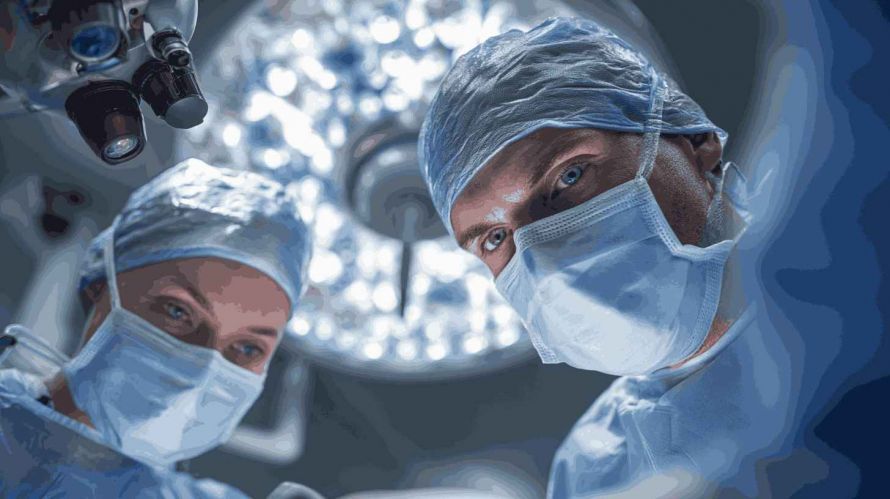
Modern skull base surgery enables precise procedures on cranial nerves and tumors of the skull base.
Surgery and Endoscopic Procedures—Modern Approaches to the Skull Base
Today, endoscopic techniques allow for surgical access through the nose or small openings in the facial skull. This enables minimally invasive access to a tumor without the need for large incisions. Traditional open surgery is still used when the tumor’s location is complex or when it is situated deep within the skull base.
Depending on the type, size, and location of the tumor, it is removed under a microscope. Benign tumors can often be completely removed, while malignant tumors frequently require a combination of surgery and radiation therapy. In every case, the goal remains to preserve cranial nerve function and protect important blood vessels.
Diagnosis, Symptoms, and Neuroradiological Procedures
Typical symptoms result from pressure on the cranial nerves or the brainstem: dizziness, paralysis of individual facial nerves, hearing loss, double vision, or numbness.
An MRI of the skull base region is the gold standard, supplemented by a CT scan to assess bony structures. Neuroradiology plays a central role, as it precisely determines the tumor’s location and prepares for surgery.
Some tumors are discovered incidentally, while others are diagnosed based on distinct symptoms. Precise localization determines the further course of treatment and the surgical approach.
Who is it for? Procedure, advantages, and disadvantages of skull base surgery
Surgery is appropriate for patients in whom tumors, vascular abnormalities, or inflammatory processes are causing symptoms or could continue to grow. The process begins with a comprehensive diagnostic evaluation, an interdisciplinary consultation, and planning. During surgery, neuromonitoring is frequently used to protect the cranial nerves.
Advantages include the targeted removal of the tumor, relief of pressure on the brainstem, and a reduction in neurological symptoms. Disadvantages may include risks such as postoperative swelling, bleeding, infections, or—in rare cases—permanent functional impairment of individual cranial nerves. Modern endoscopic techniques significantly reduce these risks.
Postoperative Care, Recovery, and Long-Term Outcomes
After surgery, patients are closely monitored in the neurosurgical clinic. Postoperative MRI follow-ups confirm the outcome and document the complete removal of the tumor. Many patients experience a significant improvement in their neurological symptoms.
In the long term, regular follow-up visits are important, especially for malignant tumors or tumors with a high risk of recurrence. The combination of surgical expertise and modern diagnostic techniques enables stable, long-lasting results.
FAQ
What symptoms indicate a skull base disorder?
Symptoms such as dizziness, facial nerve paralysis, hearing problems, headaches, or numbness may indicate tumors or inflammatory processes in the skull base and should be evaluated by a neurosurgeon.
When is surgery necessary?
Surgery is recommended when tumors are growing, compressing cranial nerves, or putting pressure on the brainstem, as untreated conditions can cause long-term damage.
Is skull base surgery always performed as open surgery, or is endoscopic surgery also an option?
Modern techniques allow for endoscopic access through the nose or small skin incisions, while open surgery remains necessary for complex locations.
How high is the risk of paralysis?
Thanks to intraoperative neuromonitoring, precise planning, and experienced neurosurgeons, the risk is significantly reduced, but it cannot be completely ruled out depending on the tumor’s location.
What does follow-up care involve?
Regular MRI scans, clinical examinations, and interdisciplinary follow-up care ensure long-term outcomes and enable the early detection of recurrences.