Spinal Correction and Modern Treatment Methods
Spinal correction uses various techniques to correct poor posture and functional disorders of the spine. Depending on the findings, the therapist employs gentle manual techniques that mobilize the vertebrae, release blockages, and provide targeted relief to the muscles. Many patients benefit from a combination of manual manipulation techniques, stabilizing exercises, and a consistently implemented treatment plan. It is crucial that the method be adapted to the individual’s spinal anatomy and that mobility be improved gradually. For mild functional problems, consistent physical therapy is often sufficient.
Another key component of spine-oriented therapy is active realignment. In this process, the therapist focuses on posture, muscular balance, and the structural characteristics of the vertebrae. Through targeted interventions, movement patterns are corrected and the spine is gradually straightened. Gentle methods help reduce strain and permanently correct poor posture. With regular practice, long-term improvements can be achieved.
Even structurally deeper misalignments, such as scoliosis or pronounced curvatures of the thoracic or lumbar spine, can be treated with a combination of manual correction, physical therapy, and—if necessary—surgical intervention. The diagnosis always includes imaging such as X-rays or MRI, because the extent of the curvature must be precisely determined. Only then is a decision made as to whether a conservative approach is sufficient or whether surgery is advisable.
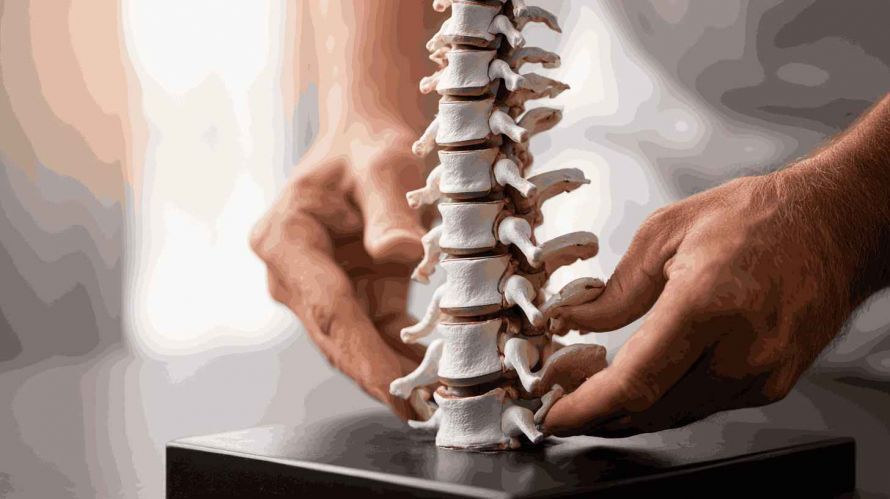
Gentle manual spinal correction to improve posture and relieve pain.
The Spine, Scoliosis, and Correction—When Treatment Is Necessary
Spinal correction is indicated when symptoms such as back pain, headaches, muscle tension, or restricted movement occur. Conditions such as scoliosis, structural blockages, or wear and tear can affect the vertebrae and cause long-term problems. Patients with chronic back pain also often benefit from improved posture and targeted therapy. The treatment follows a medical protocol that begins with a detailed initial consultation. This is followed by a diagnosis, during which the extent of the misalignment is precisely determined and an individualized treatment plan is developed.
Regular sessions not only improve mobility but also enhance the stability of the spine. Treatment is usually structured in stages, allowing the muscles and joints to adapt to the new alignment. One advantage of conservative methods is that they are gentle and do not require surgery. A potential disadvantage is that success requires time and consistent practice. Nevertheless, studies show that many patients benefit in the long term from a personalized treatment plan.
Diagnosis, Methods, and Individualized Treatment Planning
An accurate diagnosis is crucial for identifying the cause of the symptoms. It includes orthopedic examinations, an assessment of posture, the degree of curvature, and a functional evaluation of the muscles. In cases of structural changes, X-rays or MRI scans are used to evaluate the vertebral bodies, intervertebral discs, and spinal cord. Only then is the treatment method selected, which can range from gentle manual techniques to combined physical therapy. Treatment is tailored to each individual to ensure it is optimally suited to the patient’s anatomy and daily life.
Many spinal correction techniques can be combined. Active exercises, techniques applied near the joints, and guided corrections support spinal alignment and improve posture. The therapeutic approach always takes the entire musculoskeletal system into account, not just the vertebrae themselves. The goal is long-term improvement and a greater sense of freedom of movement.
Benefits of Spinal Correction—Improved Mobility, Straightening, and Targeted Therapy
Spinal correction can provide tangible benefits for many patients because misalignments, scoliosis, or functional blockages are specifically corrected. Through a gently guided method or structural therapy, mobility improves, and the vertebrae become more stable within the segment.
Straightening relieves pressure on muscles and joints, which can reduce back pain and improve quality of life in the long term. Many techniques are manual, non-invasive, or combine physical therapy with modern procedures, allowing the back to be realigned step by step. Especially in an orthopedic context, regularly adjusted treatment is precise and tailored to the individual.
Disadvantages and Potential Risks—Limitations of the Method, Consideration of Surgery, and Structural Problems
Like any treatment, spinal correction also has potential disadvantages, especially if the curvature is severe or there is structural damage to the vertebral bodies. Some procedures require time and regular active participation and do not result in the same degree of improvement in the severity of the misalignment for every patient.
In cases of severe scoliosis or complex findings, surgical intervention cannot be ruled out, which carries additional risks. In rare cases, muscle tension, short-term discomfort, or a lack of effect may occur if the method is not precisely tailored to the diagnosis. Therefore, a thorough diagnostic evaluation is essential to avoid unnecessary strain and to determine the best treatment for each individual.
FAQ
How does spinal correction work?
The process begins with an initial consultation, a precise diagnosis, and an assessment of the extent of the misalignment. An individualized treatment plan is then developed, combining manual techniques and active exercises. The correction is performed step by step and is guided by the anatomy of the spine.
When is surgery recommended for scoliosis?
Surgery is considered when severe curvatures, structural damage, or progressive symptoms occur. It is usually necessary when conservative methods are no longer sufficient. The decision depends on the severity of the curvature and the patient’s symptoms.
Are there any disadvantages or risks associated with manual spinal correction?
Disadvantages are rare but may include short-term muscle tension or mild discomfort after the treatment. There are virtually no serious risks if the treatment is performed by experienced specialists. An accurate diagnosis is essential to ensure that no structural problems are overlooked.
Is physical therapy a reliable treatment for scoliosis?
Physical therapy can improve posture, strengthen muscles, and slow the progression of scoliosis. It is an effective method when performed regularly. However, for severe curvatures, it may not be sufficient on its own.
How long does it take for the spine to become noticeably straighter?
The duration depends on the diagnosis, muscle strength, and the regularity of the exercises. Mild postural issues often improve within a few weeks. More complex curvatures take longer and require ongoing therapy.

About the medical author
Sabine Schneider
Editor-in-Chief
Sabine Schneider – medical author: Explore expert articles and medical expertise in the Leading Medicine Guide.
More about the medical author →