Percutaneous nucleotomy is a new, minimally invasive surgical technique used to treat a herniated disc. Compared to open surgery, percutaneous nucleotomy offers several advantages. Chief among these is faster healing.
Here you will find further information as well as a selection of specialists and centers that perform percutaneous nucleotomy.
What is percutaneous nucleotomy, and when is it used?
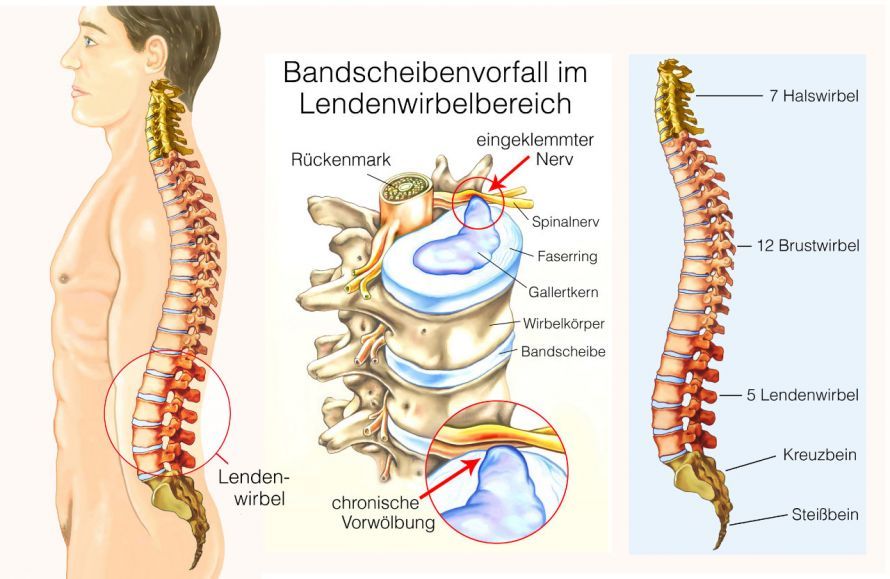
Percutaneous nucleotomy is a new, minimally invasive surgical technique for the gentle treatment of a herniated disc. A herniated disc causes back or neck pain that cannot be relieved by rest, pain medication, or physical therapy.
A herniated disc in the cervical spine is primarily diagnosed using an MRI (magnetic resonance imaging).
Open disc surgery is often accompanied by disc replacement or spinal fusion. With percutaneous nucleotomy, the intervertebral discs do not lose their mobility. The method is therefore a less invasive alternative to open disc surgery.
Furthermore, percutaneous nucleotomy can also be used in more severe cases, such as stenosis.
What does percutaneous nucleotomy involve?
In most cases, surgeons perform percutaneous nucleotomy under local anesthesia. This means the patient remains conscious. Discharge from the hospital usually occurs the next day. For younger patients, treatment on an outpatient basis is even possible.
Percutaneous nucleotomy is a minimally invasive procedure: The surgeon makes only small incisions in the skin over the affected section of the spine and inserts an endoscope into the body through them. The endoscope is equipped with a camera, a light source, and fine instruments. The camera’s image is then displayed live and magnified on a monitor.
Using this image as a guide, the surgeon performs the disc surgery with a 2-mm cannula (a microsurgical instrument). To do this, the surgeon uses a sone to remove the protruding portion of the disc that is pressing on the nerve. The surgeon then removes the remaining tissue with a small suction device. This relieves pressure on the nerve, and the pain subsides.
The surgery takes about 45 minutes.
Thanks to the technique used, there is little or no pain after the surgery. There are also virtually no scars left behind.
What are the advantages of percutaneous nucleotomy compared to open surgery?
- The risks are significantly lower than with open surgery.
- It is at least as effective as open surgery.
- In over 90 percent of cases, spinal fusion can be avoided.
- This procedure does not cause degeneration in the adjacent intervertebral discs, as is the case with spinal fusion.
- Only a small amount of tissue is removed, so the spine remains more stable.
- The procedure is performed under local anesthesia and is therefore much safer than general anesthesia.
- A postoperative neck brace is not necessary.
What follow-up care is required after percutaneous nucleotomy?
In most cases, the pain has completely disappeared after the surgery. Pain medication or a neck brace is rarely necessary.
A follow-up examination takes place one day after the surgery. The patient is then discharged home. Physical therapy can begin one week later.
About two to six weeks after the surgery, the patient is fully functional again.