Cerebrovascular diseases are among the most serious medical conditions because they directly affect blood flow to the brain and thereby endanger vital brain functions. Many of these conditions present acutely—for example, through a stroke, a brain hemorrhage, or neurological symptoms such as paralysis, speech difficulties, or severe headaches.
In particular, aneurysms, arteriovenous malformations (AVMs), or a ruptured blood vessel can trigger a dangerous situation within seconds. Other forms develop gradually, such as cerebrovascular diseases with recurrent circulatory disturbances or an impending cerebral infarction. Diagnosis is usually conducted on an interdisciplinary basis by neurologists, neuroradiologists, and neurosurgeons, as the precise location of a vascular problem is crucial for treatment planning.
Endovascular procedures such as coiling or embolization have greatly expanded treatment options and can reduce the risk of further bleeding. In cases of complex vascular malformations or AV fistulas, microsurgical procedures are often necessary. Subsequent consistent rehabilitation helps patients compensate for neurological deficits and cognitive impairments as effectively as possible.
What are cerebrovascular diseases, and how do they affect the brain?
Cerebrovascular diseases encompass all disorders that affect the blood vessels in the brain and thereby compromise the brain’s blood supply. These include cerebrovascular conditions such as stroke, cerebral hemorrhage, aneurysms, AVMs, and cavernous malformations. Circulatory disturbances or ruptured blood vessels can trigger acute neurological deficits and permanently impair brain function. A particularly critical aspect is that many of these conditions are initially discovered as incidental findings and only cause symptoms in the acute stage.
Aneurysms and vascular malformations, such as arteriovenous malformations, often develop over many years before causing symptoms. However, if a rupture occurs, it results in severe cerebral hemorrhage that requires immediate intensive care. Cerebrovascular diseases are considered one of the leading causes of permanent damage to the nervous system worldwide. Early diagnosis can significantly reduce the risk of hemorrhage and the risk of an ischemic event.
Venous or arterial disorders of the cerebral vessels also play an important role, as they can trigger silent ischemia or chronic headaches. The condition can impair thinking, motor skills, and cognitive functions if the affected area of the brain is no longer adequately supplied with blood. Therefore, an interdisciplinary approach involving neurology, neurosurgery, and neuroradiology is crucial. Today, modern neurovascular centers can perform minimally invasive endovascular procedures or surgical interventions.
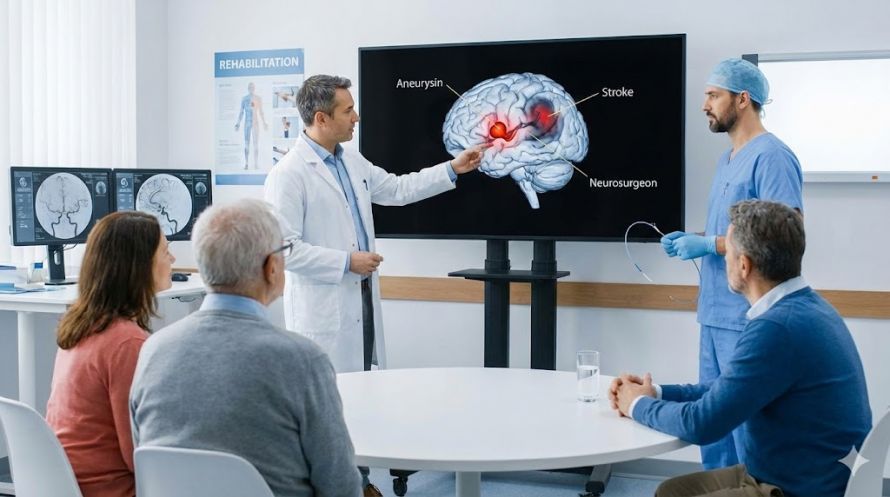
Modern imaging techniques reveal vascular changes in the brain and enable targeted treatment planning.
Causes & Risk Factors for Cerebrovascular Diseases and Stroke
The most common causes of cerebrovascular disease are vascular changes that are exacerbated by high blood pressure, smoking, or genetic factors. High blood pressure is considered the most significant risk factor, as it weakens the walls of the brain’s blood vessels and thus promotes the development of an aneurysm or a cerebral hemorrhage. Arterial and venous malformations, such as AVMs, can also be congenital and increase the risk of neurological complications over time.
Circulatory disorders are often caused by arterial narrowing or embolisms, which can trigger a cerebral infarction. A ruptured aneurysm, on the other hand, leads to a subarachnoid hemorrhage, which often presents suddenly with severe headache, nausea, and neurological deficits. Other risk factors include high blood lipid levels, diabetes, or chronic vascular diseases. Familial clusters also indicate that genetic factors play a significant role.
Arteriovenous malformations, venous angiomas, or fistulas can also cause epileptic seizures, persistent headaches, or strokes. These malformations are often congenital and are frequently only detected via MRI or angiography. In children and young adults, AVMs are one of the most common causes of non-traumatic cerebral hemorrhages. Therefore, early identification of potential risk factors is crucial to preventing complications.
Symptoms of cerebrovascular disease and signs of an aneurysm or vascular problems
Typical symptoms and warning signs of cerebrovascular diseases
The symptoms of cerebrovascular diseases depend heavily on their location and the affected region of the brain. A stroke usually presents suddenly with paralysis, speech difficulties, dizziness, impaired consciousness, or vision loss. With aneurysms, warning signs often do not appear until the acute phase, such as the classic “excruciating headache” associated with a subarachnoid hemorrhage. Headache, nausea, and neurological deficits are typical warning signs.
AVMs or cavernous vascular malformations, on the other hand, can cause insidious symptoms such as epileptic seizures, headaches, or cognitive impairments. With slowly growing vascular abnormalities, symptoms often develop over a period of months. Some patients report recurrent sensory deficits or unsteadiness while walking. Even small cerebral infarcts can go unnoticed and are only detected on an MRI.
Cerebral hemorrhages frequently cause acute symptoms, whereas ischemic changes are more likely to be associated with progressive cognitive impairment. Depending on the affected area, speech disorders, impaired consciousness, or motor deficits may occur. In cases of vascular narrowing, temporary neurological disturbances—known as TIAs (transient ischemic attacks)—sometimes occur as warning signs. These should always be considered a medical emergency.
Diagnosis of Cerebrovascular Diseases at the Department of Neurosurgery
Diagnosis usually begins with a neurological examination to assess acute symptoms such as paralysis or speech disorders. This is followed by imaging procedures such as CT or MRI to visualize cerebral hemorrhage, cerebral infarction, or vascular malformations. Vascular imaging via MR angiography or CT angiography is particularly crucial for aneurysms and AVMs. In cases of complex vascular abnormalities, digital subtraction angiography is often performed.
In neurosurgery, the exact location of the lesion is also assessed to plan the optimal form of treatment. Modern techniques such as ICG angiography enable intraoperative vascular imaging to monitor blood flow in real time. In the case of arteriovenous malformations, angiography helps analyze the structure of venous and arterial inflows. This precise diagnosis forms the basis for safe and targeted treatment.
Interdisciplinary consultations with neuroradiologists and neurologists are also part of the diagnostic process. Combining various areas of expertise provides a comprehensive picture of the disease. Particularly in the case of cerebrovascular diseases, it is important to distinguish between ruptured and unruptured vascular abnormalities. The diagnostic evaluation ultimately determines the therapeutic approach—endovascular, surgical, or conservative.
Cerebrovascular Diseases and Their Treatment
Treatment Options: Endovascular, Neurosurgical, and Conservative Approaches for Aneurysms, Cerebral Hemorrhage, and Vascular Lesions
Endovascular procedures such as coiling, stent-assisted coiling, or embolization are now the preferred methods for treating many aneurysms and AVMs. Microcatheters are guided into the cerebral vessels via the groin or another vascular access point to occlude the aneurysm or embolize a malformation. This method is minimally invasive and reduces the risk of bleeding in many cerebral vascular diseases. Ruptured aneurysms, in particular, are frequently treated with interventional procedures.
Neurosurgical procedures are necessary when endovascular therapies are insufficient or the anatomical conditions are unfavorable. For complex aneurysms, clipping is performed; for AVMs, microsurgical resection or a combination of embolization and surgery is used. Cerebral hemorrhages sometimes require surgical decompression to reduce intracranial pressure and preserve neurological function. In severe cases, treatment takes place in an intensive care unit.
Conservative treatment approaches include managing risk factors such as high blood pressure, diabetes, or atherosclerosis. For small, stable aneurysms or vascular changes, close monitoring may be sufficient. Rehabilitation measures help restore motor and cognitive abilities after a stroke, cerebral infarction, or hemorrhage. Interdisciplinary therapy programs promote long-term recovery.
Prognosis & Rehabilitation After Stroke and Other Cerebrovascular Diseases
The prognosis depends heavily on the timing of treatment, the location, and the extent of vascular damage. In the case of a stroke, every minute counts, as the brain is highly sensitive to disruptions in blood flow. In cases of cerebral hemorrhage or ruptured aneurysms as well, early neurosurgery or endovascular therapy determines the outcome. Patients who receive timely treatment have significantly better chances of recovery.
Rehabilitation is a central component of overall treatment. It includes motor, speech, and cognitive training programs tailored to the affected region of the brain. Following severe neurological deficits, early neurological rehabilitation may be necessary to rebuild basic functions. Modern rehabilitation approaches also include neuropsychological care to improve cognitive deficits.
In the long term, the prognosis also depends on managing risk factors. Patients benefit from structured programs designed to reduce high blood pressure, cholesterol, or other risks to the brain’s blood vessels. Many cerebrovascular diseases require regular MRI or angiography follow-ups to prevent the risk of recurrent bleeding. Overall, an interdisciplinary approach significantly improves both survival and quality of life.
FAQ
How do cerebrovascular diseases manifest—and when is there a risk?
Cerebrovascular diseases often manifest as sudden symptoms such as headache, vomiting, dizziness, or neurological deficits. Warning signs appear when blood flow is disrupted or ischemia sets in. The situation becomes particularly critical in cases of a cerebral hemorrhage or an acute cerebral infarction. Any unexplained deterioration should be evaluated by a doctor immediately, as early treatment can be life-saving.
What are AVMs, and why are they considered risky?
AVMs (arteriovenous malformations) are congenital vascular malformations in which arteries and veins are directly connected. Due to their high blood flow, these vascular structures can be unstable and may bleed at any time. Many AVMs are not detected until symptoms such as epileptic seizures, headaches, or neurological deficits occur. Targeted diagnostic testing is important to determine the individual’s risk of bleeding and the appropriate form of treatment.
How does a cerebral infarction occur, and why is rapid action so important?
A cerebral infarction occurs when a blood vessel is blocked by a clot or a narrowing of the vessel, and the affected area of the brain is no longer adequately supplied with blood. The ischemia leads to damage to nerve cells within minutes. The faster a patient is treated, the more brain tissue can be saved. Early diagnosis is crucial to minimizing long-term complications such as paralysis or speech disorders.
How are vascular diseases of the brain’s blood vessels treated today?
Treatment depends on the type and extent of the vascular disease. AVMs, aneurysms, or other vascular abnormalities can be treated endovascularly, through neurosurgery, or using a combination of both approaches. In the case of cerebral infarcts, the focus is on rapidly restoring blood flow, for example through thrombolysis or mechanical thrombectomy. In addition, rehabilitation measures are important for gradually improving any remaining neurological deficits.
Share this article

About the medical author
Sabine Schneider
Editor-in-Chief
Sabine Schneider – medical author: Explore expert articles and medical expertise in the Leading Medicine Guide.
View full expert profile →