Expert Interviews
Headaches and Migraines – Accurate Diagnosis and Effective Treatment for Long-Lasting Relief

Alexandra Pfitzmann ·
In Germany, about 70% of the population occasionally suffers from headaches, and about 10–15% suffer from migraines, with 1–2% affected chronically and about 38% experiencing severe headaches several times a month. The editorial team of the Leading Medicine Guide learned what can be done effectively to address this issue in a conversation with headache specialist Dr. med.

Headaches and migraines are among the most common neurological conditions in Germany and can significantly impair quality of life. Fortunately, there are now a variety of effective medical interventions—ranging from targeted diagnostics to drug therapies and preventive strategies—that can help those affected alleviate their symptoms and lead active lives again.
Headaches and migraines arise from various processes in the brain and surrounding structures.
“When asking what exactly happens during a headache or migraine, it’s important to first understand that there are over 200 different types of headaches in total. Generally, we distinguish between primary and secondary headaches. Secondary headaches are a symptom that occurs in connection with another condition—such as a cold, the flu, or even a brain injury.
A typical example is the common cold-related headache associated with sinusitis. Primary headaches, on the other hand, do not result from another medical condition. The most common types include migraines, tension headaches, and—though less frequently—cluster headaches.
Migraine is a particularly complex form in which the interaction between the brain, nerve cells, blood vessels, and certain neurotransmitters plays a decisive role. Many sufferers also have a genetic predisposition: their nervous system reacts hypersensitively to stimuli such as stress, hormonal fluctuations, lack of sleep, certain foods, or even changes in the weather.
When a migraine attack occurs, a wave of activity spreads through the brain, altering blood flow and stimulating the release of inflammatory substances. These substances stimulate the pain fibers of the trigeminal nerve, which is the fifth cranial nerve. This activation triggers the release of additional inflammatory substances that irritate the meninges and set off an inflammatory response—which is precisely what causes the typical, usually throbbing and pulsating migraine pain that can occur on one side or both sides of the head.
Those affected often suffer not only from moderate to severe headaches but also from a variety of additional symptoms: nausea, vomiting, sensitivity to light, noise, and odors, difficulty concentrating, and an increase in pain during physical activity.
As a result, many retreat to a dark, quiet room during an attack until the symptoms gradually subside. “A migraine attack usually lasts between four and 72 hours, but for some people it can last significantly longer,” explains Dr. Regina Becker at the beginning of our conversation, and she goes on to elaborate on specific aspects of a possible genetic predisposition:
“There are people who never develop a headache at all. Some people have this predisposition, others do not. Among those affected, a positive family history is often found, especially with migraines: Often, at least one close relative is also affected. Nevertheless, this does not automatically mean that you will develop the condition simply because you carry these inherited genes.
Whether a migraine actually develops often depends on additional lifestyle factors. In women, hormones play an important role, as do stress and overall lifestyle. These factors can accumulate and ultimately lead to a migraine attack. This also explains why many women of childbearing age experience problems particularly frequently, while symptoms often subside again during menopause.
Many patients also report that the pain is particularly severe and frequent during stressful periods when they have little opportunity to relax or sleep poorly. For many migraine patients, symptoms begin as early as childhood or upon entering puberty. However, there are also people who do not develop migraines until later in life. Both patterns occur.”

There are some rare types of headaches that are significantly more difficult to diagnose than migraines or tension headaches. These include trigeminal-autonomic headaches, the best-known example of which is cluster headache.
Dr. Becker explains: “Typical of this group are strictly unilateral, often very severe pains that are difficult to treat with standard pain relievers. Some patients report unilateral tearing or redness of the eye, a runny nose, or congestion on one side of the nose—these are typical trigeminal-autonomic symptoms. Trigeminal-autonomic headaches often respond exclusively to indomethacin, which is why targeted diagnosis is so important.
Many of these patients have endured years of misdiagnosis because they are mistakenly treated as migraine or tension-type headache patients. In cluster headaches, which are more common in middle-aged men, extreme, “devastating” unilateral pain usually occurs at night. Those affected are so restless that they pace around—in contrast to migraine patients, who seek rest.
During the acute phase, fast-acting triptans—such as nasal sprays or injection pens—provide relief. In addition, inhaling pure oxygen can provide significantly rapid relief. For this reason, patients are often equipped with oxygen tanks and masks. These rare conditions are extremely debilitating, which is precisely why education and specialized diagnostics are so important.”
Migraine is a neurological disorder in which vascular and nerve-related processes trigger inflammatory signals in the trigeminal nervous system, causing throbbing, usually one-sided headaches, often accompanied by nausea, sensitivity to light and noise, and occasional aura symptoms. Cluster headaches are thought to result from a dysregulation in the hypothalamus and manifest as extremely severe, one-sided pain around the eye or temple, typically occurring in periodic phases with several attacks per day. Sinus headaches result from inflamed paranasal sinuses and manifest as a dull pressure accompanied by a stuffy nose or mild fever, while medication-induced or secondary headaches may also occur. The symptoms vary depending on the type: tension headaches tend to be dull and pressing, migraines are strongly throbbing, and cluster headaches are stabbing and accompanied by tearing or a runny nose. Triggers range from stress, hormonal influences, and muscle tension to sleep disturbances or infections.
To determine the exact cause of headaches or migraines, various diagnostic procedures are used, which are selected on an individual basis depending on the symptoms.
Dr. Becker explains: “When a patient comes to us complaining of sleep disturbances, concentration problems, decreased performance at work, and regular headaches, we begin with a detailed medical history interview. During this discussion, we try to identify the potential causes behind the symptoms, such as lifestyle changes, evening caffeine consumption, or excessive engagement with multimedia and work tasks that interfere with sleep.
In addition, we conduct technical examinations, such as electroencephalography (EEG), to detect abnormalities in nerve cell activity. We also perform ultrasound examinations of the neck and head vessels, and if necessary, we refer patients for an MRI to rule out secondary causes of the headaches.
Migraine and tension-type headache are diagnoses of exclusion: there is no definitive test that proves the condition. In the vast majority of cases, the test results are normal, allowing us to conclude that no secondary factors are present.”
Today, various medication options are available for the treatment of migraines, both for acute pain relief and for prophylactic prevention, which are tailored individually to each patient.
“The treatment of headaches depends on how frequently they occur. For occasional episodes, acute therapy with pain relievers may be sufficient, providing quick and reliable relief. For regular headaches, long-term use of pain relievers is problematic, as this can actually worsen the symptoms. In such cases, migraine prophylaxis is recommended, which includes both medication and non-medication measures.
These include sleep hygiene, stress reduction, relaxation techniques such as progressive muscle relaxation, yoga, Pilates, or endurance sports, as well as regular intake of food and fluids. If these measures are not sufficient, specific medications are used, with the choice depending on comorbid conditions such as depression or sleep disorders. Antidepressants can be helpful in this context, as they simultaneously alleviate the accompanying symptoms.
For migraines, there are now particularly effective treatments such as CGRP antibodies, which are injected once a month and block a protein produced by the body that plays a central role in migraine attacks. This therapy is well-tolerated, effective, and intended for long-term use of nine to twelve months, after which an individual adjustment is made. A common problem is medication-overuse headache, which occurs when pain relievers are taken on more than ten days a month.
In such cases, the headaches worsen and respond less effectively to medication. To avoid this, the 10-20 rule applies: take pain relievers on no more than ten days per month. In cases of severe overuse, inpatient pain reliever withdrawal may also be necessary. At the same time, however, we begin headache or migraine prophylaxis to reduce the frequency of attacks and lower the long-term need for pain relievers,” says Dr. Becker, adding:
“During an acute migraine attack, it actually makes sense to take the pain reliever in a sufficiently high dose to completely eliminate the headache. A dose that is too low may only partially relieve the pain, causing it to flare up again and again.
With ibuprofen, for example, this means taking 400 to 600 mg, rather than spreading just half that dose over several days. This way, the migraine responds better to treatment, and the attack can be effectively stopped. Among the migraine patients we treat, the main age group is between about 20 and 55 years old, although we also accept adolescents aged 15 and older.
Among women in particular, symptoms typically peak from the early 20s to the early 50s. We also see older patients, but they make up a smaller proportion of our patient population. In general, we observe that headache disorders are diagnosed more frequently today than they were 30 years ago. One reason is that scientific understanding has advanced and knowledge about these conditions has increased, so that symptoms are taken more seriously today and treated in a more targeted manner.
In addition, patients are more likely to see a doctor today because they pay closer attention to their health. An increase in headaches is particularly noticeable among young people, which is linked, among other things, to the intense sensory overload caused by smartphones and digital media. Constant notifications, continuous screen use, and a lack of rest periods strain the brain and can, especially in those with a genetic predisposition, increase susceptibility to headaches.
This often leads to sleep disturbances as well, since young people are barely able to relax anymore.”
The use of botulinum toxin (BTX) and other specialized therapies is particularly beneficial for chronic and treatment-resistant migraines, when conventional medications for acute treatment or prevention are not sufficiently effective or are not well tolerated.
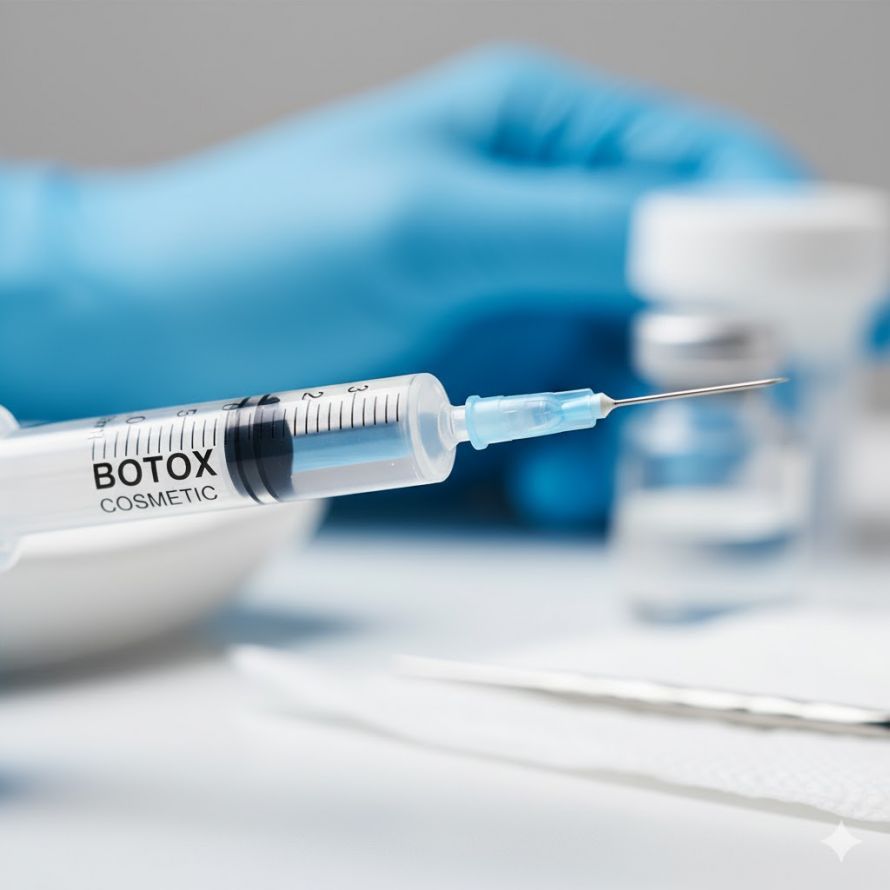
Dr. Becker elaborates: “Botox therapy is approved for chronic migraine—that is, for patients with at least 15 headache days per month, half of which are typical migraine attacks. Many patients also suffer from tension in the masticatory muscles due to teeth grinding (craniomandibular dysfunction) or in the shoulder and neck muscles.
During treatment, Botox is injected specifically into the forehead—where, among other places, the trigeminal nerve’s exit points are located—as well as into the jaw muscles and the shoulder and neck muscles. This desensitizes pain fibers and reduces muscle tension, which is particularly effective for chronic headaches.
The idea stems from the treatment of other neurological conditions involving muscular hyperactivity, such as spasticity following strokes. In those cases, it was found that Botox interrupts the constant hyperactivity of the muscles. When applied to migraines, this causes the brain to receive fewer constant stimuli from tense muscles, thereby breaking the vicious cycle of pain and tension. Botox is now also used to treat other pain conditions, such as nerve pain following shingles, since desensitizing the nerve fibers often provides significant relief without the need for strong pain medications.”
Chronic migraine is defined as ≥ 15 headache days per month, at least 8 of which are migraine-like, and BTX is specifically used for this patient group. BTX does not act like a conventional pain reliever but instead intervenes in the neurobiological mechanisms of pain.
Non-pharmacological approaches play an important role in the long-term relief of headaches and migraines, particularly as a supplement to drug therapy.
“To prevent headaches as much as possible, regular sleep, exercise, and a mindful diet are crucial. Major mistakes include irregular sleep schedules—such as sleeping too little during the week and too much on the weekend—as well as alcohol and histamine-rich foods like beer, red wine, tomatoes, eggplants, or ripe bananas, which can trigger headaches in many patients.
Light endurance exercise two to three times a week helps relax the muscles and reduce stress, though overexertion should be avoided. Monitoring your heart rate can be helpful here to ensure it does not exceed about 160 beats per minute. Seasonal factors also play a role: darker times of year or transitional months can exacerbate headaches and mood swings.
In such cases, daylight or infrared light can help, as can spending time outdoors regularly. “Ultimately, it’s about paying attention to your own triggers, optimizing lifestyle factors, and reducing stress to prevent headaches in the long term,” recommends Dr. Regina Becker.
The Munich-Schwabing Neurocenter specializes in headaches and treats a large number of patients with various headache disorders.
“We have the necessary expertise to identify and treat rare and difficult-to-diagnose headache disorders. Another advantage of our practice is our close collaboration with radiology colleagues, which enables rapid diagnostic evaluations, such as via MRI. We also maintain contacts with the university hospital to refer patients to a specialized center when necessary.
When it comes to lifestyle, hormonal status is particularly important for women of childbearing age. Estrogen-containing contraceptives can be counterproductive in cases of migraine with aura, as they increase the risk of stroke. In the case of menstrual migraines, however, a continuous progestin-only pill may be beneficial for stabilizing the hormonal cycle. Similar considerations apply to women in perimenopause or menopause, where targeted hormone therapy—such as with progesterone preparations—can help alleviate symptoms.
“This is how we take both individual triggers and hormonal influences into account when counseling and treating our patients,” emphasizes Dr. Regina Becker, and with that, we conclude our conversation.
Thank you very much, Dr. Becker, for this important information on the topic of headaches!
- Specialist in neurology with a focus on headache and migraine treatment
- Many years of experience; former director of the Upper Bavarian Headache Center at LMU Medical Center in Munich
- Practice in Munich-Schwabing, specializing in acute, chronic, and treatment-resistant forms of headaches
- Diagnosis and treatment of migraines, tension headaches, and cluster headaches
- Use of modern, guideline-based procedures, including botulinum toxin (BTX) for chronic migraine
Share this article
Expert Interviews
Read next
- Expert interview
Expert interview with Professor Dr Elmar Herbst, PhD
Oct 15, 2026
Patient-centred and personalised knee surgery
Read more - Expert interview
Cardiogeriatrics: Significance and benefits in the context of hospital reform
Sep 21, 2026
Cardiogeriatrics: Significance and benefits in the context of hospital reform
Read more - Expert interview
Expert Interview with Professor Dr. Amadeus Hornemann, MPH
Sep 18, 2026
Prof. Amadeus Hornemann on Precision Medicine in Gynecology: Modern Surgery, New Techniques, Better Quality of Life
Read more