Expert Interviews
Conservative Regenerative Therapy for Knee Osteoarthritis

Alexandra Pfitzmann ·
The editorial team of the Leading Medicine Guide learned more about conservative regenerative therapy for knee osteoarthritis in an interview with Dr. Borgmann.
Knee osteoarthritis—that is, the wear and tear of the knee joint—is one of the most common joint diseases and can significantly impair the quality of life for those affected. While surgical interventions are often viewed as a last resort, conservative regenerative therapy is becoming increasingly important.
The goal of these modern treatment approaches is to preserve joint function, relieve pain, and slow the progression of cartilage degeneration—without surgery. Innovative procedures such as extracorporeal shock wave therapy, PRP injections, or the application of biological healing stimuli open up new possibilities in the treatment of knee osteoarthritis and enable personalized, minimally invasive care.
Patients with knee osteoarthritis usually seek medical help when pain and limited mobility become more pronounced in their daily lives. Individualized diagnosis plays a central role in selecting the appropriate conservative treatment for knee osteoarthritis—especially in the context of regenerative procedures.
“When it comes to knee osteoarthritis, we first look at what actually brings the patient to us. Often, it is activity-related pain that significantly limits the quality of life for those affected. Patients report that they can no longer be as active in sports as they used to be. For example, while playing tennis, working out, or jogging may still be possible, they encounter problems on uneven ground, off-road, or in mountainous terrain.
Especially among older people who enjoy hiking, it’s common to notice that they can no longer keep up on steeper or longer inclines because their knees hurt. This can apply to any type of activity that triggers pain. Furthermore, in cases of existing knee osteoarthritis, symptoms are sometimes triggered only by overexertion. This means that the knee still reacts to overexertion even if there were no previous symptoms, manifesting as pain, swelling, or sometimes even overheating.
Nighttime pain or joint overload can also occur, often without the patient being aware of it. The primary cause of all this is generally considered to be wear and tear—but it is now known that it is usually what is called “silent inflammation.” This leads to cartilage breakdown outpacing the processes that preserve cartilage, causing the degeneration to progress. In terms of age, we generally refer to patients aged 50 and older.
In younger people who show signs before the age of 40, this is rather unusual and should be investigated more closely; in such cases, other causes—such as rheumatic diseases or injuries, for example following a cruciate ligament tear in youth—may play a role. In such cases, biomechanical instability or axial misalignment may be causing the symptoms. However, it is primarily patients aged 50 and older in whom this degenerative condition occurs within the normal range,” explains Dr. Borgmann at the beginning of our conversation.
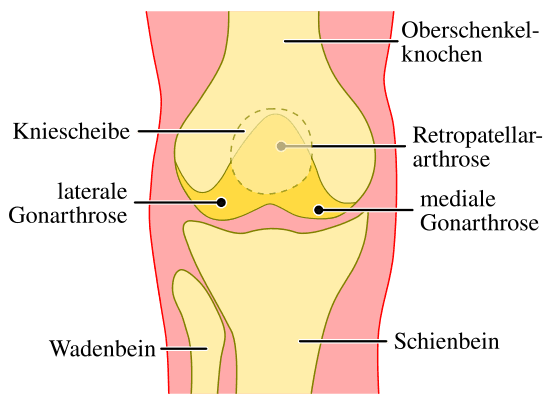
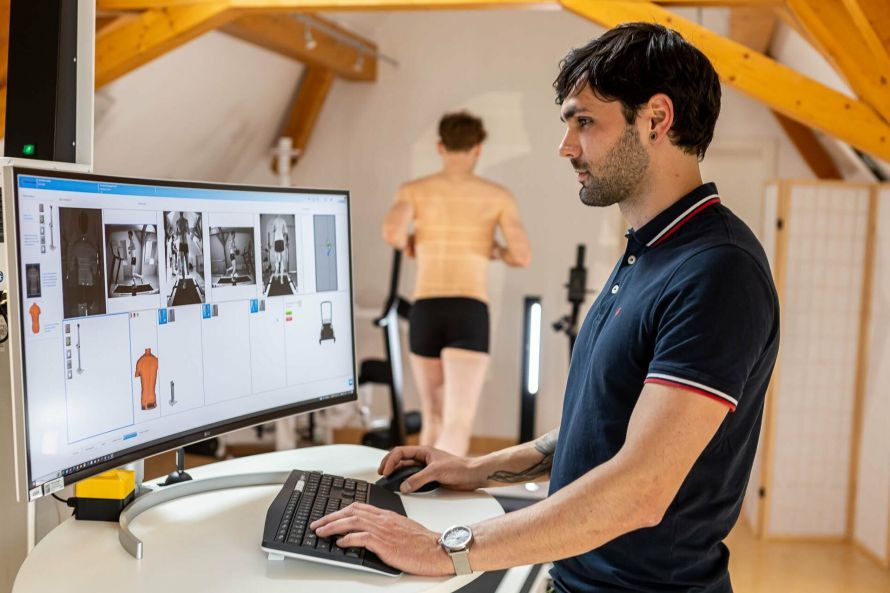
Osteoarthritis is not a uniform disease, but rather a complex interplay of structural, functional, and inflammatory processes that can vary greatly from patient to patient. Imaging techniques such as X-rays, MRI, or 4D spinal and lower limb alignment measurements provide precise information about the structural condition of the knee joint, such as cartilage wear, changes in the joint space, axial misalignments, or accompanying pathologies such as Baker’s cysts or subchondral bone changes.
This information is essential for correctly assessing the degree of osteoarthritis and for determining whether a regenerative treatment—such as PRP, shockwave therapy, or laser therapy—is appropriate and likely to be successful.
“When a patient comes to see us, the diagnostic process always begins with a detailed medical history, as this is truly the be-all and end-all of diagnosis. I place particular emphasis on determining which movements or activities trigger the pain, what worsens it, and what alleviates it. This is extremely helpful for identifying the exact cause of the symptoms and refining the diagnosis. This is followed by a manual examination, during which we always take the body’s overall posture into account.
The patient is usually examined in underwear so that we can properly assess the alignment of the spine, the position of the pelvis, and the alignment of the feet to identify axial misalignments or improper weight-bearing. Afterward, the knee joint itself is examined by palpation. Ultrasound is usually sufficient for us to make a diagnosis, and we generally do not need an X-ray or MRI.
An MRI may be used to assess the bony structures more precisely, for example, if there is suspicion of significant bone irritation or bone edema, which may indicate an accelerated progression of the cartilage-degrading process. “In cases of normal degenerative changes, an ultrasound examination is usually sufficient, but in cases where possible bone necrosis or more severe bone involvement is suspected, an MRI is advisable,” says Dr. Borgmann, describing the diagnostic process, and continues:
“The examination results are decisive when deciding whether to continue with conservative treatment or to consider surgery. As a rule, conservative therapy is the first choice in approximately 95 to 98 percent of all cases. I am constantly amazed that even in cases of advanced degenerative changes, consistent, targeted inflammation management, rest, and reduction of irritation can yield good results and make patients pain-free or significantly symptom-free.
This allows them to manage their daily lives effectively. I only see a need for surgery when specific secondary problems arise that permanently impair function. For example, in cases of severe knee osteoarthritis where there is a significant loss of extension, the pelvis is noticeably tilted, and the spine is consequently affected. In such cases, it is necessary to treat these secondary problems, because the actual problem is not just the knee, but the misalignment that places strain on other structures. In such cases, surgery is appropriate to break the vicious cycle.”
Regenerative therapies for knee osteoarthritis aim to activate the body’s natural healing mechanisms and halt or slow down degenerative processes in the knee joint. In contrast to purely symptomatic treatment, they rely on biological repair and regeneration processes within the damaged joint.
A key biological process is the stimulation of cell regeneration—particularly that of chondrocytes, the cells that form cartilage. Procedures such as PRP (platelet-rich plasma) therapy or stem cell-based approaches rely on the release of growth factors that can inhibit inflammation and stimulate the formation of new cartilage and connective tissue. This leads to a modulation of the local immune environment, thereby attenuating inflammatory processes and suppressing catabolic (degradative) mechanisms in the cartilage.
Another effect concerns the synovial fluid in the knee: regenerative therapies can improve its composition, which increases the lubrication of the joint surfaces and reduces mechanical friction—an important prerequisite for pain relief and improved mobility. In addition, methods such as shock wave therapy or electromagnetic transduction therapy promote microcirculation and cellular metabolic processes in the surrounding tissue.
This improves the supply of nutrients to the cartilage, joint capsule, and muscles and can lead to increased tissue vitality. Overall, regenerative therapies can positively influence the course of knee osteoarthritis by reducing inflammation, alleviating pain, normalizing joint metabolism, and—in early to moderate stages—even initiating structural regeneration processes. This not only improves patients’ quality of life but also often buys them valuable time before surgery becomes necessary.
Dr. Borgmann explains: “When it comes to conservative therapies, our approach follows a standardized protocol that is broadly based on proven combinations but is individually tailored. The goal is to achieve synergistic effects through a variety of regenerative procedures and to specifically target the various tissues involved in the problem.
At the initial consultation, we often start with focused shock wave therapy, which we use to treat various structures, including soft tissues such as the joint capsule and ligaments, which play a role in pain. This approach promotes regeneration in the synovial membrane and stimulates the formation of certain receptors, particularly the CD44 receptor, which plays an important role in the healing process. About a week later, we administer an injection of platelet-rich plasma (PRP) and hyaluronic acid to specifically improve the joint environment, joint metabolism, and intra-articular inflammatory activity.
This five- to seven-day period is optimal because the expression of the CD44 receptor is highest during this phase. Another component is the high-energy magnetic field, which treats both the soft tissues and the bone. Interventional treatment of the bone is particularly important because it allows the inflammatory condition—such as bone edema—to be addressed directly.
This edema lies beneath the cartilage and is more or less pronounced depending on the case. As part of conservative therapy, we naturally also treat the muscles—especially the thigh muscles—using osteopathic techniques, pressure massage, and vibration therapy to reduce the load on the knee. In addition, we conduct a posture and movement analysis to correct muscular imbalances and improve stability in the leg. The goal is to achieve a lasting improvement,” he says, adding regarding the duration of therapy:
“The entire treatment process typically spans about eight weeks. Initially, during the first two to four weeks, treatment is more intensive—usually twice a week—to specifically target all tissues and help the body move past the inflammatory phase. After that, the frequency is reduced to about once a week, and the intervals between sessions become longer as patients perform home exercises or engage in their own activities at the gym.
The injections, which we administer around the second week, are usually repeated after four weeks and, depending on the case, also after three to six months. Finally, we recommend regular maintenance treatments, about once a year, to ensure the long-term success of the treatment. As for the period following treatment, the goal is to slow the progression of osteoarthritis as much as possible. A complete cure or reversal of osteoarthritis is not yet possible, although there are studies showing an increase in cartilage volume following PAP injections.
This change is likely due more to the revitalization of the cartilage—that is, improved water absorption—rather than actual cartilage growth. Therefore, we do not currently consider a cure for osteoarthritis to be realistic. It is important to remain active in the long term through exercise, weight loss, a healthy diet, and sufficient intake of vitamin D and omega-3. We therefore recommend regular checkups and, if necessary, a maintenance treatment to preserve the condition as well as possible.
However, if pain, swelling, and limited mobility increase significantly despite these measures—to the point where everyday activities are barely possible—it is necessary to discuss the limits of conservative treatment and, if necessary, explore further options. Otherwise, treatment can be helpful for several years.”
PRP therapy, shock wave therapy, and other regenerative procedures differ in their mechanism of action, target structure, and indications for knee osteoarthritis (gonarthrosis)—even though they all share the common goal of slowing degenerative processes, relieving pain, and improving joint function.
“When a patient begins therapy, the exact timing of when they first notice an improvement can vary considerably. Ideally, relief from symptoms should be noticeable as early as after the first treatment, but this depends heavily on which tissue structure is primarily responsible for generating pain and how severe the condition is overall.
Some patients notice an improvement immediately after the injection, while for others, the first improvement may not set in until after the second injection. This means that the effect sometimes becomes apparent only after about five or six weeks, although most patients should notice a noticeable improvement within the first two to three weeks. It is therefore a process in which the healing course varies from person to person, but a positive trend should generally become apparent fairly quickly.
As far as treatment approaches are concerned, there are certainly differences among colleagues. Although the devices differ in how they are used, we believe that the decisive factor is proper application and a well-founded treatment plan. We have developed this treatment concept over the past ten years, and it is based on an intensive, two-year continuing education program comparable to a specialization.
What sets this approach apart is the targeted combination of various conservative treatments, as only the combination of shock wave therapy, PRP injections, hyaluronic acid, high-energy magnetic fields, and muscular and postural activation achieves the best possible results. “This requires time, intensive training, and the appropriate practice equipment, as this synergy of methods makes all the difference—much like a recipe, where only the right mixture results in a delicious cake,” says Dr. Borgmann.
These therapies are generally considered private services. This means that patients with public health insurance must cover these costs themselves. Private health insurance companies cover the costs in about 90 percent of cases.
“For those with public health insurance, the treatment is not covered by health insurance plans and must therefore be paid for privately. Nevertheless, it is a worthwhile investment because these preventive measures help avert more serious problems, and the resulting costs could be much higher. Unfortunately, our healthcare system is more disease-oriented than prevention-oriented. It is therefore crucial that optimal results can only be achieved through a combination of proven therapeutic methods and professional application,” emphasizes Dr. Borgmann.
PRP (Platelet-Rich Plasma) therapy involves injecting processed, platelet-rich autologous blood into the affected joint. The growth factors and anti-inflammatory substances contained in PRP stimulate cellular regeneration, particularly of cartilage and tendon cells. It is particularly well-suited for early- to moderate-stage osteoarthritis, especially in patients experiencing inflammation-related pain episodes and early-stage loss of function. Studies show good results in terms of pain relief and functional improvement, particularly when compared to hyaluronic acid.
Extracorporeal shock wave therapy (ESWT), on the other hand, works through mechanical and biological mechanisms by using acoustic pressure pulses to promote increased microcirculation, metabolic activation, and tissue regeneration. Shock waves are usually applied periarticularly rather than intraarticularly—for example, to treat associated tendinopathies, muscle imbalances, enthesopathies, or trigger points. It is particularly effective for myofascial pain or painful associated structures that often occur secondary to osteoarthritis.
There are general tips that anyone can follow to provide optimal support for the knee and at least slow the progression of osteoarthritis. The most important factor is clearly getting enough exercise to strengthen the muscles around the knee and relieve pressure on the joints.

“In addition to getting enough exercise, you should adopt an anti-inflammatory lifestyle characterized by a regular sleep schedule, because sufficient and restful sleep promotes recovery. It is also advisable to avoid acid-forming habits—that is, to refrain from smoking and to reduce consumption of coffee, alcohol, and, above all, sugar or products made with white flour as much as possible.
In terms of diet, a low-carbohydrate, Mediterranean-style diet is recommended, as it has anti-inflammatory effects and supports overall well-being. Furthermore, taking dietary supplements—particularly vitamin D and omega-3 fatty acids—can be beneficial. It’s worth having these levels checked to ensure they’re optimal. When acute pain flares up again, home remedies such as quark wraps can also provide quick and easy relief.
“Above all, the combination of exercise, a healthy diet, sleep, and targeted supplements is an effective approach to slowing joint wear and alleviating symptoms,” recommends Dr. Borgmann, and with that, we conclude our conversation.
Dr. Borgmann, thank you very much for the helpful insight into your work and the treatment options for knee osteoarthritis!
- Specialist in Orthopedics and Trauma Surgery, Certified Osteopath (DGOM), and founder of the private practice Orthopassion in Freiburg—Center for Orthopedics, Osteopathy, and Movement Medicine
- Treatment Focus: Regenerative orthopedics and osteopathic medicine—a combination of modern high-tech medicine and manual therapy
- Therapeutic methods: Extracorporeal shock wave therapy (ESWT), PRP therapy (autologous blood therapy), Tenex procedure (minimally invasive tendon treatment)
- Modern Diagnostics: 4D spinal measurement, High Performance MotionLab with gait and movement analysis
- Treatment Approach: Holistic and interdisciplinary, e.g., for CMD (craniomandibular dysfunction)
- Distinctive Feature: Integration of conventional medicine, osteopathy, and innovative diagnostics
Share this article
Expert Interviews
Read next
- Expert interview
Expert interview with Professor Dr Elmar Herbst, PhD
Oct 15, 2026
Patient-centred and personalised knee surgery
Read more - Expert interview
Cardiogeriatrics: Significance and benefits in the context of hospital reform
Sep 21, 2026
Cardiogeriatrics: Significance and benefits in the context of hospital reform
Read more - Expert interview
Expert Interview with Professor Dr. Amadeus Hornemann, MPH
Sep 18, 2026
Prof. Amadeus Hornemann on Precision Medicine in Gynecology: Modern Surgery, New Techniques, Better Quality of Life
Read more