Expert Interviews
Anterior Cruciate Ligament Tear – Modern and Personalized Surgical Procedures - Expert Interview with Dr. Georg Brandl, M.D.

Alexandra Pfitzmann ·
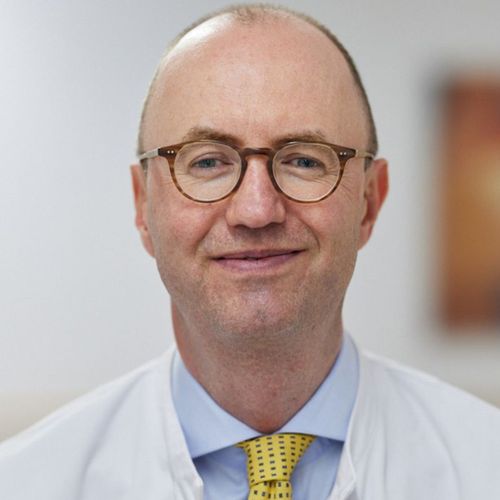
Dr. Georg Brandl, M.D., is an experienced specialist in orthopedics, orthopedic surgery, and traumatology, with a particular focus on the treatment of the knee joint. For over two decades, he has dedicated himself to the conservative and surgical treatment of knee conditions and enjoys an excellent reputation as a specialist in joint-preserving knee surgery and knee arthroplasty. Thanks to his thorough training and ongoing professional development, he is one of the leading experts in this field.
Joint-preserving knee surgery is a central component of his work. Whenever possible, Dr. Brandl relies on minimally invasive procedures to preserve the joint’s natural function and avoid early knee replacement. If a knee replacement is unavoidable, he offers state-of-the-art minimally invasive techniques for partial or total knee replacements, which accelerate the healing process and enable a faster return to mobility. Since 2015, Dr. Brandl has been the lead surgeon at a certified joint replacement center in Vienna and performs a large number of complex surgeries each year.
His expertise is underscored not only by his clinical practice but also by his active membership in national and international scientific societies. He regularly gives lectures, organizes surgical courses, and is involved in medical research. Dr. Brandl currently serves as a senior attending physician in the Second Orthopedic Department at Herz-Jesu Hospital in Vienna, where he treats patients with diseases and injuries of the musculoskeletal system. In addition, he conducts comprehensive diagnostic evaluations and provides personalized consultations at his own practice.
Due to his high level of specialization, Dr. Brandl now performs exclusively knee surgeries; but the range of treatments at the OrthoZentrum Döbling in Vienna—which is set to open in September 2025—will extend not only to the knee joint but also to hip, foot, shoulder, and elbow problems, as well as spinal issues. Patients can also undergo the entire rehabilitation process there to achieve optimal results.
He is a particularly sought-after specialist for sports injuries, helping patients get back into shape for their athletic activities through targeted interventions. Dr. Brandl places great emphasis on patient-centered therapy tailored to individual needs and life circumstances. Close collaboration with experts from other specialties enables comprehensive care that takes all relevant aspects of the patient’s medical history into account. His primary goal is to alleviate pain, restore mobility, and ensure the best possible long-term quality of life for his patients.
The editorial team of the Leading Medicine Guide spoke with Dr. Brandl specifically about anterior cruciate ligament (ACL) tears, one of the most common knee injuries.

An anterior cruciate ligament (ACL) tear is one of the most common and serious injuries to the knee joint, particularly in sports involving rapid changes of direction, sudden stops, or jumps. It is particularly problematic because the anterior cruciate ligament plays a central role in stabilizing the knee and cannot heal on its own. A tear often leads to instability and an increased risk of secondary injuries such as meniscus tears or early-onset osteoarthritis.
According to estimates, approximately 80,000 people in Germany alone suffer an ACL tear each year, with athletes and physically active individuals being particularly at risk.
“The anterior cruciate ligament most commonly tears in young, athletically active people—especially in so-called ‘stop-and-go’ sports such as soccer, basketball, or volleyball. These sports involve abrupt changes in direction, jumps, and landings that exert strong rotational forces on the knee. Situations in which the foot is fixed in place—such as when cleats get caught in the grass—and the body twists through the knee are particularly risky. Such injuries often occur without any contact with an opponent. Skiing also carries a high risk: The lower leg is stabilized by the ski boot, while the ski moves in a different direction. This creates rotational movements that place significant strain on the cruciate ligament. It is notable that many cruciate ligament tears occur at the beginning or end of the season—often at the start due to insufficient preparation or overexertion, and toward the end due to fatigue.
Well-trained muscles, especially along the leg’s axis, are therefore crucial. Those who prepare in advance with targeted strength training—ideally under the guidance of a physical therapist—can significantly reduce the risk of injury. Choosing the right footwear also plays a role. “When it comes to soccer cleats, for example, round studs are often more advantageous than elongated ones, as they reduce snagging in the ground and thus minimize rotational stress,” explains Dr. Brandl at the start of our conversation, adding:
“Another key component of prevention is what’s known as proprioception training—training in balance and deep sensory perception. It improves the body’s ability to recognize risky movements early on and automatically counteract them with muscle control. It’s not just athletes who are affected: Even everyday mishaps, such as tripping over the edge of a rug, can lead to a cruciate ligament tear. The underlying injury pattern is always similar—and ultimately, it’s often a combination of muscular control, preparation, and sheer chance that determines whether the cruciate ligament holds or not.
Attributing the stability of the knee solely to the thigh muscles—specifically the quadriceps—is insufficient, as the knee is stabilized jointly by several muscle groups. In addition to the quadriceps on the front of the leg, the muscles on the back of the leg—the so-called hamstrings—are particularly crucial. They contribute significantly to the dynamic stabilization of the knee—especially during rapid movements or sudden changes in direction. The calf muscles, which act on the knee from the back and also perform a stabilizing function, are often underestimated. Although there is currently only limited biomechanical data available in this area, clinical experience shows that they, too, contribute to knee health. Strong muscles—at the front, back, and even below the knee—provide protection and stability. Those who train in a targeted and balanced manner can significantly reduce the risk of knee injuries.”
Treatment for an anterior cruciate ligament tear can be either conservative or surgical, with the choice of therapy depending on various factors. Both approaches aim to restore knee function and ensure athletic performance, but they differ significantly in their methods and long-term effects.
“When a patient presents with symptoms suggestive of a cruciate ligament injury, there is often a clearly perceptible incident underlying the injury—such as a sudden twisting motion accompanied by an audible ‘pop’ and subsequent swelling. However, this is not always the case. There are also cruciate ligament tears in which the knee initially appears normal and only a ‘strange feeling’ remains. The decisive factors here are often the extent of bleeding into the joint and how acute the condition of the knee is following the trauma.
Modern diagnostic techniques, particularly high-resolution MRI scanners (e.g., 3-Tesla), now make it possible to visualize even the smallest structures with precision. Nevertheless, the clinical stability test remains essential. The so-called Lachman test, or anterior drawer test, provides crucial information about how unstable the knee actually is—and thus whether surgery is necessary. Not every cruciate ligament tear automatically requires surgery. Partial tears, in which portions of the ligament are still attached to the thigh, can be treated conservatively in certain cases—provided the knee shows no significant instability. Muscle-strengthening exercises and biological therapies, such as treatments with autologous blood (PRP), can be helpful in stimulating the body’s own healing process,” says Dr. Brandl, adding:
“The situation is different with a complete tear of the anterior cruciate ligament: In such cases, conservative therapy is generally not effective, as the biomechanics of the knee joint change significantly. In the long term, this can lead to secondary injuries such as meniscus tears—studies show that the incidence of medial meniscus injuries increases as early as one year later. While there are exceptions—such as patients who limit their athletic activities exclusively to cycling or who can compensate through very good muscular control (a “copper”)—the risk outweighs the benefits, especially for young, active people. In the vast majority of cases, therefore, surgical stabilization is recommended in the event of a complete rupture. Although conservative treatment options are possible, they rarely result in a permanently stable knee joint.”
The Lachman test is a clinical test used to examine the anterior cruciate ligament in the knee. During the test, the slightly bent shin is pulled forward while the thigh is held still. Greater displacement than in a healthy knee indicates an injury to the anterior cruciate ligament. The test is considered very reliable for diagnosing cruciate ligament tears.
With a cruciate ligament injury, pain is not necessarily the primary symptom—especially not in the long term. Pain may occur in the acute phase immediately following the injury, but it often subsides significantly or even disappears completely after one to two months. The real problem lies in the instability of the knee joint.
Dr. Brandl comments on this as follows: “This instability does not manifest continuously, but rather at unpredictable moments—such as when going down stairs, making a quick change of direction, or even when turning a corner. In such situations, the knee may suddenly ‘give out.’ It is precisely this unpredictability that often leads to anxiety among those affected. Many develop avoidance behaviors; they consciously restrict their movements and activities to avoid triggering instability. Nevertheless, it is generally possible to get through daily life without crutches or special braces—provided that high-risk movements are consistently avoided.
Some patients choose this path, for example, because they decide against surgery for personal reasons. However, each case must be evaluated individually: It is not uncommon for a cruciate ligament injury to affect not only the anterior cruciate ligament but also surrounding structures such as the medial collateral ligament. In such cases, multidimensional instability often occurs, which severely limits the options for conservative treatment. If the anterior cruciate ligament is injured in isolation and no other structures are affected, conservative treatment may be considered under certain conditions. However, if the injury is more complex, the course of action usually leads clearly to surgical treatment.”
There are various surgical procedures for treating an anterior cruciate ligament tear, which differ primarily in the reconstruction technique used. The goal of these surgeries is to restore knee stability and enable normal function so that the patient can return to their usual activities.
“Surgery following an ACL tear can usually be planned well in advance—it does not have to be performed immediately. It is important to first carefully assess any accompanying injuries. In cases of major meniscus or cartilage injuries, prompt surgery is often advisable to prevent further damage. In other cases—such as when there is a concurrent injury to the medial collateral ligament—a conservative approach is often preferred initially: the patient is treated with a brace for about six weeks to give the medial collateral ligament a chance to heal (it often heals with conservative treatment) before ACL surgery is considered. In addition, the condition of the knee joint immediately after the injury plays a key role.
If the knee is severely swollen or irritated, physical therapy is started first to soothe the joint. Surgery is performed only once the knee is free of irritation—in a planned and controlled manner to minimize the risk of scarring. “As a general rule, surgery is recommended about three months after the injury, though the procedure should not be delayed too long to avoid secondary injuries,” explains Dr. Brandl.
There are several surgical procedures available. In rare cases, when the cruciate ligament has torn near its attachment site but is otherwise intact, it can be reattached via a minor arthroscopic procedure—often combined with a so-called “internal brace,” a thin synthetic ligament for additional stabilization.
“This procedure is particularly suitable for patients who are not very active in sports and is very minimally invasive. In most cases, however, a cruciate ligament replacement is necessary. This involves harvesting a tendon from the patient’s own body—typically flexor tendons (e.g., from the thigh) or the quadriceps tendon. The choice depends on the patient’s age, sport, and occupational demands. The quadriceps tendon is increasingly used in young, athletically active individuals because it heals well and is associated with less discomfort at the harvest site.
For activities involving significant rotational stress (e.g., soccer), the patellar tendon is a good choice because it heals particularly stably due to its bony anchors. For people who kneel frequently as part of their work (e.g., tradespeople), however, this method is often unsuitable. Another option is the use of donor tendons (allografts), particularly for older patients or when a faster recovery without a donor site is desired. However, these require longer healing times. The actual cruciate ligament reconstruction is now performed using minimally invasive, purely arthroscopic techniques. A small skin incision is required only for tendon harvesting—usually no larger than three centimeters.
This ensures rapid wound healing and minimal visible scarring. The choice of the appropriate procedure is always tailored to the individual patient—taking into account their athletic goals, occupational demands, and general physical condition,” explains Dr. Brandl, adding:
“In many cases, cruciate ligament surgery is an outpatient procedure. If the patient can remain at the facility for about three to four hours after surgery for postoperative monitoring, pain is usually well managed. However, the option for outpatient treatment also depends on whether any additional procedures are required. If, for example, collateral ligaments also need to be treated, the procedure becomes more complex, and outpatient care is less advisable. As a rule, patients stay in the hospital overnight for monitoring. This provides safety—for example, in terms of pain management and support with mobility—and facilitates the transition into the first phase of follow-up care.
On the other hand, anyone who does not see a doctor after a cruciate ligament tear or delays treatment for an extended period risks secondary damage. If a cruciate ligament is unstable—and the patient even notices this in daily life—this already indicates a significant functional limitation. In such cases, the body sometimes relies on so-called secondary stabilizers—such as the medial meniscus, which provides additional stability to the knee. However, these structures become overloaded if instability persists, which is particularly problematic for the medial meniscus. Studies show that the risk of major meniscus damage increases significantly about one year after the injury. The meniscus can detach from the joint capsule, which can lead to irreparable tears—often during everyday movements, without any new trauma. Cartilage damage is also possible in the long term. It does not occur suddenly but develops over years due to the joint’s excessive mobility.
In contrast to meniscus injuries, the role of cruciate ligament tears in the development of cartilage wear is not quite as clearly established, but the trend is clear: Long-term instability in the knee joint leads to faster wear and tear. It is precisely for this reason that surgical techniques have improved significantly over the past ten years—they are now much less invasive and more successful than they were just a few decades ago. As a result, surgical treatment has become less daunting and, in many cases, offers a lasting solution—especially when compared to purely conservative therapy, in which secondary damage can sometimes develop gradually.”
Donor tendons come from tissue banks, consist of collagen tissue, and are not recognized as “foreign” by the body. The grafts integrate well and have proven effective in clinical practice. Artificial ligaments, on the other hand, have been tested repeatedly over the years, such as the so-called LARS ligament. However, these artificial ligaments frequently led to complications, particularly inflammation in the bone and bone enlargement.
Dr. Brandl explains: “Due to these negative experiences, purely synthetic ligaments have currently disappeared from the market and are no longer used today. The only practice that has remained is the supportive use of very thin synthetic fibers, which can stabilize the actual biological graft during the sensitive healing phase. This procedure is called the ‘Internal Brace.’ In this method, the biological cruciate ligament is further stabilized by a fine synthetic band, which can provide a certain protective effect, especially in the early phase. However, the actual ligament tissue remains biological. This technique is promising; however, there is currently too little reliable scientific data to make a clear recommendation. It remains a supplementary option in certain individual cases—the main graft remains natural tissue in every case.”
When a patient returns home after ACL surgery, the focus during the first week is clearly on measures to reduce swelling, rest, and recovery from the surgery. A slight extension deficit is typical for the knee joint after such an injury—that is, fully extending the knee is difficult.
Dr. Brandl shares his personal experience: “For me, this extension is the central goal in the first one to two weeks; it’s essentially the most important form of physical therapy at the beginning. This can often be done independently; it doesn’t necessarily require immediate guidance from a physical therapist. The main goal is to restore mobility as quickly and effectively as possible, especially full extension. After about two weeks, patients can then begin the actual rehabilitation process. At this point, I always advise my patients to seek physical therapy support or start a structured rehab program.
Doing it alone is simply too difficult, and patients often have many uncertainties—what are they actually allowed to do, which exercises are beneficial, and what should they still avoid? Many underestimate what is already possible again, especially when it comes to mobility. Often, it’s the fear of doing something wrong that hinders progress. That’s why I consider physical therapy a central part of treatment, and I work closely with various partners in this area. If there are no major accompanying injuries and the recovery is going well, patients can take their first steps without crutches after two weeks.
It usually takes six to eight weeks to be fully functional again in everyday life. Of course, there are exceptions—I once had a patient who climbed the Großglockner (3,798 m) after three months—but you shouldn’t base your expectations on such cases. The six to eight weeks are a good guideline. Of course, it also depends on one’s occupation: You can often return to an office job after just one week, but it takes more time to get back to “real” everyday life.
It’s important to have a personalized post-operative care plan with scheduled follow-up appointments to closely monitor the healing process. This allows for the early detection of potential complications and gives patients the reassurance they need to return to their normal lifestyle.
“I also see my patients regularly for follow-up visits after surgery. Everyone receives a personalized post-operative care plan with scheduled appointments. The first follow-up usually takes place after ten days, when the stitches are also removed. During that visit, I examine the knee to see how it’s healing and whether the swelling has subsided. The second follow-up appointment takes place four weeks later to determine whether the patient can completely do without supportive aids such as bandages or crutches.
Another important follow-up appointment is scheduled three to four months later. By this stage, most functions are usually working well again, and many patients want to know what the next steps are—especially which sports they’re allowed to resume. This appointment is especially essential for athletes who want to return to training, although a return to sports is usually not recommended until six months have passed. Sports, after all, place their own unique and specific demands on the knee. At this point, an MRI may also be useful to check how well the graft has healed and to give the patient the necessary reassurance. After all, the greatest risk lies in becoming active again too soon—many re-injuries result precisely from this.
For those who exercise only occasionally—such as going skiing once a year—this can be easily monitored clinically. The situation is different for active athletes: They often feel very fit again after six months, but the ligament needs a total of nine to twelve months to heal completely, at which point the risk of re-injury is truly low. That’s why an MRI follow-up is also performed shortly before the six-month mark. A follow-up examination is actually scheduled after one year, though not all patients attend it. Nevertheless, it is part of the planned follow-up care plan, and when I perform this final checkup, I take another close look at everything to ensure the long-term success of the surgery,” states Dr. Brandl.
As a long-standing member and faculty member of the AGA and the Cruciate Ligament Committee (AGA = the largest German-speaking arthroscopy society), Dr. Brandl’s focus is primarily on sports surgery procedures on the knee joint. The experience of the treating physician plays a major role. The harvesting of the graft is central to the procedure, and not every surgeon is equally familiar with all types of grafts. That is why targeted specialization in cruciate ligament surgery is particularly important, as doctors who operate on all joints often lack the same level of expertise in this area.
“Even though some colleagues focus on sports medicine and arthroscopic surgery, cruciate ligament surgery often requires even more specific expertise. It is therefore advisable for patients to consult a specialized knee surgeon, as the course of the surgery is crucial to long-term success. A well-performed surgery generally leads to good results, while complications can have lifelong consequences. I perform around 500 knee surgeries per year, about 150 of which are cruciate ligament surgeries. Many patients come not only from the surrounding area but also from more distant regions, such as Slovakia and Hungary (Budapest). This demonstrates the international demand for specialized treatments.
There is still room for improvement in the future, particularly regarding graft integration. Biological factors play a decisive role here and explain why integration is more successful in some patients than in others. Further research into and improvement of biological healing processes will therefore be a key focus. Research is also being conducted to determine which rehabilitation measures best support healing. Surgical techniques are now quite well-established, but the focus is increasingly shifting toward biological approaches to promote healing. “Although we already have a great deal of knowledge, there is significant potential for further progress in this area,” Dr. Brandl explains at the end of our conversation.
Thank you very much, Dr. Brandl, for this in-depth look at the treatment of anterior cruciate ligament tears!
Share this article
Expert Interviews
Read next
- Expert interview
Expert interview with Professor Dr Elmar Herbst, PhD
Oct 15, 2026
Patient-centred and personalised knee surgery
Read more - Expert interview
Cardiogeriatrics: Significance and benefits in the context of hospital reform
Sep 21, 2026
Cardiogeriatrics: Significance and benefits in the context of hospital reform
Read more - Expert interview
Expert Interview with Professor Dr. Amadeus Hornemann, MPH
Sep 18, 2026
Prof. Amadeus Hornemann on Precision Medicine in Gynecology: Modern Surgery, New Techniques, Better Quality of Life
Read more