Expert Interviews
Diverticulitis: Quality of Life as a Key Criterion for Surgical Treatment—An Expert Interview with PD Dr. med. Silvio Däster

Alexandra Pfitzmann ·
PD Dr. med. Silvio Däster is a board-certified surgeon (FMH) specializing in visceral surgery and is a member of the experienced team at Praxis Chirurgie im Zentrum in Basel. With his extensive clinical experience, scientific qualifications, and personal, patient-centered approach, he is committed to providing modern, high-quality surgical care.
A particular focus of his work is the treatment of diseases of the colon and rectum. As a European-certified coloproctologist (EBSQ/FEBS), he brings in-depth expertise in this field and employs minimally invasive procedures that enable faster recovery and less strain on patients. PD Dr. Däster treats a wide range of general and visceral surgical conditions—from gallbladder surgery to inflammatory disorders of the gastrointestinal tract and cancer.
Surgical treatment is performed in accordance with current scientific standards, with a consistent focus on individualized treatment planning that adheres to clinical guidelines. He also provides expert and patient-centered care in hernia surgery and minor surgical procedures. After many years of clinical work at academic hospitals in Switzerland and abroad, PD Dr. Däster made a conscious decision to join a private practice in order to provide individualized care to patients in a personal setting. In addition to his clinical work, he is also active in research and completed his habilitation in general and visceral surgery at the University of Basel in 2018.
At the “Chirurgie im Zentrum” practice, which he co-directs with Prof. Dr. Savas Soysal and Dr. Beatrice Kern, PD Dr. Däster is committed to providing modern, precise, and empathetic surgical care. The combination of high professional expertise, minimally invasive surgical methods, and close medical support ensures that patients receive the best possible care at every stage of their treatment. The editorial team of the Leading Medicine
Guide was able to learn more about the latest developments in the surgical treatment of diverticulitis in a conversation with PD Dr. Däster.
Diverticular disease—particularly in the form of recurrent diverticulitis—poses a significant limitation in daily life for many affected individuals. In addition to pain, repeated flare-ups of inflammation, and the associated stress, there are often uncertainties regarding long-term treatment. While surgical treatment was previously recommended primarily to prevent complications, recent studies show that, especially in cases of recurrent disease, sigmoid resection can lead to a significant improvement in quality of life. The focus is therefore increasingly on individualized decision-making, in which not only medical factors but also—and in particular—the patient’s subjective well-being and quality of life play a central role.

Diverticulitis develops as a result of diverticulosis, that is, the formation of small pouches (diverticula) in the intestinal wall, most commonly in the sigmoid colon (the lower left section of the large intestine).
The inflammation of these diverticula is caused by a complex interplay of mechanical irritation from stool impacted within the diverticulum, altered gut flora, and an immunological response. The development of diverticula is promoted by factors such as a low-fiber diet, lack of exercise, obesity, and advancing age.
“Diverticulosis is a benign and very common condition of the large intestine in which so-called diverticula form over the course of a person’s life. These develop at weak points in the intestinal wall, typically where blood vessels enter. As long as these diverticula do not cause any symptoms, the condition is referred to as diverticulosis—many people have this condition without noticing any symptoms. Only when these diverticula become inflamed is the condition referred to as diverticulitis, at which point it actually becomes clinically significant.
The inflammation most commonly occurs in the sigmoid colon, that is, in the lower left abdomen. There, it causes pain, which is often recognized as a classic symptom. This pain results from local inflammation of the intestinal wall and can spread to the adjacent peritoneum (local peritonitis). In addition, general symptoms such as fever or a general feeling of illness may occur. Diverticulitis can vary in severity. Generally, a distinction is made between uncomplicated inflammation and a complicated form, which can have more serious consequences. The inflammation is often caused by a diverticulum becoming blocked with stool, which leads to increased pressure and local inflammation that then spreads to the intestinal wall.
It is important to note that only a small proportion of people with diverticulosis actually develop diverticulitis—studies show that about 5% of those affected develop inflammation within ten years. However, once a person has had diverticulitis, the risk of further episodes of inflammation increases; these are then referred to as recurrent diverticulitis. The course of the disease can vary greatly, ranging from a single episode to recurring flare-ups,” explains PD Dr. Däster at the beginning of our conversation.
Diverticulitis is considered “recurrent” if, after an initial inflammatory episode, a patient experiences at least one additional episode of the same condition in the area of the diverticula in the large intestine.
It is important that the diagnoses of these episodes are confirmed, for example through imaging techniques such as ultrasound or CT. Recurrences can vary in severity—from mild, uncomplicated cases to severe, complicated inflammation with abscesses, fistulas, or even bowel perforations.
“After an acute episode of diverticulitis, the risk of the inflammation recurring is highest, especially in the first six months. However, before considering surgical intervention, there are various conservative treatment options that should be considered first. Acute diverticulitis is usually treated conservatively, unless serious complications arise, such as a bowel perforation. This can lead to life-threatening peritonitis and then requires emergency surgery. In cases of uncomplicated diverticulitis, treatment is usually limited to a temporary dietary restriction consisting of light meals; complete fasting is not necessary.
Antibiotics are often prescribed, but recent studies show that treatment without antibiotics is sufficient in uncomplicated cases. Surgery is only absolutely necessary in cases of serious complications such as bowel perforation or, in the long term, with recurring problems, such as the formation of fistulas—abnormal connections between the bowel and other organs like the bladder or vagina.
In cases of recurrent diverticulitis, conservative treatment is primarily aimed at controlling acute inflammation and managing symptoms—for example, through medication, a high-fiber diet, and risk factor management. However, it cannot eliminate the underlying cause, the diverticula. Frequent or severe flare-ups increase the risk of complications and impair quality of life. In such cases, surgery to remove the affected section of the intestine is often recommended. The decision depends on the severity of the condition and the individual’s specific situation.

From a surgical perspective, several factors are considered when deciding whether a sigmoid resection is appropriate and indicated for a patient with diverticulitis. A key criterion is the frequency and severity of inflammatory flare-ups.
Whether surgery is necessary for recurrent diverticulitis depends heavily on the individual course of the disease and the patient’s quality of life. Patients with frequent, debilitating inflammatory flare-ups who repeatedly require hospitalization are more likely to benefit from surgery. In the past, it was generally recommended to perform surgery after two inflammatory episodes, as it was assumed that diverticulitis was a progressive disease.
Today, however, we know that this is usually not the case: Often, the first flare-up is the most severe, and subsequent flare-ups are milder. For this reason, the decision to undergo surgery is now made on an individual basis, with the goal of improving quality of life, and not solely to prevent complications. “This is referred to as ‘shared decision-making’—that is, a joint assessment by the doctor and patient that takes into account symptoms, the course of the disease, comorbidities, and lifestyle,” explains Dr. Däster.
In addition to objective medical criteria, the patient’s subjectively perceived quality of life is of great importance. Chronic pain, constant anxiety about another flare-up, restricted dietary and lifestyle habits, or recurring hospitalizations can significantly impair quality of life. Studies show that sigmoid resection can significantly improve quality of life in patients with recurrent episodes of diverticulitis by reducing the number and severity of flare-ups, thereby alleviating anxiety and limitations.
In recent years, several technical advancements and minimally invasive procedures have significantly improved sigmoid resection, making it less invasive and more effective for patients.
“When surgery is indicated, it is typically performed using a minimally invasive approach—that is, through small incisions via laparoscopy or robot-assisted techniques. During the procedure, the affected segment of the intestine—usually the sigmoid colon—is removed. This usually involves 20 to 30 centimeters of the large intestine. The remaining portion is then connected to the rectum (anastomosis). This surgery is considered relatively low-risk with short hospital stays of about three to five days—but it is nonetheless a procedure with potential complications that must be carefully weighed beforehand,” says Dr. Däster, adding:
“In the past, diverticulitis was usually treated with open surgery, meaning through a large abdominal incision. This conventional method was significantly more taxing for patients: the wounds were larger, the pain after the procedure was more severe, and the recovery time was correspondingly longer. The hospital stay also lasted several days to weeks, as patients had to go without food for a long time and take it easy physically. Today, standards have changed fundamentally. Thanks to minimally invasive techniques using small skin incisions, the procedure is much less invasive. Patients recover more quickly, can resume eating sooner, and are able to move around earlier.”
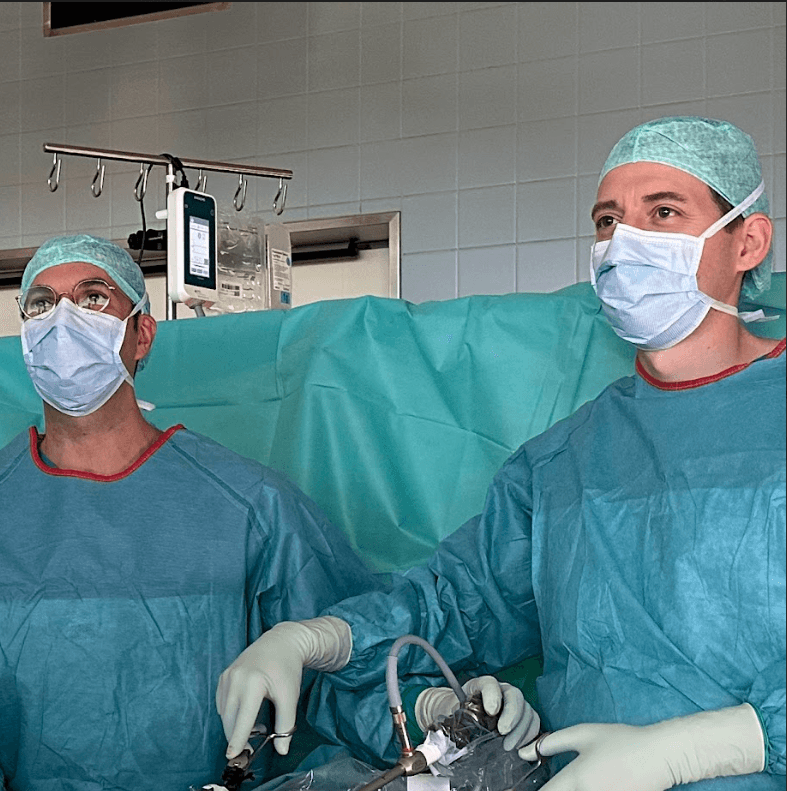
Recent studies show that elective sigmoid resection can significantly improve quality of life in patients with recurrent or chronic diverticulitis. It is particularly emphasized that the surgery not only reduces acute symptoms but also alleviates long-term symptoms such as pain, recurrent inflammation, and limitations in daily life. This leads to a noticeable increase in overall well-being and greater patient satisfaction with their health status.
The positive effects on quality of life are particularly pronounced in patient groups who suffer from frequent, recurrent flare-ups and whose daily lives are severely impaired by recurring inflammation. Patients who continue to experience pain or other distressing symptoms despite conservative treatment also benefit from the surgical removal of the affected section of the bowel.
Furthermore, studies suggest that younger patients and those in good general health recover more quickly after elective sigmoid resection and experience a more lasting improvement in quality of life. However, it is emphasized that the decision to undergo surgery should always be made on an individual basis, taking into account symptoms, disease progression, comorbidities, and personal preferences, in order to achieve the greatest possible benefit.
“After discharge from the hospital, recovery is generally uneventful, although it can vary from person to person. In the first few days at home, patients are often already able to function in their daily lives again, though they still need to take it easy physically, as the surgical incisions—even with minimally invasive procedures—can be painful at first. After about two weeks—assuming a normal recovery—most patients are able to return to work and experience few limitations in daily life. Although removing the segment of the intestine prone to inflammation can lead to a significant improvement, there is no 100% guarantee that diverticulitis will not recur. In about ten percent of cases, new inflammation can occur in other sections of the intestine even after surgery. Nevertheless, the risk is significantly reduced, as most flare-ups occur in the same location—and that section is surgically removed.
There are certainly borderline surgical cases in which, despite repeated diverticulitis flare-ups, surgical treatment is not necessarily recommended. In such cases, the decision for or against a sigmoid resection depends on various factors that must be carefully weighed against one another.
Generally, surgery is usually recommended when flare-ups are frequent, severe, or accompanied by complications such as abscesses, fistulas, perforations, or a marked deterioration in quality of life. However, if the flare-ups remain relatively mild, occur without complications, and respond well to conservative therapy, a wait-and-see approach may be appropriate.
“In some cases, surgery cannot be performed despite a medical indication—for example, if the risk is too high due to comorbidities such as severe heart disease or immunosuppression. In such cases, a case-by-case assessment is always necessary to determine whether the benefits of surgery outweigh the potential risks. In principle, however, there are hardly any absolute exclusion criteria—it depends on the patient’s overall condition and quality of life. Surgery is generally not ruled out even for patients with preexisting conditions if the recurring inflammatory flare-ups and the resulting impairment of quality of life justify it.
Nevertheless, there are always patients who, based on their own convictions, decide against surgery. This must, of course, be respected, as diverticulitis is a benign condition. In such cases, it is crucial to provide patients with comprehensive information—not only about conservative treatment options but also about the course of the disease, the risks, and the benefits of surgery. There are often misconceptions about the procedure, which is why a consultation with an experienced surgeon is always advisable to address any uncertainties and realistically assess the individual situation,” explains Dr. Däster, adding:
“Studies have shown that patients with recurrent diverticulitis have a significantly better quality of life after surgery—especially in the early stages—than patients who did not undergo surgery. In studies where patients were randomly assigned to either surgical or conservative treatment, it was found over a five-year period that many of those initially treated conservatively eventually underwent surgery—often due to persistent symptoms. These data are helpful in counseling, as they illustrate that surgery leads to a better quality of life in the long term in many cases. However, it remains of paramount importance that the decision be made jointly with the patient—based on the individual course of the disease, personal needs, and the expected improvements in daily life.”
Joint decision-making between doctor and patient is particularly important when it comes to finding the best individual solution between conservative therapy and surgery for diverticulitis. In practice, this is achieved through an open and transparent dialogue in which both medical facts and the patient’s personal values, wishes, and life circumstances are given equal consideration.

“The most important factor in deciding for or against surgery is a personal, individualized consultation and ongoing patient care. Especially with a condition like diverticulitis, which often involves individually varying courses of the disease and assessments of quality of life, a relationship of trust between the patient and the surgeon is particularly important. However, the situation is often complicated when patients have to deal with different healthcare providers at each doctor’s visit.
That is why we place great emphasis on providing care from a single source—from the initial consultation through the procedure to follow-up care. This continuity enables a well-founded assessment and builds trust, which is crucial, especially when it comes to such complex, individualized treatment decisions. If there is no acute flare-up of inflammation, surgery can usually be planned effectively. Ideally, it is performed during a flare-free interval to avoid complications. While there are also cases involving chronic inflammation where a flare-free state rarely occurs—in such cases, surgery is sometimes necessary even under these conditions. “However, the norm is planned, elective surgery during a symptom-free period,” explains Dr. Däster, and with that, we conclude our conversation.
Thank you very much, PD Dr. Däster, for this important information!
Share this article
Expert Interviews
Read next
- Expert interview
Expert interview with Professor Dr Elmar Herbst, PhD
Oct 15, 2026
Patient-centred and personalised knee surgery
Read more - Expert interview
Cardiogeriatrics: Significance and benefits in the context of hospital reform
Sep 21, 2026
Cardiogeriatrics: Significance and benefits in the context of hospital reform
Read more - Expert interview
Expert Interview with Professor Dr. Amadeus Hornemann, MPH
Sep 18, 2026
Prof. Amadeus Hornemann on Precision Medicine in Gynecology: Modern Surgery, New Techniques, Better Quality of Life
Read more