Expert Interviews
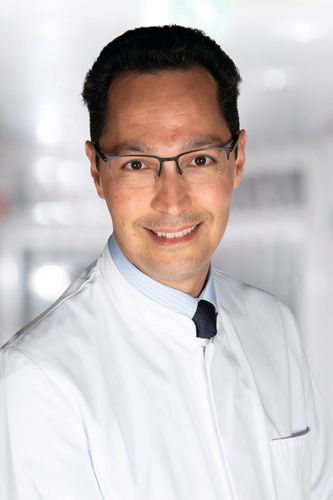
Dr. Enrico Pöschmann, M.D.: “There are over 45 techniques for properly treating hernias!”

Claudia Dechamps ·
The Swiss Hernia Center, headquartered in Thalwil with additional locations in four cantons, makes an important contribution to healthcare in Switzerland. This certified center of excellence for hernia surgery is led by Dr. Enrico Pöschmann, who has made a name for himself as a hernia specialist and trauma surgeon. This renowned center of excellence for hernia surgery treats all forms of visceral and abdominal wall hernias. The center is regarded as a premier national and international destination, particularly for complex hernias. Dr. Pöschmann and his team cover the entire spectrum of modern hernia surgery with excellent diagnostics and innovative surgical techniques. The center collaborates with various hospitals and medical groups—a form of interdisciplinary medical cooperation and professional exchange that Dr. Pöschmann greatly values.
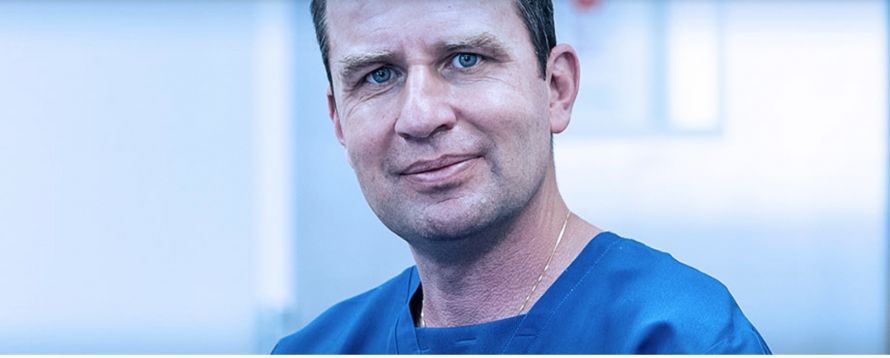 There are over 45 different techniques for the proper medical treatment of hernias—and hernia specialist Dr. Enrico Pöschmann, of course, knows them all. “You have to stay active if you want to provide your patients with the best possible care,” he says, describing his motivation for continuing education and professional exchange. A hernia—also colloquially known as a rupture, visceral hernia, or inguinal hernia—is a gap in the abdominal wall through which the peritoneum or internal organs can protrude. In most cases, a bulge is visible from the outside. “If you notice any changes in your abdominal wall, you should see a doctor right away,” warns Dr. Pöschmann. The wait-and-see approach that was once common in hernia medicine has long since been abandoned, he says. If pain is also present, this should already be considered a precursor to an emergency.
Hernias are a disorder of the connective tissue
“Hernias are a disorder of the connective tissue,” explains the hernia specialist regarding the cause of hernias. That’s why exercise can only help prevent them to a limited extent. “It helps strengthen the muscles, but it doesn’t change the structure of the connective tissue. Unfortunately, even athletes can develop hernias,” he says. He attributes the fact that hernias have become such a complex issue in medicine today partly to the fact that people have become much more active and mobile well into old age. “I’ve also noticed that people with hernias today react much more quickly and seek medical help sooner than they used to,” says Dr. Pöschmann.
Absorbable Meshes and Surgical Sutures
New surgical techniques, new materials, and robotic surgery have transformed the treatment of hernias. “Today, the use of meshes implanted in the abdominal wall is a priority,” says Dr. Pöschmann, describing the current state of knowledge in hernia surgery. Absorbable meshes are a good choice in this context. Whereas in the past, meshes were fully sutured or firmly stapled in place, today minimal fixation using fibrin glues is sufficient, or the meshes are simply placed in position. “But then the correct positioning is crucial,” says Dr. Pöschmann, describing the technical demands of this procedure. Unfortunately, he often has to correct misplacements from previous surgeries in his practice. “This is not an ideal procedure, any more than replacing meshes is,” he laments.
Teamwork also plays an essential role in hernia surgery: “In our group of independent surgeons, we always work in pairs. Especially with complex cases, I find it very rewarding and important to be able to exchange ideas and consult with one another. This is also reflected in the high quality of our care,” emphasizes hernia specialist Dr. Pöschmann.
Regular Exchange at Conferences
He places great value on collegial exchange and scientific continuing education. To learn or refine new surgical techniques, Dr. Pöschmann has attended training courses in London, Belgium, and the U.S. He frequently discusses the latest techniques, the quality of available meshes, and absorbable surgical sutures with colleagues. He regularly attends conferences and symposia. “You have to constantly develop your own expertise,” is his motto. This also includes critically evaluating one’s own actions time and again and regularly seeking feedback from patients. “After all, patients are best positioned to describe how they cope with the materials or procedures.” The smallest possible incisions and short surgery times—Dr. Pöschmann sets high standards for himself. And he gladly shares his knowledge with colleagues and young doctors.
Rectus diastasis is far more than a cosmetic problem
Hernia surgeon Dr. Pöschmann has developed extensive expertise in the field of rectus diastasis. In this type of hernia, the two large abdominal muscles separate to the right and left.
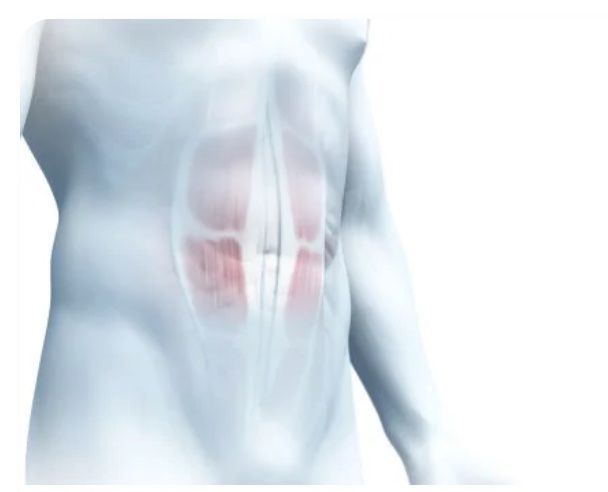 This condition is usually triggered by pregnancy or severe obesity. “In the past, this was dismissed as a cosmetic problem,” explains Dr. Pöschmann. Today, we know how important the abdominal muscles are for spinal stability. When they separate, it causes discomfort in the lower back, hips, and buttocks. “I see young female patients with back pain for which there is no orthopedic diagnosis,” reports hernia expert Dr. Pöschmann.
If rectus diastasis is suspected, the first step is to carefully investigate possible causes and make a precise diagnosis. “Immediately after pregnancy, we don’t do anything at first,” says Dr. Pöschmann, describing his approach. Targeted exercises are used to try to bring the abdominal muscles back into place. The cosmetic aspect is secondary; his focus is on the therapeutic intervention. However, if the diastasis is greater than 20 centimeters, swift action is required. The gap must be closed, if only because of the complex relationships within the abdominal cavity and the pressure that builds up there. “I close large diastases with a mesh; for smaller ones, I use absorbable meshes or suture the muscles back together along the midline.” Especially for small hernias, he and his team are increasingly using absorbable meshes. On the one hand, this allows them to achieve excellent results—which in turn keeps patients satisfied. On the other hand, the benefits of absorbable meshes are also comprehensively supported by current medical research. “New materials and techniques have brought about significant changes in hernia surgery, and our medical understanding of the underlying mechanisms is different today,” notes Dr. Pöschmann.
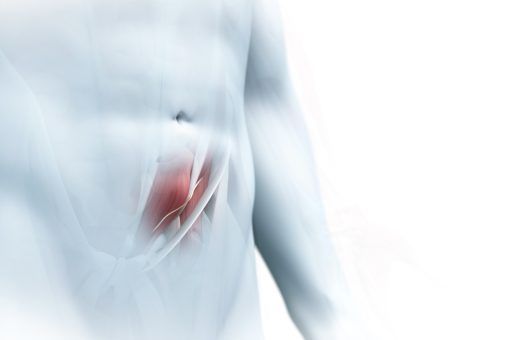
A sports hernia most commonly affects elite athletes. Since this is not a classic inguinal hernia, the diagnosis is not always easy to make and requires a great deal of expertise. If athletes experience pain in the groin area, they should see a specialist as soon as possible to determine the cause. After all, there are several possible causes. “From an enlarged inguinal canal to a spermatic cord lipoma to a Nuck’s cyst,” Dr. Pöschmann lists some possible causes.
A Certified Center Offers Peace of Mind
But how can patients form an opinion for themselves, and what should they look for when searching for the right doctor in cases of hernia or rectus diastasis? Patients should always turn to a certified center—such as the Swiss Hernia Center. Certification guarantees medical care of the highest standard, in accordance with the latest scientific findings and guidelines; furthermore, the quality circle ensures that patients are treated by experienced physicians who are well-versed in complex and complicated cases and who engage in interdisciplinary collaboration.
We would like to extend our sincere thanks to Dr. Enrico Pöschmann for sharing these interesting insights into his work as a hernia surgeon. Anyone wishing to contact our renowned expert directly can do so via his profile page on the Leading Medicine Guide.
Share this article
About the medical author
Claudia Dechamps
Editor
Claudia Dechamps – medical author: expert articles, professional insights and medical knowledge in the Leading Medicine Guide.
More about the medical author →herniacenter switzerland
ProfileExpert Interviews
Read next
- Expert interview
Cardiogeriatrics: Significance and benefits in the context of hospital reform
Sep 21, 2026
Cardiogeriatrics: Significance and benefits in the context of hospital reform
Read more - Expert interview
Expert Interview with Professor Dr. Amadeus Hornemann, MPH
Sep 18, 2026
Prof. Amadeus Hornemann on Precision Medicine in Gynecology: Modern Surgery, New Techniques, Better Quality of Life
Read more - Expert interview
Expert Interview with Professor Dr. Konstantinos Anagnostakos
Sep 15, 2026
Prof. Anagnostakos on Painful Knee Replacements
Read more