Expert Interviews
Completed the Surgical Leadership Program at Harvard University - Expert Interview with OA mag. dr. Jurij Gorjanc, dr. med., FRCS, FEBS AWS

Alexandra Pfitzmann ·
OA Mag. Dr. Jurij Gorjanc, Dr. med., FRCS, FEBS AWS, is one of the internationally recognized experts in the field of hernia surgery and, with many years of surgical experience and international recognition, has established himself as a trusted authority in the treatment of abdominal wall hernias. At his surgical practice in the Krainer Medical Center in Klagenfurt and at the Klagenfurt Hospital, he focuses on the diagnosis, surgical treatment, and follow-up care for visceral and abdominal wall hernias, applying a holistic approach to quality, safety, and medical advancement.
His particular expertise lies in both open and minimally invasive surgery (including robotic surgery); he is proficient in all standard techniques and offers a customized approach even for complex cases. Dr. Gorjanc has a remarkable international educational background. He is one of the few non-British specialists to have been admitted to the prestigious Royal College of Surgeons of England. This admission is accompanied by the conferral of the title FRCS, which signifies a high level of surgical competence and ethical integrity. His qualifications are further underscored by the European title FEBS AWS (“Fellow of the European Board of Surgery – Abdominal Wall Surgery”), which was awarded in recognition of his specialization and his contribution to the development of hernia surgery at the European level. This distinction takes into account not only practical experience but also scientific publications and standing within professional circles. His research activities and his membership in international professional societies enable him to engage in regular exchange with colleagues worldwide and keep him constantly abreast of new findings.
In addition to his clinical work, Dr. Gorjanc has been volunteering for many years with the organization “Hernia International.” In countries such as Ghana, Tanzania, Madagascar, and India, he performs hernia surgeries free of charge for people who would otherwise have no access to medical care. This humanitarian commitment (in November 2025, he will be preparing for his 16th such mission) underscores his belief that medical expertise always entails social responsibility.
At his practice in Klagenfurt and at the Klagenfurt Hospital, Dr. Gorjanc offers his patients quality-assured care that has been recognized with the seal of approval from the German Hernia Society and the DGAV as a center of excellence for hernia surgery. This demonstrates that treatment protocols, surgical volumes, follow-up care plans, and patient outcomes are regularly reviewed and maintained to high standards. His holistic approach to the individual course of a patient’s illness, combined with extensive surgical experience, makes him a sought-after specialist in the region and beyond. As a university lecturer, he gives presentations at the Faculty of Medicine in Ljubljana.
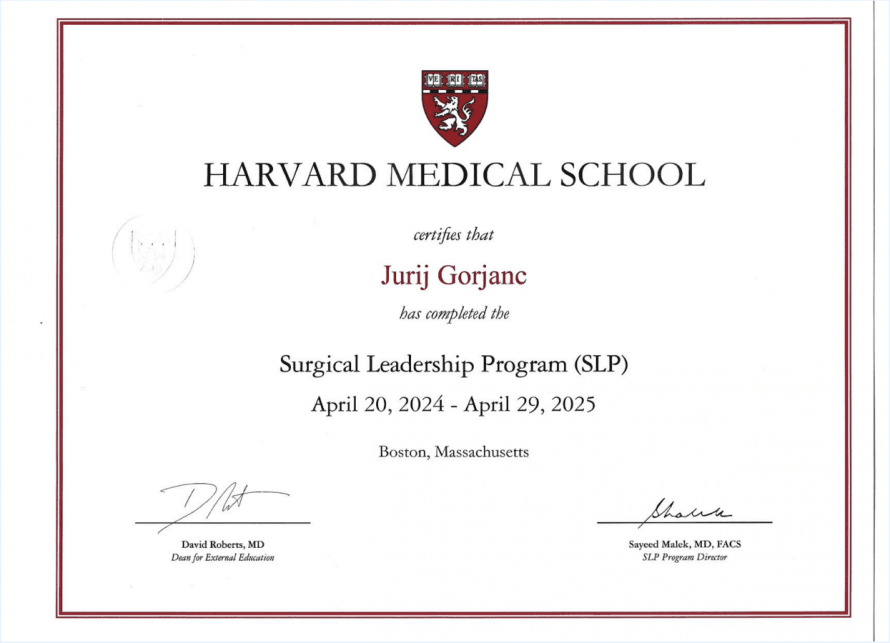
With his knowledge, precision, and dedication, OA mag. dr. Jurij Gorjanc, dr. med., FRCS, FEBS AWS embodies modern hernia surgery at the highest level. His goal has always been to combine medical excellence with compassion—to ensure safe care that adheres to the highest available standards. As a pioneer in his field, Dr. Gorjanc also completed the Surgical Leadership Program at Harvard Medical School, a world-leading training center for medical professionals. This advanced training underscores his commitment to continuous professional development and the integration of international standards into daily clinical practice.
The editorial team of the Leading Medicine Guide spoke with Dr. Gorjanc to learn more about his experiences at Harvard.
The Surgical Leadership Program at Harvard Medical School (HSLP) is an internationally recognized continuing education program designed for experienced surgeons who wish to further develop their technical, strategic, and entrepreneurial skills at the highest level. The program’s goal is to train medical leaders who not only embody surgical excellence but also possess in-depth knowledge in the areas of health economics, innovation, communication, quality management, and clinical leadership. Through a combination of interactive online instruction, case studies, lectures by leading experts, and individual mentoring, the program provides comprehensive skills for leading surgical departments, managing multidisciplinary teams, and actively shaping change in the healthcare sector. Participation in this program is internationally recognized as a mark of exceptional professional and strategic competence in modern surgery.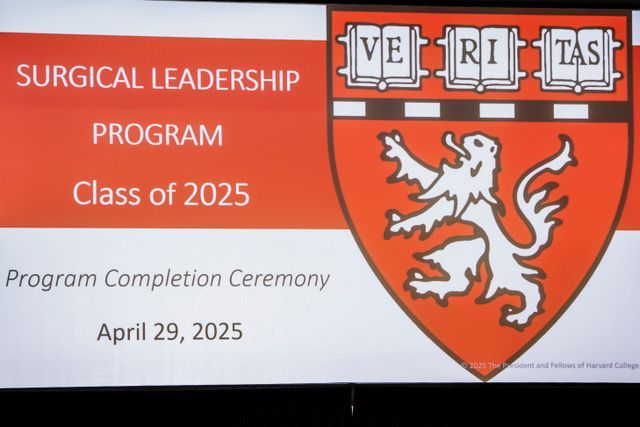
What motivated you to apply to the Harvard Surgical Leadership Program—and what was it like to be the first Austrian to participate in it?
“My motivation to apply for the HSLP stemmed from a desire to specifically develop my leadership skills and to combine surgical excellence with strategic thinking, innovation, and interdisciplinary collaboration. At a certain point in my life, I was the surgical director of a small surgical team at the Elisabethinen Hospital in Klagenfurt. I felt comfortable in that position, but during my studies I never gained a deeper understanding of the underlying factors that contribute to management skills. Harvard enjoys an excellent international reputation—particularly in the field of continuing medical education—and I wanted to bring this expertise into my professional environment. It was a special honor to be the first Austrian to participate. This not only entailed a certain responsibility but also the opportunity to represent my home country in an international, high-caliber setting. I’d like to express my sincere gratitude to my boss, Prim. Prof. Dr. Reinhard Mittermair, and EOA Dr. Markus Fellner, who made it possible for me to be away from the hospital—and thus to participate,” said Dr. Gorjanc.
How does this program differ from other continuing education or leadership courses for surgeons that you’ve experienced so far?
“The HSLP clearly stands out from traditional continuing education programs thanks to its combination of surgical expertise, strategic leadership, healthcare innovation, and management. While other programs often focus on only individual aspects, this program integrates topics such as strategic thinking, entrepreneurship, change management, and even financial planning—all with a focus on surgical practice. The scientific depth and close guidance from the Harvard faculty make it unique,” explains Dr. Gorjanc.
Which program content or modules impressed you the most or directly influenced your daily practice?
Dr. Gorjanc replies: “I was particularly impressed by the modules on change management and innovation in surgery. In the ‘Clinical Change’ module, our group even achieved full marks and thus won first prize among 70 participants. The systematic approach to complex challenges in surgical departments, as well as the strategies for implementing changes in everyday clinical practice, were extremely relevant to real-world practice. Exploring ethical issues (which are crucial for collaboration within a department) and leadership communication has also had a lasting impact on my daily work—especially in interdisciplinary team settings.”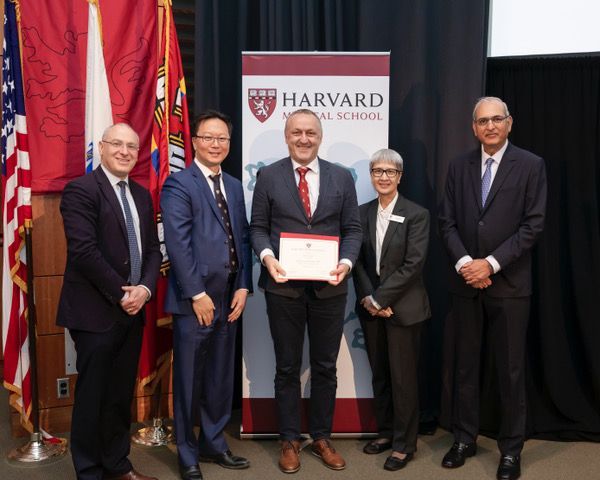
The modules on change management and innovation in the Harvard Surgical Leadership Program provide surgical leaders with fundamental models and strategies for successfully steering change processes within complex clinical structures. The focus is on practical tools for overcoming resistance, the sustainable implementation of innovations, and effective communication. This is complemented by content designed to foster creative thinking and an entrepreneurial spirit, the evaluation and adoption of innovative methods, and interdisciplinary collaboration. Through real-world case studies and international exchange, the modules prepare participants to implement change effectively and ethically in their work environments.
How did you find the collaboration with the international participants and the Harvard faculty? Were there any particular intercultural or professional insights?
“The collaboration was incredibly enriching. The participants came from 40 different countries around the world. The diversity of the participants—both geographically and in terms of surgical subspecialties—opened up entirely new perspectives. For example, on the topic of ‘Clinical Change’ mentioned earlier, I did most of the work on this project with a fellow surgeon from Scotland who is Muslim and has made a name for herself there as a woman. You learn how differently healthcare systems and leadership approaches function around the world and how we can learn from one another. The intercultural exchange on ethical and economic issues in surgery was particularly fascinating—it broadens one’s horizons enormously,” reflects Dr. Gorjanc.
The program places great emphasis on leadership skills, innovation, and entrepreneurial thinking. To what extent has it changed your perspective on your role as a surgeon?
“The program has permanently broadened my understanding of my role. You’re not just seen as a surgeon, but as a system designer, innovator, and leader with responsibility for long-term developments. It has shown me how important it is to think strategically, initiate change, and also understand economic conditions in order to achieve sustainable improvements for patients and staff. And above all, to encourage and train young surgeons so they can do their jobs well. After all, they are the future experts who will be operating on us,” emphasizes hernia specialist Dr. Gorjanc.
You had to develop a personal capstone project (a practice-oriented final project). Can you tell us more about your project and how it’s intended to improve your clinic or institution?
“I spent a lot of time discussing with my mentor which topic I should choose. There were two options: optimizing surgical education in the developing world—where I’ve been conducting international missions in my free time for 15 years—and the training of surgeons, mainly in Africa. However, I ultimately decided on the topic of the development of hernia surgery in Carinthia. I currently work at a tertiary care hospital—Klagenfurt University Hospital—where we have access to state-of-the-art equipment (including robots) and first-class teams. Many colleagues would like to be able to concentrate and treat patients with the most difficult hernia cases (recurrences, parastomal hernias, component separations, and neurological problems following hernia surgery) at such a hospital. This approach is based in no small part on experience in Scandinavian countries, where it has been shown that outcomes were significantly better when complex hernias were treated by specially trained or even certified surgeons who specialize in abdominal wall surgery (Fellow of the European Board of Surgery – Abdominal Wall Surgery). Through structured workflows, clear communication, and the integration of digital tools, colleagues in Denmark, for example, have already demonstrated initial positive results. The goal was to reduce postoperative complications and increase patient satisfaction while simultaneously using resources more efficiently. The project can also serve as a blueprint for other medical specialties. “I am very grateful to my boss, Prim. Prof. Dr. Reinhard Mittermair, for the opportunity to implement these experiences in Carinthia,” states Dr. Gorjanc.
Was there a specific moment or lesson during the program that particularly left an impression on you—professionally or personally?
Dr. Gorjanc explains: “A key moment was a case study on a real-life leadership dilemma at one of the Harvard hospitals. Our mentors compared the problem to climbing an eight-thousander, with all the logistics involved. That really resonated with me, because 13 years ago I also took part in an expedition to climb an eight-thousander in the Himalayas. Discussing this with participants from all over the world—each with their own cultural, ethical, and medical perspectives—showed me just how complex leadership responsibilities can be and how important transparent, values-based decisions are. That also had a profound personal impact on me.”
How well can the content taught in the program be applied to the Austrian healthcare system? Are there any challenges or particularly effective approaches?
“Much of the content is highly transferable, especially in areas such as change management, patient-centered care, and innovation strategies. Of course, there are structural differences—for example, in financing or legal frameworks—but the underlying principles are universal. I see the biggest challenge in the speed of implementation: While innovation is often promoted more proactively in the U.S., decision-making processes here are sometimes more complex. In my view, the Austrian healthcare system is one of the best in the world. It provides top-quality medical care for all patients, is highly socially oriented, and is (currently) on a sound financial footing,” says Dr. Gorjanc. Photo: Harvard Certificate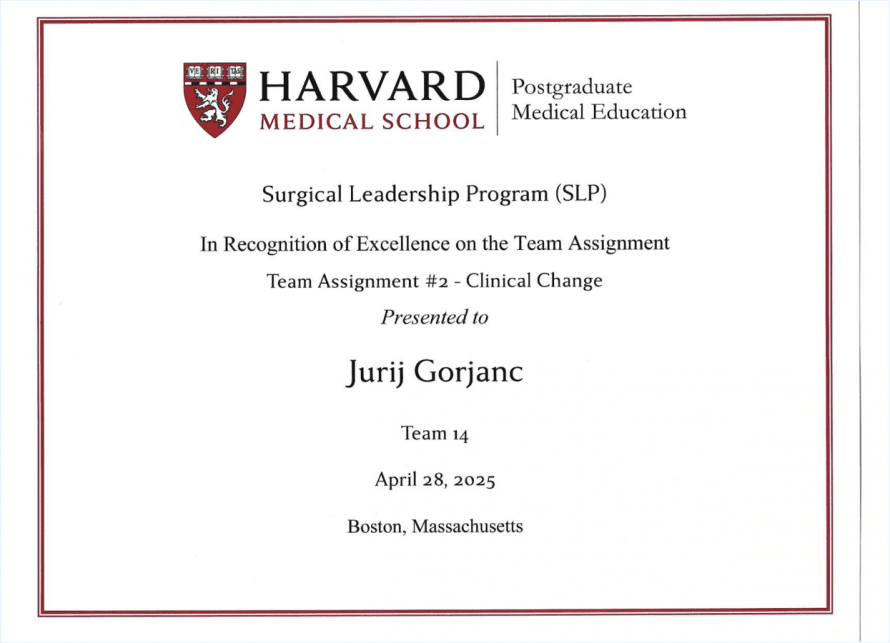
How do you rate the program’s format—with online lectures, live webinars, and in-person workshops—in terms of its compatibility with a demanding surgical work schedule?
“The hybrid format is exceptionally well thought out. We had to travel to London twice for two weeks each time and to Boston once for one week. The flexibility of the online modules allows us to work through the material at our own pace without disrupting hospital operations. At the same time, the live webinars and in-person workshops offer a valuable opportunity for exchange and networking. Of course, the program requires a high degree of personal responsibility and time management—but the investment, which is not insignificant, is well worth it in every respect,” explains Dr. Gorjanc.
What recommendations would you give to colleagues who are considering participating in this program—especially those from German-speaking countries?
“I can wholeheartedly recommend participating—especially for colleagues who want to look beyond the horizon, think ‘outside the box,’ and actively help shape the future of surgery. It’s important to prepare for the program early on, apply, and have a specific goal or project in mind. English proficiency and an openness to new ways of thinking are essential. And: ‘Don’t let the “Harvard aura” intimidate you—the community is supportive and open, not elitist,’ Dr. Gorjanc emphasizes at the end of our conversation.” 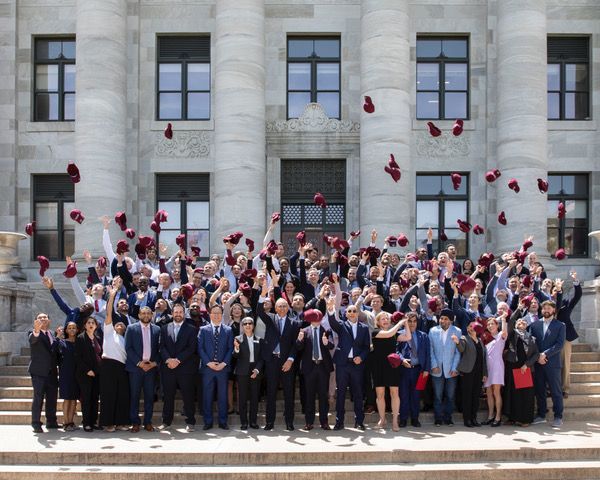
Share this article
Expert Interviews
Read next
- Expert interview
Expert interview with Professor Dr Elmar Herbst, PhD
Oct 15, 2026
Patient-centred and personalised knee surgery
Read more - Expert interview
Cardiogeriatrics: Significance and benefits in the context of hospital reform
Sep 21, 2026
Cardiogeriatrics: Significance and benefits in the context of hospital reform
Read more - Expert interview
Expert Interview with Professor Dr. Amadeus Hornemann, MPH
Sep 18, 2026
Prof. Amadeus Hornemann on Precision Medicine in Gynecology: Modern Surgery, New Techniques, Better Quality of Life
Read more