Expert Interviews
What Patients Should Know Before Hernia Surgery

Alexandra Pfitzmann ·
For many patients, hernia surgery is not a routine procedure, but rather a time that brings with it questions, uncertainties, and expectations. Before deciding to undergo surgery, it is important to understand what happens inside the body, which procedures are options, and why choosing the right surgeon plays a crucial role.
Modern hernia surgery offers safe, minimally invasive, and highly advanced methods—but every hernia is different, and each treatment requires a clear, individualized assessment.

The need for hernia surgery is determined by several medical factors that are considered together. A hernia never goes away on its own, but not every hernia requires immediate surgery.
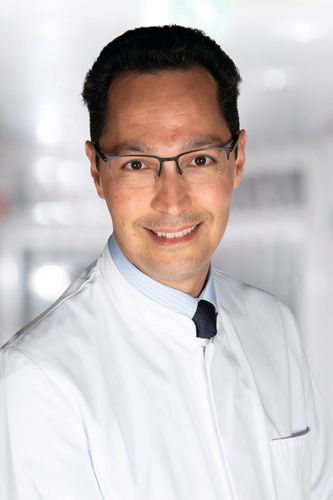
“Not every hernia requires immediate surgery. The decisive factors are symptoms, the size and location of the hernia, and the risk of incarceration. We also take into account age, comorbidities, physical activity levels, and the patient’s expectations. The goal is always a treatment that is individually tailored (so-called ‘tailored surgery’) and safe,” Dr. Gorjanc notes at the start of our conversation.
Key factors include, for example, how stable the abdominal wall remains, the severity of the symptoms, and whether there is a risk of complications. A hernia that causes pain, is enlarging, or can no longer be pushed back into place is considered unstable and therefore requires surgery. The risk of strangulation of the intestine or fatty tissue also plays a central role, as such circulatory disturbances can become acutely life-threatening and require immediate intervention.
In addition, comorbidities such as diabetes, obesity, or connective tissue weakness are factored into the decision, as are previous surgeries and overall tissue quality. The individual situation is assessed through a thorough clinical examination, during which palpation findings, protrusion, tender points, and reducibility are evaluated. Ultrasound or—in complex cases—a CT scan help to precisely assess the size, contents, and stability of the hernia.
The patient’s daily life also plays a role: if the hernia limits the patient’s ability to walk, work, or exercise, this is an indication for surgical treatment. All these factors combine to form an overall picture that determines whether hernia surgery is necessary and which procedure appears most appropriate.

Choosing a qualified hernia specialist is crucial for patient safety, the quality of the outcome, and long-term stability following surgery. Hernia surgery is among the procedures where the surgeon’s experience, specialization, and precision have been shown to make a significant difference. For this reason, the quality of a hernia surgeon is assessed based on clear professional criteria.
“The quality of a hernia specialist is easy to assess because there are clear professional criteria that indicate whether a surgeon operates at a modern and safe standard. A key foundation is formal specialization: An experienced abdominal wall and visceral surgeon is proficient in both open and laparoscopic procedures and has received in-depth training in this field. International qualifications such as FRCS or the European board certification FEBS AWS demonstrate that rigorous examinations have been passed and that the surgeon’s expertise has been confirmed by independent expert committees.
Practical experience is equally crucial. A specialized hernia surgeon should be proficient in the full spectrum of open, laparoscopic, and robotic techniques and adapt the method to the patient’s individual anatomical situation. A high volume of cases, clear specialization, and collaboration with certified hernia centers are considered objective indicators of quality because they demonstrate that complex cases are routinely treated and modern procedures are applied with precision.
External quality certifications also play an important role. Certificates and seals of approval, such as the “Quality-Assured Hernia Surgery” designation from the German Hernia Society, are awarded only to centers that meet high standards, document their results, and undergo regular reviews. Participation in scientific studies, professional societies, or international networks further demonstrates that a surgeon remains up to date with the latest developments in the field and actively contributes to the advancement of their specialty.
Another sign of high quality is transparency. Those who disclose surgery statistics, regularly attend continuing education courses, and offer structured follow-up care demonstrate a sense of responsibility and professionalism. Equally important is clear, understandable communication that reassures patients and makes the entire treatment process transparent,” explains Dr. Gorjanc.
For hernias, two basic surgical procedures are available: open surgery via an abdominal incision and laparoscopic surgery using a laparoscope. Both pursue the same goal—to permanently stabilize the weak spot in the abdominal wall—but differ significantly in technique, physical strain, and the healing process.
In open surgery, the hernia is directly exposed through a skin incision. The surgeon has a direct view of the affected area, can precisely assess the tissue, and place the mesh exactly where needed. This procedure is particularly suitable for large, complex, or previously operated-on abdominal wall hernias, as well as cases involving poor tissue quality. The open technique provides a very stable repair but involves a larger incision, slightly more postoperative pain, and a longer recovery time.
Laparoscopic surgery is performed through small incisions using a camera. The hernia is repaired from the inside, and the mesh is placed behind the abdominal wall and secured. This minimally invasive method usually results in less pain, smaller scars, and faster mobilization. It is ideal for bilateral inguinal hernias, recurrent hernias following open surgery, or for patients who would benefit from a rapid recovery. However, it requires a high level of technical expertise and is not suitable for every anatomical situation.
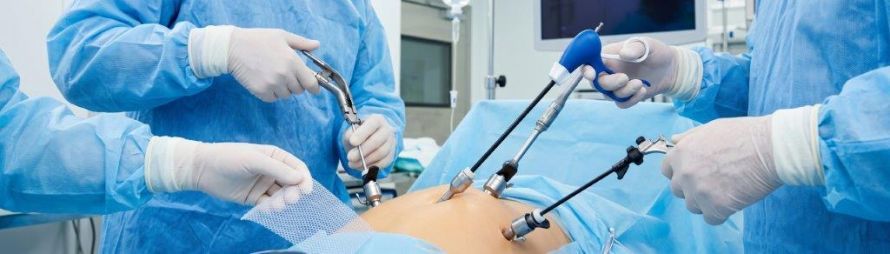
Laparoscopic Hernia Surgery
Dr. Gorjanc comments: “Generally speaking, we distinguish between open, laparoscopic, and robot-assisted procedures. Modern minimally invasive techniques often result in less pain and enable a faster recovery. However, what matters most is not the most advanced technology, but the procedure that offers the greatest long-term benefit for the specific hernia and the individual patient.”
Before hernia surgery, patients can do a great deal to reduce surgical risks and significantly improve healing. It is crucial to ensure that the body is as stable, well-nourished, and resilient as possible going into the procedure.
“Before hernia surgery, it’s worth preparing the body as well as possible for the procedure. Above all, this involves stabilizing existing conditions such as diabetes, high blood pressure, or cardiovascular problems, because a balanced metabolic state significantly improves wound healing and reduces complications. Medications must also be reviewed: Blood thinners, certain pain relievers, or dietary supplements are often adjusted or temporarily discontinued—always in close consultation with the treating physician. Another important factor is body weight. Being overweight increases pressure on the abdominal wall, complicates the surgery, and slows healing.
Even small steps, such as slight weight loss, increased physical activity, and a balanced diet, noticeably improve the initial condition. Equally crucial is managing nicotine use. Smoking impairs blood flow to the tissues and increases the risk of infections and impaired wound healing. It has been proven that cutting back on smoking or quitting entirely a few weeks before surgery supports the body’s recovery. The skin in the surgical area should also be as healthy as possible. Gentle cleansing, avoiding skin irritation, and treating minor inflammations or fungal infections reduce the risk of infection.
Staying well-hydrated and following a nutrient-rich, protein-rich diet strengthen the immune system and further promote tissue healing. “It is equally important to treat chronic coughs or constipation, as both increase pressure in the abdominal cavity and put strain on the abdominal wall,” recommends Dr. Gorjanc.
A stable metabolic state, a healthy body weight, quitting smoking, healthy skin, a good diet, and the treatment of any underlying conditions that may complicate recovery create optimal conditions for a safe surgery and a quick recovery with few complications.
In addition to physical preparation, organizing daily life plays a major role. After hernia surgery, heavy lifting, intense exercise, and physically strenuous activities must be avoided for some time. It helps to plan ahead who can provide support at home, how shopping or commutes to work will be organized, and what aids—such as an abdominal support belt—might be useful. Preparing for the first few days after surgery is also important: loose-fitting clothing, appropriate pain medication as prescribed by your doctor, a quiet environment, and short distances make the start of the recovery phase easier.
Finally, patients benefit from mentally preparing for the procedure. A clear understanding of the procedure, postoperative care, and individual risks provides reassurance and reduces stress. Discussions with the treatment team, clarifying any unanswered questions, and knowing what you can do to influence the process build confidence in the procedure.
The risks, complications, and success rates of hernia surgery depend both on the chosen procedure and on the patient’s individual anatomy and the surgeon’s experience. In general, both open and laparoscopic techniques are now considered very safe procedures with high success rates, but they differ in terms of physical strain, the healing process, and specific risks.
“Every surgery carries risks such as bleeding, infection, or wound healing complications. Specifically with hernia surgery, chronic pain or a recurrent hernia may occur. In experienced hands, success rates are very high, and most patients benefit long-term from a significant improvement in their quality of life.
With open surgery, the skin incision carries a slightly higher risk of wound healing complications, bruising, or infection because the tissue is subjected to greater stress. At the same time, this method provides a direct view of the hernia and allows for very precise reconstruction, which leads to excellent long-term stability, especially in cases of large or complex defects.
Recurrence rates—depending on the type of hernia and tissue quality—are in the low single-digit percentage range. Laparoscopic surgery typically results in less pain, lower infection rates, and a faster recovery due to the small incisions. Complications such as injury to internal structures or mesh-related issues are rare but do occur occasionally due to technical factors.
Here, too, the long-term results are very good, particularly in cases of bilateral inguinal hernias, recurrences following open surgery, or in patients who benefit from a rapid recovery. “Success rates are also in the low single-digit percentage range when the procedure is correctly selected and performed by a specialist,” emphasizes Dr. Gorjanc.
Serious complications such as severe infections, chronic pain, or mesh displacement are rare and occur primarily when the anatomical situation is challenging or tissue quality is compromised. A decisive factor in the outcome is the surgeon’s expertise: The more experienced a hernia specialist is, the lower the complication rates and the more stable the long-term prognosis—regardless of whether open or laparoscopic surgery is performed.
Whether a mesh is used always depends on how stable the abdominal wall is and what risk a suture-only repair would pose. A hernia develops due to a weak spot in the tissue—and the larger, wider, or softer this area is, the more likely it is to give way again without additional reinforcement. For this reason, a mesh is always chosen when the natural tension of the tissue is insufficient to permanently close the hernia.
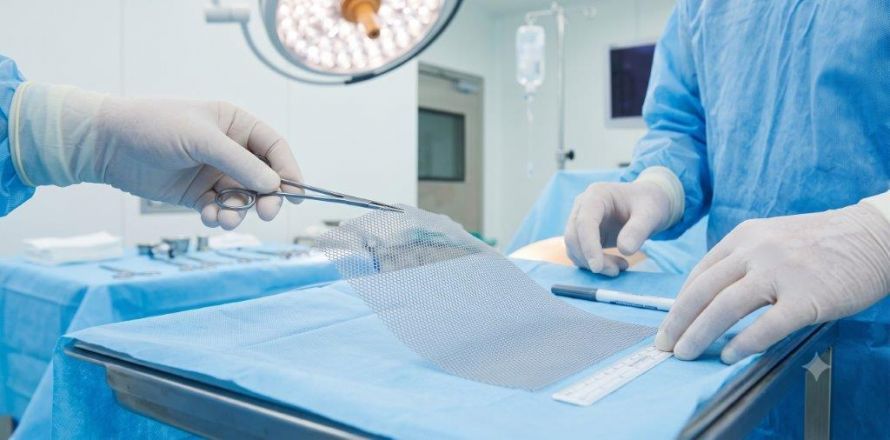
“For most hernias in adults, a mesh ensures that the abdominal wall remains stable over the long term and significantly reduces the risk of a recurrence. Modern synthetic meshes are very well tolerated today, and their safety has been proven by many years of clinical experience. Only in cases of very small defects or in specific situations—such as the Shouldice procedure for certain inguinal hernias—may suture closure alone be sufficient. Whether a mesh is necessary depends primarily on the size and nature of the hernia.
Larger defects, pronounced connective tissue weakness, recurrent hernias, or an abdominal wall weakened by previous surgeries are clear indications for the use of a mesh. The location of the hernia also plays a role: For inguinal and incisional hernias, modern guidelines recommend mesh reinforcement in most cases, because studies show that this significantly reduces the recurrence rate. “Only in cases of very small hernias or specific anatomical conditions can suture closure without a mesh provide a stable solution,” explains Dr. Gorjanc, adding:
“Various options are available for mesh materials, which are selected based on the anatomical situation and surgical method. Synthetic polypropylene meshes are used most frequently; they offer high stability and integrate well into the tissue. Lightweight meshes are also made of polypropylene, as well as polyester or polyvinylidene fluoride (PVDF; a semi-crystalline, thermoplastic fluoroplastic), but they are thinner and more flexible—ideal for delicate tissue or laparoscopic procedures where a thinner material offers advantages.
Composite meshes combine a stable base material with a special coating that prevents the mesh from adhering to organs inside the abdominal cavity; they are primarily used in laparoscopic procedures. Absorbable or partially absorbable meshes made from materials such as polylactide dissolve partially or completely and are suitable for situations in which the abdominal wall requires only temporary support or where the presence of a permanent foreign material needs to be avoided. Artificial absorbable and biological meshes made from animal or human tissue are an option in complex cases, such as infections or severely damaged tissue, because they integrate particularly well into the natural structure and dissolve over time.”
Based on the type of hernia, its size, tissue quality, surgical method, and individual risk assessment, a clear picture emerges: A mesh is used when it improves long-term stability and reduces the risk of a recurrent hernia. The choice of material depends on the anatomical situation and the surgeon’s experience—and it is precisely this combination that determines a permanently stable outcome.
The healing process after hernia surgery proceeds in clearly distinguishable phases, which vary depending on the surgical method, individual tissue quality, and physical strain.
“The healing process after hernia surgery proceeds in several phases that, while varying depending on the surgical method, follow a clearly recognizable pattern. Most patients are mobile again just a few hours after the procedure and can move around on their own. Everyday activities such as walking, showering, or light housework are often possible after just a few days. With laparoscopic surgery, this early recovery is usually faster because the small incisions put less strain on the abdominal wall. After open surgery, it takes a little longer for the wound to stabilize, since the incision is larger and the tissue has been subjected to greater stress,” says Dr. Gorjanc, adding:
“In the first few days, the focus is on wound healing. Pain is usually well-managed during this phase, and mobility improves rapidly. In the following weeks, the structural regeneration of the abdominal wall begins. If a mesh was inserted, it gradually integrates into the tissue and increasingly stabilizes the weak spot. Although the abdominal wall can withstand some strain during this time, it is not yet considered fully resilient.
Therefore, heavy lifting, intense exercise, sudden movements, and strenuous abdominal contractions should be avoided for about four to six weeks. Light exercise, on the other hand, is strongly encouraged, as it promotes blood circulation and prevents complications such as blood clots. Many people can return to work after one to two weeks, provided their job does not involve physically demanding tasks. The abdominal wall does not reach full strength until several months have passed. Even though most patients feel fit again after just a few weeks, the internal healing process is not yet complete at that point.
The mesh and tissue continue to fuse, the scars stabilize, and the abdominal wall reaches its final strength after about three to six months. During this phase, certain precautions remain advisable. Warning signs such as sharp pain during physical exertion, a new bulge, or persistent swelling should be taken seriously and evaluated by a doctor. To ensure optimal recovery, each patient is recommended a personalized rehabilitation program. This program takes into account the type of surgery, the patient’s initial physical condition, and their professional and personal daily life, and supports safe, long-term stable healing.”
Those who gradually increase their activity level, take care to avoid straining the abdominal wall, and follow the recommendations for wound care and exercise create optimal conditions for a complication-free and long-term stable recovery.
The risk of a hernia recurring after surgery results from a combination of biological factors, anatomical characteristics, and post-operative behavior.
“The risk of a hernia recurring after surgery is influenced by several factors. The size and location of the original hernia, the surgical method chosen, and the quality of the tissue are decisive. Large defects, incisional hernias, or areas that have undergone multiple previous surgeries place greater strain on the abdominal wall and are more likely to give way again. A hernia is fundamentally a sign of structural weakness in the connective tissue—the more pronounced this weakness is, the higher the risk of recurrence.
People with a genetic predisposition to connective tissue weakness, older adults, those with diabetes, smokers, or those who are overweight are therefore at increased risk because their tissue is less stable and intra-abdominal pressure is higher. The surgical technique also plays a key role. Procedures without mesh may provide sufficient stability for very small hernias, but overall they lead to more frequent recurrences than mesh surgeries. It is not only the material that is crucial, but also the correct placement and fixation of the mesh.
The surgeon’s experience has been shown to influence the outcome: Specialized centers with high case volumes achieve lower long-term recurrence rates because they routinely assess complex anatomical situations and precisely apply modern techniques. Postoperative behavior also contributes significantly to the stability of the abdominal wall. Exerting too much strain too soon—such as through heavy lifting, intense exercise, or strong abdominal contractions—can overburden the sutures or the mesh before the tissue has fully integrated.
Light exercise, on the other hand, supports blood circulation and promotes healing. Careful wound care, avoiding infections, and adhering to the doctor’s guidelines on physical activity limits are crucial during this phase,” explains Dr. Gorjanc, concluding our conversation by emphasizing:
“The best hernia surgery isn’t the most modern one, but the one that offers the safest and most lasting solution for the individual patient. Hernia surgery today is highly specialized. The right surgical method should always be the result of an individualized decision—not a one-size-fits-all solution.”
- Internationally recognized hernia surgeon with an outstanding reputation for treating complex abdominal wall and visceral hernias.
- Proficient in all modern techniques of open and laparoscopic hernia surgery.
- Holds the additional title of FRCS as a member of the Royal College of Surgeons of England—a globally rare designation signifying the highest level of surgical expertise.
- European specialist title FEBS AWS in abdominal wall surgery, awarded for an outstanding number of surgeries and scientific achievements.
- Former president of the Slovenian Hernia Society with extensive international networking experience.
- Extensive experience gained through numerous humanitarian missions with “Hernia International” in Africa and Asia.
- Certified quality: works at a center bearing the “Quality-Assured Hernia Surgery” seal from the German Hernia Society.
- Specializes in open surgery (abdominal incision), closed laparoscopic procedures, and structured postoperative care.
- Active researcher and developer of new surgical methods; continuously involved in international professional societies and studies.
Share this article
Expert Interviews
Read next
- Expert interview
Expert interview with Professor Dr Elmar Herbst, PhD
Oct 15, 2026
Patient-centred and personalised knee surgery
Read more - Expert interview
Cardiogeriatrics: Significance and benefits in the context of hospital reform
Sep 21, 2026
Cardiogeriatrics: Significance and benefits in the context of hospital reform
Read more - Expert interview
Expert Interview with Professor Dr. Amadeus Hornemann, MPH
Sep 18, 2026
Prof. Amadeus Hornemann on Precision Medicine in Gynecology: Modern Surgery, New Techniques, Better Quality of Life
Read more