Expert Interviews
Regenerative Procedures for the Spine

Alexandra Pfitzmann · May 28, 2026
Spinal disorders are among the most common causes of pain and limited mobility. They result from wear and tear, overexertion, injuries, or age-related changes and can affect intervertebral discs, vertebral joints, nerve structures, or the surrounding muscles.
In addition to traditional conservative treatments, regenerative therapies are now also used, which aim to support damaged tissue, reduce inflammation, and promote natural healing. These modern therapies offer many patients a gentle alternative to surgery and help alleviate pain and maintain spinal function in the long term.
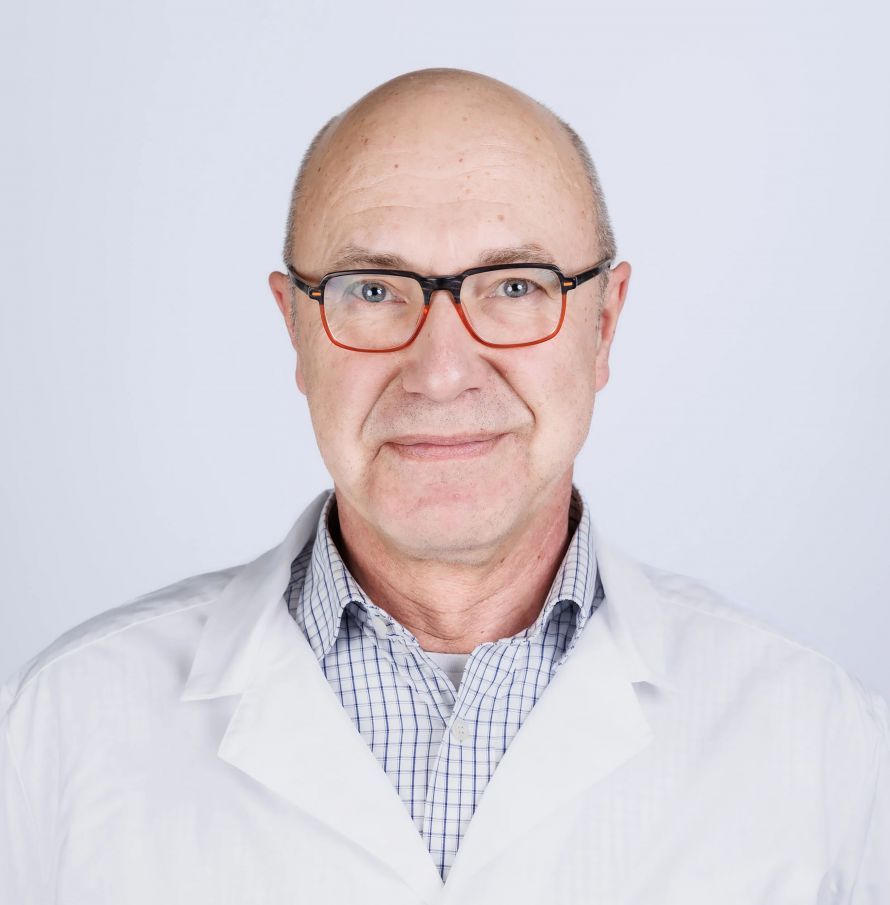
To learn more about this, the editorial team of the Leading Medicine Guide spoke with spine specialist Dr. Ferdinand Krappel, M.D.
Regenerative procedures are primarily used for degenerative or inflammatory conditions of the spine—that is, in cases where structures such as intervertebral discs, facet joints, or the sacroiliac joint are damaged but not yet so severely deteriorated that surgery would be unavoidable.
Typical indications include early- to mid-stage intervertebral disc degeneration, painful facet joint osteoarthritis, irritation of the sacroiliac joint, or inflammation-related nerve root symptoms. The goal of these therapies is to support the body’s natural healing processes, reduce inflammation, and stabilize or regenerate damaged tissue.
A regenerative procedure refers to treatments that utilize the body’s own biological mechanisms to stimulate healing. These include, for example, injections of platelet-rich plasma (PRP), concentrated bone marrow (BMAC), stem cell preparations, or anti-inflammatory autologous serum. These substances contain growth factors and cells that can reduce inflammation and promote repair processes.
They are precisely injected into the affected structure, such as the intervertebral disc or the small facet joints. The idea behind this is not to “mechanically repair” anything, but to improve the biological environment so that the body itself is once again able to regenerate tissue and reduce pain.
Before regenerative treatment of the spine is even considered, certain diagnostic criteria must be met. It is crucial that the symptoms can be clearly attributed to a specific structure—such as a degenerated intervertebral disc, an irritated facet joint, or the sacroiliac joint.

“When it comes to spinal complaints, the primary focus is initially on classic back pain, which occurs with varying frequency depending on the region: The lumbar spine is most commonly affected, followed by the cervical spine, and, much less frequently, the thoracic spine. The key question is then where the pain is coming from. Possible causes include muscular or ligamentous issues (pain or discomfort originating from ligaments).
The difficulty lies in the fact that many people show changes in the spine without experiencing any symptoms. Therefore, imaging alone is not sufficient. Only the combination of clinical examination, a tentative diagnosis, and imaging findings allows for a meaningful narrowing down of the source of pain. To refine this localization, diagnostic infiltrations are used. This involves a targeted injection into the suspected source of pain—such as the nerve root, the spinal canal, the intervertebral disc, or the small vertebral joints.
The patient then documents exactly how the pain has changed. This feedback helps identify the actual source of pain. The infiltration can be performed purely for diagnostic purposes using a local anesthetic or can be expanded to include a therapeutic component. It is usually performed under image guidance, most often with fluoroscopy and less commonly with ultrasound. To improve precision, these techniques are regularly practiced on anatomical specimens to master the exact placement of the needle.
Depending on the results, a single infiltration may be sufficient, especially for acute symptoms. In cases of chronic or recurrent pain, the question of further steps arises. One option is to treat the pain-conducting nerve branches using radiofrequency procedures—either through traditional thermal ablation or through modulation, in which nerve conduction is weakened but not destroyed. Alternatively, there are cold-based procedures in which the nerve is temporarily deactivated and later regenerates, similar to restarting a computer.
“Such methods are considered when injection therapy alone is not sufficient,” explains Dr. Krappl at the beginning of our conversation, adding:
“At the same time, we always incorporate information from physical therapy and chiropractic care to get a complete picture. In older patients, factors such as osteoporosis, muscle atrophy, or hormonal influences must also be taken into account, as they can alter the cause of the pain.
Joints such as the sacroiliac joint can also cause symptoms that feel like back pain but require a different treatment. If conservative and minimally invasive measures are insufficient or the pain keeps recurring, regenerative procedures come into play. Injections of platelet-rich plasma into the facet joints have proven effective, as they are intended to stimulate the body’s own repair processes.
For nerve roots, this procedure is still under discussion; for intervertebral discs, however, there are initial experiences with stem cell preparations derived from the iliac crest. These can be helpful for selected patients, for example, when surgical intervention is to be avoided. In peripheral joints such as the knee or shoulder, stem cell preparations derived from adipose tissue show good results; however, they are not used in the back for safety reasons. Overall, this results in a broad spectrum of diagnostic and therapeutic options, ranging from careful clinical assessment to targeted infiltrations and modern regenerative procedures.
The key is always the combination of clinical findings, imaging, targeted testing, and the patient’s individual response to identify the actual source of pain and treat it effectively.”
Early detection of degenerative changes plays a crucial role in the effective use of regenerative therapies for the spine. The earlier such changes are detected, the more likely it is that the affected tissue is still at a stage where it is biologically responsive.
Regenerative procedures are intended not only to reduce inflammation but also to specifically trigger repair processes. This concept originated in the field of sports medicine, where it was observed that, in cases of muscle or tendon injuries, concentrated endogenous substances—such as autologous blood preparations—can activate healing processes.
“The idea is to deliver biochemically highly active components from the body itself to a chronically irritated structure in order to initiate regeneration there that goes beyond mere anti-inflammatory effects. The goal is a longer-term or even permanent improvement, particularly in patients whose symptoms recur repeatedly and cannot be stably alleviated with conventional measures.
Such procedures are generally not used prophylactically, as treatment is only appropriate when symptoms are actually present. In practice, regenerative methods are primarily used when conservative measures and injections help but do not bring about a lasting change. Examples can be found, for instance, in the sacroiliac joint or the knee: Even though it has not been proven that cartilage regenerates completely, many patients show a long-term reduction in inflammation and pain.
Long-term follow-up studies—such as one from Bologna involving over a thousand knee patients—report good results over several years. Some patients undergo the treatment again after a few years if their symptoms return, in order to delay or avoid surgery. In countries where joint replacement surgery is difficult to access or involves long wait times, regenerative procedures have gained additional importance. Examples show that even older patients can achieve a good quality of life for years without having to undergo major surgery.
At the same time, it is becoming clear that joint replacement is not always the perfect solution: While hip replacements have very good success rates, knee replacements are significantly more complex, and a significant proportion of patients continue to experience pain despite surgery. The situation is also complicated in the spine, as many joints and structures are involved there. “Fusion surgery can help, but it often leads to secondary problems in adjacent segments,” Dr. Krappel explains.
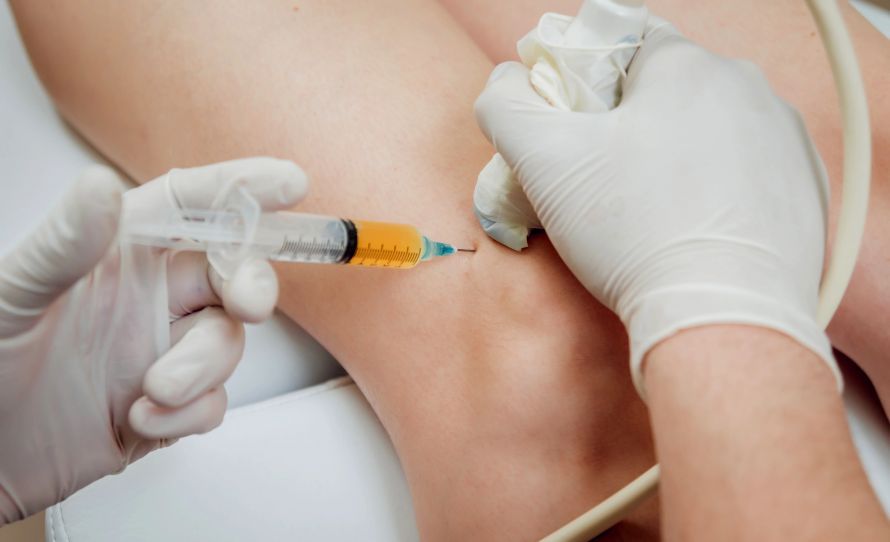
Especially in the area of the spine, there is a wide range of opportunities for regenerative approaches that can delay surgery or, in some cases, avoid it altogether.
Dr. Krappel comments: “Stem cell preparations derived from the iliac crest are used, for example, to treat intervertebral disc problems when other options have been exhausted and spinal fusion would significantly impair the patient’s quality of life. Stem cells derived from adipose tissue are also used in peripheral joints such as the knee or shoulder, where they have shown good results. This method is not used on the spine for safety reasons, as adipose tissue may potentially contain bacteria, and infections in the intervertebral disc must be avoided at all costs.
Infiltrative therapy, on the other hand, is essentially aimed at dampening an excessive inflammatory response. In cases of acute problems—such as a herniated disc—the focus is not solely on mechanical pressure, but primarily on the inflammatory cascade triggered by the disc tissue. An injection, usually containing cortisone, is intended to interrupt this inflammation and is highly likely to provide relief, especially in cases of acute symptoms.
In cases of chronic pain, the situation is more complex: Often, there are degenerative changes, early-stage arthritis, or a narrowing of the space, in which the nerve no longer has a “cushioning zone” and is therefore repeatedly irritated. Here, too, an inflammatory reaction occurs that can be temporarily alleviated by injections, but does not necessarily disappear permanently.”
An injection can reduce acute pain to such an extent that physical therapy and active exercises become possible in the first place. In practice, it is common for therapists to specifically request that a patient receive “a quick injection” so that they can work with the patient more effectively afterward. This combination of pain reduction and movement is a central component of treatment.
“If you tell a patient they have ‘severe degenerative changes in the spine,’ it’s basically the same as telling them they have ‘severe degenerative changes on the scalp’ just because their hair is falling out. Both describe normal aging processes that occur quite naturally and do not automatically cause pain. What matters is not the radiological image, but the body’s individual response.
Some people have large herniated discs and only mild symptoms, while others with similar findings can barely walk. The severity of the inflammatory response appears to play a significant role here. Even with structural changes such as spinal stenosis, it’s clear how differently people react. A mountain guide, for example, reports that he only feels pain after walking for three hours—despite findings that would trigger symptoms in others after just a few meters.
Such differences highlight how important it is to take the time to address each individual’s situation. A thorough consultation, free from the time pressures of a clinical setting, makes it possible to determine what is best for each patient and what goals they are pursuing.
“This approach is similar to what is described in the Netherlands as the ‘Acceptance and Commitment’ approach: first, accept the current state of affairs; then clarify where one wants to go; and finally, jointly determine which steps are necessary to get there,” explains Dr. Krappel.
Complementary exercise therapy plays a major role. Although this approach is not yet as widely integrated as would be desirable, the goal is clear: close collaboration between medical treatment and physical therapy.
Dr. Krappel explains: “In some centers, the physical therapist is already present during the consultation, creates an individualized plan on the spot, and assesses movement patterns. This model is considered particularly effective because the patient doesn’t have to shuttle between different locations and the treatment is provided as a seamless whole. Until this level is achieved, efforts are at least made to maintain close communication between the physician and the physical therapist—for example, through direct consultations, the sharing of images, or the joint establishment of treatment goals.
At the same time, it’s openly acknowledged that some patients want only a passive solution and show little willingness to do the work themselves. In such cases, it must be clearly communicated that purely passive treatment is often insufficient. Others, on the other hand, are highly motivated and want to do as much as possible on their own. For them, it is important to build up the therapy gradually and avoid overwhelming them.
An example from clinical experience illustrates how valuable well-integrated physical therapy can be: During a ward round, an experienced therapist pointed out that a patient should not undergo surgery but first needed targeted therapy—and she was proven right. It is repeatedly emphasized that physical therapy should not be confused with a simple massage. Many patients report that they have been “massaged,” but this is no substitute for structured, active therapy.
The goal is to improve mobility, stability, and functional control—and this is precisely where an injection often creates the necessary conditions by reducing pain to the point where the patient can once again bear weight. “Even though the interplay between medical treatment and exercise therapy has not yet been optimally implemented everywhere, developments are moving in the right direction.”
Structural changes in the spine are particularly suitable for regenerative therapies when they are detected early and the affected tissue is still biologically responsive.
Experience shows that regenerative therapies yield particularly good results for patients whose spinal complaints are primarily biological rather than mechanical in nature and whose tissue still has sufficient regenerative capacity. People who are in the early to moderate stages of degenerative changes benefit the most—that is, when wear and tear, inflammation, or irritation are the primary issues, but there is no severe structural damage such as instability or pronounced nerve compression.
“It’s easy to describe the situations in which surgery actually becomes necessary. An example from my own experience illustrates this clearly: In the case of a herniated disc with severe, electric-shock-like pain, an injection initially helped, significantly reducing the pain. Nevertheless, weakness in the thigh persisted, making it nearly impossible to climb stairs.
In such cases, a joint decision must be made as to whether patience and intensive exercise are sufficient or whether the risk of permanent damage is too great. Paralysis, on the other hand, leaves no room for compromise—in that case, surgery is unavoidable to prevent permanent damage. Another clear criterion is persistent, unmodifiable chronic pain that cannot be alleviated by any position or treatment. If such pain persists despite injections and other conservative treatments, and at the same time there is a clear finding on an MRI—such as a herniated disc or severe stenosis with an inflammatory reaction—surgery quickly becomes the primary option.
Severe weakness can also be a reason for surgery, while mild sensory disturbances such as tingling or numbness must be evaluated on a case-by-case basis. For certain occupational groups—such as a ballet dancer with weakness in the big toe muscle—even a seemingly minor limitation can pose a serious problem and necessitate surgery. Sometimes it only becomes apparent over time that conservative measures are insufficient.
A patient with degenerative scoliosis and stenosis had undergone multiple treatments and experienced alternating phases of improvement and deterioration. When the symptoms worsened significantly again after physical exertion and no lasting stabilization could be achieved, a minor microsurgical decompression was considered the most appropriate next step. “The goal is not to rush into major spinal surgery, but—if necessary—to operate as precisely and as minimally invasive as possible in order to achieve the expected benefit without taking unnecessary risks,” states Dr. Krappel, adding:
“It is common for patients to have already undergone fusion of individual vertebral segments and, over time, to develop symptoms in adjacent areas. Even in such cases, non-surgical therapies can still be used. Many people, despite existing fusions, benefit from targeted interventions such as radiofrequency treatments or injections, which can significantly relieve pain in the adjacent segments.
One example illustrates this well: A patient with multiple fusions in the cervical and lumbar spine first received radiofrequency treatment and later a PRP injection. As a result, she was virtually symptom-free for many months before the pain slowly returned. For her, this approach makes sense because the alternative would be a much more extensive surgery. Patients who have already undergone several procedures know that each additional fusion places new stress on the adjacent segments and increases the risk of further problems.
That is why it makes sense to first exhaust all non-surgical options before considering more extensive surgical procedures. It is precisely this group of patients that makes up a significant portion of those seeking minimally invasive, targeted treatment options to manage their symptoms without having to undergo another major surgery right away.”
At the Brig location, all necessary diagnostic services are available on-site. When a patient arrives with an acute problem, an MRI can be performed immediately, the findings assessed, and—if necessary—the appropriate treatment initiated right away. With the exception of PET scans, which are required only in specific cases such as tumors or unexplained inflammation, everything is available on-site. The goal is for the patient to be examined, interviewed, diagnosed, and treated without long commutes or waiting times.
Life means movement!
At the end of our conversation, Dr. Krappel makes a clear recommendation: “Life means movement, and movement is life. This seemingly banal statement hits the nail on the head.” During a continuing education seminar, the question was raised as to which form of physical therapy is best. A professor from Harvard summed it up: ‘If people go for a walk for at least half an hour every day, they’re already doing something very good for their spine!’”
Thank you very much, Dr. Krappel, for this important information on spinal therapy!
- Internationally trained orthopedic surgeon, spine surgeon, and pain specialist with many years of experience
- Director of the Center for Spine, Regenerative Medicine, and Pain Therapy at Affidea Brig
- Specializes in image-guided injections, radiofrequency therapy, and modern regenerative procedures (PRP, MSC, Lipogems)
- Comprehensive expertise in the diagnosis of osteoporosis and sarcopenia, including DXA measurements and risk profiles
- Holistic, patient-centered approach with a focus on conservative and multimodal pain management
- High level of surgical expertise in minimally invasive spinal surgery, intervertebral disc replacement, dynamic neutralization, kyphoplasty, and microsurgical procedures
- Active in international professional societies and committed to regional medical care (President of the Upper Valais Medical Association)
Share this article
About the medical author
Alexandra Pfitzmann
Editor
Alexandra Pfitzmann – medical author: expert knowledge, professional articles and medical insights in the Leading Medicine Guide.
More about the medical author →Expert Interviews
Read next
- Expert Interviews
Expert Interview with Professor Dr. Amadeus Hornemann, MPH
Sep 18, 2026
Prof. Amadeus Hornemann on Precision Medicine in Gynecology: Modern Surgery, New Techniques, Better Quality of Life
Read more - Expert Interviews
Expert Interview with Professor Dr. Konstantinos Anagnostakos
Sep 15, 2026
Prof. Anagnostakos on Painful Knee Replacements
Read more - Expert Interviews
Expert Interview with Professor Karl Philipp Kutzner, M.D.
Sep 11, 2026
Prof. Kutzner on Cutting-Edge Endoprosthetics at ENDOPROTHETICUM Mainz
Read more