Expert Interviews
Priv.-Doz. Dr. Martin Hürtgen: “Ninety percent of all lung cancers are caused by smoking!”

Alexandra Pfitzmann ·
Being able to breathe deeply and fully—that feels good. In our daily lives, we breathe in and out ten to twenty times a minute. In fact, we hardly ever think about the process. Of course, we realize that breathing is essential for survival: Our body is supplied with fresh, oxygen-rich air and releases the used, carbon dioxide-rich air into the environment. Oxygen passes from the alveoli into the capillaries and is then transported via the blood vessels to the individual organs and tissues. Lung diseases therefore have serious consequences for our well-being—though symptoms of a disease often take time to become apparent.
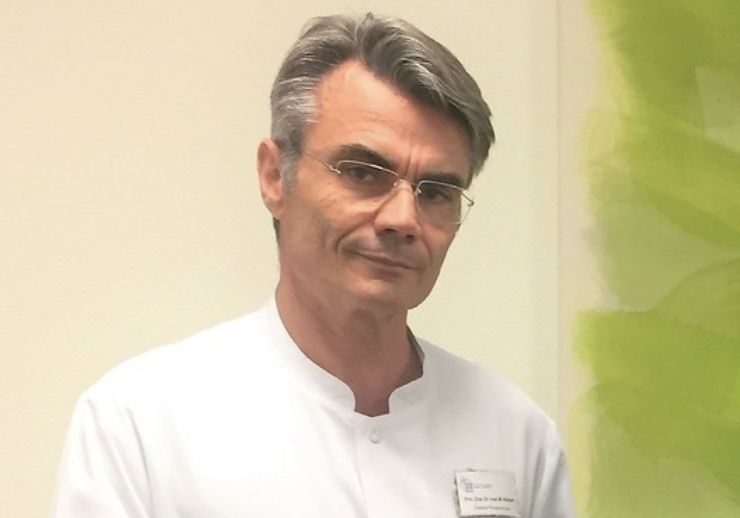
To shed more light on the topic of lung diseases, the editorial team of the Leading Medicine Guide spoke with Priv.-Doz. Dr. Martin Hürtgen, who, as chief physician of the Department of Thoracic Surgery at the Catholic Hospital in Koblenz/Montabaur, is renowned far beyond the region. He is considered a leading specialist in all types of chest and lung surgery, particularly in minimally invasive surgery—commonly known as “keyhole surgery.” PD Dr. Hürtgen also gained international recognition for developing the minimally invasive surgical method VAMLA, which opened up new possibilities for treating lung cancer. He also performed the first keyhole surgery in Rhineland-Palatinate to remove a lobe of the lung.
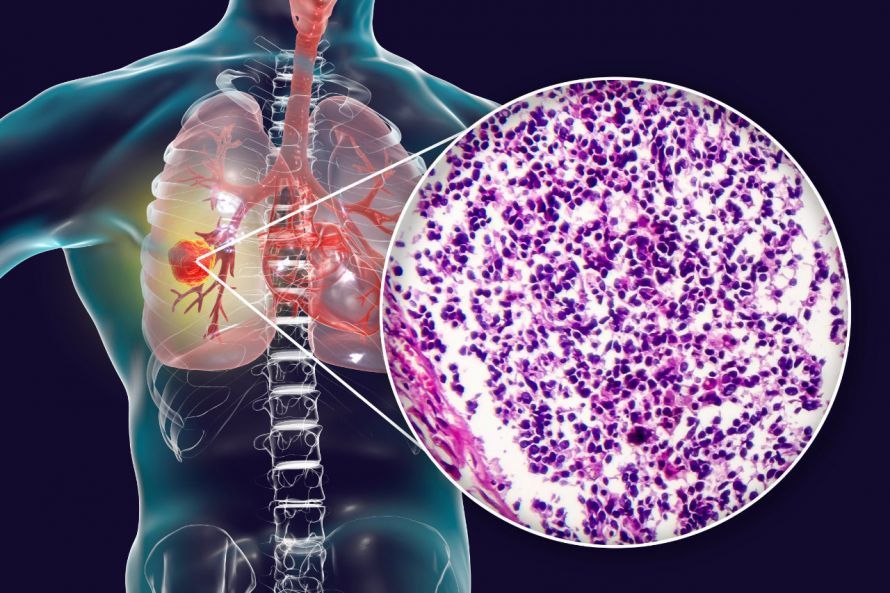
There are a large number of lung diseases. These are categorized as infectious diseases—such as pneumonia, bronchitis, or whooping cough—chronic lung diseases—such as COPD (chronic obstructive pulmonary disease), asthma, or cystic fibrosis—and malignant lung diseases, such as lung cancer. The insidious thing about the latter is that lung cancer develops very quietly. Patients usually don’t notice symptoms such as a cough or shortness of breath until the lung cancer is already at an advanced stage.
 “The quality of treatment has improved significantly compared to previous years,” says Priv.-Doz. Dr. Martin Hürtgen as he begins our conversation, adding: “Early detection is, of course, a very important issue when it comes to lung cancer. Unfortunately, Germany lacks the legal framework for health insurance companies to cover routine screenings, as is the case with breast cancer screening. Low-dose lung screening would help high-risk groups, such as smokers, detect lung cancer earlier. Not everyone needs to be screened. Screening must be carried out by an experienced lung cancer center. If symptoms such as a persistent cough, coughing up blood, shortness of breath, sputum, and pain are present, a pulmonologist’s examination usually yields an unfavorable result,” criticizes Dr. Hürtgen.
Smoking Can Be Deadly
Smoking is pretty much the worst thing you can do to your lungs. Even a single cigarette a day causes lasting damage to the cilia that cleanse the lungs. The remaining pollutants, bacteria, and mucus in the lungs—which the cilia can no longer clear away—lead to chronic inflammation and progressive destruction of the airways and lung tissue. Smoking can not only cause lung cancer, but it definitely causes pulmonary emphysema in every single smoker. “In every smoker,” emphasizes Dr. Hürtgen, explaining: “Pulmonary emphysema is a chronic, progressive lung disease in which the alveoli at the very ends of the bronchioles are irreversibly—that is, permanently—dilated and destroyed. The elastic fibers in the lungs break down. This condition is also incurable.”
Now, some smokers might say that this doesn’t apply to everyone… just look at people like former Chancellor Helmut Schmidt, who, despite being a lifelong smoker, never developed the disease and lived to be 96 years old. “This is a fallacy we’re falling for here. Let me give the example of the seat belt requirement introduced in Germany in 1976. Back then, there was also an outcry from the public, with comments like: ‘I’ve been driving without a seat belt for twenty years, and nothing’s happened.’ Yes, that may be true. But if I apply that to smoking, I have to say: Ninety percent of all lung cancers are caused by smoking. It’s not that ninety percent of smokers get lung cancer,” clarifies Dr. Hürtgen.
“In pulmonary emphysema, the septa in the lungs also break down, so that gas exchange can no longer take place. As a result, the lungs inflate like a balloon. You can always recognize these patients immediately because they have a barrel-shaped chest,” says Dr. Hürtgen, describing the appearance of people with pulmonary emphysema.
The development of pulmonary emphysema, however, is also part of the normal aging process. “People can certainly live well in later adulthood with only forty percent lung function. There are sufficient reserves available. Smoking, however, accelerates this normal aging process, and it’s possible that by the end of one’s 40s, lung capacity may be down to just twenty percent. Those who switch from cigarettes to marijuana or weed and smoke it regularly accelerate the damage even further,” warns Dr. Hürtgen about the consequences of smoking.
Treatment Options: More Hope for Lung Cancer
Thanks to advances in medicine, there are various treatment options available despite the devastating diagnosis of lung cancer. With modern diagnostic methods, an increasing number of lung cancers are being detected at an early stage. In these cases, cure rates can reach over ninety percent. Thanks to newly developed medications, even patients with inoperable tumors—or those whose lungs have been pre-damaged by smoking—can, depending on the tumor subtype, achieve a survival period of several years with a good quality of life. Patients are often wrongly declared inoperable. Thanks to modern surgical techniques, even such patients can often still be cured through surgery at specialized centers.
Even in cases of advanced pulmonary emphysema, surgery can further improve the quality of life for some patients. In this procedure, particularly non-functional portions of the lung are reduced in size to give the healthier lung more space to breathe.
As mentioned at the beginning, Priv.-Doz. Dr. Martin Hürtgen also became known for developing a minimally invasive surgical method known as VAMLA. “With the VAMLA method, a small incision is made in the patient’s neck above the chest in the operating room. This allows for the particularly thorough removal of all lymph nodes in the chest that may contain tumor cells. The VAMLA method also enables the particularly thorough removal of lymph nodes on both the right and left sides simultaneously. This is not possible with standard open surgery or other minimally invasive procedures,” says Dr. Hürtgen, describing the added assurance this provides in preventing cancer recurrence—that is, the return of the cancer.
Video-assisted mediastinoscopic lymphadenectomy—VAMLA for short—is a minimally invasive endoscopic surgical procedure in which lymph nodes are gently and thoroughly removed from the mediastinum under endoscopic visual control via a monitor.
An internationally renowned center of excellence: the certified Koblenz Lung Cancer Center
For lung cancer patients, it is of the utmost importance to receive treatment at a hospital certified for lung diseases. A surgical method such as VAMLA is performed only by highly experienced lung specialists like Dr. Hürtgen, but it can extend a patient’s life by many years or even cure lung cancer.
“Everything in the operating room hinges on the quality of the surgery. In certified centers, the mortality rate is less than one percent; in non-certified centers, it can rise to as high as ten percent—that’s quite a difference. Unfortunately, however, health policymakers and the pharmaceutical industry do not pay enough attention to surgical quality and patient outcomes. Poor surgical outcomes, such as subsequent tumor recurrences, are naturally attributed more to the disease itself than to the quality of the surgery. Compared to medications, surgical treatment is relatively inexpensive, which is why the industry and the business sector invest relatively little in surgery. True to the motto “money makes the world go round,” a great deal is invested in research into new drugs for affluent societies because there is enormous profit to be made from them, which explains the pharmaceutical industry’s high research investments. Most lung cancer patients are nearing or have recently reached retirement age; as such, their recovery is not economically profitable.
Finally, however, health policymakers are taking initial steps to concentrate the treatment of lung cancer patients at qualified and certified lung cancer centers by no longer reimbursing these treatments at less experienced hospitals. But when you see how Asian countries are investing in medical and surgical infrastructure—and what modern procedures are routinely available there—it feels as though Germany is in the Third World when it comes to medicine. To put it bluntly, it’s more cost-effective for the national economy if the patient dies—whereas for the pharmaceutical industry, it’s better if they remain ill for a long time and have to take medication. “At the very least, in certified hospitals, surgical methods such as VAMLA should be recognized for their quality and the additional effort they entail—and they should be paid for—which is not currently the case,” explains Dr. Hürtgen thoughtfully.
Dr. Hürtgen directs his criticism primarily at health and economic policymakers: “Our lung cancer patients naturally do not have a strong lobby. They tend not to come from the wealthy and influential social classes, and once they retire, they are no longer in positions of influence either. The situation is quite different when it comes to the treatment of mammary carcinomas—that is, breast cancer—since these patients are often young women who can still be of benefit to the economy after successful treatment. Health policy has completely left the funding of medical research to the industry. It’s no surprise that the industry then invests particularly in those areas of research where there is a lot of money to be made. Relatively inexpensive surgical procedures end up getting the short end of the stick, much like the development of urgently needed medications for tuberculosis or other diseases in poor countries. Yet in these areas, relatively little money could go a long way toward helping many people.
Fortunately, the extremely cost-effective VAMLA method has firmly established itself as a surgical technique within twenty years; it is also widely used in Asia, but could be learned by far more surgeons. Unfortunately, training in this area is not funded. Regrettably, the healthcare system is always portrayed in political circles and the media as a negative cost factor, even though it could also be a very valuable economic sector and an export hit for Germany.”
Surgical precision is crucial, especially in lung surgery
“The goal here is to preserve as much lung tissue as possible. Minimally invasive procedures account for ninety percent of the surgeries performed at our hospital. This spares patients a prolonged wound-healing process, allowing them to recover more quickly and, above all, to begin any subsequent necessary treatments much sooner. For example, if we decide to perform surgery first and then start supportive chemotherapy afterward, this isn’t possible as quickly without a minimally invasive procedure, since chemotherapy cannot be administered while the wound is still healing,” explains Dr. Hürtgen.
The patient is always the focus
For the patient and their loved ones, a lung cancer diagnosis is like a nightmare and definitely a devastating blow. It is crucial to ensure the highest quality of care and the greatest possible comfort for patients, as well as to treat those affected with sensitivity. For this reason, at the Interdisciplinary Lung Cancer Center, Priv.-Doz. Dr. Martin Hürtgen and his team do everything they can to determine the best individualized treatment and discuss every step with the patient on an equal footing. “In an interdisciplinary tumor board, experts from a wide range of specialties—such as oncology, pulmonology, radiology, nuclear medicine, radiation therapy, and even psycho-oncology—contribute their expertise. If necessary, palliative care specialists and social medicine counselors are also consulted,” says Dr. Hürtgen, describing the close collaboration and bringing our conversation to a close.
Dr. Hürtgen, thank you very much for this candid and insightful look into your work. Thank you for such a pleasant conversation!
Anyone wishing to contact our specialist directly can do so via his profile page on the Leading Medicine Guide.
Share this article
Expert Interviews
Read next
- Expert interview
Expert interview with Professor Dr Elmar Herbst, PhD
Oct 15, 2026
Patient-centred and personalised knee surgery
Read more - Expert interview
Cardiogeriatrics: Significance and benefits in the context of hospital reform
Sep 21, 2026
Cardiogeriatrics: Significance and benefits in the context of hospital reform
Read more - Expert interview
Expert Interview with Professor Dr. Amadeus Hornemann, MPH
Sep 18, 2026
Prof. Amadeus Hornemann on Precision Medicine in Gynecology: Modern Surgery, New Techniques, Better Quality of Life
Read more