Expert Interviews
Dr. Martin Susewind, M.D.: “There’s no diet that works in the long run!”

Alexandra Pfitzmann ·
As a specialist in bariatric surgery, Dr. Martin Susewind serves as the head of the general surgery team at the MIC in Berlin, a clinic for minimally invasive surgery renowned far beyond the capital. Dr. Susewind enjoys international renown, particularly as the director of “Weight Balance,” the certified center of excellence for bariatric and metabolic surgery. In an interview with the Leading Medicine Guide, this empathetic specialist offers a rare behind-the-scenes look at his field—and explains numerous details about excess weight, diets, and the chronic condition of obesity.
The projections are alarming: obesity is becoming increasingly widespread, especially in industrialized nations. This isn’t just about a few extra pounds, a lost bikini figure, or the classic beer belly—which can still be somewhat concealed. It only becomes truly concerning when excess weight spirals out of control. Of course, a few extra kilos around the hips aren’t usually a big deal. But when excess weight becomes a chronic condition—then the consequences for the body are significant.
Obesity can lead to serious health problems and should therefore be treated without fail. Often, people can’t manage this on their own. In such cases, it’s advisable to consult experts in overweight and obesity. Through nutritional counseling, therapy, and ultimately surgery, they can provide lasting help in reducing weight. Successfully—and, above all, permanently—reducing morbid obesity requires an individualized, multimodal treatment plan.
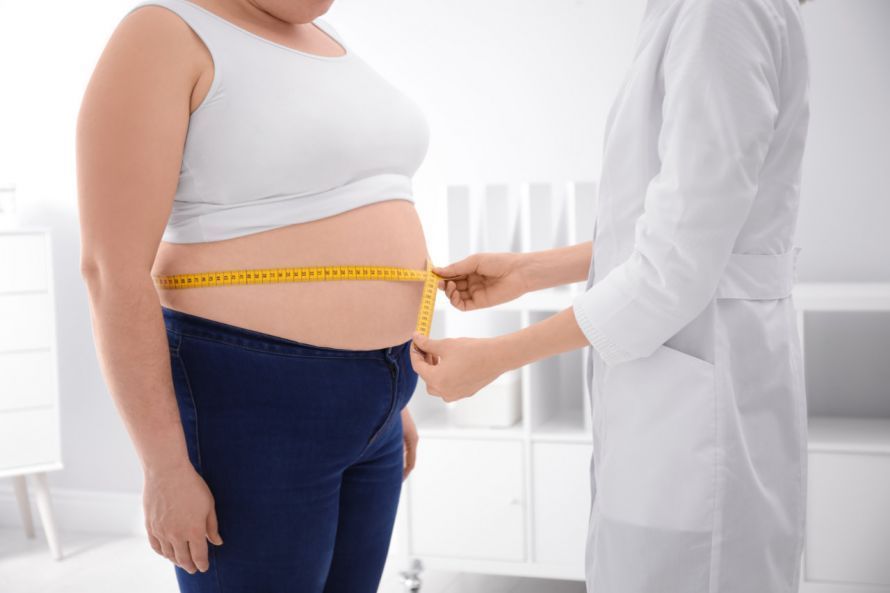
Obesity refers to pathological overweight © New Africa / AdobeStock
Leading Medicine Guide: Dr. Susewind, what role does nutrition play when it comes to being overweight?
Dr. Martin Susewind: A healthy diet is, of course, very important. A balanced diet consisting of plenty of vegetables and fruits, occasional fish and meat in moderate amounts, healthy fats, and small amounts of sugar is naturally one of the pillars of weight management when it comes to maintaining a normal body weight.
Leading Medicine Guide: But that’s not all, is it...
Dr. Martin Susewind: If you combine this with an adequate amount of exercise, you’re unlikely to gain a significant amount of weight. The danger today often lies in the fact that people have lost their sense of satiety. Emotional eating—that is, eating simply because it tastes good—can become a problem. Of course, there are always times when people eat more than usual, but this must not become the norm. People who are severely overweight often resort to emotional eating because they aren’t seeing real results from a healthy diet. This is due to the metabolic level at which these patients operate. This refers to a person’s metabolic rate relative to their resting metabolic rate in relation to their body weight.
Leading Medicine Guide: Are there any diets that can help?
Dr. Martin Susewind: The “diet craze” plays a “weighty” role today in the truest sense of the word, since there really is no diet that works in the long term and permanently. People are being steered in completely the wrong direction here. They may lose a few kilos, but ultimately the weight comes back—and with a vengeance. Only a lasting change in diet, combined with other therapies, helps patients lose weight and then maintain their new weight.
Leading Medicine Guide: How do you help patients who come to you with serious conditions such as obesity understand that they need to change their diet going forward? What methods do you offer?
Dr. Martin Susewind: First and foremost, the person affected must be taken under your wing on a personal level. Trust must be built, and the patient’s current condition must be clearly communicated and acknowledged in order to establish a solid foundation. Patients with obesity often need to be relieved of the feelings of guilt that frequently accompany their condition. Many feel ashamed and have often endured a barrage of insults and ridicule from the public or even within their own families; they feel stigmatized, emotionally wounded, and psychologically vulnerable. Here at the MIC Clinic, we offer long-term and sustainable therapy. This begins with a detailed consultation with a doctor, followed by nutritional counseling. We make it clear to those affected that healthy eating tastes good and is enjoyable. It’s important that preparing healthy meals is practical for everyday life and doesn’t take hours. At the same time, we show that healthy eating doesn’t have to be expensive. For many people, the idea of healthy eating is associated with high costs and a lot of effort. We help clear up these misconceptions.

A change in diet and exercise help with weight loss and maintaining a healthy weight © M.studio / AdobeStock
Leading Medicine Guide: How long does this kind of therapy last?
Dr. Martin Susewind: The nutritional counseling program runs for a period of six months. During this time, we also go grocery shopping with our patients. For example, at the supermarket, we’ll pick up a whole range of different cereal boxes and compare the sugar content of the products. The goal here is to provide a concrete, visual demonstration so that patients realize how easy it is to reduce their calorie intake in certain situations.
Leading Medicine Guide: That’s very concrete advice! What other types of support do you offer your patients?
Dr. Martin Susewind: Nutritional counseling sessions take place once a month to answer questions, monitor weight, and provide additional tips. Individual counseling is available—but most people opt for counseling in a small group of four to five people, which is what we recommend as well. In the group setting, participants also realize that they’re not alone with their problem. They then feel better supported and also benefit from the questions asked by the other participants. At any time during this counseling phase, participants can contact us and our experts by phone or email to ask questions on the spot or to get a boost of motivation. This is, of course, absolutely crucial for the entire course of therapy.

Leading Medicine Guide: Such a complete change in diet is certainly not always easy for those affected, is it?
Dr. Martin Susewind: During nutritional counseling, we also provide very specific recipe recommendations, based on the Mediterranean diet, which includes plenty of vegetables, few carbohydrates, and plenty of fish but little meat. At the same time, patients undergo taste retraining. Someone who has been drinking tea with a lot of sugar for years, for example, needs some time to realize that this tea actually tastes like sugar water. It can take several weeks for their sense of taste to adjust.
Leading Medicine Guide: Do aids also play a role in weight loss?
Dr. Martin Susewind: Certainly. For example, protein shakes are recommended; they’re particularly useful for managing cravings because they provide a feeling of fullness without containing unnecessary or unhealthy calories. Portion sizes are also discussed, and rituals are incorporated into the new daily routine. Eating is not just about consuming food; it provides an opportunity for shared conversation and is part of our cultural heritage. Many people neglect respect for food and the joy of preparing it. It’s important to cultivate this food culture so that people can approach healthy eating in a positive and enjoyable way.
Leading Medicine Guide: So nutrition plays a major role. But when is surgery indicated?
Dr. Martin Susewind: The decisive factor here is the individual’s BMI—that is, the body mass index. This is calculated as the ratio of body weight in kilograms to the square of body height in meters. To make a more accurate assessment of weight, age must be taken into account in addition to weight and height. Starting at age forty, metabolism and body composition change, resulting in natural weight gain, and consequently, the recommended BMI also shifts.
Leading Medicine Guide: What are the general guidelines for BMI?
Dr. Martin Susewind, M.D.: In cases of obesity, four categories are distinguished:
Stage I: BMI of 30–35
Stage II: BMI of 35–40
Stage III: BMI of 40 or higher
Stage IV: BMI over 50 (superobesity, i.e., extreme obesity)
BMI is calculated as the quotient of body weight divided by the square of body height.
Example: For a person who is 1.70 m tall and weighs 68 kg, the BMI is calculated as follows:
68 kg / (1.70 m × 1.70 m) = 23.53
A BMI of 20–25 is considered normal weight, and a BMI of 25–30 is considered overweight.We follow the guidelines for determining the need for surgery. Accordingly, surgery is indicated at Stage II if additional comorbidities are present, such as high blood pressure, sleep apnea, or osteoarthritis. Surgery is indicated at Stage III, even if no comorbidities are present, and immediate surgery is indicated at Stage IV.
Leading Medicine Guide: And what type of surgery is performed?
Dr. Martin Susewind: In the past, gastric bands were used for patients with obesity. This is now done only in very rare cases. Gastric reduction surgery—primarily gastric bypass or sleeve gastrectomy—is more successful and better tolerated. Above all, these surgical methods allow for the important hormonal component to be taken into account. After all, numerous hormones are produced in the gastrointestinal tract that send signals to the brain. These hormones are also crucial for the patient’s sense of satiety.
Leading Medicine Guide: How should we visualize gastric bypass surgery?
Dr. Martin Susewind: In gastric bypass surgery, the entire gastrointestinal tract is restructured. Large sections of the stomach and small intestine are bypassed during the passage of food, so that food enters the lower sections of the small intestine directly shortly after leaving the stomach. As a result, fewer nutrients—and thus fewer calories—are absorbed. In most cases, dietary supplements are needed to regulate vitamin and mineral levels. This surgical method is particularly effective for people with type 2 diabetes, as they often no longer need to take diabetes medication after the surgery.
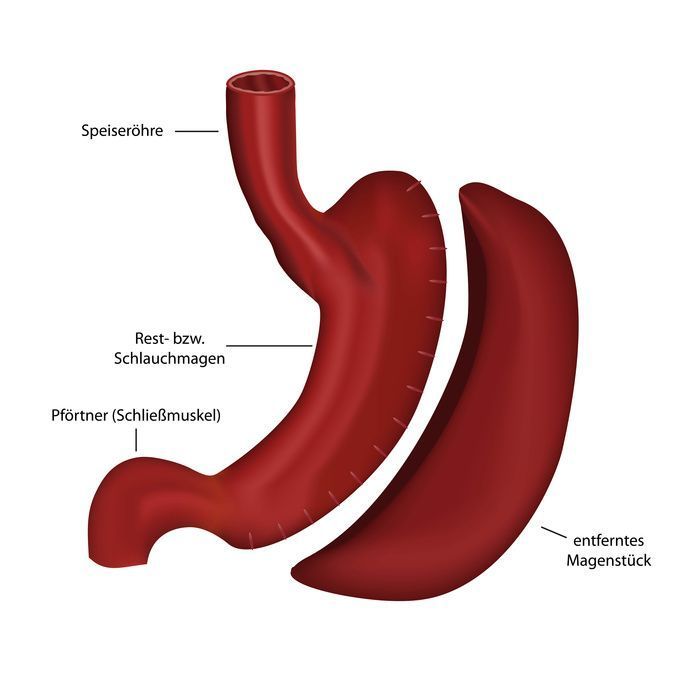
© bilderzwerg / Fotolia
Leading Medicine Guide: And what exactly is sleeve gastrectomy?
Dr. Martin Susewind: In sleeve gastrectomy, the volume of the stomach is also reduced. To achieve this, large portions of the stomach are removed, and the remaining portion is reshaped into a tube-like organ. As a result, the patient can only consume small amounts of food. The hormonal component is also a decisive factor in this surgery. The goal of all these surgeries is to achieve permanent weight loss and, in particular, to cure comorbidities such as diabetes mellitus, high blood pressure, or sleep apnea.
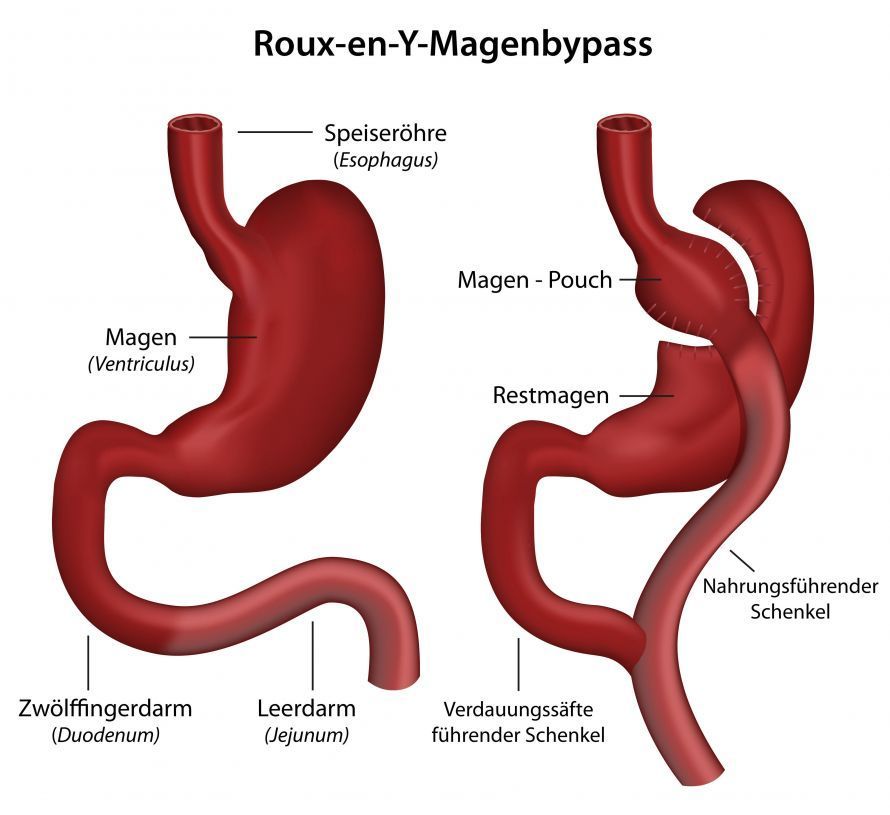
Illustration of a Roux-en-Y gastric bypass © bilderzwerg / AdobeStock
Leading Medicine Guide: What exactly is the procedure for these surgeries?
Dr. Martin Susewind: We perform exclusively minimally invasive surgeries. This means that only five tiny incisions, ranging from five to fifteen millimeters in size, are required. The patient is admitted to the hospital on the day of the surgery and can usually be discharged after three days.
Leading Medicine Guide: After just three days? And what happens next?
Dr. Martin Susewind, M.D.: Gastric reduction surgery is a major step forward. However, the journey toward lasting, healthy weight loss continues, because the desired goal can only be achieved in combination with exercise and a healthy diet. Once the patient is discharged from the clinic after surgery, they must follow the dietary progression plan, which is explained in detail before the operation through consultations and informational brochures. This means that only liquids may be consumed during the first two weeks. This is followed in the third week by the so-called “pureed food phase”—which includes foods such as soups or finely pureed dishes. Throughout the entire post-operative period, we provide close follow-up care. Subsequently, follow-up checkups are conducted every six months and eventually once a year.
Leading Medicine Guide: Some people are left with unsightly skin folds after such significant weight loss. What do you recommend in these cases?
Dr. Martin Susewind: Any potential plastic surgery should be discussed before gastric surgery. The occurrence of skin folds and their severity cannot be predicted. Some patients live well and happily with skin folds, simply because they feel so relieved and are willing to accept them. If plastic surgery is being considered, a significant amount of time must first pass after the gastric bypass surgery. After all, the body continues to change after surgery, and the extent of potential skin folds cannot be predicted. There is then the challenge of securing coverage from health insurance, which is not always guaranteed. We work in an interdisciplinary manner, so a colleague from the plastic surgery department can be consulted at any time.
Leading Medicine Guide: Are there also “relapse” patients who eventually return to their original weight?
Dr. Martin Susewind: I actually have to commend most patients. They are truly model patients. Thanks to their newfound mobility, some people go from being couch potatoes to full-fledged exercise junkies. They are deeply grateful for their new lease on life. If patients ever show a tendency to fall back into old patterns of behavior, we counteract this with our supportive therapy. Psychological support—which we provide through our on-site psychologists—is always crucial. The goal is to break through the patients’ “thick shell,” free them from shame, and help them realize that they can make a change.
Leading Medicine Guide: Overcoming obesity surely has an impact on patients’ overall quality of life, doesn’t it?
Dr. Martin Susewind: We’ve seen many times that relationships do indeed break down after significant weight loss. A person’s self-confidence and sense of attractiveness increase dramatically, paving the way for them to view things more critically than they perhaps did before. This is especially true for women. That’s why, when working with a family, we always strive to ensure that not only the family member affected by obesity changes their diet, but all family members do. And that’s a positive thing—that way, everyone in the family gets to experience how good it feels and how delicious it is to eat a healthy, balanced diet!
Dr. Susewind, we’d like to thank you very much for this engaging and informative conversation!
You can contact obesity specialist Dr. Susewind directly via his profile page on the Leading Medicine Guide.
Share this article
Expert Interviews
Read next
- Expert interview
Expert interview with Professor Dr Elmar Herbst, PhD
Oct 15, 2026
Patient-centred and personalised knee surgery
Read more - Expert interview
Cardiogeriatrics: Significance and benefits in the context of hospital reform
Sep 21, 2026
Cardiogeriatrics: Significance and benefits in the context of hospital reform
Read more - Expert interview
Expert Interview with Professor Dr. Amadeus Hornemann, MPH
Sep 18, 2026
Prof. Amadeus Hornemann on Precision Medicine in Gynecology: Modern Surgery, New Techniques, Better Quality of Life
Read more