Expert Interviews
Minimally Invasive Hernia Surgery

Alexandra Pfitzmann ·
The editorial team of the Leading Medicine Guide learned more about modern, minimally invasive hernia surgery in a conversation with Dr. Meurer.

A hernia occurs when a tear or weak spot develops in a weak area of the abdominal wall or another section of tissue. As a result, tissue—usually a portion of the intestine or fatty tissue—protrudes through the opening, forming a bulge that can be recognized as an inguinal, umbilical, or femoral hernia.
“This bulge can sometimes be painful, but it is not necessarily associated with pain. There are various causes for the development of a hernia: on the one hand, congenital weak spots such as the navel or the groin, where the abdominal wall is naturally thinner, as well as acquired hernias, such as incisional hernias, which can develop at surgical incision sites.
Hernias occur particularly frequently in the groin, which is due to anatomical weaknesses in the abdominal wall. It’s clear when surgical treatment is necessary: a hernia will never go away on its own. It is usually just a matter of timing as to when surgery is advisable. This is primarily due to the constant pressure exerted on the weak spot in the abdomen. This pressure increases with physical exertion, coughing, or bowel movements, as these activities raise intra-abdominal pressure.
Over time, this constant pressure tends to make the hernia larger, which is why surgery is generally unavoidable if the hernia is to be corrected. The timing of the surgery is usually not an emergency but can be scheduled in advance. It depends primarily on the individual’s symptoms. “Many people live with a hernia without experiencing any symptoms and can therefore schedule surgery for a later date. However, those who experience pain or discomfort due to the bulge naturally suffer significantly more and are more likely to seek surgery sooner and in a targeted manner,” explains Dr. Meurer at the beginning of our conversation.

Typical symptoms of a hernia include a visible or palpable lump that may become more pronounced during exertion, coughing, or standing. These are sometimes accompanied by pain, a feeling of pressure, or discomfort. In some cases, the hernia causes no symptoms and is discovered only by chance. Even if the hernia is strangulated, it must be treated surgically immediately to prevent circulatory problems, tissue damage, or intestinal prolapse. In the case of small, asymptomatic hernias, the doctor decides on a case-by-case basis whether surgery is advisable to prevent future complications.
Minimally invasive hernia surgery has established itself in recent decades as a gentle yet effective method for treating hernias. Unlike open surgery, this procedure allows the hernia to be repaired and the abdominal wall to be strengthened through small skin incisions and the use of special instruments. The decision on whether to perform hernia surgery using a minimally invasive or open approach is based on a variety of carefully considered factors.
“For one thing, the choice of surgical procedure depends heavily on the patient. Minimally invasive surgery generally requires general anesthesia. However, for patients who cannot tolerate general anesthesia due to other medical conditions or their overall health, it is also possible to perform the procedure under local anesthesia. While this is not the most common scenario, it is an option that is occasionally considered. Furthermore, the size and location of the hernia are decisive: Larger hernias or those that can no longer be reduced are generally better suited for open surgery.
The goal is always to choose the minimally invasive procedure whenever possible, as these are generally associated with the lowest complication rates. Nevertheless, there are contraindications, such as an extensive hernia that requires additional soft tissue reconstruction, which typically necessitates conventional surgery. It is important that the decision be tailored to the individual patient, taking into account their comorbidities, previous surgeries, and overall health. “Not every patient who has already undergone abdominal surgery is a suitable candidate for minimally invasive hernia surgery; rather, the choice must always be tailored specifically to the individual case,” says Dr. Meurer, adding:
“In minimally invasive surgery, laparoscopic methods are usually used, involving only small incisions of no more than one centimeter. The instruments used are specialized laparoscopic surgical tools. In contrast, open surgery involves a larger incision, depending on the location of the hernia. In this procedure, conventional instruments such as scalpels and forceps are used to operate directly on the patient. Because the minimally invasive method involves a smaller incision, the wounds are generally smaller, and there is less blood loss.
This technique often results in fewer complications and faster recovery times. Because of the reduced strain on the tissues, patients benefit from a faster recovery, less pain, and a shorter hospital stay. The minimally invasive technique thus represents an important advancement in hernia surgery that both improves treatment outcomes and sustainably enhances patients’ quality of life.”
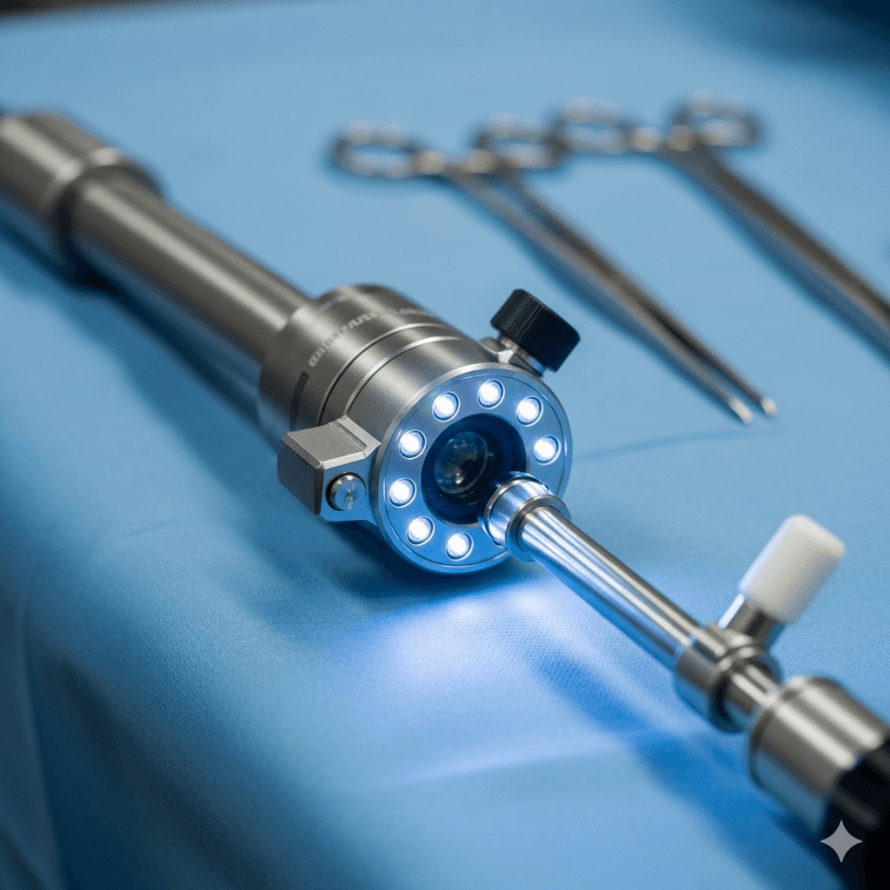
St. Josef Hospital in Bochum is equipped with state-of-the-art technology and has an experienced team specializing in minimally invasive surgery. This combination makes it possible to perform even complex hernia surgeries with less strain on patients.
While this technique offers advantages for many conditions, open procedures may also be appropriate under certain circumstances, such as large hernia rings, adhesions, or anatomical peculiarities. The hospital’s expertise and modern technology provide the foundation for safely and gently performing the best possible individualized treatment—even in complex cases. Robot-assisted systems are also increasingly being used, particularly for more complex procedures.
These systems offer even greater freedom of movement for the instruments, improved 3D visualization, and enhanced precision, particularly in challenging anatomical conditions. These technologies thus not only minimize tissue trauma but also contribute to faster wound healing, a lower risk of infection, and a shorter recovery time.
“We use the surgical robot from Medtronic, the Hugo-RAS system. Since last year, we have been using this robot to operate on ventral abdominal wall hernias (hernias in the anterior abdominal wall) in selected cases. This approach offers, above all, increased safety and precision, as the 3D view is greatly magnified and the tissue layers can be dissected with great accuracy. A key advantage is that suturing—particularly the closure of hernial defects—becomes significantly easier and more precise.
Especially during midline surgeries, where the technique is otherwise very challenging, the robotic instruments enable movements that would be nearly impossible to achieve with conventional laparoscopic techniques. The instruments offer a much greater range of motion and greater dexterity, which significantly facilitates the surgeon’s work. As for the learning curve, each system has specific guidelines regarding when a surgeon is permitted to operate independently on a patient using the robot. After completing training—which includes theoretical knowledge, practice on models and animal models, and supervised surgical procedures—an experienced robotic surgeon can perform procedures independently after demonstrating a specified level of competence.
Patient selection is individualized and varies depending on the surgeon’s experience. It is important to understand that the technology is ultimately an extension of laparoscopic surgery. “For the surgeon, robotic technology primarily means a significant reduction in physical strain, as it allows for greater freedom of movement and precision, thereby making surgeries easier and safer overall,” explains Dr. Meurer regarding the use of robotics.
The minimally invasive technique reduces the risk of postoperative complications, such as infections or scarring, in several ways compared to open surgery.
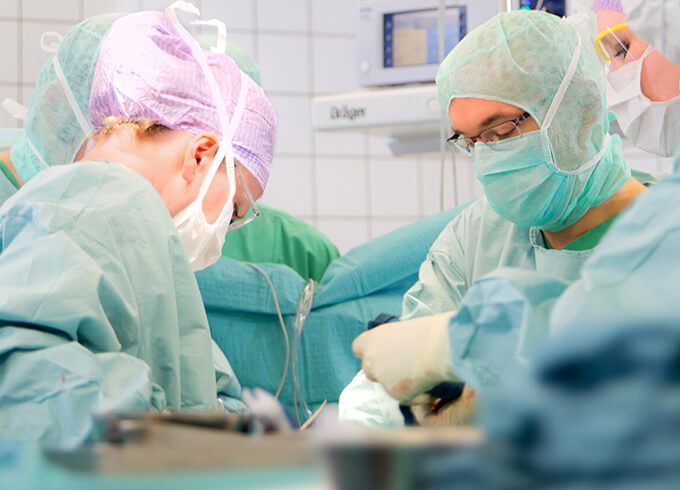
Dr. Meurer comments: “It is generally known that minimally invasive procedures reduce the complication rate in several ways. For example, infection rates are significantly lower—particularly wound infections—because the incisions are smaller. In addition, patients usually report less postoperative pain after such procedures. With regard to recurrence rates, it can also be observed that, with well-selected minimally invasive procedures, the recurrence rate is often lower, particularly in inguinal hernia surgery.
However, caution is warranted here, as comparability is not always clear-cut. The lower rates of infection and pain mean that patients are able to resume full physical activity and return to work more quickly. Another advantage is the cosmetic aspect: The smaller incisions leave significantly less noticeable scars, which is an important consideration for many patients. Although this aspect is not usually viewed as the most important reason from a scientific perspective, it is clear that the minimally invasive technique is also significantly more aesthetically pleasing due to the smaller access sites.”
Minimally invasive hernia surgery offers a number of significant advantages over open surgical techniques in terms of postoperative recovery time and the overall healing process.
“At our facility, hospital stays following minimally invasive hernia surgery are generally very short, which is in line with current healthcare and healthcare economic guidelines. If the surgery proceeds without complications, the patient can go home either on the day of the surgery or the following day at the latest. For larger hernias or when drainage is necessary, patients usually stay in the hospital for two to three days. This also depends on the individual’s pain tolerance, though our goal is to care for patients until they can be adequately managed on an outpatient basis.
For about 90 percent of patients with uncomplicated hernias, this is possible within one day. After surgery, we generally use synthetic mesh, as it has been scientifically proven to significantly reduce the recurrence rate and quickly restore the patient’s ability to bear weight. For hernias, such as inguinal or umbilical hernias, patients can resume full physical activity after about two weeks; for more extensive procedures, this is of course adjusted on a case-by-case basis. After about a week, most patients are already able to resume full physical activity—including sports—provided they are no longer experiencing pain.
The synthetic mesh remains permanently in the body and becomes firmly integrated through the body’s own connective tissue ingrowth, which further increases its stability. “At our facility, we use only synthetic meshes, as we do not consider the approach of using biological, absorbable meshes to be convincing. Overall, we perform approximately 400 hernia surgeries annually, and these procedures offer a high standard of safety and durability,” Dr. Meurer explains.
Minimally invasive hernia surgery is particularly beneficial for patients who need to return quickly to work and daily life, as well as for those with cosmetic concerns or an increased risk of wound healing complications, such as those with diabetes or obesity. For individuals with an increased risk of incisional hernias, the technique can also be a safer alternative due to the small incisions. However, in patients with extensive prior surgeries, adhesions, or very large hernias, the procedure is only appropriate after an individual assessment, as these factors can affect safety and feasibility. The technique must also be carefully considered in cases of severe cardiopulmonary disease, as the gas insufflation required for the minimally invasive method can be stressful. An individualized risk-benefit analysis, the surgeon’s experience, and the center’s technical equipment are crucial for selecting the optimal procedure.
It is extremely important that patients choose certified hospitals. Certified facilities, such as St. Josef Hospital in Bochum, consistently adhere to current scientific standards and the guidelines of professional societies.
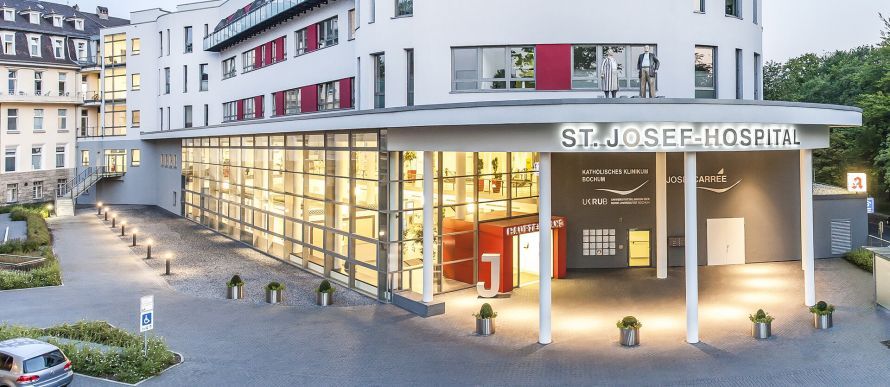
“This means that care provided there is of a high professional standard, using treatment methods that are demonstrably safe and proven. In addition, certified centers offer a comprehensive range of surgical procedures. They are capable of performing both minimally invasive and open surgeries and of competently applying all available techniques. It is important that they regularly handle a large number of these procedures in order to be able to perform the various methods safely and routinely.
This allows them to consistently select the best surgical method for each individual patient without limiting themselves to a single technique. Another crucial aspect is the continuous monitoring of treatment quality. Certified facilities regularly analyze their results, monitor complication and recurrence rates, and compare these against established benchmarks. This allows them to identify potential problems early on and take targeted measures to further improve the quality of care.
“This quality assurance gives patients the assurance that they are being operated on at a hospital that transparently monitors its performance and consistently maintains a high standard of care. Overall, certification significantly increases safety and trust in treatment, as it ensures and continuously monitors the standard of care,” emphasizes Dr. Meurer.
Future prospects and current challenges in the German healthcare system: the impact of hospital reform, the importance of scientifically sound medical indications, societal expectations regarding postoperative care, as well as bureaucratic hurdles and their effects on the quality of patient care.
“Looking ahead, my main hope is that the financial aspects of hospital reform will not influence medical decision-making. It is undeniable that minimally invasive and robotic surgeries are generally more expensive than conventional open procedures. Therefore, there is a risk that, for cost reasons, surgical methods will be chosen that are not necessarily the best option for the patient—which is undesirable from a medical standpoint. This issue should be addressed urgently to ensure that treatment is always based on the best medical evidence, regardless of financial considerations.
Freedom of choice regarding the length of inpatient stays has also been restricted, as there is an increasing pressure to perform as many procedures as possible on an outpatient basis. This poses a major challenge for education and training, particularly in hernia surgery, since young colleagues can only master the necessary surgical techniques through extensive training,” explains Dr. Meurer, adding:
“Another important point is societal acceptance. Until now, patients have often been accustomed to spending several days in the hospital after minor procedures. This approach is set to change in the future: If the patient is doing well and is pain-free, early discharge on the same day or in the evening after surgery should be possible. It is important to inform patients accordingly and prepare them for these changed expectations. However, for certain patients—especially older or independent patients who are uncertain or who face uncertainties at home—the situation is handled differently.
Naturally, these patients are not discharged without careful consideration, as there is a risk that they may not recognize signs of bleeding or complications. This remains a sensitive issue, as longer inpatient stays are expensive and result in higher costs. As a result, longer stays are sometimes even refused as a cost-saving measure—regardless of the patient’s individual needs. From the perspective of patient care and fairness, this practice is extremely problematic because it often fails to take patients’ actual needs into account. Finally, the situation is further complicated by unclear guidelines, potential fines, and a high level of bureaucratic red tape, which makes the situation very difficult and unsatisfactory for many doctors and hospitals.”
Thank you very much, Dr. Meurer, for this excellent insight into hernia surgery!
- Kirsten Meurer is the Executive Senior Physician at the Department of General and Visceral Surgery at St. Josef Hospital in Bochum (Ruhr University).
- She is a specialist with particular expertise in hernia surgery.
- The certified hernia center at St. Josef Hospital is one of Germany’s leading facilities for the surgical treatment of hernias.
- Under her leadership, over 500 patients with inguinal, umbilical, incisional, and complex abdominal wall hernias are treated each year.
- Use of state-of-the-art surgical techniques with individually tailored treatment plans.
- The certified center guarantees high-quality standards in diagnosis and treatment.
- Treatment is provided on an outpatient, pre-hospitalization, or inpatient basis—depending on individual risk and findings.
Share this article
Expert Interviews
Read next
- Expert interview
Expert interview with Professor Dr Elmar Herbst, PhD
Oct 15, 2026
Patient-centred and personalised knee surgery
Read more - Expert interview
Cardiogeriatrics: Significance and benefits in the context of hospital reform
Sep 21, 2026
Cardiogeriatrics: Significance and benefits in the context of hospital reform
Read more - Expert interview
Expert Interview with Professor Dr. Amadeus Hornemann, MPH
Sep 18, 2026
Prof. Amadeus Hornemann on Precision Medicine in Gynecology: Modern Surgery, New Techniques, Better Quality of Life
Read more