Expert Interviews
PD Dr. Marcus Mumme on cartilage therapies in routine clinical practice and innovative studies, and regenerative options for osteoarthritis

Alexandra Pfitzmann ·
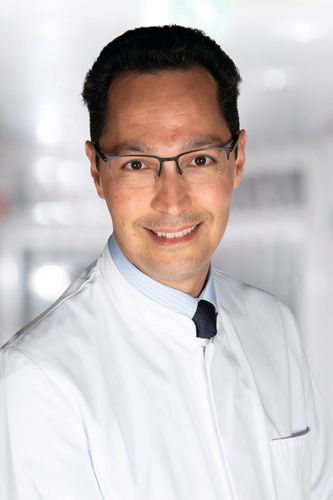
Priv.-Doz. Dr. Marcus Mumme is a board-certified specialist in orthopedics and traumatology and is one of Switzerland’s leading experts in the field of knee and sports surgery. At the Sportclinic Zurich Hirslanden, where he has been practicing since October 2024, he focuses on providing comprehensive orthopedic care to patients with knee joint problems—in both recreational and competitive sports.
He has a particular interest in regenerative therapy for osteoarthritis and cartilage damage, where he sets new standards both clinically and scientifically. PD Dr. Mumme has extensive experience in both conservative and surgical treatment of the knee joint, particularly in cases of ligament injuries, meniscus damage, and complex joint misalignments. His clinical work is complemented by a strong commitment to research: As the former head of Cartilage and Regenerative Knee Surgery at the University Hospital of Basel and of Sports Orthopedics at the University Children’s Hospital of Basel, he played a key role in developing innovative techniques, including the transplantation of cartilage cells from the nasal septum—a procedure with great future potential.
SportClinic Zurich Hirslanden combines state-of-the-art orthopedic medicine with a strong focus on personalized care. Originally a clinic specializing in high-performance sports medicine, it has evolved into a leading center for orthopedic surgery that treats patients of all ages. In this setting, Dr. Mumme applies his expertise in a targeted manner to work with an interdisciplinary team to find individualized solutions for his patients—always with the goal of maintaining or restoring mobility and providing lasting relief from symptoms. His work is characterized by high professional standards, many years of clinical experience, and a deep understanding of the needs of athletes and people with chronic joint problems.
The editorial team of the Leading Medicine Guide spoke with PD Dr. Mumme and received up-to-date information on cartilage therapy options and regenerative treatment options for osteoarthritis.

Cartilage therapies play a central role in modern orthopedics, particularly in the treatment of joint damage and osteoarthritis. While conservative measures often provide only limited relief, regenerative procedures open up new possibilities for maintaining or restoring joint function. As part of routine clinical practice and innovative studies, a wide range of approaches are currently being researched and applied with the aim of repairing cartilage defects and slowing the progression of osteoarthritis. These developments promise to sustainably improve the quality of life for many patients.
In routine clinical practice, various regenerative procedures have proven to be particularly effective in the treatment of cartilage damage and osteoarthritis.
“There are various regenerative procedures that have become established for treating cartilage damage and osteoarthritis. The choice of therapy depends largely on the extent and type of damage—for example, whether only the cartilage is affected or whether the bone and other tissues of the knee joint are also involved. Treatment ranges from simple conservative therapies, such as physical therapy, to complex procedures in which the patient’s own cells are harvested and cultured in the laboratory to regenerate the damaged tissue. A promising new therapy is nasal cartilage-based treatment, which is already being used in studies for osteoarthritis behind the kneecap. For other cartilage defects, however, there are already established procedures. It is important to note that causes and risk factors must be taken into account; no method is used in isolation, but is usually implemented in combination with treatment of the risk factors,” explains PD Dr. Mumme.
Innovative studies play a central role in the further development and optimization of cartilage therapies by systematically testing new treatment methods and improving existing procedures. Clinical trials allow for the objective evaluation of the efficacy, safety, and long-term outcomes of new therapies, which forms the basis for evidence-based recommendations. These studies examine both new regenerative techniques and combination therapies aimed at promoting cartilage regeneration and modulating inflammatory processes in the joint.
Regarding the studies, PD Dr. Mumme explains: “In order to actually be able to apply a regenerative therapy such as nasal cartilage treatment to patients, several steps are necessary, which typically take many years. Currently, there is already a temporary authorization that allows the treatment to be performed on a limited number of selected patients. Meanwhile, extensive clinical trials are underway to evaluate the treatment’s efficacy and safety. These trials are mostly randomized and controlled, meaning patients are randomly assigned to different treatment groups to objectively compare which therapies yield the best results. Patients are monitored regularly as part of the study; the effort involved is not significantly greater than the follow-up care required for standard therapies and includes imaging procedures and clinical examinations. The goal is to improve the data set to enable broad approval.”
These studies usually last many years, including follow-up phases in which the long-term effects are assessed.
“During this time, patients can already receive the therapy in a controlled setting, and the results help to further develop the treatment. The collected data is then analyzed, synthesized, and submitted via scientific publications and applications to regulatory authorities. The next important step is applying for market approval, after which the treatment can generally be approved for widespread use. The issue of cost reimbursement also plays a major role here. For the therapy to be covered by health insurance plans, the data must be very convincing and the benefits clearly demonstrated. Support from industry partners is also crucial to ensuring manufacturing, quality assurance, and widespread availability. The example of nasal cartilage therapy clearly illustrates how complex and time-consuming the development process is. “It requires the collaboration of an interdisciplinary team of scientists, physicians, clinical specialists, regulatory agencies, and industry to bring innovative treatments from the research stage to routine clinical use,” explains PD Dr. Mumme.
Implementing regenerative cartilage therapies in everyday clinical practice presents various challenges. For one thing, many of these procedures are technically demanding and require specialized expertise as well as close interdisciplinary collaboration, for example between orthopedic surgeons, radiologists, and physical therapists. The careful selection of suitable patients is crucial, as not every case of cartilage damage or every stage of osteoarthritis can benefit equally from regenerative therapy. In particular, advanced osteoarthritis with severe joint wear often poses a limitation for regenerative approaches.
“After treatment begins, the follow-up period lasts about two years. In the initial phase, close monitoring takes place—approximately two and six weeks after therapy—to monitor the healing process. As the study progresses, check-ups occur at longer intervals: every six months, then annually, and finally just one check-up in the second year. During this time, data is collected to evaluate the treatment’s effectiveness and analyze it as part of the study. Regarding efficacy in knee osteoarthritis, patients typically notice initial improvements after about half a year. These improvements continue to increase in the following years, particularly after one to two years. Studies suggest that the results achieved are generally stable after five years; however, long-term data spanning up to ten years are currently lacking, which is why the long-term durability of the treatment remains unclear. The prognosis for success not only varies from person to person but also depends on factors such as overall muscle tone, weight, and lifestyle. Patients who are physically fit, of normal weight, and free of risk factors such as smoking generally benefit more. For study purposes, however, severely obese patients (BMI over 35) are not included, as they carry a higher risk of complications and the risk-benefit balance is less favorable. In cases of significantly higher obesity, weight loss is strongly recommended prior to treatment. Patients with rheumatological conditions such as rheumatoid arthritis or infectious knee arthritis are not suitable candidates, as the underlying causes of these conditions generally preclude regenerative therapy. In general, the age limit for current studies is 65 years; the prospects for success are significantly better for younger patients. “Active, athletic individuals, including competitive athletes, are also participating; they use the treatment primarily among young, active adults and professional athletes to maintain their mobility and athletic performance,” said PD Dr. Mumme. 
To ensure meaningful results, the number of patients required for the study—which focuses on the treatment of patellar osteoarthritis—is carefully planned.
“For one of the ongoing studies, for example, we have determined a sample size of 75 patients. These patients will be randomly assigned to two treatment groups to compare different therapeutic approaches. The exact number of participants always depends on the study design and the assumptions made during the planning phase. When caring for patients, it is important to us to provide them with honest and transparent information. Participation in the study is strictly voluntary, and patients are fully informed about the respective treatment options, procedures, and the time and effort involved. They must know that they can withdraw from the study at any time. For treatment within the study focusing on patellar osteoarthritis, the reality is that there are virtually no standard alternatives in this area other than a prosthesis. As a result, patients are more willing to participate in the study. Dr. Mumme offers this specialized therapy at the Sportclinic Zurich as part of the study and for a limited period covered by an authorization. Patients from more distant regions may participate in principle, but must keep in mind that regular follow-up visits are required. For patients traveling from very far away, there is a risk that they will not attend their follow-up appointments, which would significantly impair the study’s evaluation. Without continuous follow-up, the study’s validity may be severely limited, as the course of treatment must be documented. In addition to medical treatment, a healthy lifestyle is crucial for success. This includes a balanced diet, weight management, regular exercise, and avoiding overexertion while still continuously strengthening the muscles. Appropriate sports equipment, good shoes with cushioning and stabilization, and, optionally, knee braces are also valuable aids. “These factors help improve the knees’ resilience and ensure the long-term success of treatment,” explains PD Dr. Mumme, adding:
“Generally speaking, it can be observed that injuries, sports injuries, and overuse injuries are on the rise, which is primarily attributable to the population’s increasing level of physical activity. These trends are leading to a higher incidence of related conditions. In addition, the prevalence of obesity is rising, which is another risk factor for joint problems. Society as a whole is aging, making age-related wear and tear in the knee more common. These demographic factors also contribute to the potential rise in the incidence of these conditions. An even more decisive factor, however, is the simultaneous increase in physical inactivity, particularly among young people. Less exercise and physical activity lead to weaker muscles and a higher risk of injury or premature wear and tear. Taken together, all these factors suggest that the strain on the knee joint is likely to increase in the future.” 
A significant innovation in regenerative cartilage therapy is the intraoperative use of PRP (platelet-rich plasma)—that is, the patient’s own blood—which is injected directly into the affected joint during surgery, a procedure that has already been performed at SportclinicZurich.
PD Dr. Mumme comments: “This method aims to support the body’s own healing processes and improve the repair of cartilage defects. Although the use of PRP in this context has not yet been widely established as the standard of care, there is growing evidence that it can improve the outcomes of cartilage regeneration. At Sportklinik Zurich, intraoperative PRP application has already been integrated into routine clinical practice. During surgery, while the cartilage is being reconstructed, the PRP is injected into the joint to promote the formation of new cartilage tissue. This approach is an extension of traditional procedures and is intended to improve the chances of healing, as the growth factors in PRP stimulate regeneration. However, performing this technique involves greater organizational and medical effort, since the preparation and administration of PRP during surgery must be precisely planned. This means that staff must be specially trained and the necessary equipment must be available on site. Currently, this treatment option is not yet available in all clinics because it has not yet become standard practice.”
The ongoing study examining the effectiveness of nasal cartilage therapy is expected to continue for several more years.
“It is difficult to predict the exact duration, but the current plan is to continue collecting and analyzing data for at least three to five years. The goal is to use this international collaboration across multiple centers in Germany, Italy, Croatia, Sweden, and Austria to establish a broader evidence base in order to validate the method for wider clinical application. Long-term results and the long-term safety of nasal cartilage application in cartilage treatment are also expected to influence the standard for future treatment approaches. “The results of these studies and clinical experience will thus improve and further develop treatment not only in Zurich but also in numerous other centers worldwide,” said PD Dr. Mumme, and with that, we conclude our conversation.
Thank you very much, PD Dr. Mumme, for the insight into regenerative cartilage therapy!
Share this article
Expert Interviews
Read next
- Expert interview
Expert interview with Professor Dr Elmar Herbst, PhD
Oct 15, 2026
Patient-centred and personalised knee surgery
Read more - Expert interview
Cardiogeriatrics: Significance and benefits in the context of hospital reform
Sep 21, 2026
Cardiogeriatrics: Significance and benefits in the context of hospital reform
Read more - Expert interview
Expert Interview with Professor Dr. Amadeus Hornemann, MPH
Sep 18, 2026
Prof. Amadeus Hornemann on Precision Medicine in Gynecology: Modern Surgery, New Techniques, Better Quality of Life
Read more